Considering Metal Roof Repair Within Overland Park Kansas?
APC Roofing works on ribbed sheet and concealed-clip panels alike, for houses as well as workshops and barns.
Call 913-398-5020 and a roofer will come out and describe what the metal shows.
Naming a System – A Glance Up
Screw-down panels, corrugated or ribbed, are fastened with screws through the exposed metal, whereas standing seam relies on clips that sit under locked joints. Coated steel is what the great majority of metal-roofed homes carry, and aluminum and copper are less frequent choices.
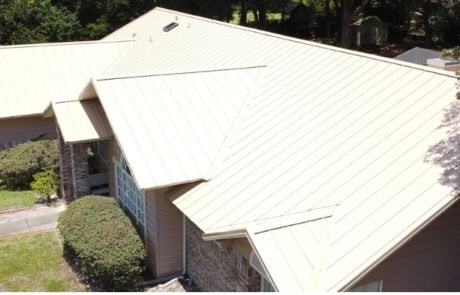
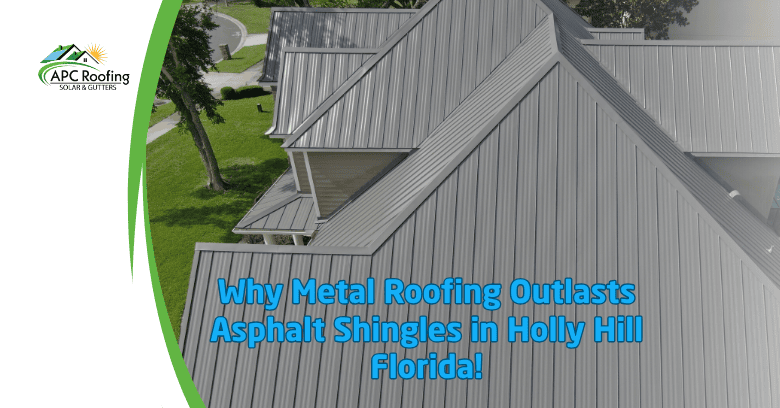
Rows of fastener heads, visible from the street, give away a screw-down roof, and uninterrupted pans separated by raised folds mean standing seam. Outbuildings and porches lean toward ribbed or corrugated sheet, though a house can suit either.
Rolled Shapes – Reach Between Supports
Corrugated sheet ripples in smooth, repeating curves, and ribbed panels pair tall square ribs with broad flat areas. Neighboring sheets overlap at a side edge by a single crest, and screw locations follow a published diagram.
Ribbed stock is stiffer and spans further between supports, while corrugated fits a period barn or a farmhouse style. On a big roof plane, taller ribs keep a downpour from spilling over side laps, while a low pattern handles short runs like a porch or lean-to.
Hardware in the Weather: Aging in Sunlight
A single screw pins the metal firmly to framing below, and a washer under each head stops water getting in. Sun and temperature swings dry out neoprene over time, though the coated metal nearby stays sound far longer.
Too much torque flattens a washer at once, while an underdriven or tilted fastener never seals all the way around.
Fastener Replacement: Worth Doing, With Limits
On corrugated or ribbed sheet, every washer ages at one pace, and a whole-roof re-screw is routine over the years. Every existing fastener is removed, and a wider replacement goes back in where threads can still find purchase.
A re-screw stops drips around screw heads and draws lifting sheets back down, though perforations, split laps and faulty trim remain as before. New screws are matched to whatever framing lies beneath, with wood threads for lumber and drill points for steel, and a factory color on every top suits most finishes.
Expansion and Contraction – Stress at Screw Holes
A steel panel stretches in sunshine and draws in after dark, and a longer run shifts farther still, and aluminum changes nearly twice as much. Where nothing lets a panel slide, the metal elongates screw holes, and seals start to fail.
Creaks as the day warms come from steel adjusting, and nothing is damaged where every detail allows for slack.
Beneath Raised Seams: Hidden Hardware
Each long pan is fixed solid in one short zone, and floating clips everywhere else let the pan glide. Trim at an unanchored end leaves a gap for travel, and rigid fastening over a big pan shears or wrinkles the metal.
A pan is positioned and clips are screwed to the deck beside a long edge, so no fastener head is left out in the weather.
Joint Styles: Which Suits the House
One kind of rib clicks shut under a firm push, while machine-rolled designs get folded over by a motorized seamer. A double-lock seam rides out storms and sheds pooled water, and maker approvals cover shallower slopes.
Pan width and rib height vary from product to product, and architecture and a buyer's eye decide. Accessories such as clips and closures fit a single system, so a repair calls for knowing exactly which panel is up there.
Light or Heavy: Reading a Label
Steel thickness is given as a gauge, and a low figure signals thick metal. Outbuildings commonly get twenty-nine, while twenty-six and twenty-four are typical choices for houses.
For aluminum, sheet is sized in thousandths, and with either metal, a stouter panel holds shape. Standing in a yard, nobody can judge weight by eye, so a label or order sheet is what gets checked.
Rust Resistance – Aging in Sunlight
Roofing steel leaves a mill with a zinc or aluminum-zinc layer over plain sheet, and a color coat is baked on afterward. Scrapes confined to paint are harmless, whereas a gouge through to bare metal soon shows red.
PVDF finishes hold color for decades, and polyester families fade and chalk more quickly. Wet masonry corrodes aluminum-zinc coated sheet, and a barrier belongs wherever panels meet new stonework.
Weighing Options – Coast and Country
Aluminum carries less weight and does not redden, but a dropped tool or a falling branch dents a soft sheet sooner. Along the coastal end of our service area, salt in the air shortens the life of zinc-based coatings, and makers restrict certain products near surf.
Copper turns up chiefly on bay windows, dormers and entry roofs, and left unpainted, the metal darkens with age.
Metals That React – Matching or Separating
Water that has crossed copper wears away any steel coating below, and streaks appear years ahead of perforation. Aluminum laid against treated lumber corrodes at every contact point, and a bare steel screw in soft sheet breaks down too.
Any added flashing or trim should be the same metal as what is up there, or an isolating layer separates unlike metals.
A Matter of Taste: Choices That Help
Oil canning names shallow dips and bulges across a flat pan, and a sun low in the sky exaggerates every contour. Metal with a visible warp stays just as watertight, and nothing shortens the life of the roof.
Thicker metal, a slimmer width and striations rolled into every pan tame rippling, and a deck without humps or dips matters too. Images of real houses show oil canning from obvious to barely there, and you make the call on profile.
For People Inside – Sound and Temperature
A shed with bare purlins under the panels rings like a drum, since one thin layer is all that stands between sky and interior. Metal on a home rests on a deck and underlayment, over an insulated ceiling, and indoors most people hear little more than on shingles.
A light-colored panel sheds much of the sun's warmth, so upstairs spaces bake less. A charcoal or black panel gets hot, and without venting and insulation, color alone does little. After sunset, metal sheds stored warmth quickly, and an attic beneath follows suit.
Protecting Whoever Is Below: Chosen With Care
At the colder end of our territory, snow slides readily off smooth coated steel, and a slab arriving all at once can injure someone or rip a gutter off. Guards break a load into small harmless chunks, and a doorway, walkway or meter below decides placement.
Standing seam takes clamp-on brackets that grip each rib without piercing the metal, while screw-down sheet takes mounts fastened into framing with sealed screws, and at the warm end of our range snow gear is unnecessary.
Storm Marks – A Record of What Happened
Hail visits the colder end of our range with some regularity, and heavier grades with stiffening ribs shrug off more stones. Where a blow splits paint, bare metal can corrode, and a trim piece pushed out of place can channel rain inside.
After any storm, each affected area is photographed and measured, so the size and position of each dent are known.
Uplift: Trim Held Tight
Gusts tug harder at corners and along a perimeter, and an unfastened edge lets pressure build beneath. Trim along every outer line is hemmed and hooked onto a continuous cleat, leaving nothing for a storm to seize.
Clips and screws are packed closer in high-load zones near corners, per manufacturer guidance for local conditions. Where hurricanes reach, at the coastal end of our territory, the number of fasteners goes up again, and panels carry an uplift rating to suit.
Openings in a Covering – Careful Detailing
A pliable-based collar is shaped to fit a panel and clamped onto a pipe, and placement is down in a pan rather than on a crest. A chimney or skylight is built up on a curb with a cricket above, so runoff is steered aside.
Caulk is a secondary barrier behind formed metal, since weather hardens and splits any compound long before the panels are done.
Meeting Planes: Made to Shed
Each valley receives a wide flashing before panels arrive, and every sheet is trimmed on the skew. Raw ends are folded under and locked to a cleat, and fasteners stay clear of wherever rain concentrates.
An endlap on a long run holds sealant between overlapping sheets, and screws go through both thicknesses at close spacing.
Additions and Wings: Where Membrane Takes Over
Corrugated and ribbed sheet usually needs around three inches of rise in every foot, since anything less lets rain back up at overlaps. Standing seam with double-locked joints goes much lower, with certain lines suited to decks that are nearly flat.
Many homes have a gentle stretch over a porch or a later addition, and each incline is measured on site, and anything under a panel's limit is finished in a membrane.
Support for the Roof: Checked on a Tear-Off
Metal on a dwelling is installed over full sheathing, and a heat-rated synthetic membrane goes in between, since ordinary felt dries out under sun-heated steel. Pole buildings commonly have metal spanning between purlins with air below, so wider gaps call for thicker steel.
A stripped roof is probed, and weak sections are replaced, since punky fibers offer a screw no bite.
Going Over the Existing Roof – Grounds for Refusal
Many building codes allow metal over a single layer of asphalt shingles, and noise and a dumpster are avoided. New steel adds well under two pounds per square foot, so reinforcement is rarely needed. Battens over a fresh membrane go across existing shingles, and every fastener is sized to reach solid wood.
A second layer already in place, soft decking or stains from past leaks mean a full tear-off, because a problem covered with steel keeps growing out of sight.
Small Parts at Edges – Tight Against Weather
Closures matching a panel shape stop up hollows under each rib at both extremes, and rain, insects and birds cannot get under the panels. A cap along a peak comes vented or solid, depending on how an attic is ventilated.
Drip edge, rake trim and a gutter apron finish every outer line, and water falls clear of fascia instead of running behind.
Care With the Metal – Sheet by Sheet
Standing seam is produced to fit each run from bottom to top, so no crosswise joint sits in the path of runoff. A long panel calls for several people spaced along the metal, and a crimped or creased pan is no longer usable.
Feet go in a flat where something solid lies below, because ribs and seams crush under a boot. Moisture turns a painted panel into a slide, so climbing up for a look is unwise.
Signs Worth a Call – A Look From Below
- Red staining around each screw, low on a slope.
- Hardware sticking up, mid-panel.
- A peeled drip edge, above a porch.
- A vent cap knocked askew, close to a ridge.
- A cut end turning red, along a rake.
- Uneven fading, where afternoon light hits.
- A ceiling stain in a straight line, over a closet.
- A gap along a rib, near a valley.
APC Roofing and Metal Roof Repair in Overland Park Kansas – Step by Step
We start by identifying which panel type is installed and how the panels are held, and then every screw or clip, edge, opening, valley and lap is checked. Gauge, finish and hardware are noted as we go, and a trip into the attic catches past leaks.
Every finding goes into a report with images, and a reason sits beside every recommendation. If new fasteners are enough, that is what we suggest, while a worn-out roof is named as such.
Metal Roof Repair Around Overland Park Kansas: A Careful Look
Call 913-398-5020 and someone will arrange to stop by.
Saving What Is There: Piece by Piece
An individual rusted sheet can be unscrewed and exchanged, although new paint never quite matches older metal. A new pipe boot or a resealed lap ends a local drip, while re-fastening cures aged washers.
Once red rust has eaten through large areas, patching no longer makes sense, and a covering with every joint and collar given out is no different. A partial job on just one side is sometimes a sensible middle course, as long as nothing else shows wear.
Planning Ahead: What Cuts Life Short
A carefully installed panel system can pass forty years, though climate, care and material all make a difference. Standing seam, with no holes through a pan, gets by on less maintenance, while corrugated and ribbed sheet calls for fresh screws in time.
Galvanic contact, unfinished cuts and caulk in place of flashing hasten replacement, and a periodic look finds problems while minor. Leaves and twigs that collect against a curb or in a valley hold moisture against coated steel, and brushing debris off protects paint.
For a roofer's view on Metal Roof Repair in Overland Park Kansas, call APC Roofing at 913-398-5020. Someone will go over every panel, fastener and piece of trim, and a written report puts options in front of you.
Verified

Verified