
Maybe you’re putting a roof on a new shop or a covered porch and you want something tougher than shingles. Or you already have a corrugated metal roof, and now there’s a rust ring around a few screws and a drip that shows up in heavy rain. Either way, you’d like a straight answer from someone who works on these roofs regularly.
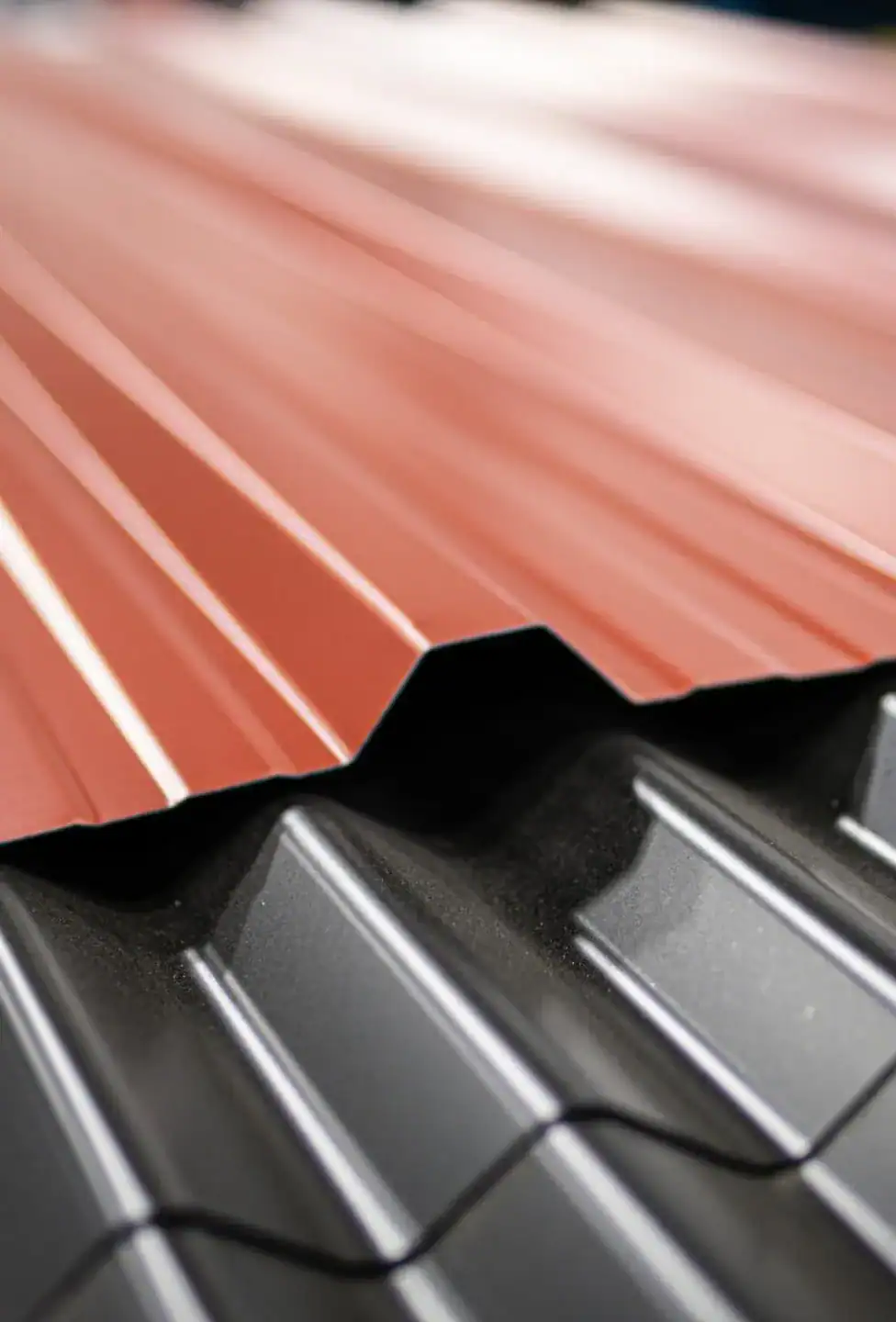
Corrugated metal roofing in Overland Park is a good fit for a lot of buildings, and a poor fit for a few. It comes down to the building, the slope of the roof, and whether you’re comfortable with the bit of upkeep exposed screws need over the years.
APC Roofing has worked on Kansas City-area roofs from our Shawnee office, and we install and repair both corrugated and standing seam metal. We’re GAF Certified, licensed and insured, and inspections are free. Call 913-398-5020 to have someone take a look.
What corrugated metal roofing is
Corrugated metal is sheet metal pressed into a repeating wave or rib pattern. The shape gives a thin sheet a lot of stiffness, so it can span between supports without sagging. You’ll also hear it called ribbed metal, R-panel or exposed-fastener metal, depending on the profile.
The defining feature is the fasteners. Corrugated panels are held down with screws driven right through the face of the metal. Each screw has a rubber washer under its head that seals the hole. That’s different from standing seam metal roofing, where the panels are held by hidden clips and no screws go through the surface.
Where corrugated metal roofing in Overland Park makes sense
Corrugated and ribbed panels are common on shops, detached garages, barns, carports and covered porches. They go up quickly, they’re light, and they shed rain and snow well.
They can work on a house too, especially if you like a farmhouse or modern rustic look. On a home, the panels go over a solid wood deck with a quality underlayment beneath them, not over open framing.
Slope matters. Most exposed-fastener panels need a moderate pitch so water drains off before it can creep back under the overlaps. A porch or addition with a very low slope usually needs a different system, such as standing seam rated for low slopes or a flat roof membrane.
Corrugated metal and Kansas City weather
Hail is the first thing most people ask about. Metal can dent in a bad hailstorm, and thinner panels dent more easily. Many dents are cosmetic, and the roof keeps shedding water fine. A hit hard enough to crack the paint or bend a lap can open a path for rust or water, though, so it’s worth having a roof checked after a big storm.
Wind tests the edges. Strong gusts pull hardest at the corners, eaves and ridge, which is why screw spacing is tighter there and trim needs to be fastened well. Once wind gets under a loose edge, it can peel back a panel.
Our temperature swings matter too. Metal expands in the sun and shrinks at night. Over years, that movement can work screws loose and stretch the holes around them. Snow is the last piece. It slides off metal easily, sometimes all at once, so snow guards above doors and walkways are worth considering.
The screws are the maintenance item
The rubber washers under each screw head are usually the first thing to wear out on a corrugated roof. Sun and temperature swings harden the rubber until it cracks, often long before the panels themselves are worn. That’s when you start seeing leaks along a line of screws or rust rings around the heads.
The fix is usually a re-screw: replacing the old fasteners with new ones, often a slightly larger size where the old holes have stretched. It’s normal maintenance for this kind of roof, not a sign that something went wrong.
How the screws go in matters from day one. A screw driven too hard crushes the washer and dimples the metal. One driven at an angle never seals properly. Screws also need to match what’s underneath, since wood framing and steel framing take different fasteners.
Panel thickness and coatings
Metal roofing thickness is measured in gauge, and a lower number means thicker metal. Thinner panels are common on farm buildings. Homes and shops in hail country often get heavier panels because they resist dents better.
Most steel panels have a zinc or aluminum-zinc coating to fight rust, with a baked-on paint finish over that. Cut edges and deep scratches are where rust starts, so trimmed ends should be handled carefully. Mixing metals can cause problems too. Runoff from copper, or contact with treated lumber, can corrode some steel and aluminum panels over time.
Corrugated or standing seam?
Corrugated metal costs less than standing seam and is quicker to install, which is why it’s so popular on outbuildings. Standing seam has no exposed screws, so there’s less maintenance over the life of the roof, and it handles lower slopes. For a house, many homeowners lean toward standing seam. For a shop or porch, corrugated is often the practical choice. Our metal roofing in Overland Park page compares the options.
How it works with APC Roofing
- Book your free inspection. Call 913-398-5020 or request a free online estimate.
- Get a clear, honest assessment and estimate. We check the panels, screws, laps, trim and any pipe boots, look for rust and hail damage, and give you photos and a written estimate.
- Get the work done and the site cleaned up. Whether it’s a re-screw, a repair or a new roof, the crew finishes and cleans up.
Financing is available through Aqua Finance, Fortifi, Hearth and Home Run Finance.
Corrugated metal roofing questions
Is corrugated metal a good choice for a house?
It can be, especially if you like the look. On a house, it should go over a solid deck and underlayment. Standing seam is the lower-maintenance option if you’d rather not deal with exposed screws.
Is a corrugated metal roof loud in the rain?
Over open framing, like on a barn, you’ll hear the rain. On a home with a solid deck, underlayment and an insulated attic, most people notice only a small difference from shingles.
How often does a corrugated roof need new screws?
It varies with sun exposure, fastener quality and how they were installed. Have the screws checked during routine inspections and after big storms, and plan on a re-screw at some point in the roof’s life.
Can you repair one damaged panel?
Usually, yes. A single damaged panel can often be replaced, though new metal may look brighter than the weathered panels around it for a while.
Get straight answers on corrugated metal
A leak along a row of screws stays small for a while, but it lets water reach the wood underneath every time it rains. Re-screwing early is a lot simpler than replacing rotted decking later.
When it’s done right, a corrugated roof just keeps working: dry inside and solid through hail season, with no drips along the fasteners. Call 913-398-5020 to book your free inspection, or start your estimate online.


















