A storm rolled through, and now your metal roof is covered in small dents. Or there’s a drip in the garage you can’t trace, and you’re wondering how a roof that’s supposed to last for decades has started to leak. Either way, you want to know what’s actually wrong before anyone starts quoting new panels.
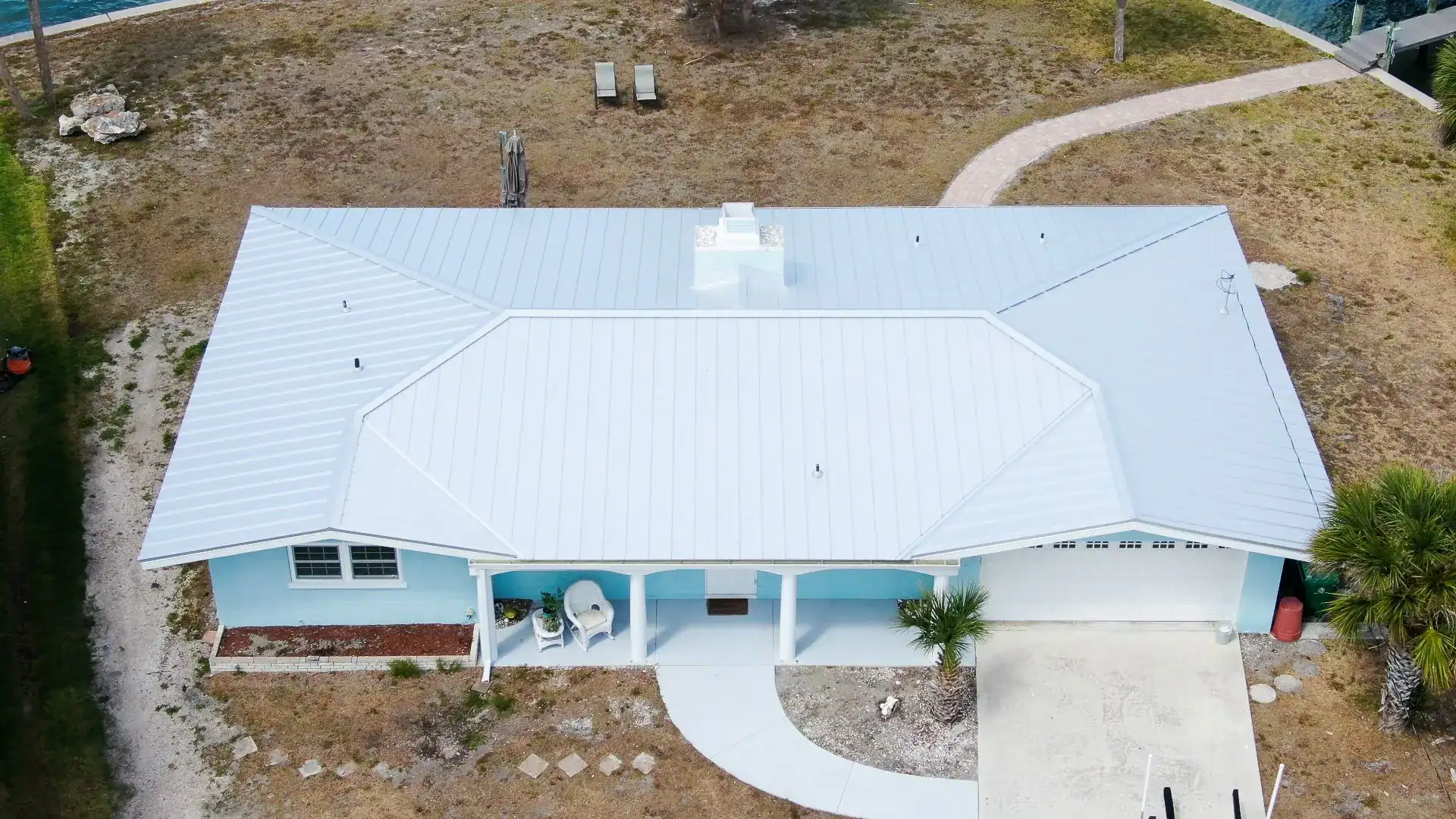
Metal roof repair is often simpler than people expect, because most leaks start in a few predictable places. Some of what looks like damage isn’t a problem at all. This page walks through both, so you can tell a water problem from a cosmetic one.
APC Roofing has worked on metal roofs since 2017, including standing seam, corrugated, metal shingles and stone-coated steel. We’re GAF Certified, licensed and insured, and your inspection is free. Call 866-995-0704 to have your roof looked at.
Dents vs. damage on a metal roof
“There are dents all over it. Is my roof ruined?” That’s the most common question after a hailstorm, and the answer is often no. Metal bends without breaking. That’s why hail that would wreck an asphalt shingle roof often leaves a metal roof dented but still keeping water out.
Real damage on a metal roof is anything that opens a path for water: a split panel, a coating cracked deeply enough that rust has started, a fastener pulled loose or a seam pried open. Everything else is about how the roof looks. Both matter, but they’re different conversations, and you should know which one you’re having.
Where metal roofs actually leak
Most problems come from the parts that hold the roof together, not the panels themselves.
Fasteners. Metal panels expand and contract a little every day as they heat and cool. Over the years that movement can work screws loose or wear the hole around them. The rubber washers under the screw heads also harden and crack in the sun, so a screw can look tight and still let water in.
Pipe boots. The flexible collar around a vent pipe dries out and splits long before the metal around it wears out.
Sealant and trim. Sealant at laps and transitions ages out. Ridge caps and trim pieces can lift in high wind.
Rust at cuts and scratches. Corrosion usually starts at a cut edge, a drilled hole or a deep scratch, not in the middle of a panel.
Physical damage. A fallen limb, a panel crushed by someone servicing equipment, or hail hard enough to crack the coating rather than just dent it.
Where you live shapes which of these shows up first. Along the coast in the Daytona Beach area, salt air speeds up corrosion at cut edges and fasteners. Strong Central Florida sun is hard on washers and sealant. In the Kansas City area and around Springfield, hail and big temperature swings put more strain on seams and fasteners.
What usually doesn’t need a repair
Some things look like problems and aren’t.
Oil canning is the slight waviness you can see across wide, flat panels when the light hits them at an angle. It’s a normal trait of formed sheet metal and doesn’t let water in. Shallow hail dents in a panel with an unbroken coating are the same story. Fading or chalking of the paint is normal sun wear on the top coat. It changes how the roof looks, not how well it keeps water out.
Before agreeing to any repair, ask which findings are water problems and which are appearance problems. A good contractor will tell you the difference without being asked.
After a storm, check where the damage hides
The checks that matter after hail or high wind are the ones nobody can make from the driveway: fastener rows along the edges, ridge and hip trim, seams, and any spot where a hailstone may have cracked the coating. A metal roof can look fine from the ground and still have a few loose fasteners at the eave, or look beat up and be perfectly watertight.
Getting the roof inspected soon after a storm also puts its condition on record while the event is recent. If you decide to file an insurance claim, you file it yourself and pay your own deductible. APC can document what we find with photos, provide an estimate and work with your adjuster. For hail specifically, our hail damage roof repair page covers what to look for.
When metal roof repair stops making sense
Replacing fasteners with larger gasketed screws, swapping out pipe boots, redoing sealant and replacing a few damaged panels can add many good years to a metal roof that’s otherwise sound.
A few findings change that math. Rust eating through panels in more than one area is one. A finish that’s worn out across whole slopes is another. A deck that’s been wet long enough to soften is a third. Then there’s the one that surprises people: if your panel profile has been discontinued, there may be no matching panel to repair with. A roof can be structurally fine and still hard to repair for that reason alone.
If replacement does make more sense, our metal roofing page covers the systems we install.
How it works with APC Roofing
- Book your free inspection. Call 866-995-0704 or request a free online estimate.
- Get a clear, honest assessment and estimate. We check fasteners, seams, trim, boots and panels, then show you photos and separate the water problems from the cosmetic ones.
- Get the roof fixed and the site cleaned up. The crew makes the repair and leaves your property clean.
Financing is available through Aqua Finance, Fortifi, Hearth and Home Run Finance.
Metal roof repair questions
Can a leaking metal roof be repaired, or does it need replacing?
Most leaks on a sound metal roof can be repaired, since they usually come from fasteners, boots, sealant or trim. Replacement makes sense when rust is widespread, the deck is soft or no matching panels exist.
Are hail dents on a metal roof covered by insurance?
That depends on your policy. Some policies treat cosmetic dents differently from damage that lets water in, so read your policy and talk with your insurer. If you file a claim, APC can document the damage and work with your adjuster.
Why does my metal roof leak only in heavy rain?
Often it’s a fastener with a cracked washer, a lifted trim piece or a lap where sealant has aged out. Heavy or wind-driven rain reaches spots a light shower doesn’t.
Do you repair metal roofs near me?
APC serves Central Florida, the Daytona Beach area, the greater Kansas City area and Springfield, Missouri. See metal roof repair in Clermont or metal roof repair in the Kansas City area for local details.
Keep a good metal roof doing its job
A loose fastener or a split boot is a small fix today. Left alone through a rainy season, it can let water reach the deck, and that’s a bigger job.
Have it checked, fix what’s actually leaking and leave the cosmetic stuff for when it suits you. Then you can get back to trusting the roof you paid for. Call 866-995-0704 to book your free inspection, or start your estimate online.