Searching for Metal Roof Repair Here in Clermont Florida?
APC Roofing installs panel coverings and mends worn sheet, from a pole barn to a family home.
Call 407-270-1129 and you will hear in plain words what condition the roof is in.
Telling Systems Apart – Surface Clues
Corrugated and ribbed sheet is held down by screws driven straight through the metal, whereas standing seam hangs on clips hidden under tall ribs. Nearly every residential job uses coated steel, while aluminum and copper account for a minority.
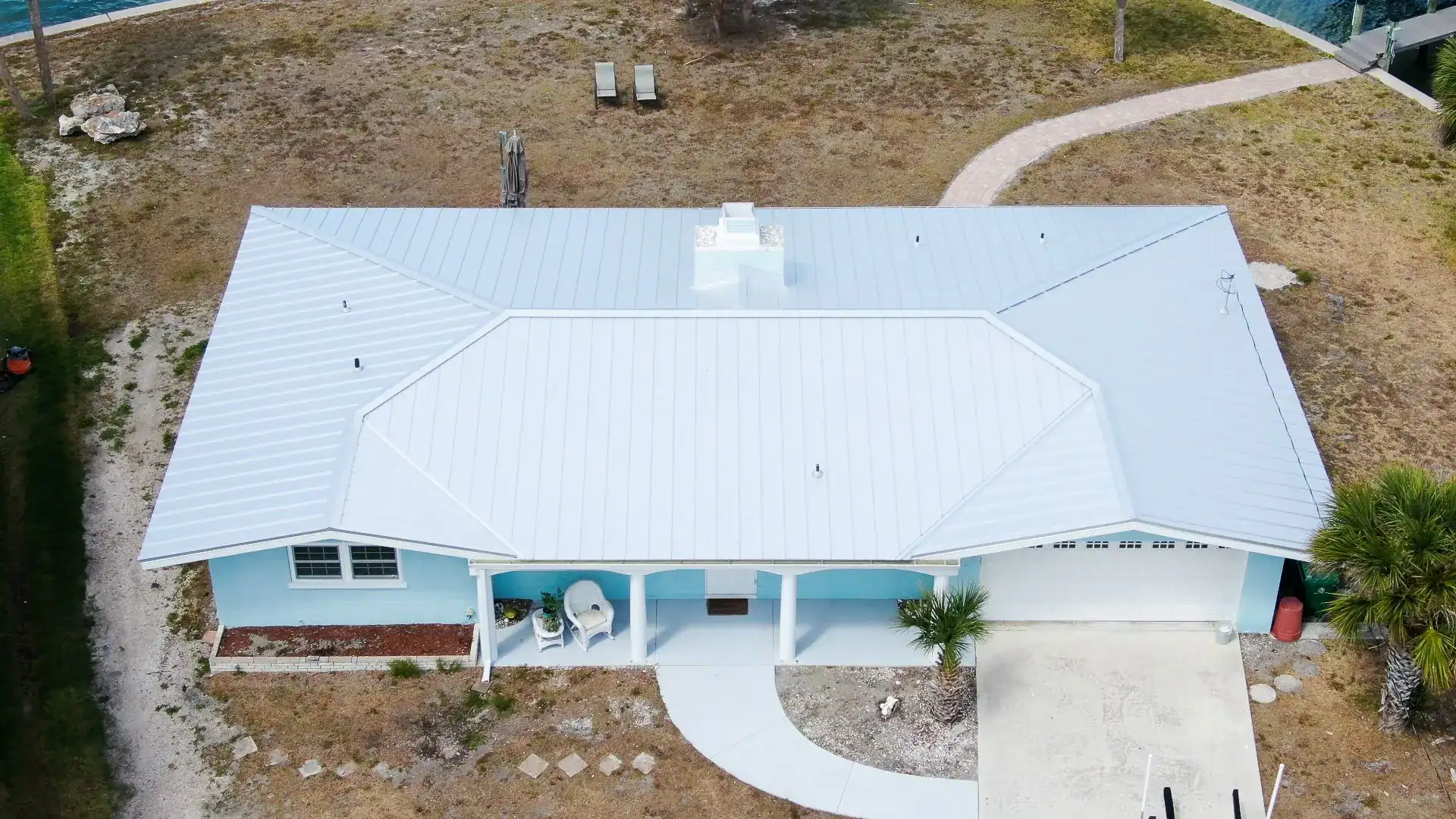
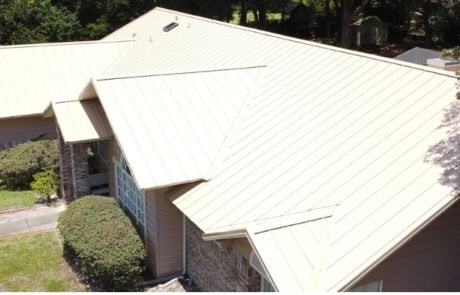
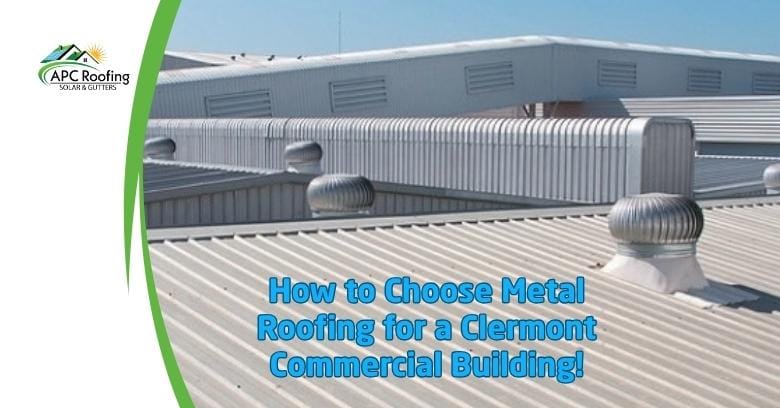
Seen from a sidewalk, dotted lines of screws signal an exposed-fastener system, while flat pans divided by upright folds with no hardware showing are standing seam. Farm buildings and garages commonly have ribbed or wavy sheet, and houses carry both styles.
Cross-Section Choices: Which Suits a Building
Corrugated sheet rises and falls in rounded, evenly spaced waves, while ribbed designs show angular ribs and wide flats. Each sheet laps over a neighbor along a long edge, and every screw lands where a maker's layout calls for.
A ribbed profile stands up to flexing and can bridge wider gaps, and corrugated suits older buildings and a farmhouse look. Rib height governs how much water a long slope can move, and a lean-to or porch manages fine with a gentle pattern.
Fastener Hardware – Why Installation Matters
Each screw draws a panel snug against a rafter or purlin, and a sealing washer beneath each head closes a drilled hole. Years of sun and heat stiffen synthetic rubber until cracks form, well ahead of the painted steel nearby.
A screw set too tight crushes a washer out sideways, and a slack or crooked fastener leaks on one side.
Hardware Swaps – Where Help Stops
Washers dotted across a ribbed field grow old together, and a full re-screw is an ordinary step somewhere along the way. Each original fastener is taken out, and a screw one size larger takes each place so threads grip solid material.
A re-screw ends drips and steadies sheets that rattle in wind, though perforations, split laps and faulty trim remain as before. New screws are matched to whatever framing lies beneath, with wood threads for lumber and drill points for steel, and tops come painted to suit a colored finish.
Expansion and Contraction: Room to Travel
Sunshine stretches steel slightly and a chilly night pulls the metal back, and a longer run shifts farther still, while aluminum goes about twice as far. Where nothing lets a panel slide, the metal elongates screw holes, and washers then stop sealing.
Ticking heard as morning sun lands on steel is ordinary expansion, and a roof built with slack is unharmed.
Beneath Raised Seams: Out of the Weather
One short stretch of every long pan is pinned tight, while clips on every other section permit movement. Trim at an end that travels is bent with clearance underneath, and rigid fastening over a big pan shears or wrinkles the metal.
Each pan is set in place, and clips are driven through into the deck along one side, and a neighboring pan locks over every anchor.
Quick-Fit or Heavy-Duty – Suited to Pitch
Snap-together panels latch by hand, and mechanical versions are finished by a rolling tool. A double-lock seam holds far better against strong gusts and standing water, and maker approvals cover shallower slopes.
Pan width and rib height vary from product to product, so the house and a preferred look guide a decision. Accessories such as clips and closures fit a single system, and a substitute from elsewhere leaves gaps.
Stock Weight: Reading a Label
Steel is described by gauge rather than inches, and a smaller number means a thicker sheet. A shop or barn frequently has twenty-nine, while houses often take twenty-six or twenty-four.
Aluminum uses decimal figures rather than gauge, and across the board thicker goods resist dents and ripple less. Different grades look identical once installed, so a label on a bundle shows what was delivered.
Surface Protection – Finishes That Hold Up
Coil stock is dipped in molten zinc or an aluminum-zinc alloy, and a baked primer goes on before a color coat. A scratch that stays within paint does no harm, but a cut that reaches base steel is where corrosion takes hold.
PVDF finishes hold color for decades, but silicone-modified polyester goes dull and powdery earlier. An aluminum-zinc surface is damaged by contact with fresh mortar, and a separator goes wherever panels touch new brick.
Base Material: Matching a Location
Aluminum is light and free of red rust, but a soft sheet dents from smaller blows. Salt air at the coastal end of our territory attacks zinc-based layers, and some makers limit steel products by distance from a shoreline.
Copper is usually kept to small accent roofs over a bay or a porch, and with nothing applied, color shifts over the years.
Metals That React: Treated Lumber and Wrong Screws
Copper upslope of a steel covering sends corrosive runoff over the panels, and a stain shows up before a leak does. Chemicals in treated lumber pit any aluminum resting on top, and an ordinary screw of an unsuited alloy fails as well.
Replacement flashing should come from a metal already present, or a strip of membrane goes between dissimilar metals.
A Matter of Taste: Setting Expectations
In trade terms, oil canning describes soft ripples across a broad flat between seams, and low sun at dawn or dusk shows up every hollow. A warped look in the metal lets no rain through, and nothing shortens the life of the roof.
Narrow pans, heavier stock and striated flats hold waves back, and a deck without humps or dips matters too. Photographs of finished houses show how noticeable oil canning can be, and the decision on profile rests with you.
Comfort Below: What Reaches Living Space
An outbuilding with bare framing under the metal makes a loud din in rain, because nothing there soaks up impact. Metal on a home rests on a deck and underlayment, over an insulated ceiling, and occupants notice only a slight change from shingles.
Light tones and cool pigments bounce a large share of sunlight away, and the attic takes in far less. Deep shades absorb as much as dark asphalt, and without venting and insulation, color alone does little. Metal loses daytime warmth shortly after the sun sets, so evenings indoors feel better sooner.
Protecting Whoever Is Below: Above Entries and Paths
At the colder end of our territory, snow slides readily off smooth coated steel, and a whole mass may come down at once on anything under an eave. Guards break a load into small harmless chunks, with placement over doorways, decks and equipment.
Standing seam takes clamp-on brackets that grip each rib without piercing the metal, whereas on corrugated sheet, mounts go into solid wood with gasketed fasteners, and homes where snow seldom falls go without.
What Ice Does – A Record of What Happened
Hail is common across the colder end of our territory, and a heavier gauge or striated pans resist dents better. A strike sharp enough to break a finish lets rust start, and a trim piece pushed out of place can channel rain inside.
After any storm, each affected area is photographed and measured, and the depth of each dent is gauged.
Staying Put in a Blow: Trim Held Tight
Corners and borders see heavy suction, an open field much less, and an unfastened edge lets pressure build beneath. Trim along every outer line is hemmed and hooked onto a continuous cleat, leaving nothing for a storm to seize.
An attachment pattern grows denser toward every corner, following a maker's layout for a site's exposure. Where hurricanes reach, at the coastal end of our territory, the number of fasteners goes up again, and products are chosen with a wind rating to match.
Vents and Stacks – Careful Detailing
A round pipe receives a rubber or silicone boot molded to follow each rib, and a flat location lets a flange bed down evenly. A chimney or skylight is built up on a curb with a cricket above, and water cannot pool at an upper edge.
Sealant backs up flashing and never stands in for folded metal, because sunlight dries and cracks sealing compounds within a few years.
Changes of Direction: Made to Shed
A valley pan goes down ahead of any panel, and panels are trimmed on a diagonal to match. Raw ends are folded under and locked to a cleat, and fasteners stay clear of wherever rain concentrates.
A sealed endlap connects consecutive lengths on an extended run, and fasteners through both thicknesses keep water from backing up.
How Low Metal Can Go – When a Membrane Wins
Through-fastened sheet generally wants about three inches of rise per foot, and at anything less, rain creeps sideways across laps toward screws. Machine-folded seams go much lower, and some products are allowed on nearly flat decks.
Houses frequently include a porch or wing with a gentle roof, and each incline is measured on site, and an area that metal cannot serve is given a membrane.
A Base Layer: Wood or Open Framing
A house takes panels on a solid, continuous deck, and a synthetic barrier made for high heat sits on top, because traditional felt degrades quickly up there. An outbuilding may have nothing but purlins under the metal, and support distance dictates grade.
Once an old covering comes off, spongy sheathing is found and swapped, as fasteners driven into mush pull straight out.
Leaving the Old Roof in Place: Light Enough to Add
Local codes commonly accept metal set over a lone shingle layer, and noise and a dumpster are avoided. New steel adds well under two pounds per square foot, so rafters rarely need reinforcing. Battens on top of a synthetic membrane are laid across existing shingles, and screws reach through into solid wood.
Where a roof was already recovered once, or the decking is soft, everything comes off, as a wet base under a new roof only gets worse.
Completing the Job: All Around
Strips cut to match a profile close off space under each rib at high and low points, so blown rain and critters are shut out. A ridge cap can be vented to let warm air escape or left solid, and attic ventilation is what decides.
Drip edge, rake trim and a gutter apron finish every outer line, and runoff is steered clear of a fascia board.
Working at Height: Where to Step
Standing seam is produced to fit each run from bottom to top, and no cross joint interrupts runoff. Big panels need a team so nothing buckles in transit, and a damaged pan is replaced, not flattened out.
A foot goes only in flats directly above supports, since pressure on a rib bends the metal out of shape. Morning dew alone can make metal treacherous, so owners do better keeping off the roof.
Clues to Watch: Without Climbing Up
- Rust rings around screw heads, on a slope facing afternoon sun.
- A row of lifted screws, at an eave.
- Trim bent up at a corner, after a windstorm.
- A flue collar sitting crooked, beside a chimney.
- A sheared end streaked orange, at the bottom of a run.
- Blotchy color, on a sunny slope.
- Spots on a ceiling in a row, under a porch roof.
- A lock pulled apart, where slopes meet.
How APC Roofing Approaches Metal Roof Repair in Clermont Florida – Step by Step
Everything begins with identifying which panel system is installed and how the panels are fastened, and after that every fastener, trim piece, penetration, valley and lap gets a close look. Notes cover gauge, finish and every kind of hardware, and a trip into the attic catches past leaks.
Every finding goes into a report with images, and every piece of advice comes with an explanation. When a small fix works, nobody pushes a bigger job, and a roof past saving is described plainly.
Metal Roof Repair in Clermont Florida: Plain Findings
Dial 407-270-1129 and we will schedule an inspection.
Repair or Replacement – Knowing Limits
An individual rusted sheet can be unscrewed and exchanged, but brand-new paint stands out against faded neighbors. A new pipe boot or a resealed lap ends a local drip, while new fasteners seal screw holes again.
Once red rust has eaten through large areas, patching no longer makes sense, and a covering riddled with failed seams is no better off. One tired face of the house can be redone alone, when harm is local.
Planning Ahead: Upkeep Over Time
A carefully installed panel system can pass forty years, though any figure is an estimate, not a promise. Standing seam, with no holes through a pan, gets by on less maintenance, whereas screw-down sheet has washers changed out at some point.
Dissimilar metals, raw edges and sealant used instead of proper flashing wear out a covering ahead of schedule, and a periodic look finds problems while minor. Piles of leaves behind a chimney keep a patch of metal damp for days, and brushing debris off protects paint.
Before deciding on Metal Roof Repair in Clermont Florida, phone APC Roofing at 407-270-1129. Every screw or clip, edge and boot gets a close look, and a write-up leaves every decision in your hands.