Your Florida room roof has been patched three summers in a row and it’s still dripping when a storm parks overhead. Or you’re adding a covered patio and the builder needs someone to roof the low-slope section. Either way, you’re looking for flat roof installation in Daytona Beach from a crew that understands a nearly flat roof plays by different rules than the shingled roof next to it.
Most flat roof headaches come from the install, not the material. Usually it’s water that sits too long, or a weak joint where the flat roof meets the main roof. You deserve to know how the roof will be built before you agree to anything.
APC Roofing installs flat and low-slope roofs for homes and light commercial buildings across the Greater Daytona Beach area. We’re GAF Certified, licensed in Florida (CCC1337030) and insured, and your estimate is free. Call 386-259-8425.
Flat roof installation in Daytona Beach starts with drainage
A “flat” roof should never be truly flat. Water has to move toward a gutter, scupper or drain, and the common minimum for a new low-slope roof is about a quarter inch of fall per foot. Many older porch and addition roofs around Daytona Beach were framed with less than that, which is why water sits on them for a day after every afternoon storm.
Standing water wears out any membrane faster and finds every weak seam. When we replace a flat roof, fixing the drainage is part of the job. That might mean tapered insulation boards that build slope into the roof, a small cricket to steer water around an obstruction, or a wider scupper and downspout so the water has somewhere to go in a heavy downpour.
Choosing the membrane
With drainage sorted out, the next decision is what goes on top. For most homes in the area, it comes down to three choices:
- TPO, a white, reflective single-ply membrane with heat-welded seams. It stays cooler in the Florida sun, which matters if the room underneath is air-conditioned. More on TPO roofing in Daytona Beach.
- EPDM, a flexible rubber membrane that’s easy to repair and comes in large sheets with few seams. See EPDM roofing in Daytona Beach.
- Modified bitumen, a multi-layer asphalt-based system that’s thick and stands up to foot traffic.
We’ll recommend the one that fits how you use the space and explain why.
The tie-in to your main roof
On a house, the trickiest part of a flat roof is usually where it meets the sloped roof above it or the wall of the house. Water running off the main roof lands right at that joint. If the membrane doesn’t run far enough up under the shingles, or the wall flashing is just caulked in place, wind-driven rain gets behind it.
A proper tie-in carries the membrane up the slope under the shingles, with the shingles and flashing lapped over it so water always flows from one layer onto the next, never behind it. Where the flat roof meets a wall, the membrane turns up the wall and gets covered with metal counterflashing. A lot of porch and addition leaks trace back to this one detail.
Edges and anything that goes through the roof
Hurricane-season wind pulls hardest at roof edges and corners. The metal edge around a flat roof has to be fastened securely enough to stay put in high wind, because once an edge lifts, wind can peel the membrane back like tape. Closer to the beach, the fasteners and trim also need to stand up to salt air.
Pipes, vents and HVAC stands each get their own flashing piece made for that membrane. A blob of sealant around a pipe might hold for a season, but it isn’t a permanent fix.
Replacing an old flat roof: tear-off or cover?
Florida’s building code limits when a new roof can go over an old one, and even where it’s allowed, it’s only a good idea if the old roof is completely dry. Wet insulation under a new membrane stays wet, and the new roof blisters and fails early. In most cases the old roof should come off so the deck can be checked and any soft wood replaced.
If your flat roof only has a problem or two, a repair may be all you need. Our flat roof repair page covers when that makes sense.
What installation day looks like
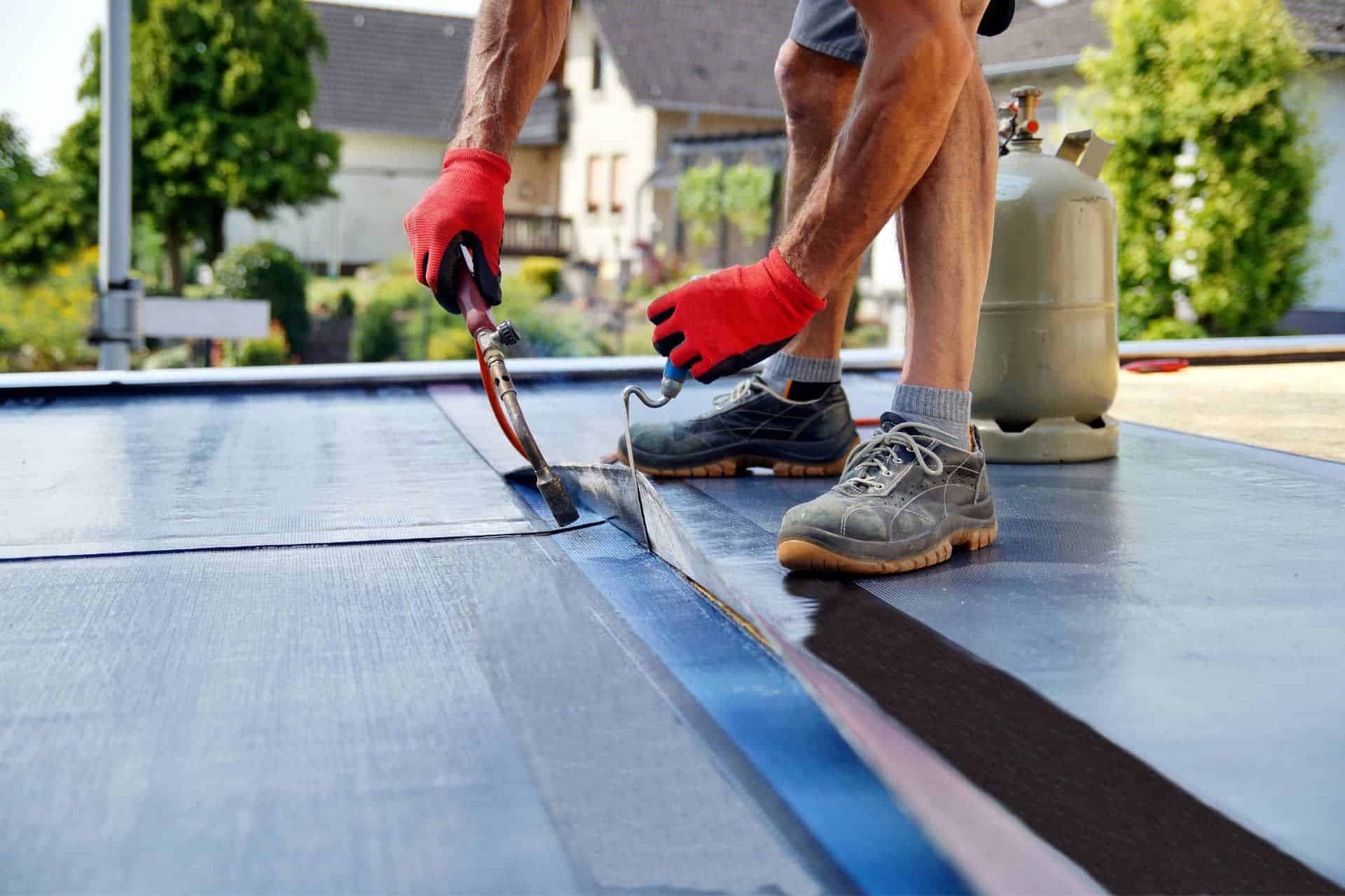
On a typical porch or addition roof, the old roof is stripped, the deck is inspected and any damaged wood is replaced. Insulation or a cover board goes down, with tapered pieces if the slope needs help. The membrane is installed and the seams are sealed, then the tie-in to the main roof, the wall flashing, the pipe flashings and the edge metal are finished. The crew cleans up, and the building department inspects the work under the permit.
Most residential flat roof sections are small enough to finish quickly, and you’ll get a realistic timeline with your estimate.
How it works
- Book your free inspection. We check the existing roof, the deck, the drainage and the joint with the main roof.
- Get a clear, honest assessment and estimate. You’ll get photos, a recommended membrane, and a written scope that covers drainage, flashing and edge metal.
- Your roof gets installed and the site gets cleaned up. We install it, clean up and leave your yard the way we found it.
Financing is available through Aqua Finance, Fortifi, Hearth and Home Run Finance.
When a flat roof keeps leaking, the ceiling stain is the small part. Water soaks the insulation and decking, and the longer it goes, the more wood has to be replaced when the roof finally comes off.
Flat roof installation questions
What’s the best flat roof material for a Florida home?
There isn’t one answer for every roof. TPO is popular here because it’s white and reflective. EPDM is flexible and easy to repair. Modified bitumen handles foot traffic well.
Do I need a permit for a flat roof replacement?
In most cases, yes. A roof replacement in Florida generally requires a permit and a final inspection, and we handle that as part of the job.
Can you roof a new addition or patio cover?
Yes. We can install the low-slope roof and tie it into your existing roof.
Why does water sit on my flat roof after it rains?
Usually the roof doesn’t have enough slope or the drain or scupper is too small or clogged. A new installation is the best time to fix that.
Get a flat roof installation estimate in Daytona Beach
Call 386-259-8425 or request your free estimate online. You can also visit our Greater Daytona Beach roofing page.
The goal is a low roof that drains clean after every storm, a dry room underneath, and no more summer patch jobs.