The low roof over your back porch has a seam that’s started to lift, and after the last afternoon storm there was water on the floor of the Florida room. Maybe someone told you it’s a “rubber roof” and you’re not sure whether to patch it or redo it. If you’re looking into EPDM roofing in Daytona Beach, you want to know whether it’s the right material for that part of your house before you pay to put it back.
It’s confusing. Flat roofs use different materials than the shingled roof over the rest of the house, and every roofer seems to have a favorite. You deserve a plain explanation and an honest recommendation, even if it turns out a different membrane fits better.
APC Roofing installs and repairs flat and low-slope roofs across the Greater Daytona Beach area. We’re GAF Certified, licensed in Florida (CCC1337030) and insured, and your inspection is free. Call 386-259-8425.
What EPDM is
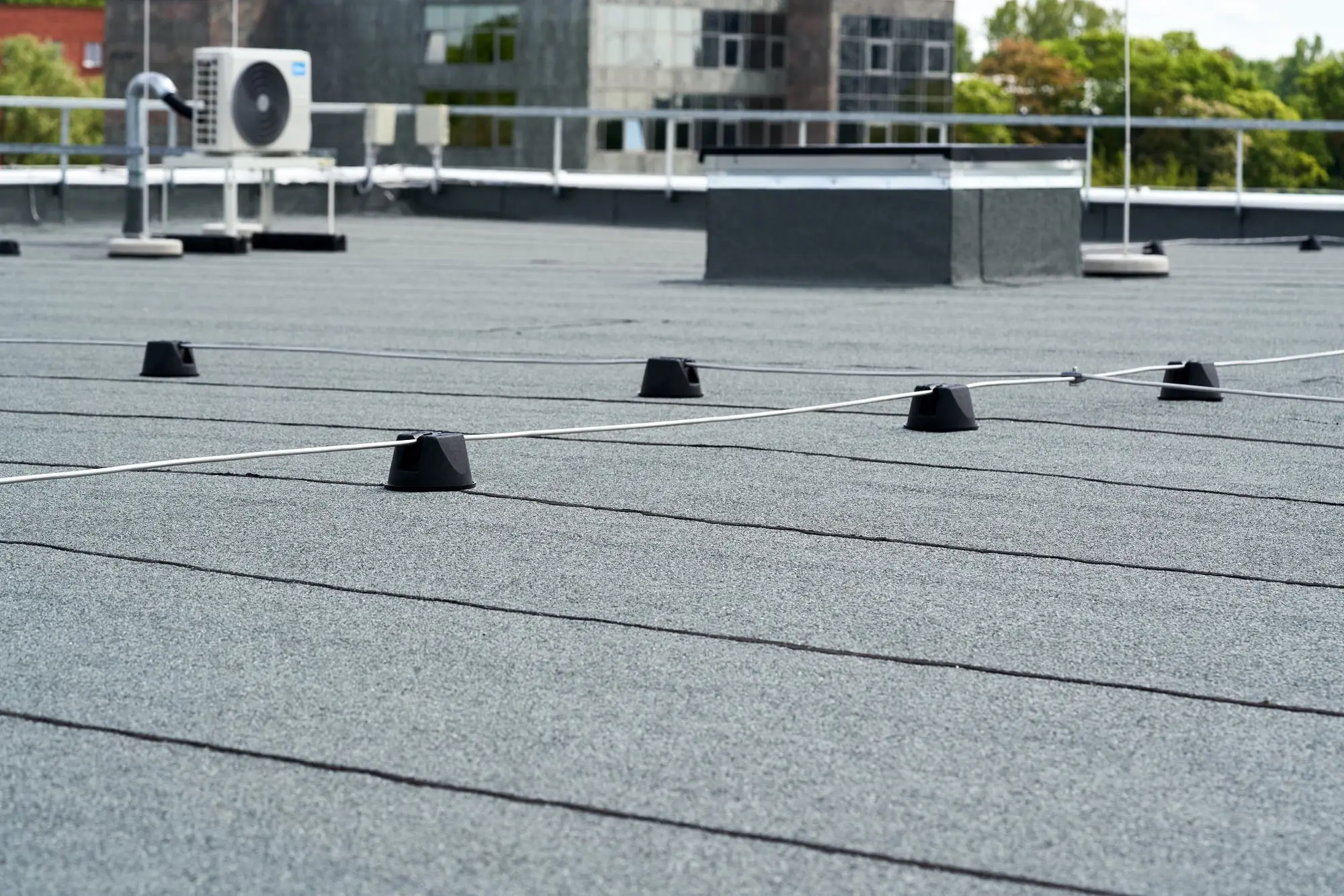
EPDM is a synthetic rubber membrane. It comes in large sheets, so a small roof may need only one piece with no seams at all, and bigger roofs need just a few. It stays flexible for years, which helps it ride out the daily heating and cooling a roof goes through in Florida without cracking.
Most EPDM is black, though white versions are made too. Seams are joined with a primer and special seam tape, then the edges are sealed. Around pipes, walls and edges, the membrane is finished with flashing pieces and metal trim.
Where EPDM roofing in Daytona Beach makes sense
Shingles need slope to shed water. On a roof that’s nearly flat, water moves too slowly and backs up under the overlaps. That’s why the low sections of many homes around Daytona Beach need a membrane instead:
- Back porches and screened lanais with a nearly flat roof
- Florida rooms and additions tied into the main roof
- Carports and covered patios
- Small commercial buildings and the flat sections of mixed-use buildings
How EPDM handles Daytona Beach weather
Sun and heat. EPDM holds up to UV well, which is one of its strengths. The catch is color. A black membrane soaks up heat on a summer afternoon, and the room underneath can get warm. If that room is living space, it’s worth asking about white EPDM or a reflective membrane like TPO.
Afternoon storms. Flat roofs hold water longer than sloped ones, so drainage matters as much as the membrane. Low spots that hold water after a storm wear faster, and debris collects in them.
Wind. Hurricane gusts pull at the edges and corners first. A good EPDM install has well-secured edge metal and properly sealed perimeter details, because that’s where a membrane starts to peel back.
Salt air. Closer to the ocean, metal edge trim and fasteners corrode faster, so those parts deserve the most attention on a beachside roof.
EPDM or TPO?
Both are single-ply membranes, and both work well when they’re installed right. The honest differences come down to a few points.
TPO is usually white and reflective, and its seams are heat-welded into one continuous sheet, which many roofers prefer in a hot climate. EPDM’s seams are taped instead of welded, but the material is very flexible, has a long track record and is simple to patch. For a living space under a flat roof in Daytona’s heat, TPO or white EPDM is often the cooler choice. For a carport or a porch you don’t air-condition, black EPDM can make good sense.
You can read more on our page about TPO roofing in Daytona Beach. We’ll recommend what fits your roof and tell you why.
What goes into a good EPDM roof
The membrane is only the top layer. What’s underneath decides how long it lasts.
The old roof comes off, and any soft or rotted decking gets replaced. Insulation or a cover board goes down to give the rubber a smooth, solid base. If the roof doesn’t drain well, tapered insulation can add slope toward the gutter or scupper. Then the EPDM is adhered to the base, seams are primed and taped, and every edge, wall and pipe gets its own flashing detail.
The spot where a flat porch roof meets the shingled main roof deserves special care. The membrane has to run up under the shingles far enough that water can’t get behind it. A lot of porch leaks come from that one transition, and our page on flat roof installation in Daytona Beach goes into more detail.
Repair or replace?
EPDM is one of the easier membranes to repair. A puncture from a fallen branch, a small split or a lifted seam can usually be patched with compatible material, as long as the surrounding rubber is still sound and the insulation underneath is dry.
Replacement makes more sense when seams are failing in many places, the membrane has shrunk and pulled away from the edges, or water has soaked the insulation below. Covering wet insulation traps the moisture, and the new roof won’t last. If you’re leaning toward a repair, see our flat roof repair page.
How it works
- Book your free inspection. We check the membrane, seams, edges and drainage, and look for wet spots underneath.
- Get a clear, honest assessment and estimate. Photos, a straight answer on repair or replacement, and a written estimate that names the materials.
- Your roof gets done and the site gets cleaned up. We install or repair the roof and leave your yard clean.
Financing is available through Aqua Finance, Fortifi, Hearth and Home Run Finance.
A small seam leak on a flat roof can let water into the insulation over a single rainy season. Once that happens, a simple patch usually isn’t an option anymore.
EPDM roofing questions
Is EPDM a good choice for Florida?
It can be. It handles sun and temperature swings well. Black EPDM gets hot, so over living space many homeowners choose white EPDM or TPO.
Can you repair my existing rubber roof?
Often, yes, if the damage is limited and the insulation under it is dry. We’ll check before recommending anything.
Can a new EPDM roof go over my old one?
Sometimes, if the old roof is dry and the building code allows another layer. In most cases we recommend removing it so the deck can be checked.
How do I know if my flat roof is EPDM?
EPDM looks and feels like a sheet of rubber, usually black, with taped seams. TPO is usually white and a bit stiffer. We’ll tell you exactly what you have during the inspection.
Book a free look at your EPDM roof
Call 386-259-8425 or request your free estimate online. You can also see our Greater Daytona Beach roofing page.
The goal is a porch, addition or carport that stays dry through every summer storm, and a roof you don’t have to think about.