Shingle Roofing

Planning 3-Tab Shingle Roofing in Clermont Florida?

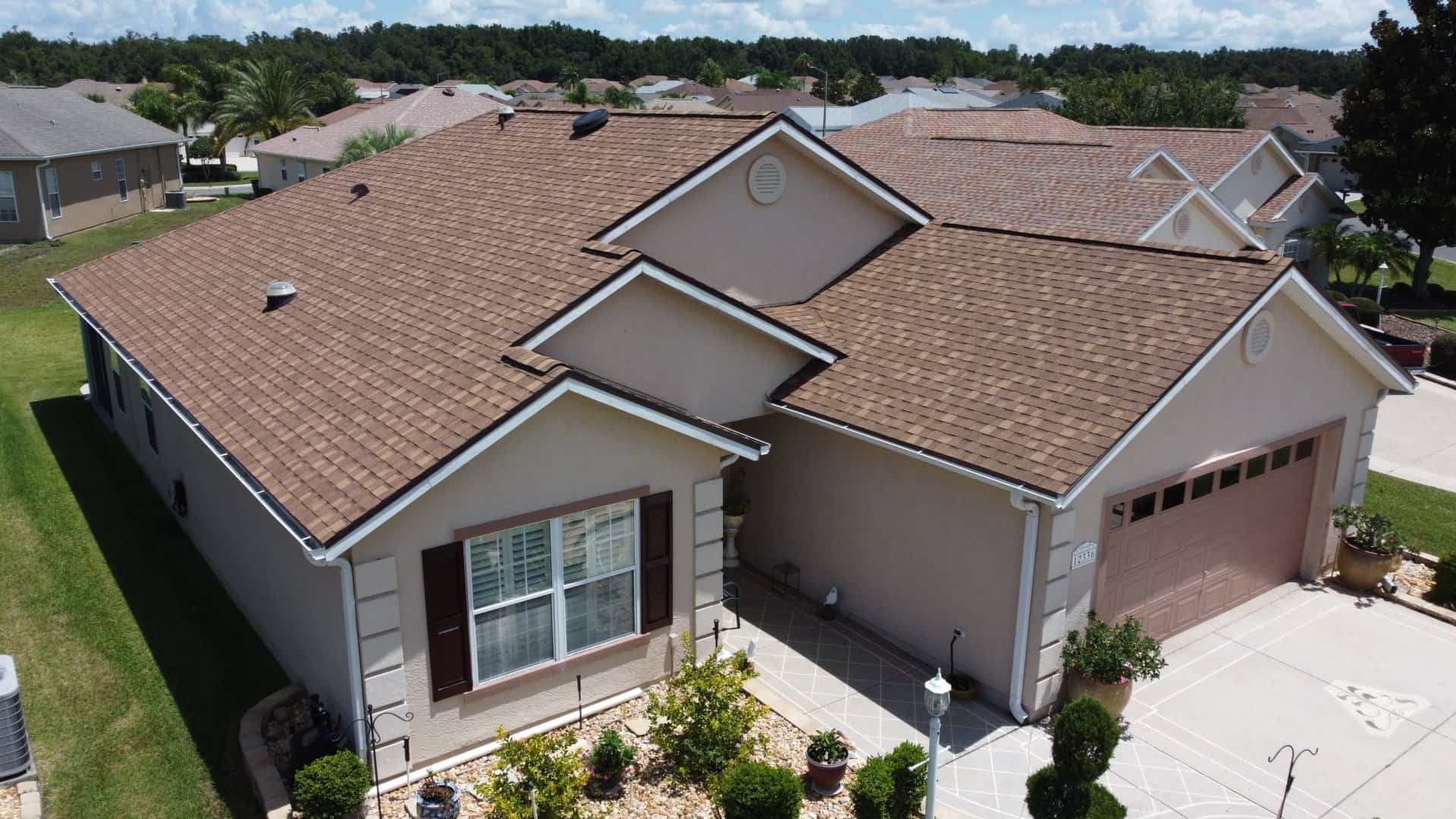
APC Roofing mends torn, curled and lifted pieces and lays complete new coverings, on a bungalow, a split-level or a colonial.

Call 407-270-1129 and a visit will show what condition everything is in.


Anatomy of a Covering – Factory Details

A mat of glass fibers makes each shingle strong, and a saturant of asphalt seals out rain, and granules rolled into the surface shade everything beneath from ultraviolet rays.

Bundles that seem identical on the shelf can differ widely inside, and weight per square often tracks with durability. A swatch offers the look and nothing more, but a specification sheet names the ratings.

Traditional and Textured: The Practical Contrast

A three-tab shingle is one thin layer with two slots cut into its lower half, and a slope covered this way shows even, repeating rows. An architectural shingle has an irregular top ply fused to a whole base, so the uneven profile casts shadows.

Laminated products carry more asphalt and weigh more per square, and a stronger wind class is commonly assigned. Nailing on a two-ply shingle aims at the strip where the plies are joined, and a printed guide shows the right position.

Strip Products in Use: Sensible Settings

A detached garage, a shed or a porch often suits three-tab well, while a house already wearing that type can be matched. Many manufacturers have narrowed their ranges of that style, so an exact replacement can be hard to find.

Laminated shingles hide small dips in an older deck better, while a thin strip follows every undulation. The two styles share the same underlayment and edge metal, so the difference lives entirely in the top layer.

Mineral Grit and Aging: Sun-Facing Slopes

Shingles fresh from the bundle drop leftover grains in their opening months, and nothing about it signals a defect. A steady stream of grit from an aging covering shows the top layer is going, and the unprotected asphalt soon cracks and curls.

Faces that point south and west take the strongest sun, and dull patches gather there.

Sealant Lines – Wind Resistance

Every shingle arrives with a sticky asphalt stripe, and a stretch of warm, sunny days softens it until the overlying row sticks. A stuck course stands up to gusts that would otherwise flip its edge, but nails remain the main fastening for the life of the covering.

At the colder end of our territory, a covering installed in freezing temperatures can wait months to bond, and a stiff wind can raise a loose tab before then. Makers' directions cover this with cement placed by the installer, and a drawing on each wrapper gives the amount and location.

Securing Each Course: Tools and Technique

Nails are driven within a slim band set out by the manufacturer, so the shank ties in the row beneath too. Four fasteners per shingle meets the basic requirement, and six go in where the slope is steep or the wind is strong.

A nail set too high misses the row underneath, excess air pressure buries the head in the mat, and a crooked shank makes a bump that wears through the shingle above it. Every wind rating on a wrapper presumes the pattern was met, while a bad compressor setting repeats itself on every shot.

The Wood Below: Soft Spots

A deck of plywood or OSB lies beneath every shingle, since shanks need continuous solid material to stay put. Some older homes have spaced planks installed originally for cedar shakes, so a layer of sheathing comes before shingles.

A tear-off exposes spongy or rotten areas, which are removed and replaced, because nails in weakened material back out over time. Adjacent sheets are spaced slightly apart at their edges, because swelling in damp seasons buckles anything laid too tight.

Underlayment Basics: Felt or Synthetic

A water-shedding membrane covers the deck ahead of the shingles, and its runs overlap from the bottom edge upward. Synthetic sheet has largely replaced asphalt-saturated felt, because the newer product weighs less, tears less easily and lies flatter.

Rain forced past a loose shingle is shed by the membrane below, yet leaving it bare for long shortens its useful life.

Peel-and-Stick Protection: Trapped Runoff

At the colder end of our territory, attic warmth melts snow on the upper slope, and meltwater hardens again once it reaches the cold rim. Held back up the slope, water works its way under the tabs, and standard felt or synthetic sheet does not close around the nails.

A self-sealing ice barrier goes down along the bottom of each slope where winters freeze, and it continues until it passes the wall line inside the house. Throughout our service area, valleys and chimneys commonly receive it as well, as water collects and lingers there.

The Outer Rim: Under and Over

A metal drip edge wraps the eaves and the rakes, so rain falls free beyond the woodwork. The lower flashing sits under the underlayment, while at the gable side the order flips.

Edge metal around the whole perimeter is a code requirement in many towns, and without it water curls back under the shingles and soaks the deck.

The Lowest Row: Installation Order

Before any exposed shingles, a starter strip is laid along the bottom, so tacky asphalt ends up at the very brink of the deck. Flipping an ordinary piece around keeps the adhesive away from where it is needed, so the outermost tabs are pinned by nails only.

Many manufacturers call for starter along the rakes as well, because gusts pry at a roof's perimeter.

Inside Corners – Methods Compared

A valley can be built open, with a metal channel left exposed down its center, and the closed-cut type carries one side's courses through while the other side is cut back. Woven work alternates rows from the two planes and suits three-tab, while makers generally advise against it for architectural shingles.

No nails are driven near the middle of the crease, and a waterproof underlayment is laid beneath along the full run. Collected leaves and twigs slow the flow and keep the surface wet, so water starts finding a path under the sides.

Brick and Framing Edges – Chimney Aprons

Along a sidewall, a bent L-shaped step flashing is woven in with each course, while the exterior finish overlaps the upright flange. At the low corner by the house, a kickout piece bends outward, so water is thrown clear into the gutter.

Around a chimney, step pieces line the sides, an apron covers the front and counterflashing is set into the masonry, and a broad stack calls for a saddle upslope.

Through-Roof Vents: Wear Over Time

Standard boots join a flat metal or plastic plate to a rubber sleeve, and years of sun leave the seal brittle and split. The flange slips under the courses higher up, so runoff flows across the downhill side instead of under it.

Collars frequently need attention while the rest of the covering is healthy, and new boots are standard whenever the shingles are replaced.

At the Summit – Final Courses

Each hip and the ridge get a row of cap shingles across the joint, and on a laminated covering the manufacturer supplies a thicker matching version. Pieces cut from strip shingles are much thinner, and on frigid days at the colder end of our territory the crease may crack.

An exhaust vent commonly sits under the ridge caps, so the nails must be long enough to pass through it and bite the sheathing.

Attic Airflow: Common Problems

Intake openings in the soffits let cool air in near the bottom, and it should leave high along the ridge. Blown fill crowding the corners can cut off movement, so a baffle in each rafter bay keeps the way clear.

Without airflow, an attic bakes the boards from below, and it also holds moisture rising from the house. At the colder end of our territory, frost can form on the nail tips poking through overhead, and the thaw sends droplets onto the ceiling. Combining different exhaust types can make one vent pull air in through another, and the soffits stop doing their job.

Around the Map – Storms and Algae

The metros we serve run from freezing uplands to steamy lowlands, so a shingle ages in its own way depending on the setting. At the coastal end of our territory, hurricanes bring hours of sustained wind, and product sheets set out an enhanced nailing method. Relentless sunshine hardens the binder over the years, and lasting humidity gives algae room to grow.

At the colder end of our territory, repeated freezing opens small splits further, and packed snow sits on the slopes for days.

Frozen Pellets: What a Strike Does

At the colder end of our territory, hail is a familiar part of the storm calendar, and manufacturers offer lines built to resist it. A hailstone knocks granules loose where it lands, and a heavy blow may fracture the fiberglass below.

Impact ratings come from a laboratory test that drops steel balls on the shingle, and a higher grade means passing a tougher trial. Modified asphalt with added rubber is used by several makers, and that mix stays flexible in the cold.

Storm Winds – The Damage Done

Uplift concentrates at the outer margins and the corners, and a shingle no longer stuck down lifts again and again. Once a tab is doubled back, a crease forms where it bent, and the damaged spot stays weak for good. A shingle in that condition gets replaced, while one that only lost its seal can be cemented back down.

Gaps where tabs tore away expose the membrane to sunlight, and it was never made to stand up to daylight.

Roof Growth: Slowing the Return

The inky bands seen on so many houses come from algae, and it feeds on limestone filler in the shingle. At the humid end of our territory, shaded north-facing roof planes grow it fastest, but the streaking by itself is largely about looks.

Moss matters more, since it keeps the courses damp, and as clumps thicken they wedge the tabs upward. Pressure washing takes the granules along with the growth, so a gentle rinse with a cleaner made for roofing is the safer route. Copper-bearing mineral is blended into algae-resistant lines, and zinc bands near the top release traces that discourage regrowth.

What the Color Changes – Blends and Batches

Deep tones take in more solar warmth and reach higher surface temperatures, while a light gray or tan stays cooler. A few lines carry special granules that keep even a mid-tone from getting as hot, and their performance is published as a reflectance value.

The look can drift from one manufacturing lot to the next, so instructions call for pulling from several bundles as the work goes. Blended colors, with many tones on each piece, hide those minor differences, while a uniform finish lets them stand out.

Standing on a Slope: A Safer View

A sun-baked covering loses its firmness, and every tread grinds granules loose. At the colder end of our territory, frozen tabs split beneath a person's weight, while frost at dawn makes the footing treacherous.

The ground is the right place for anyone without roofing gear, since a zoom lens on a phone catches a lot.

A Second Layer – Weight and Nails

Many jurisdictions let a new roof go directly onto an earlier roof, but never over two, or over boards that are wet or rotten. With the old shingles left where they are, the decking is never exposed, and damaged sheets end up sealed beneath the added material.

Humps and hollows in the courses below show through, and step and valley metal commonly remains in service. Two layers put more pounds on the rafters than they were planned to hold, and every nail must travel through the old material before it grips.

Clues to Notice: A Homeowner's Guide

  • Mineral grains build up in the gutter troughs, and the heaps come back after each cleaning.
  • Tabs stand up along one edge, which means the seal has let go.
  • Bottom corners curl upward, which happens as the oils bake out.
  • Splits open across the middle of a tab, and water can reach the mat through them.
  • Shiny black spots stand out against the color around them, because the granules there are gone.
  • A pipe boot has gaps between its collar and the pipe, so water works its way indoors.
  • The metal where a slope meets siding sits bent or pulled back, so every storm can find a weak point.
  • A stain spreads across the ceiling of an upstairs room, even though the leak may start far from the spot.

How APC Roofing Approaches 3-Tab Shingle Roofing in Clermont Florida: Our Method

An inspection starts by walking each slope in turn, with a close look at the valleys, vents, flashings and edges. The attic is checked from inside for stains and light coming through, and the underside of the deck shows where water has been.

Every fault is photographed, and its size is measured. A written summary lays out what was found, and each recommendation carries its reasons. A little problem is never made to sound big, while a covering at the end of its life is called that. Which way to go is up to the homeowner, and waiting is one of the options.

3-Tab Shingle Roofing Across Clermont Florida: a Careful Look Before Any Advice

Call us at 407-270-1129 to arrange a visit.


Keep or Tear Off – Reading the Signs

A failed vent collar, a lifted flashing or several damaged tabs calls for ordinary repair, and the sound shingles nearby stay in service. New pieces will not match weathered ones exactly, and the tone that went on years ago may be out of production.

On a worn covering, tabs are brittle and crack when lifted to reach the nails, so the pieces beside the work may need to come out too. If hard, curled courses run from eave to ridge, a new covering is the sensible answer.

How Long Shingles Last – Early Endings

Flat three-tab designs usually run fifteen to twenty years, while architectural lines can go well beyond that. Ventilation, exposure and fastening decide where a given covering lands, and heavy weather can end the span ahead of schedule.

Checking the flashings and pipe seals now and then is sensible upkeep, as prompt fixes keep water out of the wood.

When you are weighing 3-Tab Shingle Roofing in Clermont Florida, call APC Roofing at 407-270-1129. Every slope, edge and flashing gets a close look, and you get the findings in writing and choose.

Jacqueline

Verified

★★★★★
Mike Ferrai was absolutely amazing from beginning thru the end..! Our roof looks awesome..!!! Couldn't be happier.! Would definitely recommend for all your roofing needs.. A++++++++

Frank Smith

Verified

★★★★★
Our experience with APC roofing began with an introduction and quote by Lucio. He came to our home, explained the process and immediately went on the roof to access the damage. As we began to inquire further about what to expect Lu got us in contact with Adrian. Now Adrian became an invaluable partner in very honestly and sincerely letting us know what APC could and couldn’t do to repair or replace our damaged roof. Hurricane Milton left us scrambling to come up with thousands to meet our deductible. Patiently and empathetically Adrian dispelled our apprehension about working with a contractor or being left incomplete and in need of legal help to resolve any disputes. He gave us his assurance that he would oversee the entire project. I have to admit that he kept his word. Even when we thought there would be a last minute hiccup with financing he put me in-touch with Lucy and she did not give up until we got the information and terms I wanted. This was a truly great team from start to…

JOHN WEBER

Verified

★★★★★
Our rep. Holly and this company did a wonderful job while staying within our budget! I highly recommend you work with this company and Holly in particular.

Tramale Suggs

Verified

★★★★★
Honest trustworthy company with great employees… hardworking and dedicated to providing great service….thank you Adrian

Mike Price

Verified

★★★★★
Everything went smooth on schedule nice clean job would recommend to anyone Mike Price was a great guy to work with