Replacing the roof on your home is one of the biggest checks you’ll write for the house, and most people only do it once or twice. You’re comparing estimates that don’t line up, trying to figure out why one is so much higher than another, and wondering what’s really going to happen to your yard, your driveway and your schedule on the day the crew shows up.
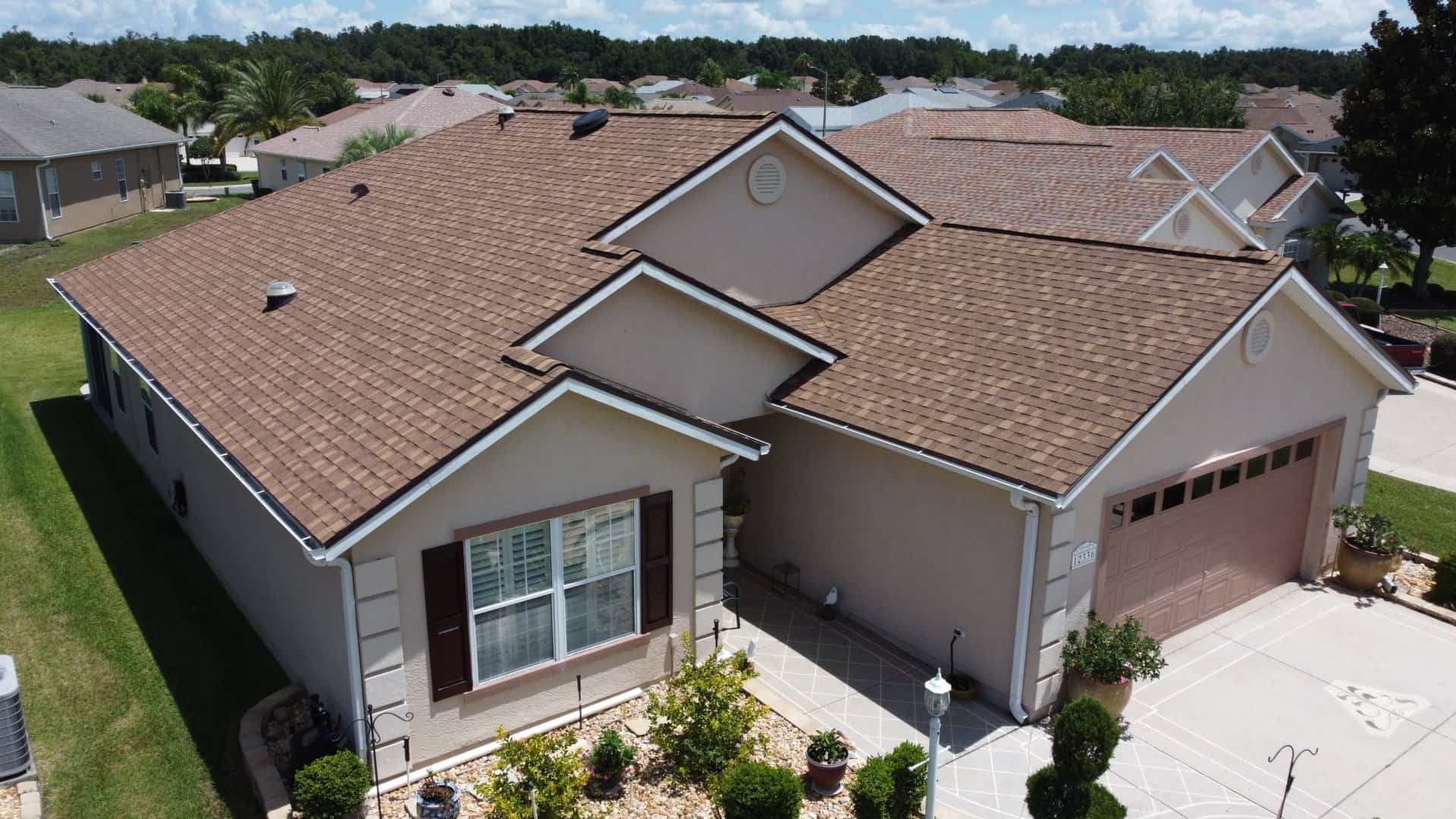
This page walks through residential roofing in Clermont from the homeowner’s side: choosing a material, reading an estimate, and what the work actually looks like. APC Roofing is GAF Certified, licensed in Florida (CCC1337030) and insured, and your inspection and estimate are free.
Picking the right roof for a Clermont home
Every material handles Central Florida’s sun, afternoon storms and hurricane season a little differently.
Asphalt shingles are the familiar choice on a lot of Clermont homes. Architectural shingles are thicker and dimensional, and they hold up to wind better than the flat 3-tab style. See architectural shingle roofing in Clermont for the details.
Concrete and clay tile are popular on Florida homes. Tile itself is very durable, but it’s heavy, and the underlayment beneath it does most of the waterproofing. That underlayment is usually what fails first. Our tile roof installation page explains how a tile roof is built.
Metal handles heat and wind well and comes in standing seam, screw-down panels, metal shingles and stone-coated steel.
Flat membranes like TPO and EPDM cover the low porches, carports and additions that are too flat for shingles or tile.
If you’re replacing a roof, you don’t have to keep the same material. Your inspection is a good time to talk through options, including how much weight the framing can carry if you’re thinking about tile.
What affects the cost of a new roof
There’s no honest way to price a roof without seeing it, which is why the inspection comes first. These are the things that move the number:
- Size and pitch. Bigger and steeper roofs take more material and more time, and steep roofs need extra safety setup.
- Material. Shingle, tile and metal differ a lot in material cost and install time.
- Layers and decking. If there’s more than one old layer, or the plywood underneath is soft, that adds tear-off and repair.
- Details. Valleys, chimneys, skylights, dormers and walls all need flashing work.
- Code requirements. Florida’s building code sets requirements for things like underlayment and how the roof is fastened, and a proper replacement meets them.
When two estimates are far apart, the gap is usually in the scope, not the profit. One might replace all the flashing and the other might reuse it. One might include new underlayment across the whole roof and the other might not say. For a deeper look at the replacement side, see roof replacement in Clermont.
What a good estimate spells out
A written estimate you can trust names each material going on the roof and says whether the old roof is coming off. It explains how any soft decking found during the job will be handled, and covers flashing, vents and cleanup. If something is only promised out loud, you have nothing to hold onto later. Put two detailed estimates next to each other and the differences are easy to see.
What install day looks like
Before tear-off starts, anything near the eaves that could get damaged gets protected, like landscaping, AC units and pool enclosures. The old roof comes off into a dumpster. With the deck exposed, the crew checks it for rot and soft spots and replaces bad sections with new plywood.
Then the new roof goes on in layers: underlayment, new flashing at walls, valleys and pipes, the roofing material, ridge caps and vents. Many residential roofs are installed in a single day. Larger and more complex roofs, including most tile jobs, take longer, and you’ll know the timeline ahead of time.
At the end, the crew cleans up and runs a magnet over the yard and driveway to pick up stray nails.
What good work looks like when it’s done
From the street, the roof should look straight and even, with clean lines at every edge. Nail heads should be hidden under the shingle above. Flashing around chimneys and walls should be new metal, not old pieces reused or covered with a smear of tar. Gutters should hang straight and drain. If anything looks off to you, ask. You’re paying for it, and you deserve an answer.
Keep the paperwork
Hold onto your estimate, the install date, the materials used and the photos. Florida insurance companies often ask about roof age and condition when they write or renew a policy, and buyers ask the same questions when you sell. Having it all in one folder makes those conversations easy.
How it works
- Book your free inspection. Call 407-270-1129 or request a free estimate online.
- Get a clear, honest assessment and estimate. Photos of your roof and attic, a recommendation with the reasons behind it and a written estimate. Financing is available through Aqua Finance, Fortifi, Hearth and Home Run Finance; see roof financing.
- Your roof gets done and the site gets cleaned up. The crew installs your roof and leaves your property clean.
An aging roof doesn’t usually fail all at once. It starts with a leak at a worn spot, and water can damage the deck and insulation for a while before you see it inside. Planning a replacement before that happens gives you time to compare options instead of making a rushed decision.
Questions about residential roofing in Clermont
How much does a new roof cost in Clermont?
An honest number needs an inspection, because the size, pitch and material of your roof and the condition of the deck underneath all change it. The estimate is free and lists everything that’s included.
How long does a roof replacement take?
Many residential roofs are done in one day. Larger and more complex roofs take longer.
Do I need to be home during the work?
Not necessarily, but it helps to be reachable in case the crew finds soft decking or anything else you’d want to know about.
Can you finance a new roof?
Yes. Financing is available through Aqua Finance, Fortifi, Hearth and Home Run Finance.
Start with a free inspection
Call 407-270-1129 or book your free estimate online. You’ll come away with a clear picture of your roof, a written plan and the confidence that you picked the right roof for your home. Trust matters, and it starts with straight answers.