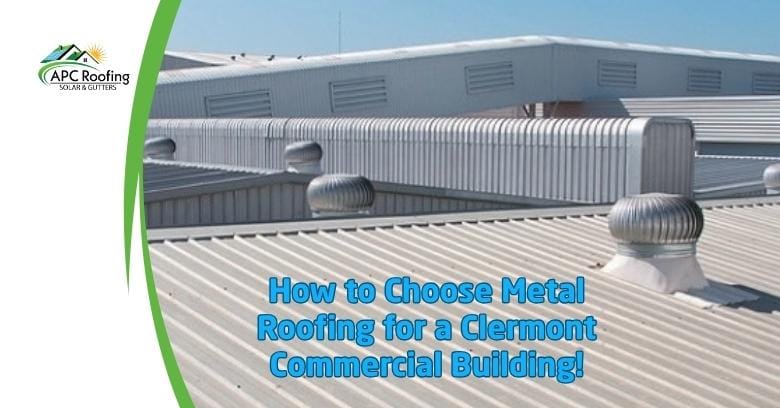
Searching for Corrugated Metal Roofing Across Clermont Florida?

APC Roofing works on ribbed sheet and concealed-clip panels alike, across homes as well as sheds and barns.

Dial 407-270-1129 and a visit ends with a straight account of what was found.


Sorting Out Types: Visible Clues

Exposed-fastener roofing is pinned by screws passing through every panel, while standing seam is attached with clips tucked inside raised joints. Nearly every residential job uses coated steel, and aluminum or copper appears now and then.

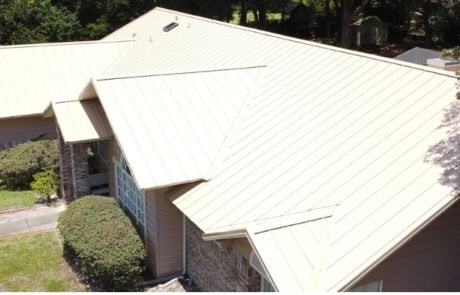
A glance from a lawn at lines of screw heads points to a through-fastened roof, while flat pans divided by upright folds with no hardware showing are standing seam. Barns, workshops and porches often wear corrugated or ribbed sheet, and houses carry both styles.

Cross-Section Choices: Which Suits a Building

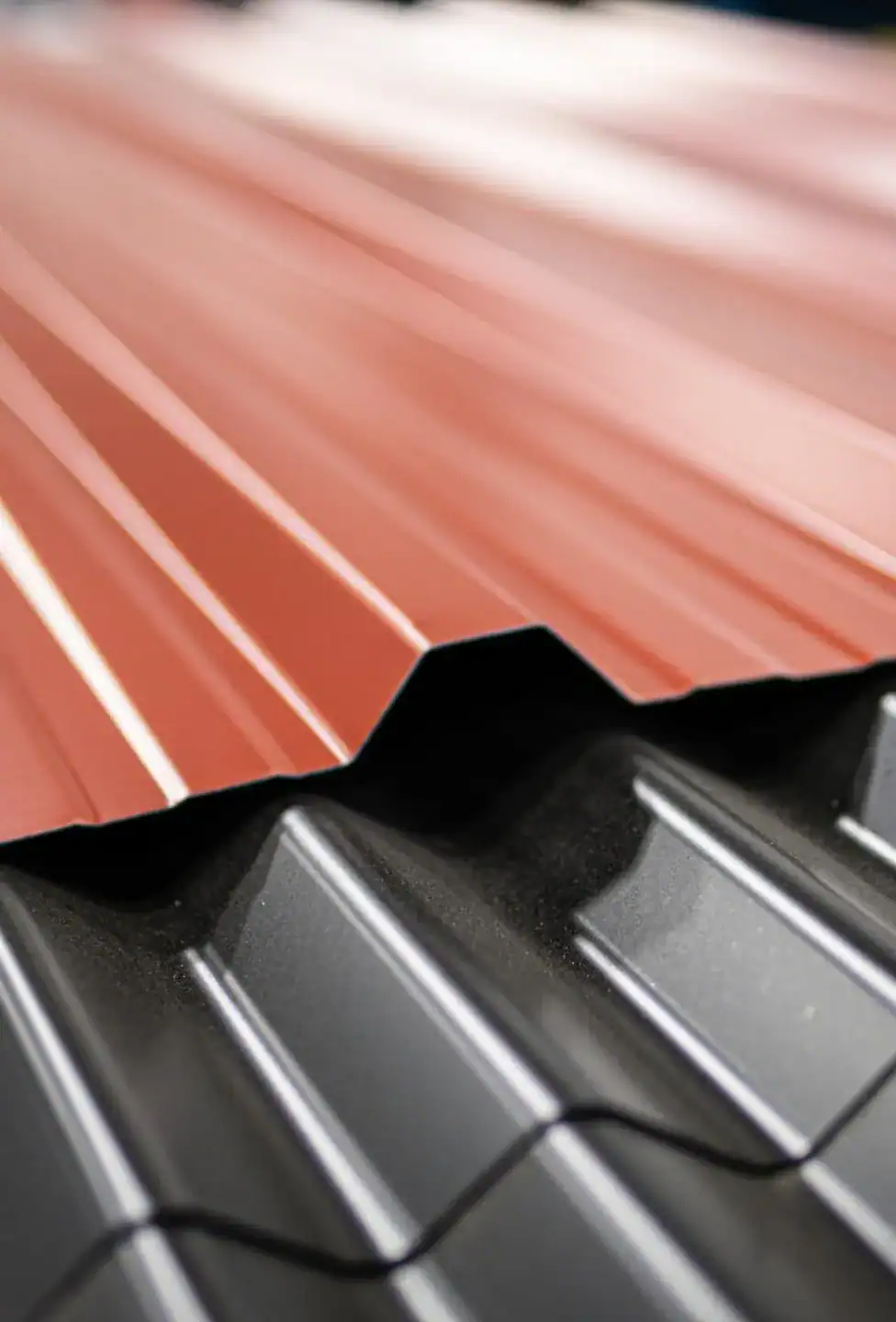
A corrugated sheet curves up and down in regular round waves, and ribbed panels pair tall square ribs with broad flat areas. Side by side, adjoining lengths overlap by one crest, and screw locations follow a published diagram.

Ribs make a stiffer panel that crosses longer spans, and corrugated suits older buildings and a farmhouse look. High ribs carry a heavy downpour across an extended slope, while a low pattern handles short runs like a porch or lean-to.

Exposed Hardware: Small Parts, Big Job

Each screw draws a panel snug against a rafter or purlin, and a gasketed washer under each head does the sealing. Rubber in steady sunlight hardens and cracks with age, and the panels can go on for decades more.

Overdriving tears a washer and dishes the metal, while an underdriven or tilted fastener never seals all the way around.

Hardware Swaps: Part of Upkeep

Washers on corrugated or ribbed panels give out as a group, so at some stage all seals get changed. Old fasteners are backed out one at a time, and an oversized screw returns to every hole to catch undamaged fibers or metal.

A re-screw ends drips and steadies sheets that rattle in wind, but rust damage, open laps and failed flashing are untouched. New screws are matched to whatever framing lies beneath, with wood threads for lumber and drill points for steel, and color-matched tops blend in with a painted finish.

Growth and Shrinkage: Why Slack Matters

Sunshine stretches steel slightly and a chilly night pulls the metal back, and a forty-foot run can shift a quarter inch or more, while aluminum goes about twice as far. A tightly fixed panel enlarges fastener holes a little with every cycle, and water gets past a washer.

Popping and clicking on a sunny morning is expansion at work, and a careful installation suffers no damage.

Attachment Beneath Folded Seams: Out of the Weather

Every lengthy pan is secured firmly in only one zone, while clips on every other section permit movement. A finishing piece at an opposite end has room built in underneath, and metal with no play winds up torn or kinked.

As a pan is laid, clips are driven into the deck along one leg, and an adjacent pan then covers every anchor point.

How Seams Close: Which Suits the House

Snap-together panels latch by hand, and mechanical versions are finished by a rolling tool. A double-lock seam holds far better against strong gusts and standing water, and a gentler pitch is allowed.

Widths between ribs and the height of each rib differ by line, so the house and a preferred look guide a decision. Clips, trim and closures are bought to suit one particular panel, and a mismatch shows up as gaps and loose joints.

How Much Material Is Up There: Reading a Label

A steel panel is rated by gauge, and a lower figure means more metal per sheet. Outbuildings commonly get twenty-nine, while twenty-six and twenty-four are typical choices for houses.

For aluminum, sheet is sized in thousandths, and in either metal thicker stock dents less and lies flatter. A view from below reveals nothing about grade, so a product data sheet is a reliable guide.

Surface Protection: What Lasts

Coil stock is dipped in molten zinc or an aluminum-zinc alloy, and a primer and a colored enamel are baked over the metal. Damage no deeper than paint is cosmetic, but a sheared edge exposes steel that will corrode.

High-end fluoropolymer finishes keep a bright look for years, while polyester versions chalk and fade sooner. Wet masonry corrodes aluminum-zinc coated sheet, so panels are kept away from a new chimney or stone wall.

Choosing the Metal – Trade-Offs

Aluminum carries less weight and does not redden, but a soft sheet dents from smaller blows. Along the coastal end of our service area, salt in the air shortens the life of zinc-based coatings, and some makers limit steel products by distance from a shoreline.

Copper is usually kept to small accent roofs over a bay or a porch, and left unpainted, the metal darkens with age.

Chemistry on a Rooftop: Treated Lumber and Wrong Screws

Water that has crossed copper wears away any steel coating below, and a dark streak shows long before any hole. Pressure-treated framing corrodes aluminum laid directly on top, and a mismatched fastener rusts quickly.

Replacement flashing should come from a metal already present, or a separator tape sits wherever unlike metals meet.

A Matter of Taste: What Can Be Done

What the trade calls oil canning is a mild wave in a flat pan, and faint hollows show at sunrise and fade by noon. Metal with a visible warp stays just as watertight, and nothing shortens the life of the roof.

Narrow pans, heavier stock and striated flats hold waves back, and a deck without humps or dips matters too. Pictures of completed homes give a sense of how visible oil canning gets, and you make the call on profile.

For People Inside: Noise and Heat

A racket many recall comes from sheet over open framing, because a single thin skin vibrates freely. Metal on a home rests on a deck and underlayment, over an insulated ceiling, and indoors, few people notice more noise than under asphalt.

A white, tan or light gray panel turns back much glare, and the attic beneath stays cooler on a summer afternoon. Deep shades absorb as much as dark asphalt, and vents and insulation weigh as heavily as the choice of color. After sunset, metal sheds stored warmth quickly, and an attic beneath follows suit.

Retention Hardware – Clamped or Fastened

Across the colder end of our territory, snow does not cling to painted steel, and a slab arriving all at once can injure someone or rip a gutter off. Guards set along a roof hold a load in place until a thaw, and a doorway, walkway or meter below decides placement.

Brackets on standing seam bite an upright fold, not a flat, while screw-down sheet takes mounts fastened into framing with sealed screws, and in our warmer markets a house goes without.

Pounding From the Sky – A Record of What Happened

Hail is a fact of life at the colder end of our service area, and thicker steel shows fewer dents. A sharp blow that chips a color coat leaves metal bare to weather, and a flattened rib or a shifted cap can leak.

Following a storm, our roofer takes pictures and measurements, and the depth of each dent is gauged.

Storm-Ready Attachment: Layout Matters

Gusts tug harder at corners and along a perimeter, and a loose flange gives moving air a handle. Finish trim is hemmed and caught on a cleat, and nothing is left free to flap.

Fasteners go in closer together near corners and a roof's rim, following a maker's layout for a site's exposure. At the coastal end of our range, where hurricanes come ashore, rows of screws draw in further, and products are chosen with a wind rating to match.

Breaking Through the Metal: Detail Work

A flexible boot is formed around every rib and banded tight to a pipe, and a hole is cut in a flat, never across a crown. Larger units get a raised curb plus a cricket on an uphill side, so no water dams up.

Caulk is a secondary barrier behind formed metal, since the steel outlasts any compound many times over.

Inside Corners: Made to Shed

A valley pan goes down ahead of any panel, and each sheet is cut to a matching angle. Each raw end is hemmed back and hooked onto a cleat, so no hole sits where runoff gathers.

Where a long run needs more than one length, a lap is sealed between layers, and screws pass through both thicknesses, upper over lower.

How Low Metal Can Go – Measured, Not Guessed

Most ribbed sheet is specified for about three in twelve or steeper, and at anything less, rain creeps sideways across laps toward screws. Mechanically seamed panels are approved much lower, and product literature states an exact minimum.

Nearly level spots over sunrooms and porches turn up on plenty of houses, and pitch is measured rather than judged by eye, and anything under a panel's limit is finished in a membrane.

Substrate: Checked on a Tear-Off

A house takes panels on a solid, continuous deck, and a heat-rated synthetic membrane goes in between, since felt paper cooks under summer metal. Pole buildings commonly have metal spanning between purlins with air below, so support spacing and gauge are matched.

With an old roof gone, damaged sheathing is cut away and rebuilt, because crumbling plywood cannot anchor a clip.

Going Over the Existing Roof – Grounds for Refusal

Many building codes allow metal over a single layer of asphalt shingles, and noise and a dumpster are avoided. New steel adds well under two pounds per square foot, and typical framing carries a little extra easily. Furring strips and a new underlayment go down over existing shingles, and every fastener is sized to reach solid wood.

A second layer already in place, soft decking or stains from past leaks mean a full tear-off, since trapped dampness under metal has no way to dry.

Completing the Job: Vented or Solid

Shaped closures fill spaces under every rib at an upper line and a lower line, and wind-driven rain, wasps and birds stay out. A ridge cover can include a vent or be solid, as existing ventilation requires.

Rake trim, drip edge and an apron into a gutter close off a roof's outline, and fascia boards are kept out of runoff.

Care With the Metal: Handling and Footing

Standing seam panels are formed at full slope length, so a single piece covers eave to ridge without an endlap. A long panel needs several people to steady the metal on the way up, and a damaged pan is replaced, not flattened out.

Weight should go only into pans over framing, as a seam under a boot can bend open. Morning dew alone can make metal treacherous, so climbing up for a look is unwise.

Warning Signs – No Ladder Needed

  • Orange halos at fasteners, on a slope facing afternoon sun.
  • Loose screws riding high, by a peak.
  • Trim bent up at a corner, over a front door.
  • A boot pulled away from a pipe, beside a chimney.
  • A sheared end streaked orange, in a valley.
  • Uneven fading, across one face of the house.
  • A leak tracking one line of fasteners, down a hallway.
  • A gap along a rib, beside a hip.

APC Roofing and Corrugated Metal Roofing in Clermont Florida: What Happens on a Visit

We start by identifying which panel type is installed and how the panels are held, and next come screw locations, perimeter trim, pipes, valleys and overlaps. Notes cover gauge, finish and every kind of hardware, and a trip into the attic catches past leaks.

You receive a report, pictures included, and a reason sits beside every recommendation. If a covering needs only new screws, we say exactly that, and a roof past saving is described plainly.

Corrugated Metal Roofing Around Clermont Florida – Details Read Closely

Phone 407-270-1129 and we will book a day that suits you.


Fix or Redo: Weighing Choices

One badly damaged sheet can be swapped alone, though new metal looks brighter than weathered neighbors. Replacing a cracked boot deals with water at a pipe, while new fasteners seal screw holes again.

Widespread perforation puts replacement on the table, and a covering with every joint and collar given out is no different. Redoing one face of the house is a middle path, provided trouble goes no further.

Looking Down the Road: What Cuts Life Short

Coated steel put on properly often gives forty years or better, though any figure is an estimate, not a promise. Standing seam asks for less upkeep, since nothing pierces a pan, while corrugated and ribbed sheet calls for fresh screws in time.

Copper runoff, bare edges and caulked joints where flashing belongs shorten the life of a roof, and a check every few years catches small faults early. Leaves and twigs that collect against a curb or in a valley hold moisture against coated steel, and sweeping debris clear helps a finish.

Before deciding on Corrugated Metal Roofing in Clermont Florida, get hold of APC Roofing at 407-270-1129. Someone will go over every panel, fastener and piece of trim, and a written report puts options in front of you.

Jacqueline

Verified

★★★★★
Mike Ferrai was absolutely amazing from beginning thru the end..! Our roof looks awesome..!!! Couldn't be happier.! Would definitely recommend for all your roofing needs.. A++++++++

Frank Smith

Verified

★★★★★
Our experience with APC roofing began with an introduction and quote by Lucio. He came to our home, explained the process and immediately went on the roof to access the damage. As we began to inquire further about what to expect Lu got us in contact with Adrian. Now Adrian became an invaluable partner in very honestly and sincerely letting us know what APC could and couldn’t do to repair or replace our damaged roof. Hurricane Milton left us scrambling to come up with thousands to meet our deductible. Patiently and empathetically Adrian dispelled our apprehension about working with a contractor or being left incomplete and in need of legal help to resolve any disputes. He gave us his assurance that he would oversee the entire project. I have to admit that he kept his word. Even when we thought there would be a last minute hiccup with financing he put me in-touch with Lucy and she did not give up until we got the information and terms I wanted. This was a truly great team from start to…

JOHN WEBER

Verified

★★★★★
Our rep. Holly and this company did a wonderful job while staying within our budget! I highly recommend you work with this company and Holly in particular.

Tramale Suggs

Verified

★★★★★
Honest trustworthy company with great employees… hardworking and dedicated to providing great service….thank you Adrian

Mike Price

Verified

★★★★★
Everything went smooth on schedule nice clean job would recommend to anyone Mike Price was a great guy to work with