Metal Roofing

In Need of Metal Roofing Here in Clermont Florida?

APC Roofing installs panel coverings and mends worn sheet, on houses, garages, porches and outbuildings.

Phone 407-270-1129 and a roofer will look closely and explain plainly what is up there.


Identifying a System: Hints in Plain Sight

Corrugated and ribbed sheet is held down by screws driven straight through the metal, but standing seam is anchored by clips concealed beneath upright folds. Coated steel is what the great majority of metal-roofed homes carry, though aluminum and copper have a place too.

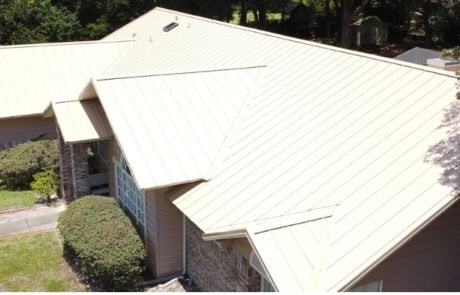
A glance from a lawn at lines of screw heads points to a through-fastened roof, while flat pans divided by upright folds with no hardware showing are standing seam. Barns, workshops and porches often wear corrugated or ribbed sheet, and dwellings use both.

The Cross-Section: Matching a Building

Corrugated material makes a run of soft, even undulations, and a ribbed panel has trapezoid ribs separated by broad pans. Each sheet laps over a neighbor along a long edge, and a printed fastening schedule sets where screws land.

With deep ribs, a ribbed panel bridges wider spacing, and corrugated remains popular for a traditional farm look. On a big roof plane, taller ribs keep a downpour from spilling over side laps, whereas a short porch covering gets by with a low pattern.

Exposed Hardware – Why Installation Matters

Each screw clamps a panel down onto wood or steel framing, and a gasketed washer under each head does the sealing. Ultraviolet light slowly bakes neoprene brittle, well ahead of the painted steel nearby.

Driving a screw past snug crushes a washer and dimples the metal, and a shallow or off-square setting never seals fully.

Fresh Fasteners – Benefits and Gaps

On corrugated or ribbed sheet, every washer ages at one pace, so at some stage all seals get changed. Old fasteners are backed out one at a time, and a screw one size larger takes each place so threads grip solid material.

A full re-screw with new washers closes leaks at each head and tightens loose sheets, but red rust, gaping laps and cracked flashing need other remedies. Replacements are chosen for whatever framing lies underneath, lumber or steel, and color-matched tops blend in with a painted finish.

A Covering in Motion – Built to Allow Travel

Sunshine stretches steel slightly and a chilly night pulls the metal back, and a long run can gain a quarter inch between noon and midnight, while aluminum goes about double. Metal held too rigidly wears fastener holes into slots, and washers then stop sealing.

Ticking heard as morning sun lands on steel is ordinary expansion, and a careful installation suffers no damage.

Anchoring Standing Seam: Tucked Away

A long pan is locked down at a single band, while floating clips elsewhere allow the pan to slide. Trim at an end that travels is bent with clearance underneath, and metal with no play winds up torn or kinked.

A pan is positioned and clips are screwed to the deck beside a long edge, so each new pan conceals all hardware below.

Joint Styles – Suited to Pitch

A snap-together rib engages when an installer presses down, and mechanical versions are finished by a rolling tool. A double-lock seam rides out storms and sheds pooled water, so maker ratings reach lower pitches.

Every product line has distinct spacing and rib size, and building shape and personal taste steer a buyer. Parts made for one system rarely suit a rival brand, and a substitute from elsewhere leaves gaps.

How Much Material Is Up There – Beyond Appearances

Coil for roofing is sold by gauge, and numbers fall as sheet gets thicker. Outbuildings commonly get twenty-nine, while houses often take twenty-six or twenty-four.

For aluminum, sheet is sized in thousandths, and more material means fewer marks and less waviness. A view from below reveals nothing about grade, so a label or order sheet is what gets checked.

Rust Resistance – Finishes That Hold Up

Roofing steel leaves a mill with a zinc or aluminum-zinc layer over plain sheet, and an oven-cured primer and color coat are applied on top. Paint scuffed but not broken through is fine, but an unprotected cut or a gouge to bare steel is where red rust starts.

PVDF finishes hold color for decades, and polyester families fade and chalk more quickly. Wet masonry corrodes aluminum-zinc coated sheet, and a separator goes wherever panels touch new brick.

Picking an Alloy: Near the Water

Aluminum has less mass than steel and cannot turn red with rust, though an impact leaves a deeper mark. Close to salt water, at the coastal end of our range, metallic coatings break down faster, so a marine-grade finish is often chosen for homes near a beach.

Copper is usually kept to small accent roofs over a bay or a porch, and left unpainted, the metal darkens with age.

Incompatible Neighbors – Isolation and Compatibility

Runoff from copper eats through coated steel downhill, and staining shows up well ahead of pinholes. Pressure-treated framing corrodes aluminum laid directly on top, and a mismatched fastener rusts quickly.

A new piece of flashing belongs in a metal that matches existing work, or tape and membrane keep dissimilar metals from meeting.

What Buyers Notice – Why Installation Counts

Oil canning means a slight bow in a wide stretch between seams, and a sun low in the sky exaggerates every contour. A warped look in the metal lets no rain through, and useful life is unchanged.

Heavier gauge, narrower pans and pencil ribs in each flat all reduce waviness, and an even deck beneath helps as well. Pictures of completed homes give a sense of how visible oil canning gets, and the decision on profile rests with you.

Indoor Comfort: Noise and Heat

Panels laid straight over bare purlins ring out in a downpour, because a single thin skin vibrates freely. On a house, a solid deck, underlayment and ceiling insulation sit below the panels, and occupants notice only a slight change from shingles.

Cool-pigment coatings return the bulk of the sunshine, and the attic beneath stays cooler on a summer afternoon. A charcoal or black panel gets hot, and vents and insulation weigh as heavily as the choice of color. Thin steel cools off right after dusk, and the attic below catches up before long.

Holding a Load Up There – Clamped or Fastened

In the snowier part of our service area, a metal roof sheds snow fast, and a slab arriving all at once can injure someone or rip a gutter off. Guards break a load into small harmless chunks, and hardware sits over entries, paths and meters.

For standing seam, bolted clamps grip each upright joint, whereas on corrugated sheet, mounts go into solid wood with gasketed fasteners, and where snowfall is rare, nothing is added.

Pounding From the Sky: When Paint Cracks

Hail is common across the colder end of our territory, and heavier grades with stiffening ribs shrug off more stones. A strike sharp enough to break a finish lets rust start, and a flattened rib or a shifted cap can leak.

Following a storm, our roofer takes pictures and measurements, so the size and position of each dent are known.

Uplift – Rated Assemblies

Wind load concentrates at corners, rakes and eaves, and air that gets under a loose edge can peel a sheet back. Finishing trim is hemmed and caught on a cleat for a whole run, leaving nothing for a storm to seize.

Fasteners go in closer together near corners and a roof's rim, set by a maker's tested layout for each exposure. Where hurricanes reach, at the coastal end of our territory, the number of fasteners goes up again, and panels carry an uplift rating to suit.

Openings in a Covering – Careful Detailing

A flexible boot is formed around every rib and banded tight to a pipe, and a level stretch, not a peak, is chosen for a hole. A chimney or skylight is built up on a curb with a cricket above, and water from higher up is divided and sent past.

Caulk is a secondary barrier behind formed metal, since the steel outlasts any compound many times over.

Where Slopes Meet: Built to Drain

Valley metal is laid before a single panel, and each sheet is cut to a matching angle. Exposed ends are bent back and gripped by cleats, so no hole sits where runoff gathers.

On a run too long for one sheet, an endlap joins pieces with sealant between, and fasteners pass through both thicknesses, with uphill metal on top.

Limits Near Flat – When a Membrane Wins

Most ribbed sheet is specified for about three in twelve or steeper, and on a gentler slope, overlaps start to let water through. Machine-folded seams go much lower, and a few products go almost to flat.

Porches, additions and back rooms often carry a barely tilted section, and pitch is measured rather than judged by eye, and anything under a panel's limit is finished in a membrane.

Support for the Roof: Wood or Open Framing

A house takes panels on a solid, continuous deck, and a high-temperature synthetic underlayment goes between, since ordinary felt dries out under sun-heated steel. On a barn or shop, panels often span open purlins, and wider spacing calls for heavier stock.

A stripped roof is probed, and weak sections are replaced, because crumbling plywood cannot anchor a clip.

When the Old Roof Stays: Light Enough to Add

Local codes commonly accept metal set over a lone shingle layer, and the mess and hauling of removal are avoided. Steel panels weigh well under two pounds per square foot, and ordinary framing copes without trouble. An underlayment topped with a grid of furring strips goes over existing shingles, and clips or screws go down into solid structure.

Where a roof was already recovered once, or the decking is soft, everything comes off, since trapped dampness under metal has no way to dry.

Finishing Pieces: All Around

Strips cut to match a profile close off space under each rib at high and low points, so blown rain and critters are shut out. A ridge cap can be vented to let warm air escape or left solid, according to how an attic sheds heat and moisture.

A drip edge along an eave and trim on each rake complete a border, and fascia boards are kept out of runoff.

Care on Site: Handling and Footing

Standing seam panels are formed at full slope length, and nothing overlaps partway up. An extended panel needs enough hands under the metal to stay straight, and a crimped or creased pan is no longer usable.

On panels, a step belongs in a flat above a purlin or deck, since a heel on a rib crushes a fold. Dew or rain makes coated steel as slick as glass, so climbing up for a look is unwise.

Clues to Watch: Plain to See

  • Rust circles where screws go in, on a slope facing afternoon sun.
  • Screws no longer tight against metal, at an eave.
  • A peeled drip edge, facing prevailing wind.
  • A vent cap knocked askew, beside a chimney.
  • Rust creeping from a trimmed end, next to a skylight.
  • Blotchy color, where afternoon light hits.
  • A ceiling stain in a straight line, under a porch roof.
  • A lock pulled apart, where slopes meet.

How APC Roofing Goes About Metal Roofing in Clermont Florida – Step by Step

We begin by figuring out which system is up there and how the panels are anchored, before each fastener, edge, boot, valley and lap is read in sequence. Thickness, coating and hardware style go into notes, and the attic is searched for stains and soft decking.

You receive a report, pictures included, and every piece of advice comes with an explanation. If a covering needs only new screws, we say exactly that, and a roof at the end of service life is named as such.

Metal Roofing Around Clermont Florida – Careful Assessments

Phone 407-270-1129 and someone will arrange to stop by.


Saving What Is There – When a Tear-Off Makes Sense

A single ruined panel can come out and a sound panel go in, although new paint never quite matches older metal. A new pipe boot or a resealed lap ends a local drip, while a re-screw takes care of hardened washers.

Once red rust has eaten through large areas, patching no longer makes sense, and a covering the wind has twisted out of shape is in the same position. Redoing one face of the house is a middle path, provided trouble goes no further.

Planning Ahead – Upkeep Matters

A carefully installed panel system can pass forty years, but estimates of service are a rough guide only. A seamed pan roof has fewer parts that age, while through-fastened sheet needs a re-screw somewhere along the way.

Dissimilar metals, raw edges and sealant used instead of proper flashing wear out a covering ahead of schedule, and a check every few years catches small faults early. Leaves and twigs that collect against a curb or in a valley hold moisture against coated steel, so clearing debris away helps paint last.

For a roofer's view on Metal Roofing in Clermont Florida, reach APC Roofing at 407-270-1129. Every screw or clip, edge and boot gets a close look, and findings come to you written up, with any choice left to you.

Jacqueline

Verified

★★★★★
Mike Ferrai was absolutely amazing from beginning thru the end..! Our roof looks awesome..!!! Couldn't be happier.! Would definitely recommend for all your roofing needs.. A++++++++

Frank Smith

Verified

★★★★★
Our experience with APC roofing began with an introduction and quote by Lucio. He came to our home, explained the process and immediately went on the roof to access the damage. As we began to inquire further about what to expect Lu got us in contact with Adrian. Now Adrian became an invaluable partner in very honestly and sincerely letting us know what APC could and couldn’t do to repair or replace our damaged roof. Hurricane Milton left us scrambling to come up with thousands to meet our deductible. Patiently and empathetically Adrian dispelled our apprehension about working with a contractor or being left incomplete and in need of legal help to resolve any disputes. He gave us his assurance that he would oversee the entire project. I have to admit that he kept his word. Even when we thought there would be a last minute hiccup with financing he put me in-touch with Lucy and she did not give up until we got the information and terms I wanted. This was a truly great team from start to…

JOHN WEBER

Verified

★★★★★
Our rep. Holly and this company did a wonderful job while staying within our budget! I highly recommend you work with this company and Holly in particular.

Tramale Suggs

Verified

★★★★★
Honest trustworthy company with great employees… hardworking and dedicated to providing great service….thank you Adrian

Mike Price

Verified

★★★★★
Everything went smooth on schedule nice clean job would recommend to anyone Mike Price was a great guy to work with