You’ve decided on a metal roof, or you’re close. Now the worry shifts. You’ve heard that metal roofs leak when they’re put on wrong, that some installers screw panels down so tight they buckle by August, and that the details at the chimney and valleys are where corners get cut. You’re about to spend real money, and you want metal roof installation in Blue Springs, MO that holds up to the hail and the January freezes for as long as the metal does.
That’s the right thing to focus on. With metal, the installation decides more than the product does.
APC Roofing is GAF Certified, licensed and insured, and has been in business since 2017. Your inspection and estimate are free. Call 913-398-5020 and we’ll look at your house and explain exactly how we’d put a metal roof on it.
What happens during a metal roof installation
Every house is a little different, but a proper install follows the same basic order. Knowing it helps you ask good questions of anyone you’re considering.
1. Inspection and measuring
Before anything comes off, we check the roof deck from above and the attic from below for soft spots, old leaks and sagging. Panels are measured to the roof, especially for standing seam, where each panel runs in one piece from ridge to eave.
2. Tear-off
We tear the old roof off down to the deck before any metal goes on, so we can see and fix the wood first.
3. Deck repairs and underlayment
Damaged decking gets replaced. A high-temperature underlayment is the usual choice under metal, since the panels get hot in summer and basic felt can break down under them. In a climate with ice dams, an ice barrier at the eaves and in the valleys is standard practice.
4. Edge metal and flashing
Drip edge, eave trim and valley metal go on before the panels. This is the part you’ll never see again, and it’s where a lot of leaks come from when it’s rushed.
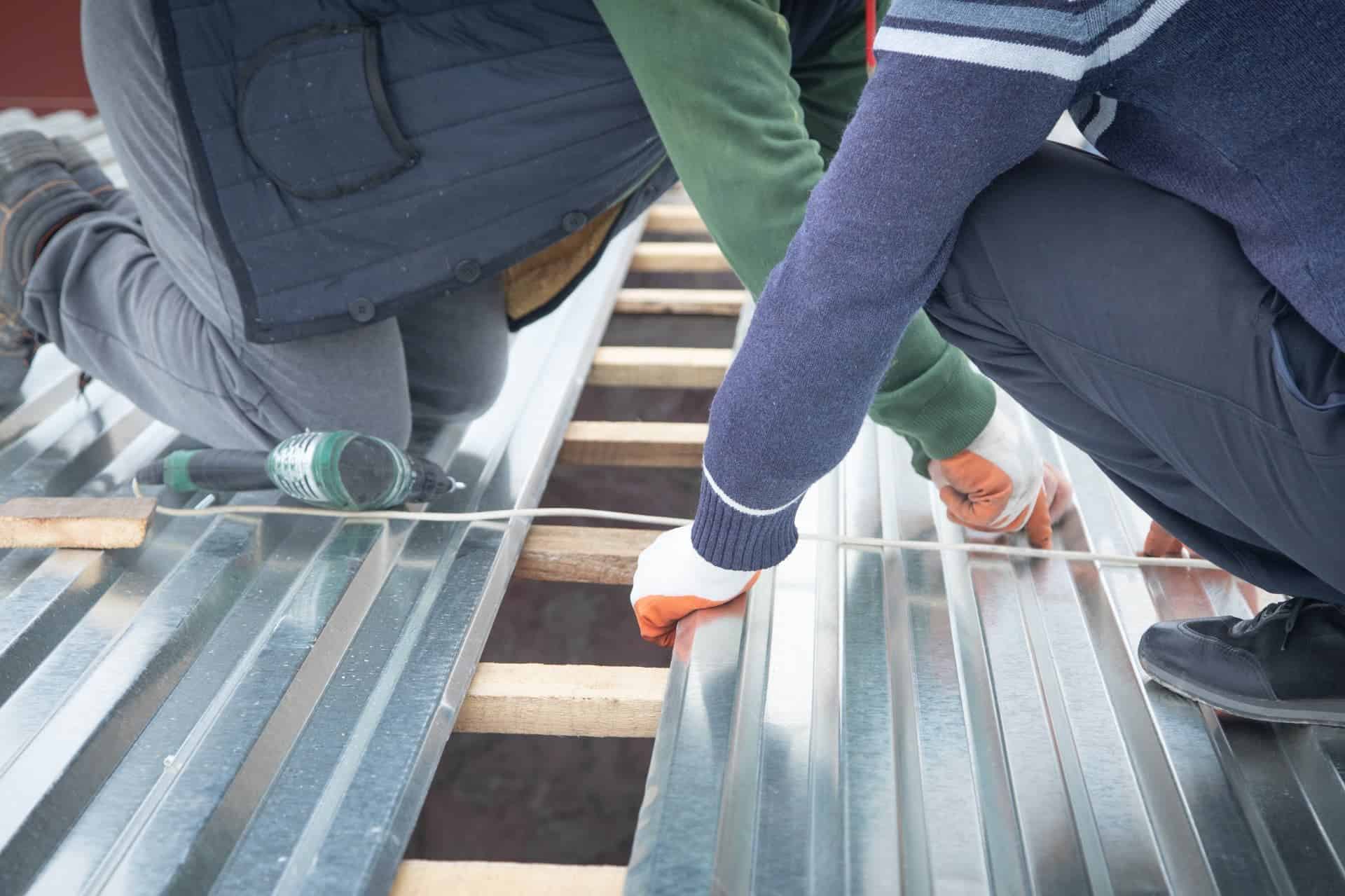
5. Panels
Standing seam panels are fastened with clips hidden under the seams. Exposed-fastener panels are screwed through the face with sealing washers. Either way, the fastening follows a pattern, with tighter spacing near the edges and corners where wind pulls hardest.
6. Trim, penetrations and cleanup
Ridge caps, gable trim and flashings around pipes, vents and chimneys go on last. Then the crew sweeps for metal shavings and loose screws, which can rust stains onto the panels if they’re left behind.
Details that separate a good metal install from a bad one
Room to move
Metal expands in summer heat and contracts in winter cold, and in the Kansas City area the swing between the two is big. Standing seam clips let panels slide. Exposed-fastener panels need screws driven to the right depth, not cranked down. When panels can’t move, you get rippling (“oil canning”), popped fasteners and torn washers.
Flashing that matches the roof
Pipe boots, chimney flashing and wall flashing have to be made for metal. A rubber boot meant for shingles won’t seal against a ribbed panel. At chimneys and walls, the flashing should be built to steer water around the opening, not rely on a bead of caulk.
No mixing metals
Some metals react with each other when they touch and water gets between them, and the result is corrosion. Fasteners, flashing and trim should match the panel material or be separated from it.
Snow guards where they matter
Snow can slide off a metal roof in one heavy sheet. Over a door, a walkway, a deck or a lower roof, snow guards hold it in place so it melts off instead.
Choosing the right metal for your Blue Springs home
If you’re still deciding between standing seam, corrugated panels, metal shingles and stone-coated steel, our metal roofing in Blue Springs page compares them. For a closer look at the most common residential choice, see standing seam metal roofing.
A quick rule of thumb: for a home where you want a clean look and low upkeep, standing seam is usually the starting point. For a shop or outbuilding, exposed-fastener panels are often the practical choice.
How it works with APC Roofing
- Book your free inspection. Call 913-398-5020 or request a free estimate online.
- Get a clear, honest assessment and estimate. You’ll get photos of your current roof and deck, the metal options that fit your house, and a written estimate.
- Your roof gets installed and the site gets cleaned up. We’ll give you a realistic timeline with your estimate, and the crew leaves your yard clear of scrap and screws.
Financing is available through Aqua Finance, Fortifi, Hearth and Home Run Finance if you’d like to spread out the cost.
If you’re replacing your roof after hail damage, you file the claim with your insurance company and pay your own deductible. We document the damage, write the estimate and work with your adjuster.
Metal roof installation questions
How long does a metal roof installation take?
The size and shape of the roof, the type of metal and the weather all affect it, and metal usually takes longer than a shingle roof. We’ll give you a realistic timeline with your estimate.
Can a metal roof go on a low-slope section?
Some metal systems can handle lower slopes than shingles, but there’s a minimum for each product. Very flat sections usually need a flat roofing system instead.
What’s oil canning?
It’s a visible waviness in flat areas of metal panels. Some of it is cosmetic and normal, but heavy rippling is often a sign the panels were fastened too tight to move.
Do I need new gutters with a metal roof?
Not always, but it’s a good time to check them. Snow and heavy rain come off metal faster than shingles, so gutters and their hangers need to be up to it.
Book your metal roof installation in Blue Springs, MO
A metal roof put on wrong can leak within a few seasons, and fixing an install is harder than doing it right the first time. You only want to pay for this once.
Call 913-398-5020 to book your free inspection or start your estimate online. You’ll get a roof that shrugs off the next spring storm and a crew that left your place as clean as they found it. See all our Blue Springs roofing services.