The bonus room over your garage is the hottest room in the house every July, and the flat roof above it is due for replacement anyway. Or you manage a small building, the old roof is done and every bid mentions TPO. You’re looking into TPO roofing in Blue Springs because you want to know whether it’s the right choice or just the one everyone’s selling.
That’s worth asking. TPO is a good roof for a lot of buildings, but no flat roof material is right for every situation, and you should understand the trade-offs before you commit.
APC Roofing installs and repairs TPO roofs on homes and light commercial buildings across Blue Springs and the Kansas City area. You’ll get a plain answer on whether TPO fits your roof. We’re GAF Certified, licensed and insured, in business since 2017, and the inspection is free. Call 913-398-5020 to book it.
What TPO roofing is
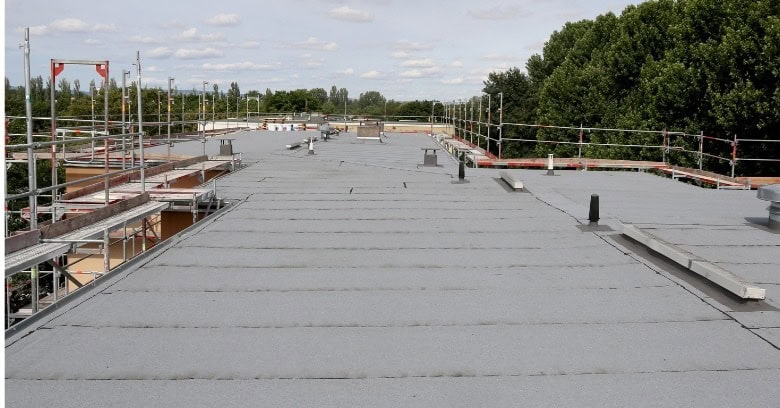
TPO, short for thermoplastic polyolefin, is a single-ply roofing membrane that comes in wide rolls, usually white. It’s used on flat and low-slope roofs where shingles won’t work because water drains too slowly.
What sets TPO apart is how the seams are joined. Instead of glue or tape, overlapping sheets are welded together with hot air. The two layers melt into one, so a properly welded seam is often stronger than the sheet around it. Since seams are where most flat roofs leak, that’s a real advantage.
Why Blue Springs homeowners choose TPO
It keeps the room below cooler. A white TPO surface reflects much of the summer sun instead of soaking it up. On a hot Missouri afternoon, a dark roof can get far hotter than a white one, and that heat ends up in the sunroom or bonus room underneath. A reflective roof won’t replace good insulation, but it can make that room more comfortable.
The seams are welded. Welded seams don’t rely on adhesive that can dry out over the years, which matters on a roof that goes from summer heat to January freeze.
It handles ponding better than many older roofs. No flat roof should hold water for days, but TPO seams hold up well when water does sit for a short while after a storm.
It’s a good match for a mixed roof. TPO ties in cleanly where a low-slope porch or addition meets a shingle roof, as long as the transition is detailed properly.
The trade-offs
TPO isn’t perfect for every roof. Some things to weigh:
In cold weather, TPO is stiffer than rubber EPDM, and installing it takes more care on a cold day. Thicker TPO membranes resist punctures and hail better, and a solid cover board under the membrane helps too, which is worth discussing in a part of Missouri that sees hail most springs. Patching TPO years from now takes a hot-air welder and a clean surface, while EPDM can often be patched with tape.
If the roof is small, shaded or sees a lot of hard winters without much summer sun hitting it, EPDM roofing in Blue Springs can be the better fit. We’ll tell you which one we’d recommend for your roof and why.
Thickness and attachment
TPO comes in several thicknesses, and on roofs that see foot traffic, equipment or hail, a thicker membrane is usually worth it. How it’s attached matters too. It can be fully glued down, which keeps it flat and quiet in the wind, or fastened with plates and screws along the seams. On homes, fully adhered TPO is common because it lies tight to the roof and handles wind well at the edges.
Underneath, the deck and insulation have to be dry and solid. If the old roof has wet insulation or soft decking, that gets replaced before the new TPO goes on. Our flat roof installation in Blue Springs page goes through the full process.
Caring for a TPO roof
A TPO roof doesn’t ask for much, but a little attention goes a long way. Keep drains, scuppers and gutters clear, especially in fall when leaves come down and before winter when ice can block them. After a serious hailstorm, have the roof checked even if nothing is leaking yet. Keep foot traffic to a minimum, and don’t let anyone set sharp tools or equipment directly on the membrane.
White TPO collects dirt over time, which can reduce how much sun it reflects. A gentle rinse helps; harsh chemicals and pressure washers don’t.
How it works
- Book your free inspection. Call 913-398-5020 or request a free estimate online.
- Get a clear, honest assessment and estimate. We check your current roof, the deck and the drainage, then explain whether TPO or another membrane makes sense in a written estimate.
- Your roof gets done and the site gets cleaned up. Old material and debris leave with the crew.
If you’d like to spread out the cost, financing is available through Aqua Finance, Fortifi, Hearth and Home Run Finance.
Waiting on a worn-out flat roof usually means more wet insulation and decking to replace once the new roof goes on.
TPO roofing questions
Is TPO or EPDM better in Kansas City weather?
Both work here. TPO is the stronger pick when summer heat in the room below is the main concern, and EPDM is the stronger pick on small, shaded roofs or where easy patching matters most.
Can a TPO roof be repaired?
Yes. Punctures and open seams can be cleaned and welded with a new piece of TPO. The surface needs to be clean and dry for a good weld. See our flat roof repair in Blue Springs page for more.
Does a white roof really make a difference?
On a sunny roof over a living space, it can. The surface stays cooler, so less heat moves into the room. How much you’ll notice comes down to your insulation and how the room is heated and cooled, so we won’t promise a number.
Can TPO go on a house, or is it only for businesses?
It’s common on both. On homes, TPO is used on porches, garages, additions and other low-slope sections.
Is TPO roofing in Blue Springs right for your roof?
You shouldn’t have to pick a roof based on whatever the last salesperson said. Call 913-398-5020 or start your free estimate online.
When it’s done, the room under that roof is easier to live in, the seams are sealed tight and you made the choice knowing the pros and cons. See all our flat roofing services in Blue Springs.