Hoping to find Commercial Roofing Installation in Blue Springs Missouri?
APC Roofing puts down and fixes low-slope systems over stores and offices, including the drains, curbs and flashings.
Reach us at 913-398-5020 and a roofer will come out and look everything over.
Buildings Where People Work – the Basics
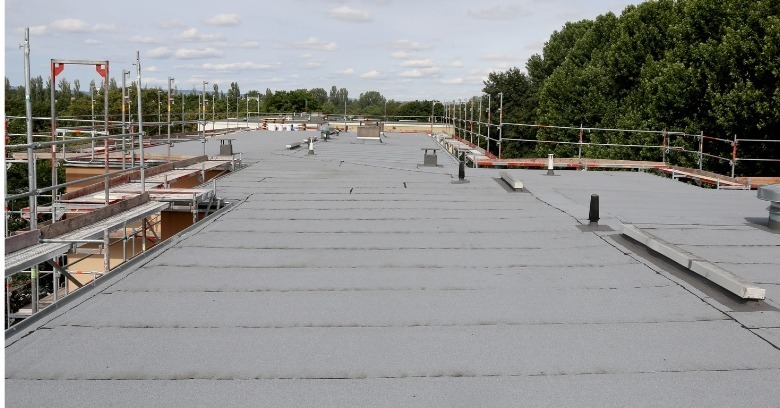
Customers, goods and running machines fill the space beneath the covering, and dripping water can idle a conveyor or spoil a pallet of product. A big footprint is covered at a gentle grade, so drainage and wind resistance are worked out by calculation.
Package units, vent stacks and dishes are bolted in place above the ceiling, and each duct, line or support passes through the waterproofing. The activity indoors steers the selection of materials, and cold storage calls for vapor control an office can skip.
The Principal Membranes: a Plain Primer
TPO, PVC and EPDM are single-ply products made as one flexible layer, modified bitumen is rubberized asphalt sold by the roll, and built-up roofing stacks felt and hot tar in plies. A walk-behind welder fuses the overlaps on thermoplastic material, whereas rubber splices rely on primer and adhesive tape.
Cooking vents on a restaurant leave fat beside the fans, and oily buildup degrades asphalt and EPDM coverings, so PVC is a common pick for the spot. A stone-covered built-up system is weighty and tough, and the aggregate shields the bitumen from sunlight.
Metal on Shops and Plants: Upkeep Notes
Through-fastened sheets take a screw at intervals across the flats, and each shank is set into a purlin or joist. Sunlight bakes the washers until the rubber splits, and fasteners loosen as the metal moves with temperature.
Clips concealed in the raised seams secure a standing-seam roof, and the pans slide freely along the length. Rust is often found at overlaps and cut edges, and a coating applied while the steel is sound can slow the spread.
Decking on Big Buildings – Why the Base Counts
Fastening choices depend on the structure below, and reroofing leaves the framing in place. Fluted steel accepts screws readily, a concrete slab needs glue or anchors set in drilled holes, and gypsum plank takes specialty fasteners made for gypsum.
Moisture trapped for years can rust through metal decking, and a damaged area is removed and a new piece fastened in place. Wherever the interior is exposed, the underside gets a look from a lift, and small cores from above show the rest.
Attachment Methods: Choosing an Approach
Many installations are fastened with plates screwed along every lap, glued-down systems rely on adhesive over the entire back, and ballasted sheets stay put under a blanket of stone. Deck type, building height and wind exposure point to the right method, and an engineer confirms the framing can carry any added weight.
Between the plates, a fastened sheet balloons in stiff gusts, whereas a glued sheet holds steady on a clean, dry substrate. Close inspection goes slowly on a ballasted system, since rock or pavers have to be cleared before a lap can be read.
Wind on Low-Slope Work – a Matter of Engineering
Each corner feels the hardest pull, since air accelerates on rolling over the perimeter. A band along each side takes somewhat less, and the interior bears a light load.
Attachment rows tighten on the approach to corners and edges, as set out in engineering tables for height and wind speed. An under-fastened outer angle lets the sheet curl up, and pressure underneath can strip a wide section.
The Insulation – an Overlooked Component
Polyiso is set on the deck in one or more courses, and a firm cover board spreads concentrated weight. Good insulation trims the demand on the HVAC system, and tapered pieces create the fall that sends rain to the outlets.
Waterlogged foam barely resists heat flow, and the heavy mass adds weight and rusts a steel deck. Nondestructive meters and cored samples show how far the problem reaches, and each sodden piece is removed instead of buried.
Drainage Hardware: The Path Down
A domed strainer sits over every interior sump, and the slots hold back gravel and plastic bags. When the grate mats over, rain has nowhere to go, and a wide pool gathers in the surrounding field.
A secondary outlet is set slightly above the everyday drain, and runoff spilling at the upper level points to a plug further down. Ponded water adds load that the framing may not be sized for, and a pool that outlasts a downpour by two days marks a low spot or a fouled strainer.
Leak Hunting on a Large Building – No Guesswork
The mark on a suspended ceiling shows where moisture landed, but the split in the sheet is often somewhere else entirely. Steel decking guides runoff down the corrugations, and seams in the foam layer offer extra routes.
Laps, curbs and outlets upslope of the stain are checked by hand, and a controlled hose test can isolate a hidden entry point. A patch placed right over the wet ceiling often misses, and moisture finds a way in at the next storm.
Air-Conditioning Gear – Practical Notes
A built-up curb lifts each machine above the field, and base flashing climbs the sides under a metal cap. The corners are the fussiest detail up there, and a pinhole at the crease lets rain run down behind.
A new unit from the HVAC contractor may sit on an adapter with no flashing, and drips show up indoors within weeks. Condensate discharged straight onto the covering discolors and softens the surface, so the stream ought to be carried to a drain.
Objects That Rise Above the Surface: Handling Each Type
Each round stack wears a prefabricated boot with a clamp, while awkward profiles are boxed in a pitch pocket and packed with filler. Over time the compound pulls away and splits, and a top-up is standard upkeep.
Runs of conduit and gas line rest on unattached blocks, since every screw driven through the sheet is a future leak. Pads cut from spare roofing stock go under each base, so daily movement rubs the buffer rather than the covering.
Domes and Hatches: What Wears
Plastic bubbles on older units go cloudy and brittle under sunlight, and the screwed-down rim is where cracks start. Water gets in through a hardened gasket or a loose frame joint, yet the membrane usually takes the blame.
The access hatch is lifted on every service visit, and constant use loosens hinges and flattens the weatherstrip. Smoke vents are life-safety devices that pop open in a fire, so work nearby leaves every mechanism free.
Parapet Walls and Coping: Staying Dry
The covering bends upward and becomes base flashing, a termination bar grips the upper end, and a counterflashing strip sheds water outward. A coping cap crowns the parapet and throws rain clear, but joints whose sealant has cracked admit runoff beneath.
Brick and block that have weathered let water migrate indoors, and the ceiling stain that follows mimics a membrane problem. An inspection covers the coping, the counterflashing and the wall as well as the membrane, and failing mortar is raked out and repointed.
Metal Trim Where the Field Ends – Wind at the Border
The flange is hooked onto a cleat fastened along the eave, and a cover strip seals the sheet to the horizontal face. The profile chosen has to be rated for wind at the building's elevation, since a bent clip can let a gust peel a whole stretch.
A box gutter on a long wall moves a torrent in heavy rain, which calls for sturdy hangers and oversized downspouts. Crumpled or raised trim is a clear repair item, since early work protects the covering behind the edge.
Foot Traffic From Technicians: Setting Some Ground Rules
Electricians, cable installers and HVAC crews all make regular trips up, and a worn lane appears between the hatch and the units. A stray sheet-metal screw is driven into the membrane underfoot, and a propped panel can gouge a hole.
Heavy walkway pads laid along the route show where to tread, and grinding hits dense material instead of the field. Service agreements can tell outside trades to stick to the protective strips, and a bucket for scraps and screws keeps the membrane clear.
Upkeep Through the Year – Staying Ahead of Leaks
A walk-through twice annually suits most commercial coverings, and a damaging storm earns an additional check. Regular servicing clears the strainers of collected debris, the seams are traced with a probe, and brittle sealant gets marked for replacement.
A walk before the stormy months concentrates on outlets and the perimeter, and a follow-up hunts for whatever a harsh stretch of weather pulled apart. Every minor fault is recorded with the exact spot, and trouble shows up long before water comes through.
Keeping Track of a System: What Belongs in the File
A useful dossier includes a plan with every unit, drain and hatch marked, and a written cross-section lists every layer from the deck up. A dated photo log follows each repair, and cut samples and infrared findings get appended.
Many older properties change hands without a scrap of information about the covering, and each roofer who climbs up has to investigate afresh. Roof records belong with the building, not with whoever did the work, so a future manager or purchaser inherits a copy.
Repair, Restore or Replace: The Main Signals
Localized faults on a healthy sheet are patched in place, while an elderly but dry surface can accept a new liquid system. Widespread waterlogged boards signal a full replacement, as do laps cracking across the whole field, though years alone never decide the matter.
A liquid coating needs a scrubbed surface and sound mending beneath, since damp layers below stay hidden and soggy. Swapping only the ruined sections is sometimes a sensible middle course, when the surrounding field is still performing.
The Reroofing Decision – Guided by What Lies Beneath
In a recover, a fresh membrane goes directly over the old surface, and a board is placed between old and new. An overlay is allowed by code over no more than a single existing covering, and only over dry insulation.
A tear-off removes every component down to the structure, and the exposed deck can be inspected and repaired. A tapered system can be designed to empty the low spots, and crickets between drains split the runoff.
Signs Worth Reporting: What to Look Into
- A steady stream from the backup scupper in a storm, which announces a stalled main outlet.
- A damp patch over a desk or shelf that returns, which means leakage has crossed every layer.
- Blotches or efflorescence on brick under the coping, which can point to seepage passing through the masonry.
- Fascia metal that flutters or rattles in a gust, which can give wind a place to pry.
- Standing water in the same place long after a downpour, which hints at a low area in the structure or a slow drain.
- A skylight whose plastic has turned chalky, which is ready to fail at the frame or under a load.
- Water trickling down an interior column in a storm, which often traces back to a lap or a curb.
- Water spilling over the lip of an eave gutter, which can soak the wall and the ground below.
How APC Roofing Tackles Commercial Roofing Installation in Blue Springs Missouri – Step by Step
The drains, scuppers and overflows get our attention before anything else, and the seams, curbs and edges are next in line. On a leaking building, cores and a meter check the foam, and no recommendation is made until the readings are in.
Everything we find is written up with photographs and a sketch, and every defect is keyed to a location. The outcome we propose is a repair, a coating or a replacement, and you get reasons to weigh for yourself.
Commercial Roofing Installation Around Blue Springs Missouri – Get the Facts
Dial 913-398-5020 and we will fix a time to see the building.
Working Above Occupants: Practical Arrangements
Power fastening through steel echoes through the space beneath, and the smell of primers can reach the fresh-air intakes. The facility manager hears in advance when the noisy stage is coming, and nearby vents can be closed off during curing.
Old membrane and foam are lowered by hoist or dropped through a covered chute, and shelving or machinery directly below can be tarped. Water-based adhesives give off far less odor than solvent-based glue, and the gentler choice suits a building full of people.
Section by Section – Protecting the Interior
A careful tear-off exposes only what can be dried in before the crew leaves, and new insulation and membrane go onto the opened area in the same pass. A holding seal ties the completed edge to the untouched field each night, and the barrier is cut out as work continues.
The weather report limits the size of each tear-off, and any hint of showers shortens the stretch. A downpour on exposed insulation leaves the boards waterlogged, and runoff may find a path to the offices underneath.
The Weather We Work In – Market by Market
At the colder end of our territory, hailstones and drifted snow are real concerns, so a hard cover board and an engineer's review of the framing are sensible. Intense sunshine in every city we cover breaks a membrane down over time, and light-colored surfaces bounce much of the glare away.
Hurricane wind at the coastal end demands tighter anchoring, and tropical storms require ample secondary drainage. Glues and primers carry a temperature floor, while hot-air welding copes with cool days but not with showers.
Staying Safe Aloft – No Shortcuts
Many low buildings have no wall at the perimeter to catch a misstep, so warning lines or harnesses tied to anchors are used near the edge. Plastic skylights break under someone who stumbles onto the dome, so guards over each opening are standard practice.
Anchor points installed for good serve every trade that follows, and a safety gate at the ladder completes the setup. A missing screen or warning line is flagged in our findings, since even a low building is high enough for a serious fall.
If Commercial Roofing Installation in Blue Springs Missouri is on your agenda, dial APC Roofing at 913-398-5020. Someone will go up and check the outlets, the laps and the edge metal, and written findings follow, with the choice left to you.
Verified

Verified
Verified
Verified
Verified