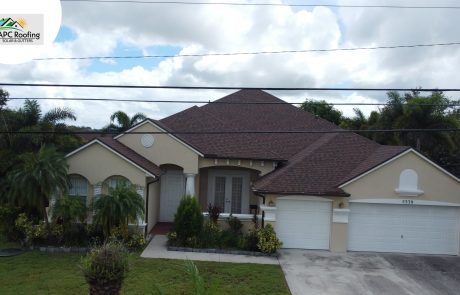
Looking for EPDM Roofing in Palm Coast Florida?
APC Roofing builds and fixes low-slope sections of a house, and on a residence the job tends to be a porch, a garage or a wing.
Call 386-356-2111 and a roofer will climb up and give you a plain account.
Runoff by Design: Why Shape Counts
A so-called flat roof is framed to lean gently toward a drain or an edge, and codes commonly ask for at least a quarter inch of drop per foot. Carpenters can set the change in height into the rafters, or foam panels cut on a taper can add the difference over the deck.
Rain leaves a steep roof almost as fast as the drops land, but a low section can stay wet for an hour or more, which gives every flaw many more chances to leak. A cricket, a little peaked saddle, steers runoff around a chimney, which keeps a pond from gathering where the current would stall.
Where Shingles Stop Working – Why Membranes Take Over
An asphalt roof is allowed by code only at two in twelve and up, and clay and concrete tile need steeper planes yet. Under the limit, rain blown by wind creeps beneath the overlaps, and nails and decking stay damp for days.
Many houses wear shingles on the main roof and a membrane over a porch or garage, because the incline under each section sets the material. Sheet roofing is one continuous skin with sealed joins, which lets rain rest on the surface without finding a gap.
Low-Slope Choices: a Plain Guide
TPO and EPDM are single-ply products made in wide factory rolls, and modified bitumen is asphalt improved with polymers and sold in narrower strips, and built-up roofing builds felt and tar in plies under stone. Light membranes spare the framing over porches and garages, and a crew can check every join closely.
TPO is normally a white plastic membrane, whereas EPDM is a black synthetic rubber. Deck type, outlet layout and rooftop units steer the choice, and we put forward a recommendation, and the decision stays with the homeowner.
Welds and Splices: Heat on TPO, Tape on EPDM
Leaks seldom start in the open area of a sheet, and trouble gathers where two widths overlap. TPO seams are melted into one piece by a machine blowing hot air, and a dull hooked probe traced along the joint shows any gap.
Each EPDM lap is sealed with primer and tape, and dust or damp at installation weakens the adhesion for years. Older rubber joins often open at a corner, and a cover strip across the opening keeps water out once more.
White or Black: the Practical Side
A reflective TPO membrane throws back much of the solar heat, and the area below stays cooler. Black EPDM soaks up radiant energy, so the layers beneath rise in temperature through the day. Reflectance is valuable in the hotter markets we serve, while the payoff falls at the colder end of our territory.
Thin or Thick – Where the Difference Shows
Membrane depth is stated in mils, thousandths of an inch, and 45 and 60 are common on residential porches, and heavier rolls exist for hard service. More substance on top copes better with a stray screw, and the deeper body endures ultraviolet aging for longer. From the ground, an owner cannot read the gauge, so the mil rating goes into the written proposal.
The Hidden Stack – the Parts in Order
A cover board commonly lies directly under the membrane, and rigid insulation fills the next level down, and a deck of plywood, steel or concrete carries everything. Polyiso slows heat passing into or out of the rooms, and each extra inch adds R-value. Drenched insulation quits performing and gets heavy, and dampness below a sealed membrane stays put for years. A meter, an infrared scan or a small core cut maps the affected zone, since the finished surface often gives no sign.
The Changeover – a Mixed Detail
Against a steeper main roof, the membrane runs up beneath the courses, so each downpour ends on the membrane rather than beneath. The sheet's highest edge faces no direct rain, and nothing depends on a line of sealant.
When the membrane is run on the bottom course, water slides beneath the lip, and a strong storm pushes moisture down into the framing. Wet drywall where the porch ceiling meets the house often leads back to a reversed junction, and the cure is to rebuild the detail with the shingles on the outside.
Termination and Trim – Fastened Every Few Inches
Gusts crossing a low roof draw upward, especially at corners and along the perimeter, and a lifted piece can let the membrane be ripped away. A metal edge fastened every few inches locks down the rim of the sheet, and a drip lip turns runoff down into the gutter.
A termination bar anchors the membrane at the wall line, and sealant along the top keeps rain from slipping behind, and tucked-in counterflashing protects the joint. Bent trim or nails backing out along the rim are a repair item, since a quick refix spares the membrane a blow-off.
The Parapet – Masonry or Framing
Base flashing carries the membrane up the inside face, and counterflashing set higher overlaps the turned-up edge. Copings line the top of the parapet, with an inward slope that keeps rain off the exterior.
Separated joints along the crest channel rainfall into the wall, and the damp can show up far from the point of entry. Where the structure is brick, loose mortar is repointed too, and framing under stucco depends on sealed corners and a tight top.
Routes Off the Deck: Paths and Pipes
A low roof sheds runoff by an inside outlet, a scupper through a wall or an edge gutter, and debris lodged at any opening holds water back. A domed strainer covers an interior drain set in a shallow sump, and piping in the house leads down to the yard or a storm line.
A backup scupper sits above the main outlet, and code requires another way out where parapets could trap water. Leaves and grit come out of strainers and gutter throats during maintenance, and a displaced dome is secured over the drain.
Pools That Linger – What Owners Should Know
Rain found on a membrane two full days after a storm is a defect in a roofer's eyes, and a sag in the deck or a clogged outlet lies behind the problem. A membrane under a lasting pool ages faster, and dirt and algae build up there. Inches of rain spread over a roof put real strain on the joists, so the sag grows each time rain gathers.
A fresh sheet over the same framing keeps the same contours, so tapered insulation, a cricket or an added drain has to do the correcting. The joists and the path for new pipe steer the choice of remedy, and a level laid across the low area confirms the plan.
Holes in the Field – Tracking Down Pinholes
A single-ply membrane can be sliced through while still new, and a dropped screw or a dragged ladder foot is enough. Hail at the colder end of our territory can fracture a brittle membrane, and branches carried by wind can gouge a surface anywhere.
A minor opening spotted early is a straightforward patch, but months of rain through the gap saturate the insulation beneath. Pinholes show up only on a slow, close walk of the field, and a glance from a ladder misses tiny punctures.
Marked Lanes – Sparing the Sheet
A membrane is a weather skin, not a floor, and repeated trips to the air conditioner on the roof grind at the surface. Dense pads are welded or glued along the approach to the units, and the strips handle the abrasion instead of the membrane. The scope adds traffic protection wherever a roof holds mechanical gear, and heating and cooling technicians are directed to the marked lane.
Elevated Platforms: Access for Repairs
Pedestal-set pavers hold patio furniture clear of the membrane, and the gap below lets rain reach the outlets. Deep planters call for a look at what the framing can support, because waterlogged earth weighs a great deal more.
Pavers come up individually without tools, so the membrane under a patio stays within reach for repairs.
Penetrations – Detail Work
Plumbing vents are sealed with molded boots of matching membrane, and a stainless clamp tightens the collar around the stack. A skylight or a unit sits on a curb raised above the deck, and the membrane runs up each side under a metal cap. Irregular pieces such as brackets or cable bundles get a pitch pocket, which is a small collar holding sealant.
The fill pulls back and cracks as seasons pass, and adding more is routine maintenance.
Fixing Versus Replacing – Where the Line Falls
Leaks on a membrane generally come from one limited area, and a matching piece sealed over the opening makes a sound job. On TPO the overlay is welded down and tested with a probe, and an EPDM cover is primed and taped with rounded corners.
Starting over makes sense when seams fail across the field, or the membrane has hardened and split, or wide areas of insulation are saturated. We state clearly which option fits, and the verdict comes with photographs and readings.
Layer On or Strip Off: the Deciding Factors
A new sheet can be laid over the current roof on a separator board, and the code restricts the method to roofs with just one covering. Laying a sheet over the top needs dry insulation, since moisture shut in keeps working on the framing.
Removal down to the deck is what a tear-off means, and soft spots can be mended and given proper fall, and code demands the method where a house carries two coverings. Moisture readings and the number of layers on the house settle the route, and the owner gets the findings in writing before choosing.
The Toll of the Years – Sun, Feet and Standing Water
Ultraviolet light, daily heat swings and pooled rain break down a membrane gradually, and service traffic grinds trails into the field. Yearly attention to strainers and pitch pockets lengthens the working span, and prompt patches on minor cuts keep the insulation dry.
Clues Worth Heeding: Before Damage Grows
- A yellowed patch on the ceiling under the porch roof, an indication that rain has crossed the insulation.
- A stream pouring out of the overflow opening in a storm, often because the main outlet is choked.
- Trim sitting loose after a blustery day, which can let the membrane be pulled back.
- Moss or algae streaking the rim, which shows rain sitting for days.
- A drooping line above the porch from outside, which may point to joists loaded by ponding.
- Blisters or ripples in view from an upstairs window, which suggest trapped moisture or loose adhesion.
- Streaked stucco below a parapet, typically from separated joints along the coping.
- A wet stripe on the porch ceiling next to the house, usually a clue the tie-in has opened.
The Way APC Roofing Takes On EPDM Roofing in Palm Coast Florida – What Happens, in Order
We look first at the drainage: outlets, strainers and low spots, and the laps follow, probed along the full run. Curbs, pitch pockets, parapets and edge metal are examined afterward, and when a leak is present, a meter and a core sample test the insulation.
The findings go into a written report with photographs, and each detail is set out in plain terms. If a repair is enough, we say so, and a membrane past saving is described honestly.
EPDM Roofing Throughout Palm Coast Florida – Low-Slope Know-How
Call 386-356-2111 and we will organize an inspection.
Coatings Over an Old Sheet: Honest Limits
Rolled or sprayed fluid can go over an existing membrane, and the liquid cures into a jointless skin. A coat over a sound membrane adds reflectance and some years, but on a leaking roof the layer just paints over trouble.
Silicone tolerates standing water, but acrylic loses adhesion where puddles stay. Washing and patching beforehand are the larger share of the labor, since material laid over grime or chalk lets go. We are straightforward about when a coating is worthwhile, and when the sheet below needs more than a new surface.
Weather and Scheduling – Reading the Sky
The primer and tape used on EPDM need a dry surface, and cool temperatures slow the adhesive's grab. Welding TPO with hot air works on brisk mornings, but rain brings every membrane installation to a stop.
A small repair can be done in a brief pause between showers, whereas a full replacement needs several settled days. Open areas are sealed off watertight before the crew goes home, so the house is protected until the next day.
For work on EPDM Roofing in Palm Coast Florida, speak with APC Roofing at 386-356-2111. A roofer checks the membrane, the drains and the perimeter, and a written account follows, and the decision stays with you.
Verified

Verified
Verified
Verified