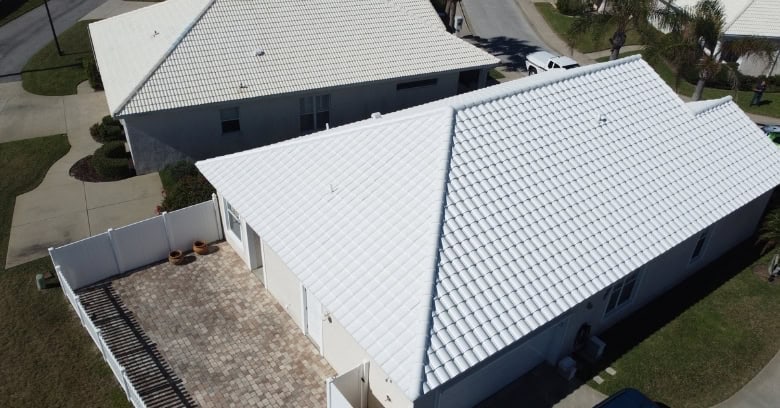
Looking for Roofing Companies in Shawnee Kansas?
APC Roofing takes on anything from a checkup to a full replacement, across shingle, metal and tile coverings.
Phone 913-398-5020, and a roofer schedules a visit to look at the house.
What a Roof Is Made Of: the Basics
The surface a passerby notices is only the outer layer, and felt or a synthetic membrane, boards and rafters lie out of sight. Bent metal covers the gap at a chimney, a pipe or a valley, and a drip there rarely points to worn shingles on the slope.
Airflow through the attic belongs to the roof system as much as any material, since trapped summer heat bakes the deck from underneath. Water showing indoors may come from any level of the structure, so attention paid only to the outside can miss where the water entered.
The Jobs a Roof Performs: More Than Meets the Eye
A pitched covering sends rain down toward the gutters, and the fastening pattern resists wind uplift. The framing bears the load above, snow included at the colder end of our territory, while airflow through the attic moves damp air out.
Shedding water is the covering's task, and resisting wind is the fastening's job, while what is underneath answers for holding the roof up, unnoticed. A weak link puts strain on the parts around the weak spot, so the cause gets traced instead of the symptom being patched.
The Smaller Details Up Top: A Shorter Story
The shingled field is built to last for decades, but a rubber collar at a vent pipe gives out far sooner. Rain finds a way down past the weak point, and a brown patch forms on the ceiling underneath.
Sealant around a skylight loses hold after enough summers, and aluminum flashing pits at the bends in salt air. Cap shingles break along the seam, because wind and weather strike the peak harder than the slopes below.
A Walk Around the Property Beforehand: What Turns Up at Each Point
From the driveway, the outline of the roof shows dips, sags and wavy planes, and the gutters and painted trim show up in the same look. Through binoculars, torn collars, lifted tabs and bare patches come into focus, though some faults cannot be judged without climbing onto the roof.
On the slope, a roofer works over every pipe connector and traces each flashing run, and the covering is checked for brittleness, granule shedding and curling. A steep or wet roof is not walked, and the eave, reached by ladder, provides the vantage point instead.
Above the Ceiling: Signs Worth Finding
A watermark on the decking shows where rain has gotten in, and dampness under the fingers shows the entry is still active. Daylight visible between the boards marks an opening, and a measurement from the peak locates the spot for the outside look.
Nail points gone orange signal damp air, not a leak, and a darkened patch under the deck tells the same story. Insulation stuffed into the eaves, or a bath fan ducted into the attic instead of outside, gets found only from inside, so a look from the yard alone misses ventilation faults of that kind.
A Homeowner's Take-Away: An Overview
The visit produces photographs linked to particular spots on the roof, and a note explains what each picture shows. Solid sections are treated in the same plain language as sections that are not, and trouble spots are ranked from most to least urgent.
Keeping an older report gives the next check something to compare against, and movement across seasons reads more directly than one day's condition. A covering looked at on a regular schedule rarely catches the owner off guard, and large jobs show warning signs well ahead of the work becoming pressing.
Keeping a Shingle Roof in Shape: a Short Rundown
Stiffened collars at the plumbing vents get changed early, and brittle beads at the walls get cut out and run again. Branches and leaf litter come off the low points and the chimney back side, and the gutter runs along the eaves get straightened.
A slipped shingle put back early is easy work, but delay through a wet season can let water reach the ceiling below. Moss along a north-facing slope wedges under the laps, and the growth gets treated and brushed off, never pressure-washed.
A Regular Routine: the Basics
A trade professional should cover the roof on a yearly basis, timed for right after the season that is hardest on roofs locally. The aim is spotting aging before rain gets through, and repair work gets planned rather than rushed.
Between visits, an owner can look at the roof from the yard after rough weather, and upstairs ceilings deserve a look for new marks. Climbing to the attic hatch with a flashlight twice a year is a smart move: dark spots, daylight and matted insulation turn up long before anything travels any further.
The Age of a Roof Seen From the Ground: What the Years Bring
Freshly laid, a shingle covering is flat and evenly toned, and by mid-life the sun-facing side fades ahead of the shaded side. Close to the finish, corners lift and bald patches spread, and each fix soon fails again.
What the lawn view suggests is a solid baseline, but a walk on the roof is what confirms the condition. A covering that has reached the end of a normal service life raises a replacement question, and a reliable contractor says so outright, instead of offering another fix.
A Channel That Has Given Up: What Homeowners Should Know
A sloped roof delivers water only to the eave, and the gutter takes over from that point. A hanger that has given way tips the run toward the wall, and the wood underneath begins to rot.
A weak patch there usually traces to a stopped-up drain, not the shingles, and new shingles will not cure a fault of that kind. How each gutter runs and where the water discharges get checked, and the metal at the drip edge gets looked over for gaps and poor overlap.
How the Roof Breathes: The Basics
Fresh air is meant to come in at the soffits and exit along the ridge, and that movement removes heat and moisture from under the deck. If the vents get blocked, the attic overheats each summer and stays sticky the rest of the year, and the shingles age prematurely.
Adding roof openings without matching intake draws air from the rooms beneath, and one high point pulling toward a nearby high point can choke flow at the soffits. A roof placed over bad ventilation inherits an existing weakness, so the underlying issue belongs in the scope of any re-roofing plan.
What Gets Chosen and Why: How Choices Differ
At the colder end of our range, ice and drifting snow set the build, so a self-sealing membrane runs up from the edge. On the coastal side of our area, storm winds set the nail pattern, and reinforced edge metal and sealed seams get specified.
Where hail falls hard at the colder end of our territory, an impact-rated covering is worth considering, while ultraviolet light ages granules in every market we serve. Every build answers to conditions at that particular site, not routine or whatever was used on the last job.
Homes and Shops: One Steep, One Flat
A pitched covering sheds water through overlapping courses, and the material is commonly shingle, tile or metal panels. A store or warehouse shelters under a nearly flat, sealed membrane, and mechanical equipment and drains break through that surface.
A fair number of homes have a shallow strip over a porch, and a lapped product there lets water back up under the tabs. A low spot like that needs a continuous membrane tied in beneath the main covering, and re-shingling that spot only repeats the trouble.
Covering an Open Roof: What Holds Up
A secured sheet keeps rain out while repairs get scheduled, but a quick layer does not mend anything below. A well-set cover laps over the peak and gets battened along the edges, and the cover gets tensioned before the flapping starts.
A cover needs a wide border around the hole, because rain slips in around a snug fit. Material left on for a long stretch keeps the roof from drying out, and whatever sits below begins to suffer.
The Tie-In at a Chimney or Upright Surface: the Proper Method
Step flashing gets woven in with each course along a wall, and counterflashing tucked into the masonry covers that metal from above. A chimney gets an apron across the downhill face and metal tied in up each edge, and a broad stack gets a saddle set into the slope nearby.
Caulk troweled onto a bad seam lets go once temperatures shift the metal, so a rebuilt detail is the only answer that lasts. Crumbling mortar lets rain soak into the masonry higher up, and some leaks like that need a mason as well as a roofer.
The Written Scope: Comparing Bids
The plan for a job names every product by brand, and the document states plainly whether the work is a tear-off or a layover. A solid outline sets a rule for any soft sheathing found mid-job, and new metal, vents and the cleanup work appear as separate items.
Thorough scopes from rival bidders can be checked point by point, and the true difference between the two shows plainly. A roofer who waves off the specifics gives no genuine protection, because nobody can confirm later what got said.
Replacing a Roof, Step by Step: Start to Finish
Landscaping and paving get shielded before any tearing begins, and the old shingles get pulled off in pieces. At that stage, the wood underneath gets inspected, and weak spots come out, and solid planking follows.
Membrane at the eaves, underlayment across the field and new flashing all go down, and shingles or panels, capped at the ridge, complete the installation. The yard and drive get a magnetic sweep before the crew leaves, and the gutters get a final check for leftover material.
Upkeep on Other Coverings: Details by Material Type
Exposed-fastener metal panels seal at a rubber gasket under every fastener, and a worn spot gets cured with a new screw rather than caulk. Across our markets, tile sets by mortar, by foam or by clips, based on the property, and the layer underneath carries the job of shedding water.
Weight placed wrong breaks a piece, and a damaged unit gets swapped for another of matching shape. A modified-bitumen or single-ply section needs the seams and any puddling checked, and the drain openings get kept free of debris.
What Owners Tend to Notice: Outside and In
- Coarse grains washing out after every rain, well beyond what a new roof sheds.
- Tabs curling at the corners, on planes that face the afternoon sun.
- A vent seal that has pulled loose, above a bathroom or a kitchen exhaust.
- A brown patch on upstairs drywall, new since the previous season.
- Daylight through the attic boards, beside a vent stack.
- Moss on a shaded slope, soaking up water after every rain.
- A sag along the ridge line, visible against the sky.
- Rust streaks below a metal joint, easy to spot from the yard.
Roofing Companies in Shawnee Kansas: APC Roofing's Approach
Before a scope gets drawn up, a roofer examines the whole covering and the attic, and the evidence comes back as photographs and the verdict in writing. Solid parts get described as directly as weak ones, and the next step is left to the homeowner.
Roofing Companies in Shawnee Kansas: a Full Look, Not a Guess
Dial 913-398-5020 and get a date on the calendar.
An Archive for the Roof: Useful at Resale
Saving the install date and the product names on the invoice pays off later, and adding every inspection report to that folder grows the file. Marking down every repair, with the location and the work done, leaves useful detail, and after several years the weak spots become obvious.
Selling a property brings questions about what is overhead, and a documented account settles the matter later. A duplicate set, saved to a phone or a drive, is worth making, in case the paper sheets go missing in a move.
Judging the Result: a Homeowner's Guide
The field reads as straight bands, with crisp cuts where each slope ends, and every fastener stays hidden under the shingle above. Around chimneys and dormers, the flashing gets replaced rather than reused, and no gob of roofing cement stands in for a missing piece.
Ventilation openings stay in place and free of debris, and the gutters return to position, clean and fastened. The yard gets swept with a magnet before the crew leaves, and a light scatter of sawdust near any cut line rinses off a walkway in seconds.
Anyone who came here searching for Roofing Companies in Shawnee Kansas can get a straight answer without more digging. Picking up the phone for APC Roofing at 913-398-5020 moves the scheduling forward. Every stop takes in the whole roof, not just the part in question, with no loose ends left over.
Verified

Verified