In Need of Standing Seam Metal Roofing Across Springfield Missouri?
APC Roofing builds and maintains coverings made of coated sheet and aluminum, on houses, garages, porches and outbuildings.
Reach us at 913-398-5020 and a roofer will come out and describe what the metal shows.
Identifying a System – A Glance Up
Exposed-fastener roofing is pinned by screws passing through every panel, while standing seam is clipped down beneath upright folds. Most metal on houses is coated steel, and aluminum or copper appears now and then.
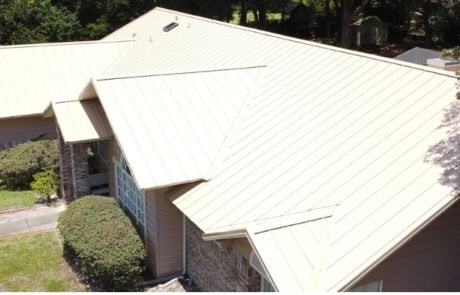
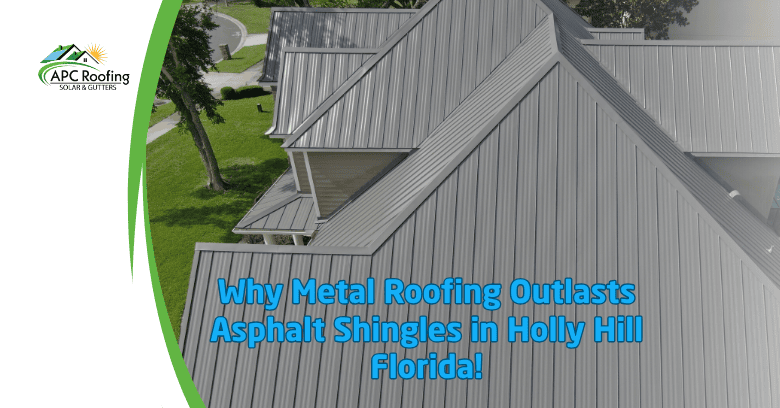
A glance from a lawn at lines of screw heads points to a through-fastened roof, while flat pans divided by upright folds with no hardware showing are standing seam. Outbuildings and porches lean toward ribbed or corrugated sheet, and dwellings use both.
Rolled Shapes – Reach Between Supports
Corrugated sheet ripples in smooth, repeating curves, while ribbed panels carry squared ribs with wide flats between. One length rides over a neighbor at a side lap, and every screw lands where a maker's layout calls for.
Ribs make a stiffer panel that crosses longer spans, while corrugated fits a period barn or a farmhouse style. On a big roof plane, taller ribs keep a downpour from spilling over side laps, while a low pattern handles short runs like a porch or lean-to.
Fasteners in the Open: Small Parts, Big Job
Each screw draws a panel snug against a rafter or purlin, while a washer at each head keeps rain from following a shank. Synthetic rubber ages in the sun, going hard and then cracking, and the panels can go on for decades more.
A screw set too tight crushes a washer out sideways, while too little pressure or a crooked angle leaves an opening.
Fresh Fasteners – Where Help Stops
On corrugated or ribbed sheet, every washer ages at one pace, and a full re-screw is an ordinary step somewhere along the way. Each original fastener is taken out, and a wider replacement goes back in where threads can still find purchase.
Re-screwing with new washers fixes leaks at screw heads and snugs down sheets that flutter, but red rust, gaping laps and cracked flashing need other remedies. Thread type follows whatever support lies below, since lumber and steel purlins take different screws, and a painted cap keeps new work inconspicuous.
Thermal Movement – Stress at Screw Holes
A steel sheet grows in afternoon heat and shrinks back by dawn, and a long run adds up to a measurable distance, and aluminum reaches about double. Where nothing lets a panel slide, the metal elongates screw holes, and washers then stop sealing.
Popping and clicking on a sunny morning is expansion at work, and a careful installation suffers no damage.
Under Upright Joints – Laid in Sequence
Every lengthy pan is secured firmly in only one zone, while clips on every other section permit movement. A finishing piece at an opposite end has room built in underneath, and metal with no play winds up torn or kinked.
Pans go down one at a time, with clips screwed along a single side, so each new pan conceals all hardware below.
Joint Styles: Choosing Between Options
One kind of rib clicks shut under a firm push, while other designs are crimped over by a machine. Double-lock construction resists uplift and ponding, so maker ratings reach lower pitches.
Profiles come in different widths and heights, and architecture and a buyer's eye decide. Parts made for one system rarely suit a rival brand, and a substitute from elsewhere leaves gaps.
Choosing a Weight: Dents and Ripples
Steel thickness is given as a gauge, and numbers fall as sheet gets thicker. Pole buildings frequently carry twenty-nine, and homes typically get twenty-six or twenty-four.
Aluminum sheet is measured in decimal inches, and in either metal thicker stock dents less and lies flatter. Standing in a yard, nobody can judge weight by eye, so only a maker's label or data sheet can confirm what was bought.
Rust Resistance – Aging in Sunlight
At a steel mill, coil gets a metallic layer of zinc or zinc and aluminum, and baked-on primer and color follow. Damage no deeper than paint is cosmetic, but a sheared edge exposes steel that will corrode.
PVDF systems keep color and gloss for decades, but silicone-modified polyester goes dull and powdery earlier. Uncured concrete and mortar harm an aluminum-zinc coating, and a separator goes wherever panels touch new brick.
Which Metal Suits: Near the Water
Aluminum carries less weight and does not redden, but a dropped tool or a falling branch dents a soft sheet sooner. Salt air at the coastal end of our territory attacks zinc-based layers, and some makers limit steel products by distance from a shoreline.
Copper is usually kept to small accent roofs over a bay or a porch, and years outdoors take bare metal to brown and then green.
Chemistry on a Rooftop: Treated Lumber and Wrong Screws
Runoff from copper eats through coated steel downhill, and a stain shows up before a leak does. Chemicals in treated lumber pit any aluminum resting on top, and an ordinary screw of an unsuited alloy fails as well.
Flashing added later should match whatever metal is already installed, or a separator tape sits wherever unlike metals meet.
What Buyers Notice – Why Installation Counts
Oil canning is a gentle waviness across the flat of a standing seam pan, and faint hollows show at sunrise and fade by noon. A slightly distorted pan sheds rain like any other, and nothing shortens the life of the roof.
Stiffening ribs, a stouter grade and a smaller pan width lessen waves, and a smooth, straight base under the panels counts. Images of real houses show oil canning from obvious to barely there, and the choice of panel is yours.
Indoor Comfort: Noise and Heat
A racket many recall comes from sheet over open framing, because a single thin skin vibrates freely. Residential metal goes over plywood and underlayment, with insulation above each ceiling, and in a living room few can pick out any change from shingles.
A white, tan or light gray panel turns back much glare, and the attic beneath stays cooler on a summer afternoon. A deep hue absorbs heat like any dark surface, and without venting and insulation, color alone does little. Thin steel cools off right after dusk, so evenings indoors feel better sooner.
Guard Rows – Clamped or Fastened
Across the colder end of our territory, snow does not cling to painted steel, and an avalanche off an eave can flatten shrubs, gutters or anyone underneath. Retention bars keep a load up top to melt off gradually, and typical spots are above doors, walks, decks and gas meters.
Brackets on standing seam bite an upright fold, not a flat, while ribbed or corrugated sheet takes mounts driven into structure with sealing washers, and in milder markets roofs do without.
Blows From Above – Photographs and Measurements
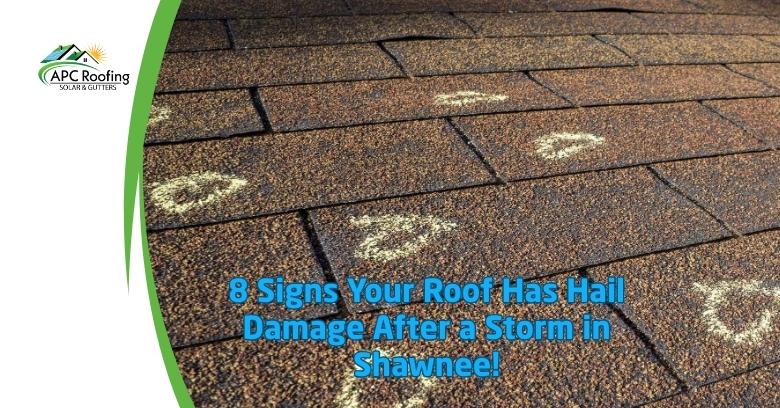
At the colder end of our territory, hail is a regular event, and a heavier gauge or striated pans resist dents better. A crease that cracks paint exposes bare metal to rust, while a seam or trim edge pushed out of line may open.
Once a storm has passed, a roofer photographs and measures every mark, and each dent and damaged panel is located.
Uplift: Built to a Pattern
Perimeter bands of a roof take a heavier pull than a central field, and an unfastened edge lets pressure build beneath. Finishing trim is hemmed and caught on a cleat for a whole run, and no gap is left to work into.
Fasteners go in closer together near corners and a roof's rim, according to a published schedule for how sheltered a site is. At the coastal end of our range, where hurricanes come ashore, rows of screws draw in further, and panel and hardware are rated as one assembly.
Where Something Pokes Through – Careful Detailing
Each pipe takes a boot made for panel roofs, with a base pressed to follow corrugations, and a flat location lets a flange bed down evenly. A skylight, chimney or larger unit sits on a raised curb with a cricket uphill, and water from higher up is divided and sent past.
Sealant finishes a joint already made watertight by folded metal, as ultraviolet light turns soft compounds brittle in a few seasons.
Meeting Planes: Built to Drain
A valley pan goes down ahead of any panel, and panels are trimmed on a diagonal to match. Every raw end is turned under and caught by a cleat, so no fastener sits where water collects.
On a run too long for one sheet, an endlap joins pieces with sealant between, and screws pass through both thicknesses, upper over lower.
How Low Metal Can Go: Where Locked Seams Help
Through-fastened sheet generally wants about three inches of rise per foot, since anything less lets rain back up at overlaps. Machine-folded seams go much lower, with certain lines suited to decks that are nearly flat.
A barely tilted roof over a porch or addition is common on houses, and a measured angle decides what goes on, and a part too low for any panel gets a membrane instead.
Under Everything – Purlins on Outbuildings
Metal on a dwelling is installed over full sheathing, and a high-temperature underlayment sits beneath the panels, as asphalt felt turns brittle up there. An outbuilding may have nothing but purlins under the metal, so support spacing and gauge are matched.
With an old roof gone, damaged sheathing is cut away and rebuilt, as fasteners driven into mush pull straight out.
When the Old Roof Stays: What Has to Be True
Many building codes allow metal over a single layer of asphalt shingles, and noise and a dumpster are avoided. Steel panels weigh well under two pounds per square foot, and typical framing carries a little extra easily. A synthetic underlayment and rows of battens come next, and fasteners are long enough to bite solid boards below.
Where a roof was already recovered once, or the decking is soft, everything comes off, as a wet base under a new roof only gets worse.
Perimeter Details: Done Properly
Profile-cut closures fill openings beneath each rib at the upper and lower lines of a run, and wind-driven rain, wasps and birds stay out. A ridge cap may be vented or sealed, and attic ventilation is what decides.
Trim at every rake plus a drip edge over a gutter finish a roof's border, and fascia boards stay dry.
Day of Installation: Where to Step
Standing seam panels are formed at full slope length, so a single piece covers eave to ridge without an endlap. An extended panel needs enough hands under the metal to stay straight, and a crimped or creased pan is no longer usable.
Feet go in a flat where something solid lies below, because ribs and seams crush under a boot. A damp or dew-covered pan gives a shoe nothing to hold, and a homeowner is better off staying on the ground.
Clues to Watch – A Look From Below
- Brown rings at fastener heads, low on a slope.
- Screws backed out of holes, at an eave.
- A rake edge torn free, above a porch.
- A boot pulled away from a pipe, on a back slope.
- Corrosion along a cut, in a valley.
- Faded paint, where afternoon light hits.
- A ceiling stain in a straight line, down a hallway.
- A lap that has separated, near a valley.
APC Roofing and Standing Seam Metal Roofing in Springfield Missouri: Order of Work
The first thing we do is identify which panel system is on the house and what holds the panels down, before each fastener, edge, boot, valley and lap is read in sequence. Panel grade, paint and hardware are recorded, and from inside, the attic shows any old leaks.
A report with photos sets out what is up there, and each recommendation carries reasons. Where a reseal will do, a reseal is what we propose, while a worn-out roof is named as such.
Standing Seam Metal Roofing Across Springfield Missouri – Details Read Closely
Call 913-398-5020 and we will schedule an inspection.
Fix or Redo – When a Tear-Off Makes Sense
A lone bad pan can be taken out and exchanged, though new metal looks brighter than weathered neighbors. New sealant at a lap ends trouble at an overlap, and new screws restore a roof full of aged seals.
Widespread perforation puts replacement on the table, and a covering with every joint and collar given out is no different. Redoing one face of the house is a middle path, provided trouble goes no further.
Aging Gracefully: Upkeep Over Time
Good metal work frequently reaches forty years, and an estimate varies from house to house. Standing seam, with no holes through a pan, gets by on less maintenance, while through-fastened sheet needs a re-screw somewhere along the way.
Mixed metals, raw cut edges and caulk doing the job of flashing all shorten a roof's service, and a visit now and then spots trouble early. Wet leaves left sitting on panels stain and dull a colored finish, and brushing debris off protects paint.
For a roofer's view on Standing Seam Metal Roofing in Springfield Missouri, reach APC Roofing at 913-398-5020. We will inspect all hardware, every edge and each penetration, and a written report puts options in front of you.
Verified

Verified
Verified
Verified