In Need of Metal Roof Installation Here in Shawnee Kansas?
APC Roofing puts up and mends screw-down sheet and clip-held panels, across homes as well as sheds and barns.
Phone 913-398-5020 and you will hear in plain words what condition the roof is in.
Identifying a System – A Glance Up
Screw-down panels, corrugated or ribbed, are fastened with screws through the exposed metal, whereas standing seam relies on clips that sit under locked joints. Most metal on houses is coated steel, with aluminum and copper turning up less often.
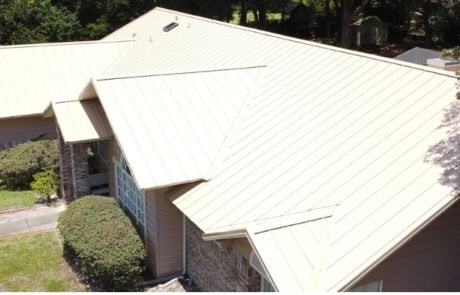
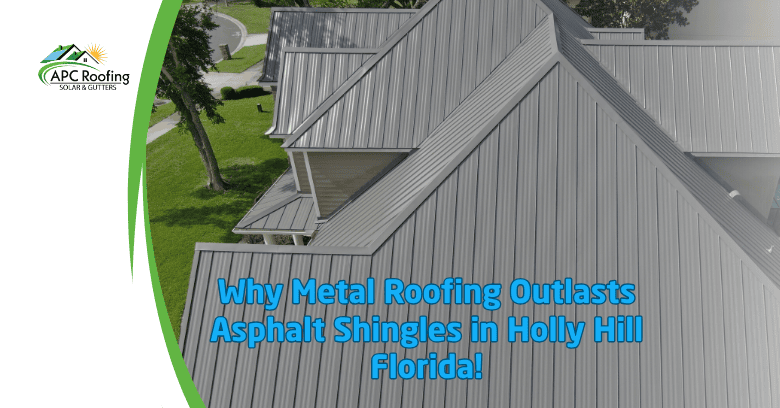
From a driveway, lines of screw heads across the panels mark a through-fastened roof, and smooth pans between tall ribs with nothing poking through are standing seam. Farm buildings and garages commonly have ribbed or wavy sheet, and houses carry both styles.
Shapes Rolled Into Steel – Reach Between Supports
A corrugated sheet curves up and down in regular round waves, while ribbed panels carry squared ribs with wide flats between. Adjacent lengths share a narrow side lap, and fastener placement follows a published pattern.
With deep ribs, a ribbed panel bridges wider spacing, and corrugated suits older buildings and a farmhouse look. A tall rib keeps heavy rain inside a channel on a broad roof plane, whereas a short porch covering gets by with a low pattern.
Fasteners in the Open – Driven Right or Wrong
Each screw clamps a panel down onto wood or steel framing, and a washer under each head stops water getting in. Sun and temperature swings dry out neoprene over time, and the panels usually last a great deal longer.
Overdriving tears a washer and dishes the metal, and a fastener stopped short or angled leaves a gap for rain.
Swapping Out Hardware: Worth Doing, With Limits
Washers on corrugated or ribbed panels give out as a group, and a whole-roof re-screw is routine over the years. Worn hardware is taken out in turn, and an oversized screw returns to every hole to catch undamaged fibers or metal.
Re-screwing with new washers fixes leaks at screw heads and snugs down sheets that flutter, yet rusted panels, opened laps and poor flashing still need separate repairs. New screws are matched to whatever framing lies beneath, with wood threads for lumber and drill points for steel, and color-matched tops blend in with a painted finish.
Movement Through the Day – Built to Allow Travel
A steel sheet grows in afternoon heat and shrinks back by dawn, and a long run adds up to a measurable distance, with aluminum going about twice as far. A panel pinned at both ends slowly slots every screw opening, and a washer stops sealing.
Ticking heard as morning sun lands on steel is ordinary expansion, and a well-built roof takes no harm from some noise.
Under Upright Joints – Laid in Sequence
Every lengthy pan is secured firmly in only one zone, while floating clips elsewhere allow the pan to slide. Flashing at an unanchored end is shaped with space beneath, and rigid fastening over a big pan shears or wrinkles the metal.
Pans go down one at a time, with clips screwed along a single side, so each new pan conceals all hardware below.
Closing a Seam – Suited to Pitch
One kind of rib clicks shut under a firm push, and mechanical versions are turned over with a powered seamer. A double-lock grips harder against wind-driven rain, and published ratings run down to lower slopes.
Pan width and rib height vary from product to product, and architecture and a buyer's eye decide. Hardware and trim are sold for one system only, so a repair calls for knowing exactly which panel is up there.
Stock Weight: Reading a Label
A steel panel is rated by gauge, and numbers fall as sheet gets thicker. A shop or barn frequently has twenty-nine, and residential work leans on twenty-six and twenty-four.
Aluminum uses decimal figures rather than gauge, and in both cases a heftier panel stays straighter and tougher. A light grade and a heavy grade are indistinguishable from a driveway, so printed product data gives a firm answer.
Surface Protection: When Damage Matters
Raw steel is galvanized, or given an aluminum-zinc treatment, before shipping, and baked-on primer and color follow. A mark in a topcoat alone keeps steel protected, but an unprotected cut or a gouge to bare steel is where red rust starts.
PVDF finishes hold color for decades, and polyester families fade and chalk more quickly. An aluminum-zinc surface is damaged by contact with fresh mortar, so panels are kept away from a new chimney or stone wall.
Base Material – Coast and Country
Aluminum carries less weight and does not redden, but softness means a heavier grade for equal toughness. Close to salt water, at the coastal end of our range, metallic coatings break down faster, and makers restrict certain products near surf.
Copper usually goes on small accent roofs over bays and entries, and the metal weathers to a natural patina with no paint.
Incompatible Neighbors: Treated Lumber and Wrong Screws
A copper pipe or flashing above steel sends corrosive drainage down over the panels, and discoloration arrives well before a panel gives way. Aluminum laid against treated lumber corrodes at every contact point, and an ordinary screw of an unsuited alloy fails as well.
Flashing added later should match whatever metal is already installed, or a strip of membrane goes between dissimilar metals.
Looks, Not Leaks: Setting Expectations
In trade terms, oil canning describes soft ripples across a broad flat between seams, and low sun at dawn or dusk shows up every hollow. An irregular-looking finish keeps weather out just as well, and useful life is unchanged.
Stiffening ribs, a stouter grade and a smaller pan width lessen waves, and a deck without humps or dips matters too. Images of real houses show oil canning from obvious to barely there, and you make the call on profile.
For People Inside: Noise and Heat
Panels laid straight over bare purlins ring out in a downpour, because a single thin skin vibrates freely. Residential metal goes over plywood and underlayment, with insulation above each ceiling, and indoors, few people notice more noise than under asphalt.
A light-colored panel sheds much of the sun's warmth, so the space under the roof runs cooler. A deep hue absorbs heat like any dark surface, and airflow and insulation lower down count just as much. After sunset, metal sheds stored warmth quickly, so evenings indoors feel better sooner.
Holding a Load Up There – Clamped or Fastened
Across the colder end of our territory, snow does not cling to painted steel, and an avalanche off an eave can flatten shrubs, gutters or anyone underneath. Stops attached to the metal let a load leave slowly, and positions are chosen where anything below could be hit.
A standing seam roof gets brackets that squeeze an upright joint rather than pierce a pan, whereas corrugated panels get mounts anchored through to purlins, and in milder markets roofs do without.
Pounding From the Sky – A Record of What Happened
At the colder end of our territory, hail is a regular event, and thicker steel shows fewer dents. A strike sharp enough to break a finish lets rust start, and a flattened rib or a shifted cap can leak.
After any storm, each affected area is photographed and measured, and each dent and damaged panel is located.
Storm-Ready Attachment – Rated Assemblies
Gusts tug harder at corners and along a perimeter, and a blast under a raised lip can tear a panel away. Finishing trim is hemmed and caught on a cleat for a whole run, and no gap is left to work into.
Spacing shrinks where loads climb, at corners and a rim, according to a published schedule for how sheltered a site is. Where hurricanes reach, at the coastal end of our territory, the number of fasteners goes up again, and panel and hardware are rated as one assembly.
Where Something Pokes Through: Keeping Water Out
Each pipe takes a boot made for panel roofs, with a base pressed to follow corrugations, and a hole is cut in a flat, not through a seam. A bigger penetration is framed with a curb and a small cricket upslope, and water from higher up is divided and sent past.
Sealant finishes a joint already made watertight by folded metal, since the steel outlasts any compound many times over.
Where Slopes Meet – No Screws in the Water
Each valley receives a wide flashing before panels arrive, and every sheet is trimmed on the skew. Exposed ends are bent back and gripped by cleats, so no fastener sits where water collects.
Long runs made of more than one piece get an endlap with sealant sandwiched inside, and uphill metal always goes on top, screwed through.
How Low Metal Can Go – Measured, Not Guessed
Corrugated and ribbed sheet usually needs around three inches of rise in every foot, and at anything less, rain creeps sideways across laps toward screws. Double-lock standing seam is rated for far shallower roofs, and product literature states an exact minimum.
A barely tilted roof over a porch or addition is common on houses, and a measurement comes before any panel is named, and an area that metal cannot serve is given a membrane.
Under Everything: Checked on a Tear-Off
A home gets metal over a continuous plywood or OSB deck, and a high-temperature synthetic underlayment goes between, because traditional felt degrades quickly up there. On a barn or shop, panels often span open purlins, so support spacing and gauge are matched.
Once the deck is exposed, any board that gives underfoot comes out, because screws in decay have nothing to grip.
Going Over the Existing Roof: Condition Decides
Panels can often go on top of one shingle layer where code permits, so the house is spared a tear-off and debris. Sheet steel is light, at well under two pounds a square foot, and typical framing carries a little extra easily. Battens on top of a synthetic membrane are laid across existing shingles, and fasteners are long enough to bite solid boards below.
A roof that was recovered once before, or a deck with decay underneath, comes off entirely, since dampness sealed beneath panels goes on rotting structural lumber.
Finishing Off – Fillers and Trim
Strips cut to match a profile close off space under each rib at high and low points, and rain, insects and birds cannot get under the panels. A ridge cap may be vented or sealed, and attic ventilation is what decides.
Gutter aprons and rake trim wrap up a roof's outline, so rain does not run down behind fascia.
On the Job: Handling and Footing
Standing seam is produced to fit each run from bottom to top, and nothing overlaps partway up. Carrying an extended panel takes people spaced along the metal, and a crimped or creased pan is no longer usable.
Weight should go only into pans over framing, as a seam under a boot can bend open. Moisture turns a painted panel into a slide, so climbing up for a look is unwise.
Clues to Watch – No Ladder Needed
- Orange halos at fasteners, just above a gutter line.
- Hardware sticking up, on a south exposure.
- A peeled drip edge, above a porch.
- A boot pulled away from a pipe, close to a ridge.
- Rust creeping from a trimmed end, next to a skylight.
- Blotchy color, on one panel more than on panels nearby.
- Water marks lined up on drywall, over a closet.
- An endlap gaping, where slopes meet.
How APC Roofing Tackles Metal Roof Installation in Shawnee Kansas – Step by Step
Our starting point is pinning down which system is up there and how the panels are secured, followed by every screw or clip, edge, boot, valley and lap. Thickness, coating and hardware style go into notes, and a trip into the attic catches past leaks.
Every finding goes into a report with images, and each repair is explained. A sound covering is called sound, while a worn-out roof is named as such.
Metal Roof Installation for Shawnee Kansas Homes – Careful Assessments
Reach us at 913-398-5020 and we will schedule an inspection.
Repair or Replacement – When a Tear-Off Makes Sense
A lone bad pan can be taken out and exchanged, though fresh color will not match weathered neighbors. Resealing a lap or replacing a boot stops a local leak, and a full set of screws fixes tired rubber.
Perforation across many panels means replacement, and a covering failing at nearly every joint is in the same position. Redoing one face of the house is a middle path, when harm is local.
Aging Gracefully: Upkeep Over Time
A well-built steel covering commonly serves forty years or more, though climate, care and material all make a difference. Standing seam, with no holes through a pan, gets by on less maintenance, while ribbed sheet gets new fasteners once washers tire.
Metals of different kinds touching, unhemmed cuts and sealant used in place of flashing shorten a roof's service, and regular inspection turns up faults while minor. Piles of leaves behind a chimney keep a patch of metal damp for days, and brushing debris off protects paint.
If Metal Roof Installation in Shawnee Kansas is on the table, phone APC Roofing at 913-398-5020. We will inspect all hardware, every edge and each penetration, and a written summary lays out what we saw so you can choose.
Verified

Verified