You’ve patched your shingles after one spring storm too many, and someone mentioned steel. Now you’re sorting through gauges, coatings and panel names, and every website seems to be selling you something. What you want to know is simple: does steel roofing in Shawnee hold up to Kansas weather, and what separates a good steel roof from one you’ll regret?
Those are the right questions. Two steel roofs can look the same from the curb and perform very differently ten years later, and the difference is mostly in details nobody points out.
APC Roofing is a GAF Certified roofing contractor, licensed and insured, and in business since 2017. Your inspection and estimate are free. Call 913-398-5020 and we’ll walk you through your options on your own roof.
Why most metal roofs on homes are steel
Steel is strong, stiff and costs less than aluminum or copper, so it’s what most residential metal roofs are made of. Bare steel rusts, though, so the protection goes on at the factory in layers. The sheet gets a metallic coating of zinc (galvanized) or an aluminum-zinc blend, then a primer, then a baked-on paint finish.
Aluminum is the other common choice. It doesn’t rust and it’s lighter, but it’s softer and dents more easily. In an area that sees hail most years, that matters.
Gauge matters in hail country
Steel thickness is listed by gauge, and the numbers run backward: a lower number means thicker metal. Pole barns and sheds often use 29-gauge. Homes usually get 26 or 24.
Thicker steel resists dents better, lies flatter and is less likely to show waviness. You can’t tell 29 from 24 by looking at it from the driveway, so ask for the product data sheet with any estimate. It should list the gauge, the metallic coating and the paint system.
Paint finishes and the Kansas sun
Summer UV is hard on any roof. On steel, the paint is what takes it.
- PVDF finishes (you’ll sometimes see the brand name Kynar 500) hold their color and resist chalking for a long time. They cost more.
- Silicone-modified polyester (SMP) finishes cost less but tend to fade and chalk sooner, especially on south- and west-facing slopes.
A scratch that only goes through the paint is cosmetic. A cut or gouge down to bare steel is where rust starts, which is why cut panel ends get hemmed or tucked under trim instead of left raw.
Steel roofing styles you’ll be offered
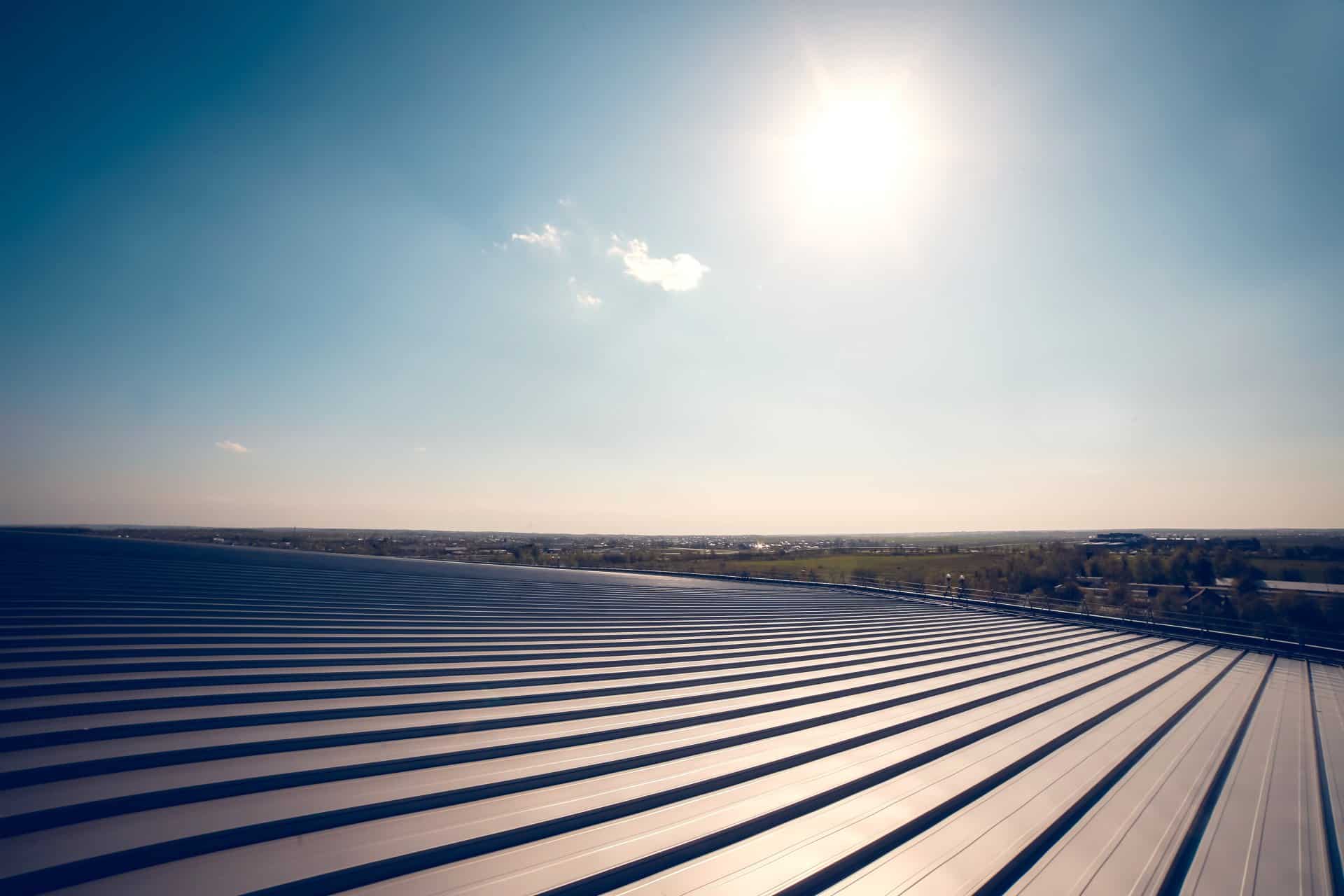
Standing seam. Panels lock together at raised ribs, and hidden clips hold them down, so no screws face the weather. This is the most common steel roof on homes. Our standing seam metal roofing in Shawnee page goes deeper.
Exposed-fastener panels. Ribbed and corrugated metal roofing is screwed straight through the face of the panel. It costs less and goes on faster. The trade-off is upkeep: each screw has a rubber washer, and those washers dry out and crack over the years.
Steel shingles and stone-coated steel. These are pressed steel panels shaped to look like shingles, shake or tile. Stone-coated versions have a granule finish bonded to the surface. They’re a good fit if you want metal’s toughness but your neighborhood or HOA leans toward a traditional look.
How Shawnee weather tests a steel roof
Freeze-thaw cycles, which crack old shingles, don’t hurt steel the same way. Snow and ice slide off painted metal, though, so think about where that snow will land: entries, decks, gutters and driveways may need snow guards.
Hot summer afternoons make steel expand, and cold nights shrink it again. Panels and fasteners have to allow for that movement, or screw holes wear into slots and seals start to fail.
Then there’s moisture. On a house, steel goes over solid decking with a synthetic underlayment. When that layer is skipped or done poorly, warm, humid air can condense on the underside of cold metal and drip into the attic.
Exposed fasteners need a little attention
If you choose a screw-down panel, plan on checking it now and then. Look for rust rings around screw heads, screws that have backed out, and washers that look flat and cracked. Re-fastening with new, slightly larger screws seals those holes again. Screws should be snug, too. One driven too hard crushes its washer, and one left loose lets water in on one side.
Steel or shingles?
Shingles cost less up front and are easy to repair. Steel costs more but sheds snow, stands up to wind and doesn’t lose granules the way asphalt does. If you’re staying in your home a long time, steel is worth pricing. If you’re selling in a few years, a good shingle roof may make more sense. We’ll show you both and let you decide.
How it works with APC Roofing
- Book your free inspection. Call 913-398-5020 or request a free online estimate.
- Get a clear, honest assessment and estimate. We check your decking, roof pitch and every pipe, wall and chimney the panels will meet, then give you a written estimate that names the gauge, coating and panel style.
- Your roof gets done and the site gets cleaned up. The crew installs the panels and trim and clears the debris before leaving.
Financing is available through Aqua Finance, Fortifi, Hearth and Home Run Finance if you’d like to spread out the cost.
Steel roofing questions from Shawnee homeowners
Will a steel roof rust?
Not when the coating is intact. Factory zinc or aluminum-zinc coatings plus paint protect the steel. Rust shows up where that protection is broken: deep scratches, raw cut edges, or spots where copper runoff or the wrong fastener touches the panel.
What gauge should I use on a house?
Most homes use 26- or 24-gauge. Thicker metal costs more and resists dents better, so it’s worth considering if hail is your main worry.
Can steel roofing go over my old shingles?
No. We tear the old roof off down to the deck before any steel goes on, so we can check and fix the wood first.
Does hail damage mean I need a new roof?
Not always. Many dents are cosmetic. Cracked paint, bent seams or damaged trim are different, since they can let water in. A free inspection will tell you which you have. If you file an insurance claim, you file it and pay your own deductible, and we document the damage and work with your adjuster.
Get a straight answer on steel
A worn roof doesn’t cost less to fix after a few more storms. Small leaks around old flashing can soak decking for a season before anything shows inside.
Whatever you choose, you should end up with a roof you understand, an estimate with no surprises and one less thing to worry about when storm season starts. Call 913-398-5020 to book your free inspection, or get your estimate started online.