Maybe it’s the roof on your detached shop, rusting around the screws. Maybe it’s a porch roof that drips every time it rains hard, or a new pole barn that needs a roof you won’t have to babysit. Corrugated metal roofing in Shawnee, KS is one of the most practical roofs you can put on a building like that, as long as the panel suits the slope and the screws go in right.
The hard part is knowing whether you’re being sold the right panel or just the lowest-priced one. You shouldn’t have to guess.
APC Roofing is GAF Certified, licensed and insured, and has been in business since 2017. We’ll inspect the roof for free and tell you plainly what we see. Call 913-398-5020 to set up a time.
What corrugated metal is
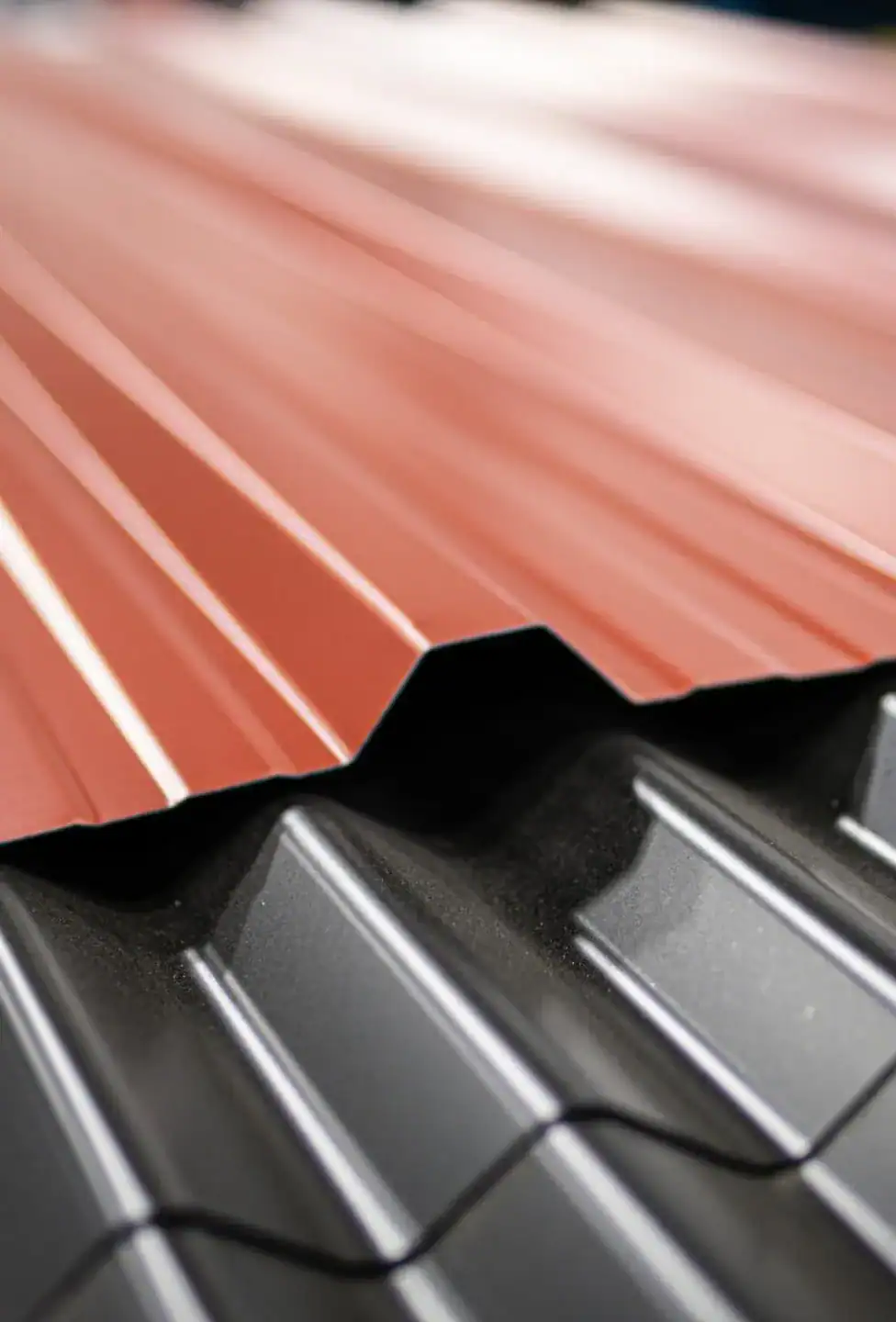
Corrugated sheet has rounded waves rolled into it. Its close cousin, ribbed panel (often sold as “R-panel”), has squared ribs with flat stretches between them. People call both of them corrugated. Either way, the sheets overlap at the edges and screws go straight through the face of the metal into the framing. That’s why it’s called an exposed-fastener roof.
It’s a different animal from standing seam, where clips hide under raised seams and nothing pierces the panel. Corrugated costs less to buy and install. The trade-off is all those screws.
Where corrugated metal roofing works well
You’ll see it most on detached shops, pole barns, garages, sheds, carports and covered porches. Some homeowners also choose it for the whole house to get a farmhouse or industrial look.
How it’s attached changes with the building. On a home, panels usually go over solid decking with an underlayment between. On a barn or shop, they often span open purlins, the horizontal boards or steel members running across the rafters. When there’s no deck underneath, the panel has to be stiff enough to bridge the gap on its own, so thickness and rib height matter more.
Slope matters more than people think
Screw-down panels rely on gravity to keep water moving past the overlaps. If the roof is too flat, wind-driven rain can push water sideways under the laps and into the building. Most manufacturers want around three inches of rise for every foot of run before they’ll approve an exposed-fastener panel, though the exact number depends on the product.
Low porch roofs and lean-to additions often fall short of that. When they do, a low-slope standing seam system or a membrane roof is the better choice, and you’ll hear that from us rather than a pitch for the wrong panel.
The screws are the weak point
Every screw has a rubber washer under its head that seals the hole. Sun and summer heat dry those washers out over the years. Because they all age together, a corrugated roof tends to start leaking in a lot of places at once.
Installation makes a big difference here. Drive a screw too tight and the washer squashes out the sides. Leave it loose or crooked and it never seals. The screws also need to land where the manufacturer says, and in solid framing.
When the washers give out, the usual fix is a re-screw. Old fasteners come out one at a time, and new ones go in, often a size larger so the threads bite fresh wood. That stops leaks at the screws and snugs down loose sheets. It won’t fix rusted panels, separated laps or bad flashing, so those get checked at the same time. Our metal roof repair page covers that work in more detail.
How corrugated metal roofing in Shawnee handles the weather
Heat is the slow one. Long sheets grow in the afternoon sun and shrink overnight, and that back-and-forth gradually wallows out the screw holes.
Hail is the sudden one. Thin panels dent easily, and a strike that cracks the paint lets rust get started. Wind works at any loose sheet edge or trim piece, which is why screws should be spaced closer together along the edges and corners. And snow slides off metal in a sheet, so think about what sits under the eaves, like the shop door or the spot where you park.
Outbuildings bring one more Shawnee problem: condensation. On a cold winter night, warm, damp air inside an unheated shop or barn hits the underside of the cold steel and turns to water. It drips, and it looks exactly like a leak. A condensation barrier or insulation under the panels prevents most of it, and it’s much easier to add while the roof is going on.
Panel thickness and finish
Steel thickness is measured in gauge, and a higher number means thinner metal. Thin 29-gauge panels are common on sheds and pole barns. Homes, and any building that takes regular hail, are better served by heavier panels. When you compare quotes, ask what gauge each one includes so you’re comparing like with like.
The finish matters as much as the thickness. Roofing steel is coated in zinc or an aluminum-zinc blend, then painted. Scratches that reach bare steel will rust, and so will panels sitting directly on pressure-treated lumber or fastened with the wrong screws. Our steel roofing page goes deeper on gauges and paint systems.
How it works with APC Roofing
- Book your free inspection. Call 913-398-5020 or request a free estimate online.
- Get a clear, honest assessment and estimate. We check the panels, screws, laps, flashing and the framing or deck below, then give you a written estimate with photos. Financing is available through Aqua Finance, Fortifi, Hearth and Home Run Finance.
- The work gets done and the site gets cleaned up. Whether it’s a re-screw, a few new panels or a whole new roof, you’re left with a building that stays dry.
Corrugated metal roofing questions from Shawnee owners
Is corrugated metal a good choice for a house?
It can be, if the slope is steep enough and you’re comfortable with exposed screws that will need attention down the road. If you’d rather not think about fasteners, standing seam is the lower-maintenance option.
Can you replace just a few rusted panels?
Often, yes, if the rest of the roof is sound. New panels won’t match the color of weathered ones exactly, so it helps to swap panels on the least visible side when you can.
Why does my metal shop roof drip on cold mornings when it hasn’t rained?
That’s almost always condensation, not a leak. Moist air inside the building is meeting cold steel. A barrier under the panels or better airflow inside usually solves it.
Do you tear off old shingles before the panels go on?
Yes. APC Roofing always tears the old shingles off down to the deck before panels go on, so we can check the decking and replace anything soft first.
A roof that stays put and stays dry
Call 913-398-5020 or start your free estimate online. You’ll find out whether your current panels can be saved or what the right new panel is. Then the shop stays dry, the tools stay rust-free, and you stop checking the ceiling every time it rains. Want to see the other metal options? Visit our metal roofing in Shawnee page.