Water is dripping onto the shop floor again, or a tenant just sent photos of a stained ceiling tile and a bucket under it. You’re trying to keep the business running while figuring out where the leak is coming from, and the last roofer patched it twice without fixing it. You need commercial roof repair in Sanford that finds the real cause and fixes it with as little disruption as possible.
That’s a lot to juggle. A leak over inventory, equipment or customers costs you more than the repair itself, and it’s hard to know whether you’re looking at a small fix or the start of a full reroof. You deserve a straight answer with photos, so you can plan and budget.
APC Roofing repairs and replaces commercial roofs across Central Florida, including Sanford and the rest of Seminole County. We’re GAF Certified, licensed in Florida (CCC1337030) and insured, we’ve been in business since 2017, and your inspection and estimate are free. Call 407-270-1129.
The commercial roofs we repair in Sanford
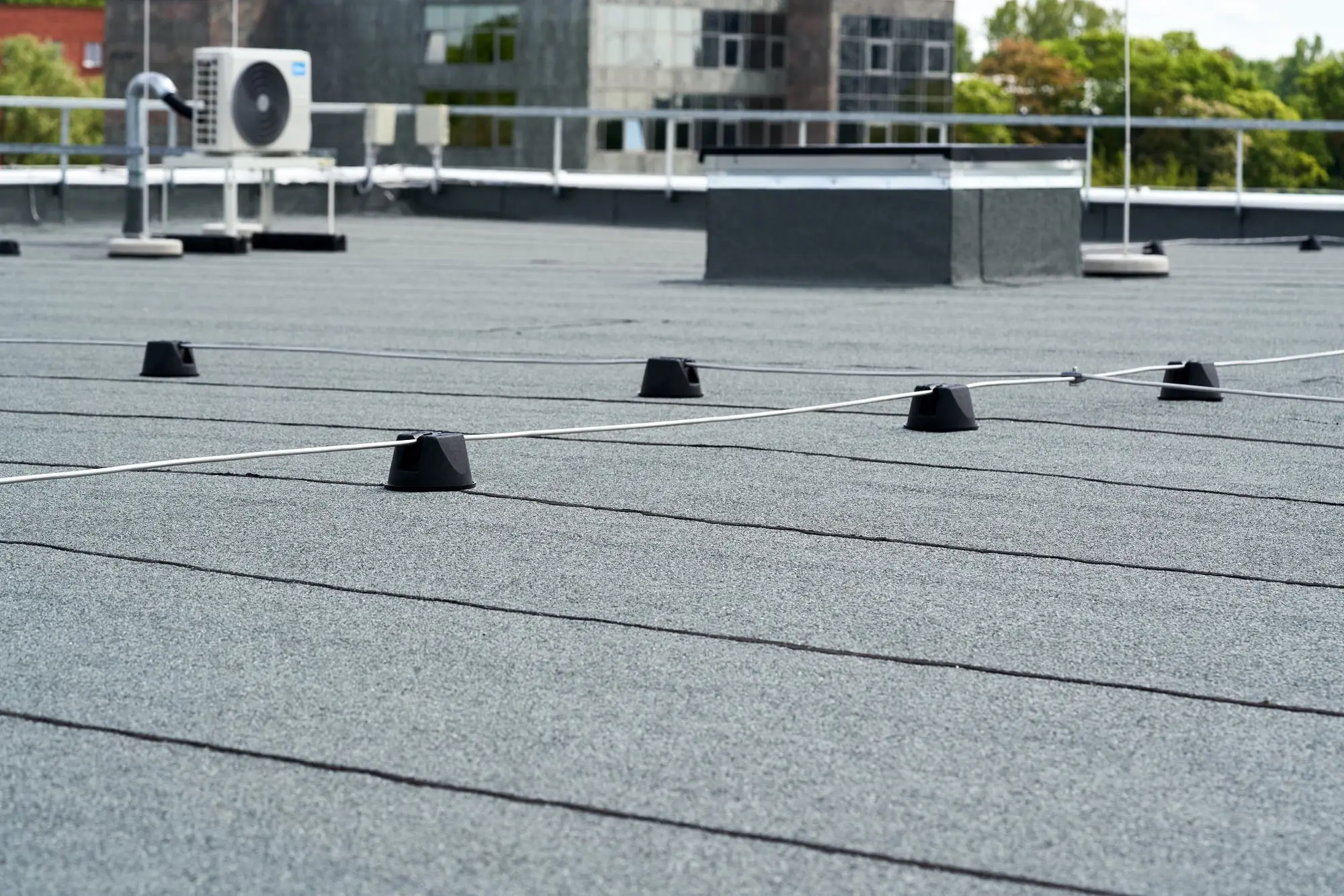
Most commercial buildings around Sanford, from retail strips and offices to warehouses and light industrial spaces, have low-slope roofs. Common systems include:
- TPO, a white single-ply membrane with heat-welded seams, very common on newer buildings
- EPDM, a black rubber membrane with glued or taped seams
- Modified bitumen, rolled asphalt-based sheets, often on older or smaller buildings
- Built-up roofing (BUR), layers of asphalt and felt, usually topped with gravel
- Metal panels, common on warehouses and metal buildings
Each system fails in its own way and gets repaired differently, so the first step is knowing exactly what’s on your building. Our Sanford TPO roofing page goes deeper on that system.
Where commercial roofs leak
On a low-slope roof, most leaks start at the same handful of places.
Seams. Where sheets of membrane join, a weak weld or failing adhesive lets water in. Heat and movement work on seams every day.
Flashing at walls and parapets. The roof membrane turns up the wall and is sealed at the top. Cracked caulk, loose termination bars and failing coping metal are frequent sources of leaks.
Rooftop units and curbs. HVAC units sit on raised curbs, and every curb is a seam in the roof. Service techs walking to and from units also puncture or wear the membrane.
Drains and scuppers. Clogged drains and scuppers leave water standing on the roof, and standing water finds any small opening.
Penetrations. Pipes, conduit, exhaust vents and equipment supports all need properly sealed boots or pitch pockets.
What Sanford’s weather does to a flat roof
Central Florida sun is hard on a flat surface that faces straight up all day. UV breaks down membranes and sealants, and the daily heating and cooling makes the roof expand and contract, which stresses seams and flashing.
Summer afternoon storms drop a lot of water fast. A low-slope roof doesn’t shed it the way a pitched roof does, so drainage problems show up quickly as ponding.
Hurricane season puts the edges to the test. High wind pulls hardest at the roof perimeter and corners, and loose edge metal can let wind get under the membrane and peel it back.
Finding the leak, not just the stain
Water on a flat roof can travel a long way under the membrane or along the deck before it drips through, so the stain inside is often not under the hole. A good inspection covers the whole roof surface, the seams, the flashing and the drains, plus the inside of the building where water shows up. On some roofs, a moisture survey or test cuts help show how far water has spread into the insulation.
You should get photos of each problem and a clear explanation of what’s causing the leak.
Repair, partial replacement or reroof?
A commercial roof that’s mostly sound with a few problem areas can usually be repaired: seams rewelded or patched, flashing redone, drains cleared and penetrations resealed.
When water has soaked large sections of insulation, or the membrane is brittle and splitting across the field, repairs stop making sense. Wet insulation doesn’t dry out under a membrane, and it adds weight and rots the deck. At that point, replacing the affected section or the whole roof is usually the better use of your budget.
We’ll show you where your roof falls on that line and why, so you can plan. If your building needs more than a repair, our Sanford commercial roofing page covers replacement and new installs.
Keeping your business running during repairs
Repairs happen on the roof, but your business is underneath. Tell us about your hours, deliveries, tenants and any sensitive equipment, and the work gets planned around them as much as the job allows. You’ll know what to expect before the crew arrives.
Storm damage and your commercial insurance
If a storm damaged your roof, you or your property manager file the claim with your insurer and pay the deductible on your policy. We document the damage with photos, give you a written estimate and work with your adjuster. More on storm work is on our Sanford storm damage page.
How it works with APC Roofing
- Book your free inspection. Call 407-270-1129 or request a free online estimate.
- Get a clear, honest assessment and estimate. You’ll get photos of every problem area and a written repair plan with the options laid out.
- The repair gets done and the site gets cleaned up. The crew works safely around your building and leaves the roof and grounds clean.
A small commercial leak rarely stays small. Water that gets under the membrane spreads into the insulation, and what could have been a seam repair turns into replacing a section of roof.
Commercial roof repair questions from Sanford owners
Can you repair a roof without shutting down my business?
Most repairs happen entirely on the roof, so businesses usually stay open. Noisy or messy work can be scheduled around your hours when possible.
How do I know if my roof can be repaired or needs replacing?
It mostly comes down to how much of the insulation is wet and how much life the membrane has left. An inspection answers both.
Do you work on metal warehouse roofs?
Yes. Common repairs include replacing worn fasteners, resealing laps and fixing flashing around penetrations.
Should I have my commercial roof checked regularly?
It’s a good idea, especially after hurricane season and after any contractor work on rooftop equipment.
Get commercial roof repair in Sanford scheduled
Call 407-270-1129 or start your estimate online. We’ll find the source, show you the fix and give you a plan you can budget for.
Then you can get back to running your business, with a dry building and one less thing to worry about. Your satisfaction is our reputation.