Your flat roof is due for replacement, and the estimate says “TPO.” Maybe it’s the roof over a carport or a back addition, or maybe it’s the whole roof of a small commercial building. You’ve heard TPO roofing in Sanford is the white roof that stays cooler, but you’d like to know what you’re actually buying before you sign.
Good instinct. TPO is a solid material, and like any membrane, it’s only as good as the seams and edges holding it together. Below is what to look for, in plain language.
APC Roofing is GAF Certified, licensed in Florida (CCC1337030) and insured, and we’ve been installing and repairing roofs in Central Florida since 2017. Your inspection and estimate are free. Call 407-270-1129 to set up a visit.
What TPO roofing is
TPO stands for thermoplastic polyolefin. It’s a single-ply roofing membrane that comes in wide rolls, usually white. “Thermoplastic” is the useful part: heat softens it, so two sheets can be welded together with hot air into one solid piece. A well-welded TPO seam is part of the membrane itself, not a glued joint.
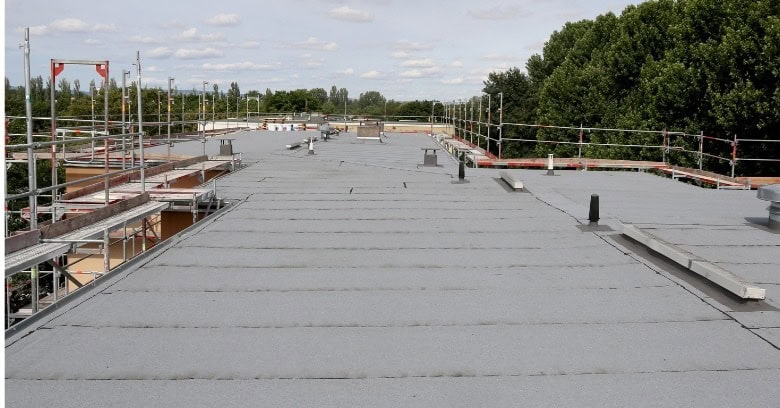
It goes on flat and low-slope roofs, the kind that are too shallow for shingles. Around Sanford, that means porch roofs, carports, garages, additions and Florida rooms on homes, plus shops, offices and warehouses.
Why TPO roofing in Sanford makes sense
The biggest reason is the sun. A white TPO roof reflects much of the sunlight that would otherwise heat the roof surface. On a porch or a room right under the roof, you can often feel the difference on a summer afternoon. How much it helps your cooling depends on your insulation and AC, so nobody should promise you a number.
Water matters just as much. Sanford’s summer storms put a lot of rain on a flat roof quickly. Welded seams hold up better against standing water than seams held by adhesive alone, and the membrane is one continuous sheet across the roof.
During hurricane season, wind pulls hard at the edges and corners. TPO is either mechanically fastened to the deck with plates and screws or fully adhered with bonding adhesive. The right method depends on the deck and the building, and either one needs the edges and corners fastened to the manufacturer’s spec.
TPO vs EPDM vs built-up roofing
EPDM is black rubber. It’s flexible and easy to patch, but it absorbs heat instead of reflecting it, and its seams are taped and primed rather than welded.
Built-up roofing uses layers of felt and asphalt, often under gravel. It’s heavy and common on older commercial buildings, and repairs are messier.
For homes and smaller buildings in Sanford, TPO and EPDM are the usual choices, and in the Florida sun TPO’s reflective surface is a real advantage. If you’d like to compare in more detail, see our flat roof installation in Sanford page.
What a good TPO install looks like
Thickness. TPO comes in different thicknesses, measured in mils, commonly 45, 60 or 80. Thicker membranes have more material to wear before they fail. Your estimate should say which one you’re getting.
Welded and probed seams. After each seam is welded, a good installer runs a probe along it to check for gaps. A seam that passes looks like one smooth surface with a small bead of melted material at the edge.
Slope and drainage. The membrane can’t fix a roof that doesn’t drain. Low spots get built up with tapered insulation or crickets before the TPO goes down.
Flashing. Walls, pipes and equipment curbs get formed TPO flashing welded to the field membrane, with metal counterflashing at walls.
Edges. Metal edge trim, fastened for wind, finishes the perimeter.
TPO repair
A puncture from a fallen branch or a dropped tool, or a seam that’s opened at one spot, can usually be repaired by welding a patch of new TPO over the damage. Older TPO that has weathered for years needs careful cleaning before a new piece will weld to it. If the membrane is cracking or failing in many places, a replacement is usually the better choice. Our flat roof repair in Sanford page covers repairs on TPO and other flat roofs.
How it works with APC Roofing
- Book your free inspection. Call 407-270-1129 or request a free online estimate.
- Get a clear, honest assessment and estimate. You’ll see what we found and why we recommend TPO, another system or a repair. Financing is available through Aqua Finance, Fortifi, Hearth and Home Run Finance.
- Your roof gets done and the site gets cleaned up. The crew clears out the old roofing and debris before leaving.
A worn flat roof can leak for a while before you notice. By the time a stain shows up, the insulation or decking underneath may need to be replaced along with the membrane.
TPO roofing questions from Sanford property owners
Is TPO a good choice for a house in Sanford?
For flat and low-slope sections like porches, carports and additions, yes. Its white surface handles Florida sun well, and its welded seams hold up to heavy rain.
Does TPO need much upkeep?
Keep the drains and gutters clear, keep foot traffic off it where you can, and have it checked after big storms. A dirty white roof reflects less sun, so a gentle cleaning now and then helps.
Can you install TPO on a commercial building?
Yes. See our commercial roofing in Sanford page.
Can TPO go over my existing flat roof?
Sometimes, if the old roof is dry and the code allows it. Wet insulation has to come out first.
A flat roof you can forget about
The goal is a flat roof that drains, stays cooler in the sun and keeps the room under it dry through the next storm season. Call APC Roofing at 407-270-1129 to book your free inspection.