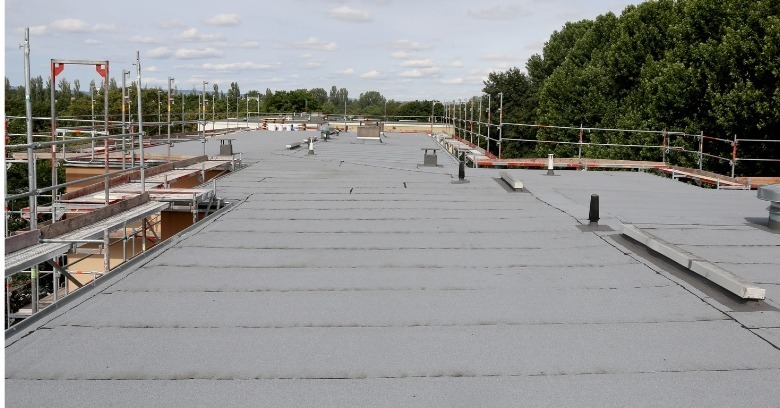
Trying to find Commercial Roof Repair in Palm Coast Florida?
APC Roofing lays new membranes and metal panels on company property, along with the details at units and drains.
Call 386-356-2111 and a roofer will come out and look everything over.
Buildings Where People Work: Setting the Scene
Workers, merchandise and equipment depend on a sound covering, and seepage can empty an aisle or stall a packing station. Across a large building, the upper surface is broad and barely sloped, and runoff and uplift are engineered rather than guessed.
Condensing units, exhaust stacks and antennas are spread across the top, and each support, line or duct gets careful flashing. How the building is used guides the specification, since a cold store and a law office have different needs.
Kinds of Low-Slope Covering: a Short Guide
A single-ply job uses one layer of TPO, PVC or EPDM, modified bitumen is asphalt with polymers added, supplied in rolls, and built-up roofing is felt sealed with hot tar several plies deep. Thermoplastic overlaps are heat-welded into a continuous piece, whereas a rubber splice depends on primer and tape.
Fryer exhaust coats the area around a restaurant's fans, and asphalt or EPDM turns soft under oily buildup, so the stretch nearby is often PVC. Gravel-surfaced built-up roofing weighs a lot and wears well, since the aggregate protects the felts from ultraviolet light.
Steel Over a Warehouse: Upkeep Notes
Some profiles are held down by screws driven through the flat of each sheet, and each shank is set into a purlin or joist. Rubber washers under the heads harden and crack in the sun, and thermal movement works the fasteners loose over time.
A standing-seam roof is held by clips folded into the ribs, so each pan can creep as the metal grows and shrinks. Red rust breaks out at laps and along cut edges, and a coating applied while the steel is sound can slow the spread.
Deck Types: Grip and Strength
Fastening choices depend on the structure below, and a reroof almost never replaces the framing. Steel with flutes holds screws securely, a poured slab gets adhesive or anchors in bored holes, and wood or gypsum plank uses fasteners rated for the material.
Moisture trapped for years can rust through metal decking, and the failed section is removed and rebuilt. The underside can be viewed from below where no ceiling blocks the view, and a few test openings from the surface fill in the gaps.
Keeping a Membrane in Place: Choosing an Approach
Plenty of commercial sheets are pinned by screws and plates in each overlap, adhered work is glued from edge to edge, and ballasted sheets are held down by rock or pavers. Height, exposure and the deck below guide the selection, and extra weight is used only where the structure can bear the load.
Between the plates, a fastened sheet balloons in stiff gusts, whereas a glued sheet holds steady on a clean, dry substrate. A ballasted layout turns inspection into a slow job, as every seam remains hidden until the stone or pavers are shifted.
Wind Across a Wide Roof: Planning the Attachment
Each corner feels the hardest pull, as vortices form where the flow crosses the parapet line. Along the sides, a narrower band sees a little less, and the middle of the field takes a small fraction.
The fastening pattern gets denser toward corners and edges, as set out in engineering tables for height and wind speed. An outer angle with too few anchors allows the sheet to lift, and pressure underneath can strip a wide section.
Insulating Foam: More Than Warmth
Panels of polyisocyanurate rest on the structural deck in offset rows, and a tough cover board over the stack takes foot traffic. Insulation reduces the load on air conditioning and furnaces, and tapered sections supply the gradient that carries rain to the drains.
Waterlogged foam barely resists heat flow, and trapped water weighs on the structure and corrodes steel. Scanning at dusk, with a few cores for proof, marks out the damage, and any spoiled patch is replaced, never roofed over.
Drainage Hardware: The Path Down
A basket-shaped strainer caps each interior opening, which keeps litter from entering the pipe. Once silt coats the grate, flow drops sharply, and a ring of ponding widens outward.
An overflow opening is placed higher than the regular drain, so a steady spill up high signals a blockage below. Ponding piles extra weight onto joists sized for far less, and a wet patch that stays two days reveals a dip or a packed strainer.
Leak Hunting on a Large Building: The Method
A brown ring on an acoustic tile shows where rain reached the room, but the fault on the surface can lie a long way off. Steel decking guides runoff down the corrugations, and joints between foam panels open more paths.
A roofer probes the laps, curbs and outlets upslope of the stained area, and a low-voltage test can trace an elusive leak. Repairs aimed at the spot directly over the drip tend to miss, so a fresh ring appears in the next shower.
HVAC Equipment Up Top – a Closer Look
Every heavy machine rests on a curb built up from the deck, and flashing wraps the sides up to a sheet-metal cover. Corner work calls for patient hands, and any open seam lets rain get behind.
When a heating contractor swaps a machine, an adapter curb often goes on unflashed, and water reaches the office below soon enough. Condensate running loose over the membrane breeds growth and grime, so the stream ought to be carried to a drain.
Penetrations Through the Field – the Small Stuff
A preformed boot, cinched with a band, covers each round stack, while awkward profiles are boxed in a pitch pocket and packed with filler. Aging compound contracts and opens hairline gaps, so topping up is part of routine upkeep.
Runs of conduit and gas line rest on unattached blocks, since a bracket screwed through the covering becomes a leak. A rubber pad beneath every foot distributes the weight, and the cushion absorbs rubbing as temperatures swing.
Domes and Hatches: What Wears
Years of strong sun make plastic lenses chalky and brittle, and cracks spread from the screws at the rim. Water gets in through a hardened gasket or a loose frame joint, yet the membrane usually takes the blame.
Every trip up the ladder means lifting the hatch cover, so the latch, springs and weatherstrip eventually give out. Heat-activated vents over a warehouse are designed to fling wide, and nothing stacked or sealed nearby is allowed to jam the lid.
Masonry Above the Roofline – Sealing the Junction
Base flashing carries the membrane up the inside face, a termination bar clamps the upper end, and metal counterflashing laps down from higher up. A coping cap spans the crest to push rain aside, but joints whose sealant has cracked admit runoff beneath.
Brick and block soak up a long downpour, and the ceiling stain that follows mimics a membrane problem. Coping, wall and flashing are all looked at in the same inspection, and failing mortar is raked out and repointed.
Gravel Stops and Fascia: Holding the Line
A continuous cleat is fixed along the eave and locks the hem of the flange, and a cover strip ties the sheet to the upper face. Codes want perimeter pieces that pass uplift testing for the site, and an undersized section flexes until the metal pulls away.
An eave gutter on a big building collects runoff from a vast surface, so hanger spacing and outlet size follow the flow. Any trim that has bent or lifted needs fixing, and fastening down loose runs helps stop the membrane peeling away.
Foot Traffic From Technicians: Protecting the Sheet
Electricians, cable installers and HVAC crews all make regular trips up, and the route wears a visible track into the field. A forgotten screw is stepped straight into the covering, and a toolbox dragged across the top tears the surface.
A line of walkway pads guides people to every unit, and wear ends up on material built for foot traffic. Managers can require contractors to keep off the unprotected sheet, and nobody should leave scraps or screws behind.
Scheduled Inspections – Staying Ahead of Leaks
Twice annually is a sensible rhythm for a walk-through of a commercial system, plus an extra check after a severe storm. A service call clears leaves and trash from the strainers, seam edges are tested with a probe, and the sealant at each pocket is inspected.
Preparing for the stormy months means close scrutiny of outlets and perimeter metal, and a later round looks for anything a punishing season loosened. Small problems are noted against a drawing of the building, and trouble shows up long before water comes through.
Roof Records: Knowledge That Lasts
A marked-up plan locates every unit, drain and hatch, and a written build-up traces each component from the deck to the membrane. Dated photographs of each repair go in alongside, and cut samples and infrared findings get appended.
Lots of aging buildings have nothing on paper about the assembly overhead, and each roofer who climbs up has to investigate afresh. Roof documentation outlasts any single service firm, and a copy can go to a successor or a buyer.
Mend, Coat or Start Over – Matching Work to Condition
A sound membrane with a handful of local faults simply gets patched, and a weathered surface that is still dry can take a fresh liquid layer. Waterlogged insulation across large areas points toward a new covering, and so do seams that crack wherever flexed, but age alone decides little.
Any restoration coating depends on a washed, repaired substrate, and over damp material the new layer only seals the trouble in. Swapping only the ruined sections is sometimes a sensible middle course, provided the rest of the field has good years left.
The Reroofing Decision – Picking a Direction
Recovering adds another membrane on top of the current roof, and a thin board keeps the surfaces apart. Code permits a second covering, never a third, and only where the insulation underneath is dry.
Tearing off takes the assembly back to the bare structure, and damaged sections of deck are mended while exposed. Tapered insulation installed at the same time can reduce chronic puddling, and saddles between drains steer water sideways.
Clues Around the Building: Before a Small Fault Grows
- Water pouring from an overflow scupper during rain, which suggests a plugged strainer.
- A brown ring overhead that widens with each downpour, which means leakage has crossed every layer.
- White salt deposits across the parapet face, which can point to seepage passing through the masonry.
- Fascia metal that flutters or rattles in a gust, which can put the membrane at risk in a storm.
- Ponding visible from a higher window days after rain, which hints at a low area in the structure or a slow drain.
- A yellowed, brittle skylight lens, which may break when a worker leans on the glazing.
- Rust spots spreading on the underside of a steel deck, which shows a leak traveling inside the assembly.
- A downspout that backs up in heavy rain, which can reflect loose brackets or a jam.
How APC Roofing Tackles Commercial Roof Repair in Palm Coast Florida: What Happens and When
Our first stop is every drain, scupper and overflow, and the laps, curbs and edges follow in turn. On a leaking building, cores and a meter check the foam, since the condition underneath shapes the advice.
Our findings go on paper, with pictures and a marked-up plan, and each problem is labeled with a location. The recommendation names repair, restoration or replacement, and the reasons are set out for you to check.
Commercial Roof Repair in Palm Coast Florida: What Needs Doing Up Top
Call us at 386-356-2111 and we will schedule a time to come out.
Working Above Occupants – Planning Together
Screwing into a steel deck rings through the rooms beneath, and the smell of primers can reach the fresh-air intakes. The loud stages are planned with the building manager ahead of time, and vents beside the work can be covered while the cement sets.
Waste is sent to the ground through an enclosed chute, and desks and machines under an open section can be shielded. Solvent adhesives carry a strong smell that water-based products lack, so the softer-smelling kind is common above occupied rooms.
Sequencing a Big Replacement – Order and Timing
The amount torn off is capped by what can be dried in by nightfall, and fresh foam and sheet cover the bare area without delay. A night seal links the finished part to the untouched field, and the barrier is cut out as work continues.
The outlook decides how far the tear-off goes, and any hint of showers shortens the stretch. A downpour on exposed insulation leaves the boards waterlogged, and the contents beneath may get wet.
Weather Across the Region: Planning Locally
Hail and the weight of snow matter at the colder end of our territory, which argues for tough cover boards and a structural check. Across all the towns we serve, UV and high temperatures age a membrane, and a pale surface sends much of the radiation back.
At the coastal end, hurricane wind pushes attachment requirements up, and tropical downpours need generous overflow capacity. Many adhesives have a minimum application temperature, whereas welded seams can go down in cool weather but never onto a wet deck.
Staying Safe Aloft: a Standard Part of the Job
Short parapets and bare perimeters leave nothing between a worker and the ground, so warning lines or harnesses tied to anchors are used near the edge. Skylight lenses cannot take a body falling onto the plastic, so guards over each opening are standard practice.
Permanent anchors help everyone who services the units, and a self-closing gate at the hatch adds a barrier. Any missing guard is noted in our findings, because a fall from a low roof can still be serious.
For Commercial Roof Repair in Palm Coast Florida, contact APC Roofing at 386-356-2111. Someone will go up and check the outlets, the laps and the edge metal, and written findings follow, with the choice left to you.
Verified

Verified
Verified
Verified