Looking for Steel Roofing Across Overland Park Kansas?
APC Roofing builds and maintains coverings made of coated sheet and aluminum, across homes as well as sheds and barns.
Call 913-398-5020 and a visit ends with a straight account of what was found.
Which System Is Up There – A Glance Up
Exposed-fastener roofing is pinned by screws passing through every panel, but standing seam is anchored by clips concealed beneath upright folds. Most metal on houses is coated steel, while aluminum and copper account for a minority.
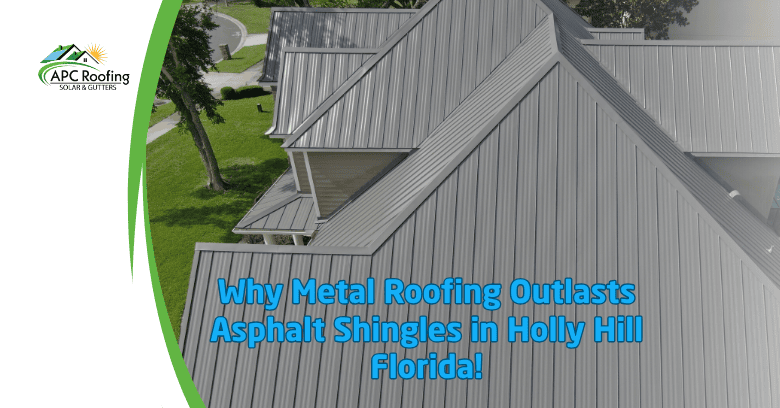
From a driveway, lines of screw heads across the panels mark a through-fastened roof, while flat pans divided by upright folds with no hardware showing are standing seam. Pole buildings, sheds and porches frequently get ribbed sheet, and houses carry both styles.
The Cross-Section: Old Look, New Look
Corrugated sheet ripples in smooth, repeating curves, while ribbed designs show angular ribs and wide flats. Neighboring sheets overlap at a side edge by a single crest, and a printed fastening schedule sets where screws land.
Ribs make a stiffer panel that crosses longer spans, and corrugated remains popular for a traditional farm look. Taller ribs give runoff more room on a long slope, and a lean-to or porch manages fine with a gentle pattern.
Fastener Hardware: Every Detail Counts
Each screw draws a panel snug against a rafter or purlin, and a gasketed washer under each head does the sealing. Synthetic rubber ages in the sun, going hard and then cracking, and the panels usually last a great deal longer.
An overdriven screw squashes a washer flat, while too little pressure or a crooked angle leaves an opening.
Hardware Swaps – Where Help Stops
Washers dotted across a ribbed field grow old together, so eventually a full new set of seals is needed. Each original fastener is taken out, and a wider replacement goes back in where threads can still find purchase.
A re-screw stops drips around screw heads and draws lifting sheets back down, but rust damage, open laps and failed flashing are untouched. Replacements are chosen for whatever framing lies underneath, lumber or steel, and a factory color on every top suits most finishes.
Expansion and Contraction – Stress at Screw Holes
Steel lengthens on a hot afternoon and shortens on a cold night, and forty feet of panel shifts roughly a quarter inch or more, while aluminum goes about twice as far. A panel pinned at both ends slowly slots every screw opening, and a washer stops sealing.
A tick from warming metal after sunrise is normal, and a well-built roof takes no harm from some noise.
Anchoring Standing Seam – Out of Sight
A long pan gets one fixed point, often near a ridge or an eave, while clips on every other section permit movement. Trim at an end that travels is bent with clearance underneath, and rigid fastening over a big pan shears or wrinkles the metal.
As a pan is laid, clips are driven into the deck along one leg, and an adjacent pan then covers every anchor point.
Quick-Fit or Heavy-Duty: Choosing Between Options
Some profiles snap together under hand pressure as each pan goes down, while other designs are crimped over by a machine. A double-lock grips harder against wind-driven rain, and a gentler pitch is allowed.
Manufacturers offer a range of pan widths and rib heights, and a home's design and a buyer's taste guide selection. Hardware and trim are sold for one system only, and a substitute from elsewhere leaves gaps.
Choosing a Weight: Reading a Label
Steel is described by gauge rather than inches, and a lower figure means more metal per sheet. Twenty-nine is a regular sight on sheds and pole barns, and residential work leans on twenty-six and twenty-four.
Aluminum is specified in thousandths of an inch instead, and in both cases a heftier panel stays straighter and tougher. A view from below reveals nothing about grade, so printed product data gives a firm answer.
Rust Resistance – Aging in Sunlight
Raw steel is galvanized, or given an aluminum-zinc treatment, before shipping, and baked-on primer and color follow. Paint scuffed but not broken through is fine, while a sheared edge or a deep gouge lets rust begin.
PVDF finishes hold color for decades, and polyester families fade and chalk more quickly. Wet masonry corrodes aluminum-zinc coated sheet, and a separator goes wherever panels touch new brick.
Which Metal Suits – Coast and Country
Aluminum is light and free of red rust, but softness means a heavier grade for equal toughness. Along the coastal end of our service area, salt in the air shortens the life of zinc-based coatings, and makers restrict certain products near surf.
A copper accent over a bay window is a familiar touch, and with nothing applied, color shifts over the years.
Incompatible Neighbors – Matching or Separating
A copper pipe or flashing above steel sends corrosive drainage down over the panels, and streaks appear years ahead of perforation. Aluminum on pressure-treated boards turns white and pits, and an incompatible screw causes slow damage nearby.
New flashing or trim has to match the metals already in place, or tape and membrane keep dissimilar metals from meeting.
An Appearance Question – Why Installation Counts
What the trade calls oil canning is a mild wave in a flat pan, and low sun at dawn or dusk shows up every hollow. An irregular-looking finish keeps weather out just as well, and nothing shortens the life of the roof.
Stiffening ribs, a stouter grade and a smaller pan width lessen waves, and an installer who does not overdrive clips helps as well. Photographs of finished houses show how noticeable oil canning can be, and you make the call on profile.
Comfort Below: What Reaches Living Space
A shed with bare purlins under the panels rings like a drum, since one thin layer is all that stands between sky and interior. Metal on a home rests on a deck and underlayment, over an insulated ceiling, and indoors, few people notice more noise than under asphalt.
Cool-pigment coatings return the bulk of the sunshine, and the attic takes in far less. A deep hue absorbs heat like any dark surface, and venting and insulation under the deck do as much for comfort as color. Panels cool fast at nightfall, so upstairs rooms settle sooner at night.
Retention Hardware: Above Entries and Paths
At the colder end of our territory, snow slides readily off smooth coated steel, and a slab arriving all at once can injure someone or rip a gutter off. Stops attached to the metal let a load leave slowly, with placement over doorways, decks and equipment.
For standing seam, bolted clamps grip each upright joint, while screw-down sheet takes mounts fastened into framing with sealed screws, and in our warmer markets a house goes without.
Storm Marks: What a Hit Can Open
Hail is common across the colder end of our territory, and stouter panels with striations hold shape better. A sharp blow that chips a color coat leaves metal bare to weather, while a seam or trim edge pushed out of line may open.
Once a storm has passed, a roofer photographs and measures every mark, and each dent and damaged panel is located.
Uplift – Rated Assemblies
Wind load concentrates at corners, rakes and eaves, and a loose flange gives moving air a handle. Finish trim is hemmed and caught on a cleat, and nothing is left free to flap.
Clips and screws are packed closer in high-load zones near corners, set by a maker's tested layout for each exposure. Along the coastal end of our service area, hurricane risk raises fastener counts again, and panel and hardware are rated as one assembly.
Where Something Pokes Through: Keeping Water Out
A plumbing pipe gets a flexible boot with a base that bends to a panel profile, and a level stretch, not a peak, is chosen for a hole. A skylight, chimney or larger unit sits on a raised curb with a cricket uphill, and water cannot pool at an upper edge.
Caulk plays a supporting role to folded metal, because sunlight dries and cracks sealing compounds within a few years.
Where Slopes Meet: Hooked and Clear
A broad flashing lines each valley in advance, and panels are sheared to a matching slant. Raw ends are folded under and locked to a cleat, and no screw goes through any path where water flows.
On a run too long for one sheet, an endlap joins pieces with sealant between, and screws pass through both thicknesses, upper over lower.
Shallow Sections: Where Membrane Takes Over
Makers of exposed-fastener sheet commonly list three in twelve, and at anything less, rain creeps sideways across laps toward screws. Double-lock standing seam is rated for far shallower roofs, and some products are allowed on nearly flat decks.
A barely tilted roof over a porch or addition is common on houses, and pitch is measured rather than judged by eye, and a part too low for any panel gets a membrane instead.
Support for the Roof: Rot and Spacing
Residential panels are laid on a solid deck, and a synthetic barrier made for high heat sits on top, since ordinary felt dries out under sun-heated steel. Pole buildings commonly have metal spanning between purlins with air below, and wider spacing calls for heavier stock.
Once an old covering comes off, spongy sheathing is found and swapped, because crumbling plywood cannot anchor a clip.
A Recover Instead of a Strip – Battens and Underlayment
Where code allows, metal can be installed over one layer of shingles, so waste is kept out of a landfill. Steel panels weigh well under two pounds per square foot, and typical framing carries a little extra easily. Battens over a fresh membrane go across existing shingles, and fasteners are long enough to bite solid boards below.
Where a roof was already recovered once, or the decking is soft, everything comes off, since dampness sealed beneath panels goes on rotting structural lumber.
Completing the Job – Tight Against Weather
Profile-cut closures fill openings beneath each rib at the upper and lower lines of a run, and driving rain and wasps are blocked. A ridge cover can include a vent or be solid, according to how an attic sheds heat and moisture.
Rake trim, drip edge and an apron into a gutter close off a roof's outline, and fascia boards are kept out of runoff.
Working at Height – Sheet by Sheet
A seamed panel comes off a forming machine cut to the length of a run, and one pan spans eave to ridge with no joint across. Carrying an extended panel takes people spaced along the metal, and a crimped or creased pan is no longer usable.
Each step should land in a flat with support right underneath, because a raised joint dents and deforms under load. A damp or dew-covered pan gives a shoe nothing to hold, so owners do better keeping off the roof.
Clues to Watch: Plain to See
- Rust circles where screws go in, low on a slope.
- Hardware sticking up, on long panels.
- Flashing flapping in a breeze, over a front door.
- A flue collar sitting crooked, over a kitchen.
- Corrosion along a cut, at the bottom of a run.
- Peeling paint, on a south exposure.
- Spots on a ceiling in a row, over a closet.
- A gap along a rib, beside a hip.
How APC Roofing Approaches Steel Roofing in Overland Park Kansas: Our Routine
We begin by figuring out which system is up there and how the panels are anchored, and then every screw or clip, edge, opening, valley and lap is checked. Thickness, coating and hardware style go into notes, and a trip into the attic catches past leaks.
You receive a report, pictures included, and a reason sits beside every recommendation. Where a reseal will do, a reseal is what we propose, and a roof at the end of service life is named as such.
Steel Roofing for Property Owners in Overland Park Kansas – Straight Answers
Call 913-398-5020 and a visit gets put on the calendar.
Deciding on Scope: Piece by Piece
A lone bad pan can be taken out and exchanged, although new paint never quite matches older metal. Replacing a cracked boot deals with water at a pipe, and a full set of screws fixes tired rubber.
Rust through sheet after sheet calls for a new covering, and a covering failing at nearly every joint is in the same position. Somewhere in between, a single worn plane of the roof can be redone, when harm is local.
Longevity: Upkeep Over Time
A well-built steel covering commonly serves forty years or more, though any figure is an estimate, not a promise. A seamed pan roof has fewer parts that age, whereas exposed-fastener sheet needs a re-screw partway through.
Copper runoff, bare edges and caulked joints where flashing belongs shorten the life of a roof, and regular inspection turns up faults while minor. Wet leaves left sitting on panels stain and dull a colored finish, and sweeping debris clear helps a finish.
For a roofer's view on Steel Roofing in Overland Park Kansas, get hold of APC Roofing at 913-398-5020. Someone will climb up and read how the panels are attached, along with every edge and opening, and findings come to you written up, with any choice left to you.
Verified

Verified