You’ve seen standing seam metal roofing on a neighbor’s house, with clean lines running from the ridge to the gutter and not a screw in sight, and you’re wondering if it makes sense for yours. Then the estimate comes in higher than you expected, and you need to know whether the extra cost buys something real or just a nicer look.

That’s the right thing to ask. Standing seam is a great roof on the right house and an expensive mistake on the wrong one. You should be able to see the difference before you commit.
APC Roofing is GAF Certified, licensed and insured, and we’ve been in business since 2017 serving Central Florida, the Daytona Beach area, the Kansas City metro and Springfield, Missouri. Your inspection is free. Call 866-995-0704 to have us take a look.
How standing seam metal roofing works
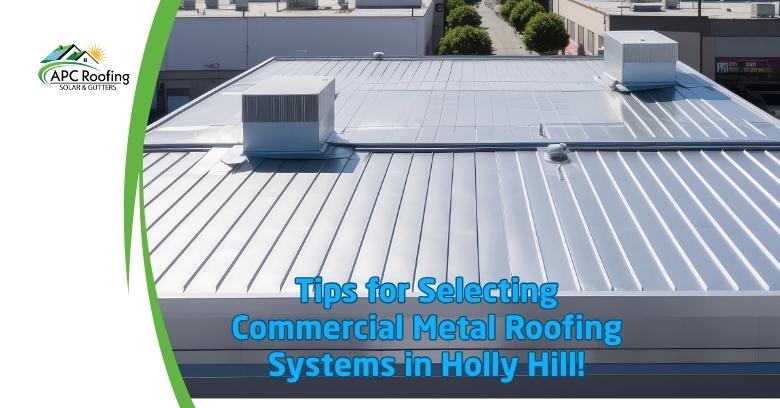
Count the screws on a standing seam roof and you’ll come up with zero. Flat panels run unbroken from the ridge to the eave and lock together at raised vertical seams. Every fastener that holds the roof down sits underneath, on clips hidden below the seam and out of the water’s path.
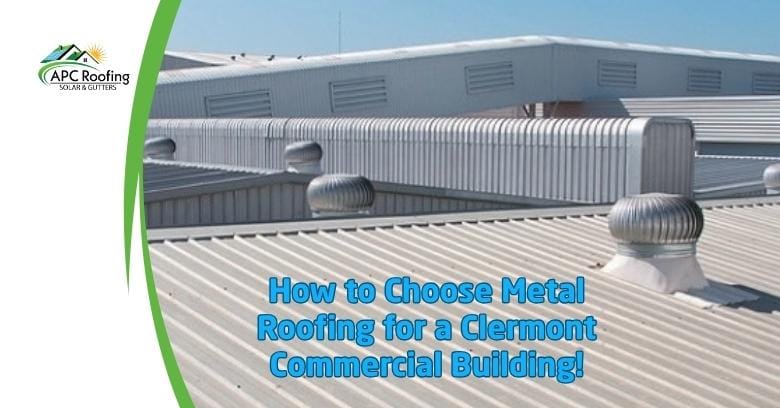
Compare that with an exposed-fastener roof like corrugated metal roofing, where hundreds of screws go straight through the panel, each sealed by a rubber washer that ages in the sun. A standing seam roof has no holes in the surface water runs across. There’s simply less that can fail, and nothing like the regular fastener checks an exposed-fastener roof needs.
The clips let the roof move
Metal grows and shrinks with temperature every single day. A long steel panel can change length by close to a third of an inch between a cool morning and a hot afternoon, and aluminum moves even more.
Standing seam is designed around that movement. Floating clips let each panel slide against the roof deck instead of fighting fixed screws, so the roof handles daily heat swings without buckling or tearing at its attachments. That’s also why panel length, clip type and where each panel is pinned are decisions an installer should make on purpose, not out of habit.
Snap-lock or mechanically seamed?
You’ll see two main styles on estimates.
Snap-lock panels press together along the seam by hand. They’re common on homes with a normal roof pitch and go on faster.
Mechanically seamed panels are folded shut with a powered seaming tool that runs the length of each seam. A single lock folds the seam 90 degrees, and a double lock folds it 180 degrees. The double lock holds up better against standing water and hard exposure, which is why it’s the usual choice for low-slope roofs and a lot of commercial work.
Seams are typically one to two inches tall, and panels often run 12 to 18 inches wide. Wider panels look cleaner but can show more waviness in the flat part, so many panels have light ribs or striations rolled in to keep the surface looking even.
Gauge, finish and ratings to ask about
Steel standing seam is usually 24 or 26 gauge. The scale runs backwards, so 24 gauge is the thicker one, roughly a third thicker than 26.
Two test ratings are worth asking for by name. UL 580 measures how well the whole roof assembly resists wind uplift. UL 2218 measures hail impact, and Class 4 is the top rating. Some insurers recognize Class 4 roofs, so it’s worth calling your carrier before you choose.
Ask about the paint finish too. Higher-grade finishes hold their color and gloss much longer than basic ones, and on a roof meant to last decades, the finish is usually the first thing that shows its age.
How standing seam handles our weather
In Central Florida and around Daytona Beach, hurricane-season wind is the main test. Standing seam performs well under wind uplift when it’s installed correctly, and that last part matters. Wind failures start at the edges and corners of a roof, where pressure is highest, so clip spacing and edge trim at the perimeter decide how the roof does in a storm. A light, reflective finish also helps with year-round sun.
In the Kansas City metro and Springfield, hail and winter weather lead the list. Thicker gauges and impact-rated products hold up better against hail. Standing seam also sheds snow quickly. That’s good for the roof, and it means snow guards belong in the plan anywhere snow could slide off over a door, walkway or driveway.
Thinking about solar later?
Solar panels can often be clamped directly to standing seams, with no new holes in the roof. If solar is on your list for the next few years, that’s a real advantage. In Florida, APC offers residential solar through a licensed solar partner, so you can ask about both at the same visit.
Is standing seam right for your house?
Standing seam costs more up front than exposed-fastener metal. It takes more material, more forming and much more skilled labor at the details. It earns that back over a long ownership horizon, in service life and in upkeep you rarely have to think about.
It shines on simple roof shapes with long, uninterrupted runs. On a roof cut into many small sections with lots of pipes and penetrations, the seam count and labor climb fast and the value drops. If you plan to sell in a few years, a less expensive roof may make more sense. We’ll walk you through the trade-offs honestly, and our metal roofing page compares all the metal types we install.
How it works with APC Roofing
- Book your free inspection. Call 866-995-0704 or request a free online estimate.
- Get a clear, honest assessment and estimate. You’ll see photos of your roof, and your written estimate will list the panel style, gauge, finish and details. If standing seam isn’t the best fit, we’ll say so.
- Get your roof installed and the site cleaned up. The crew installs your new roof and leaves the property clean.
Want to know what a proper install includes? Our metal roof installation page goes step by step. Financing is available through Aqua Finance, Fortifi, Hearth and Home Run Finance.
Standing seam questions homeowners ask
Is standing seam better than corrugated metal?
For most homes it’s the longer-lasting, lower-maintenance option, because there are no exposed screws to reseal. Corrugated costs less and suits simpler buildings and outbuildings well.
Does a standing seam roof need maintenance?
Very little compared with other roofs. It’s still smart to have the flashing, trim and gutters looked at after major storms.
Can standing seam go on a low-slope roof?
Often, yes, with mechanically seamed panels made for low slopes. The manufacturer’s minimum pitch for that panel has to be met.
Is a standing seam metal roof noisy?
Not over a solid deck with underlayment and an insulated attic. Most homeowners hear little difference from a shingle roof.
A roof you can stop thinking about
The right standing seam roof, installed with care, is one you won’t have to think about much. Picking it for the wrong house, or having it installed carelessly, is how people end up disappointed.
Call 866-995-0704 to book your free inspection, or start your estimate online. You’ll get a straight answer on whether standing seam fits your home, and a roof you can feel good about for a long time. Your satisfaction is our reputation.