Planning Shingle Roofing Around Lee's Summit Missouri?
APC Roofing lays new courses of strip and laminated products on houses, garages and sheds.
Phone 913-398-5020 and you will hear in plain terms what is needed.
Inside the Product – Factory Details
A mat of glass fibers makes each shingle strong, and a saturant of asphalt seals out rain, and a layer of granules on top screens out ultraviolet light.
Lines stacked side by side at a supplier are not always equal, and added mass tends to buy durability. A sample board shows color alone, but the manufacturer's printed sheet gives the test results.
Flat or Dimensional: How the Designs Differ
A three-tab product is a single-layer piece with twin cutouts at the exposed edge, and the result is a regular brick-like pattern. An architectural shingle glues a shaped overlay onto a full-width base, and the covering appears textured and shadowed.
A laminated bundle holds considerably more asphalt than a strip bundle, and listed wind classes are generally higher. Fasteners on an architectural shingle must catch the overlap of both plies, and a printed guide shows the right position.
Uses for the Flat Style – A Smaller Selection
Three-tab regularly serves a workshop, a garage or a porch, while a house already wearing that type can be matched. Fewer colors in that style are stocked than a generation ago, and some shades are no longer produced.
A dimensional surface disguises minor unevenness in the sheathing, while flat courses make any hollow obvious. Either style goes over the same underlayment and flashings, while the shingle alone sets the two apart.
Mineral Grit and Aging: New Versus Worn
A freshly laid covering releases surplus grains during its opening months, and the amount tapers off quickly. When an older covering sends piles of grit down the spouts, its mineral shield is wearing thin, and the naked asphalt goes on to crack.
The sunniest exposures are the southern and western sides, so bald patches tend to appear there sooner.
The Thermal Adhesive – Cold-Weather Care
Each shingle carries a stripe of heat-activated glue, and bright sunshine activates it so the row above clings. Once the courses are stuck together, gusts struggle to lift the exposed edges, and nailing still carries the load year after year.
In the cold months at the colder end of our territory, sealing can take many weeks to happen, and a stiff wind can raise a loose tab before then. Manufacturers' instructions call for dabs of roofing cement in that situation, and each package shows how much to use and where.
How Courses Are Attached: Tools and Technique
Nails land in a slim target stripe laid out by the manufacturer, and from there the shank reaches the top of the underlying row too. A standard shingle gets four fasteners, while steep pitches and windy locations need six.
A nail set too high misses the row underneath, a head pounded too far breaks the mat, and a slanted shank lifts the shingle laid over it. The wind resistance stated on the package depends on the specified pattern, and an out-of-adjustment tool spreads one error across a whole face.
The Wood Below – Before New Courses Go On
A deck of plywood or OSB lies beneath every shingle, because a fastener driven into nothing holds nothing. Some older homes have spaced planks installed originally for cedar shakes, and full sheathing is added on top before any shingles.
Sections that are soft, delaminated or rotted get cut out and replaced during a tear-off, since a nail in punky fibers pulls loose. Panels go down with a narrow space along each joint, as boards butted tightly lift into ridges when they absorb moisture.
Old Paper, New Fabric: Known Limits
A water-shedding membrane covers the deck ahead of the shingles, and it goes on in overlapping runs starting at the eave. Synthetic sheet has largely replaced asphalt-saturated felt, because the woven fabric resists tearing and stays flat when damp.
Rain that gets past a damaged shingle drains across the membrane rather than into the deck, but it is meant for occasional water, not months of open sky.
Ice Dams at the Overhang: Width That Counts
At the colder end of our territory, snow over heated rooms melts even on a sub-zero day, and meltwater goes solid again where the roof extends past the wall. Trapped water behind the blockage creeps higher beneath the courses, and nails through ordinary underlayment give it an easy path.
Colder-market codes call for a peel-and-stick membrane along the lower edge, and it runs past the interior face of the outside wall. Across every part of our service area, valleys and skylight curbs frequently get it too, because those junctions carry heavy flow.
The Outer Rim: Sequence Matters
A metal drip edge wraps the eaves and the rakes, so rain falls free beyond the woodwork. The underlayment covers the lower flashing, while at the gable side the order flips.
A modern code commonly calls for edge metal along every border, because runoff can cling and curl back toward the wood.
Base Row Details – No Substitutes
Under the first visible course lies a starter strip, so sealant lands exactly where the covering stops. A regular field piece simply turned around leaves its adhesive well back from the gutter, and the tabs at the low border are held only by nails.
A starter run along each rake is common practice under current instructions, since uplift is not limited to the eaves.
Drainage Between Planes: Construction Methods
An open valley leaves a metal trough visible in the middle, and the closed-cut type carries one side's courses through while the other side is cut back. Interlacing rows from each plane suits single-layer products, whereas two-ply shingles do not bend well enough.
Nailing close to the fold is avoided, and a sealed membrane is placed below as backup. Debris packed into a valley stays damp long after rain ends, which can push rain beneath the trimmed shingles.
Roof-to-House Joints – Frequent Leak Points
Step flashing along a wall is set one to a course, and the exterior finish hangs down across the standing half. Where the eave stops against the house, a kickout diverter goes in, and skipping it sends water into the studs.
Around a chimney, step pieces line the sides, an apron covers the front and counterflashing is set into the masonry, while stacks above a certain width require a cricket upslope.
Plumbing Protrusions – Sequence and Laps
A pipe boot is built from a flat base plate and a stretchy neoprene collar, and the sealing ring stiffens and cracks as it weathers. The upper half of the flange tucks beneath the shingles above, and water running down the slope passes over the exposed lower part.
A cracked collar is common on a covering that is otherwise sound, and a tear-off is the natural time to change every boot.
The Topmost Seams – Final Courses
Cap shingles close the ridge and each hip, and a dimensional line comes with its own heavier companion product. Improvised pieces from cut tabs are lighter and thinner, and at the colder end of our territory a freeze can open splits along the bend.
An exhaust vent commonly sits under the ridge caps, and longer nails are needed to reach through it into the deck.
Breathing Room Above the Ceiling: Balance
Fresh air is meant to enter low through soffit vents, while an exhaust at the peak lets it escape. Blown fill crowding the corners can cut off movement, and foam or cardboard baffles hold a channel clear.
A stuffy attic adds heat beneath the deck, and it also holds moisture rising from the house. At the colder end of our territory, frost gathers on exposed nail points on a freezing night, and it drips onto the insulation once the day grows mild. Mixing a ridge vent with gable louvers or a powered fan can short-circuit the flow, because suction then draws from the nearest opening instead of the soffits.
Around the Map – Storms and Algae
The area we serve spans cold, dry high country and warm, wet flatlands, and asphalt meets a different set of stresses in each. At the coastal end of our territory, hurricanes bring hours of sustained wind, and product instructions call for extra nails there. Relentless sunshine hardens the binder over the years, while streaks spread faster where the air stays sticky.
At the colder end of our territory, water that seeps into a crack freezes and widens it, while snow cover keeps the eaves cold for weeks at a time.
Balls of Ice – Reading the Strikes
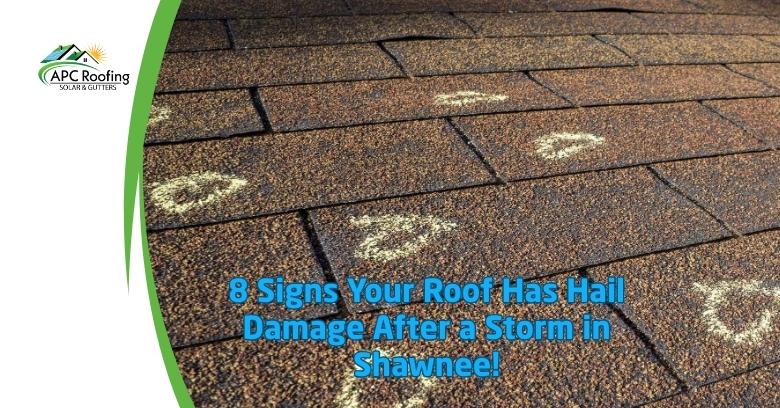
At the colder end of our territory, hail arrives most years with the thunderstorms, and several makers build shingles meant to take the hits. A hailstone knocks granules loose where it lands, and a violent one can split the reinforcement beneath.
The impact class on a bundle comes from a standard drop test with steel balls, and a tougher product shows less damage afterward. Some companies add rubber polymers to the asphalt, so the surface gives a little under a strike.
Wind on Asphalt – Putting Things Right
Suction pulls hardest along the eaves, the rakes and the corners of a roof, so a piece with a failed bond begins to lift and drop. A tab bent far back keeps a mark along the fold, and the damage leaves it permanently weakened. A shingle in that condition gets replaced, while one that only lost its seal can be cemented back down.
An empty spot in the courses puts the underlayment in direct sun, and rain then has only that thin layer to get past.
Roof Growth: Cause and Care
Black lines trailing down a slope are usually algae, which feeds on crushed limestone mixed into the product. At the humid end of our territory, faces under trees and out of the sun collect it soonest, though the staining does little harm on its own.
Moss is a different matter, since it holds water against the surface, and its roots creep under the tabs and pry them up. High-pressure spraying rips the grit away with the growth, while a soft rinse with a roof-safe cleaner does the job without damage. Copper-bearing mineral is blended into algae-resistant lines, while rain running over a zinc band near the ridge holds the stain back.
Color on the Slope – Matching Bundles
Dark shingles soak up more sunlight and run hotter, while a light gray or tan stays cooler. Certain companies make granules designed to scatter infrared rays, and a measured reflectance number comes with them.
Stock can vary from one production lot to another, and makers advise mixing bundles across a slope. A multi-tone blend disguises minor variations well, while a uniform finish lets them stand out.
Walking on Asphalt – Weighing the Risk
A sun-baked covering loses its firmness, and each tread can leave a mark. At the colder end of our territory, a frozen shingle can snap under a knee or a boot, while dew that freezes overnight leaves a slippery glaze.
Keeping both feet in the yard is safer for an owner, and a pair of binoculars shows most of what matters.
Covering What Is There – Weight and Nails
Rules across much of the country accept an overlay over an original roof, though not where two are already down or the sheathing is soft. The current shingles stay on top of the decking throughout the job, and weak spots stay just as they were.
Every ripple below telegraphs to the surface, and flashing past its prime is usually kept. Two layers put more pounds on the rafters than they were planned to hold, and short nails end up anchored only in the old shingles.
Things to Watch For: Outside and In
- Dark sand gathers where the spouts empty, and the layer thickens with each storm.
- Pieces are missing and bare underlayment peeks through, so wind has broken the bond.
- Courses have started to buckle and warp, because the material has lost its flexibility.
- Cracks run across the tabs, and rain then finds a path to the mat.
- Some spots look dull and flat, and bare asphalt now meets the weather.
- The seal around a plumbing stack has cracked, so water works its way indoors.
- The metal where a slope meets siding sits bent or pulled back, and wind-driven storms can get behind it.
- A damp patch shows up on the ceiling after heavy rain, while the opening outside can be several feet off.
How APC Roofing Works on Shingle Roofing in Lee's Summit Missouri: Our Method
An inspection first covers every slope on foot, with a close look at the valleys, vents, flashings and edges. Inside the house, the attic is searched for stains and daylight, since the underside of the deck keeps the marks of any old leak.
Anything wrong is photographed, and its size is measured. Everything found is set down in writing, and each suggestion is explained. A minor job is presented as minor, while a covering at the end of its life is called that. Which way to go is up to the homeowner, including the option of doing nothing for now.
Shingle Roofing for Homes in Lee's Summit Missouri: Findings in Plain Words
Dial 913-398-5020 to book a time.
Mending or Starting Over – Matching Old and New
A failed vent collar, a lifted flashing or several damaged tabs calls for ordinary repair, while everything else on the slope remains. Even the same color from the same maker looks different once the old shingles have weathered, while the manufacturer may have retired that design.
Stiff, dried-out shingles split when raised for nailing, so the disturbed zone keeps widening. Where the whole field is cupped and losing grit, a full tear-off is the honest recommendation.
Expected Service Life: Care Along the Way
On three-tab, fifteen to twenty years is normal, while laminated lines often reach close to thirty. Ventilation, exposure and fastening decide where a given covering lands, and heavy weather can end the span ahead of schedule.
Checking the flashings and pipe seals now and then is sensible upkeep, since a crack caught in time stays a small job.
If you are planning Shingle Roofing in Lee's Summit Missouri, phone APC Roofing at 913-398-5020. Each slope is walked and every detail checked, and a written report leaves the choice with you.
Verified

Verified