In Need of Corrugated Metal Roofing in Lee's Summit Missouri?
APC Roofing installs panel coverings and mends worn sheet, whether for a shop, a porch or a whole house.
Reach us at 913-398-5020 and you will hear in plain words what condition the roof is in.
Telling Systems Apart: Hints in Plain Sight
A corrugated or ribbed covering is secured with screws set through the metal, but standing seam is anchored by clips concealed beneath upright folds. Nearly every residential job uses coated steel, with aluminum and copper turning up less often.
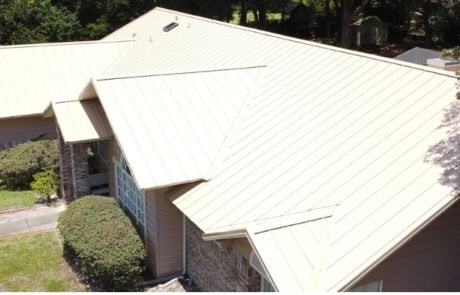
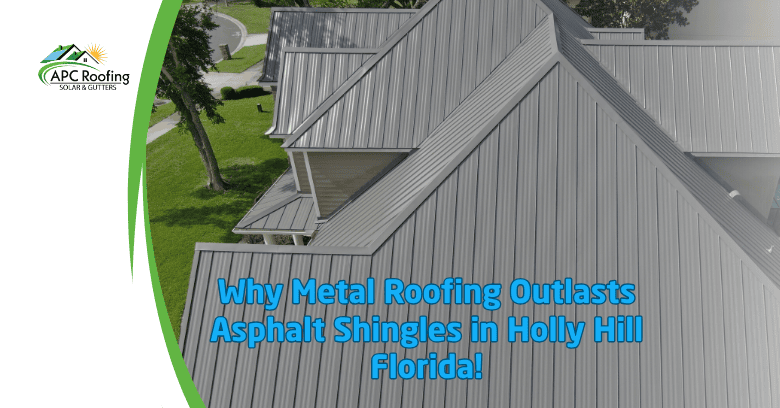
A glance from a lawn at lines of screw heads points to a through-fastened roof, and clean flats between raised joints, bare of hardware, belong to standing seam. Farm buildings and garages commonly have ribbed or wavy sheet, though a house can suit either.
Profile Options: Old Look, New Look
Corrugated material makes a run of soft, even undulations, while ribbed panels carry squared ribs with wide flats between. Adjacent lengths share a narrow side lap, and a printed fastening schedule sets where screws land.
Ribbed stock is stiffer and spans further between supports, while corrugated keeps a place on vintage buildings and farmhouse designs. Taller ribs give runoff more room on a long slope, while modest runs need little depth.
Fasteners in the Open: Aging in Sunlight
A single screw pins the metal firmly to framing below, while a washer at each head keeps rain from following a shank. Years of sun and heat stiffen synthetic rubber until cracks form, and the panels usually last a great deal longer.
Driving a screw past snug crushes a washer and dimples the metal, and a shallow or off-square setting never seals fully.
Refreshing Hardware – Where Help Stops
On corrugated or ribbed sheet, every washer ages at one pace, so eventually a full new set of seals is needed. Each original fastener is taken out, and a slightly fatter screw goes into each hole so a thread bites fresh wood or steel.
A re-screw stops drips around screw heads and draws lifting sheets back down, but rust damage, open laps and failed flashing are untouched. Thread type follows whatever support lies below, since lumber and steel purlins take different screws, and tops come painted to suit a colored finish.
Expansion and Contraction: Oval Holes and Loose Seals
Steel swells with heat and draws back as temperatures fall, and forty feet of panel shifts roughly a quarter inch or more, while aluminum goes about twice as far. Metal screwed down with no give wears each hole into an oval, and washers begin to leak.
Popping and clicking on a sunny morning is expansion at work, and a roof built with slack is unharmed.
Beneath Raised Seams – Laid in Sequence
One short stretch of every long pan is pinned tight, and floating clips everywhere else let the pan glide. Trim at an unanchored end leaves a gap for travel, and a pan held rigid throughout tears loose or buckles.
A pan is positioned and clips are screwed to the deck beside a long edge, so each new pan conceals all hardware below.
How Seams Close: Choosing Between Options
A snap-together rib engages when an installer presses down, while machine-rolled designs get folded over by a motorized seamer. A double-lock grips harder against wind-driven rain, and published ratings run down to lower slopes.
Every product line has distinct spacing and rib size, and building shape and personal taste steer a buyer. Clips, trim and closures are bought to suit one particular panel, so a repair calls for knowing exactly which panel is up there.
Stock Weight: Dents and Ripples
A steel panel is rated by gauge, and a smaller number means a thicker sheet. Farm structures often use twenty-nine, and residential work leans on twenty-six and twenty-four.
Aluminum sheet is measured in decimal inches, and more material means fewer marks and less waviness. Different grades look identical once installed, so printed product data gives a firm answer.
Factory Protection: What Lasts
Raw steel is galvanized, or given an aluminum-zinc treatment, before shipping, and a color coat is baked on afterward. Scrapes confined to paint are harmless, whereas a gouge through to bare metal soon shows red.
A PVDF finish stands up to sunlight for a long time, and polyester types chalk white sooner. An aluminum-zinc surface is damaged by contact with fresh mortar, and a separator goes wherever panels touch new brick.
Which Metal Suits – Trade-Offs
Aluminum has less mass than steel and cannot turn red with rust, but a soft sheet dents from smaller blows. Close to salt water, at the coastal end of our range, metallic coatings break down faster, so a marine-grade finish is often chosen for homes near a beach.
Copper turns up chiefly on bay windows, dormers and entry roofs, and years outdoors take bare metal to brown and then green.
Incompatible Neighbors: A Slow Chemical Fight
Rain rinsing off a copper detail wears through coated steel downhill, and a dark streak shows long before any hole. Pressure-treated framing corrodes aluminum laid directly on top, and an incompatible screw causes slow damage nearby.
New flashing or trim has to match the metals already in place, or a separator tape sits wherever unlike metals meet.
An Appearance Question: Setting Expectations
What the trade calls oil canning is a mild wave in a flat pan, and faint hollows show at sunrise and fade by noon. An irregular-looking finish keeps weather out just as well, and service life is unaffected.
Stiffening ribs, a stouter grade and a smaller pan width lessen waves, and a deck without humps or dips matters too. Photos of finished roofs give a fair idea of how much oil canning shows, and the decision on profile rests with you.
Comfort Below: What Reaches Living Space
A shed with bare purlins under the panels rings like a drum, since a single skin is the only barrier. On a house, a solid deck, underlayment and ceiling insulation sit below the panels, and indoors most people hear little more than on shingles.
Cool-pigment coatings return the bulk of the sunshine, so the space under the roof runs cooler. Dark metal heats up like any black roof on a clear day, and venting and insulation under the deck do as much for comfort as color. Within an hour of sundown, a metal covering is cool, and an attic beneath follows suit.
Retention Hardware – Clamped or Fastened
At the colder end of our range, snow lets go of a metal surface easily, and a single release can take out a gutter or strike someone nearby. Guards break a load into small harmless chunks, and positions are chosen where anything below could be hit.
For standing seam, bolted clamps grip each upright joint, while screw-down sheet takes mounts fastened into framing with sealed screws, and in milder markets roofs do without.
Pounding From the Sky – A Record of What Happened
At the colder end of our range, hail arrives most years, and thicker steel shows fewer dents. Paint knocked off at a crease leaves base metal exposed to corrosion, and a trim piece pushed out of place can channel rain inside.
After a storm, we photograph and measure what we find, so the size and position of each dent are known.
Holding On in a Gale: Trim Held Tight
Wind load concentrates at corners, rakes and eaves, and once air slips under an unsecured edge, pressure can roll the metal up. Each finishing piece is folded back and locked over a full-length cleat, and nothing is left free to flap.
Screw and clip spacing tightens at corners and around a perimeter, as manufacturer tables call for at each site. On the hurricane coast at the far end of our territory, fastening counts rise again, and a whole assembly has to carry a matching rating.
Where Something Pokes Through – Flashing Done Right
A pliable-based collar is shaped to fit a panel and clamped onto a pipe, and a flat location lets a flange bed down evenly. A skylight, chimney or larger unit sits on a raised curb with a cricket uphill, so runoff is steered aside.
A bead of sealant supports a properly formed detail rather than working alone, as ultraviolet light turns soft compounds brittle in a few seasons.
Channels Between Roof Planes: Made to Shed
Each valley gets a separate pan in advance of the panels, and panels are sheared to a matching slant. Each raw end is hemmed back and hooked onto a cleat, so no fastener sits where water collects.
Long runs made of more than one piece get an endlap with sealant sandwiched inside, and uphill metal always goes on top, screwed through.
Shallow Sections – When a Membrane Wins
Most ribbed sheet is specified for about three in twelve or steeper, since anything less lets rain back up at overlaps. Mechanically seamed panels are approved much lower, with certain lines suited to decks that are nearly flat.
Nearly level spots over sunrooms and porches turn up on plenty of houses, and pitch is measured rather than judged by eye, and an area that metal cannot serve is given a membrane.
Under Everything – Out of Sight Once Done
On a house, the panels go over solid sheathing, and a synthetic sheet rated for heat is sandwiched between, because old felt bakes and sticks under hot steel. Pole buildings commonly have metal spanning between purlins with air below, so wider gaps call for thicker steel.
Once the deck is exposed, any board that gives underfoot comes out, because crumbling plywood cannot anchor a clip.
Going Over the Existing Roof: Light Enough to Add
Local codes commonly accept metal set over a lone shingle layer, and the mess and hauling of removal are avoided. A steel covering adds only slight dead load, and ordinary framing copes without trouble. Furring strips and a new underlayment go down over existing shingles, and fasteners are long enough to bite solid boards below.
A roof that was recovered once before, or a deck with decay underneath, comes off entirely, because moisture trapped under new metal keeps doing damage.
Finishing Off: All Around
Closure strips shaped to a panel profile plug hollows under every rib where a run starts and stops, so wind-blown rain and nesting animals stay out. A ridge cap may be vented or sealed, and attic airflow needs are what decide.
Drip edge, rake trim and a gutter apron finish every outer line, and fascia boards are kept out of runoff.
Day of Installation – Carrying and Stepping
Standing seam is produced to fit each run from bottom to top, and one pan spans eave to ridge with no joint across. Big panels need a team so nothing buckles in transit, and a pan that gets bent should not go on the roof.
A foot goes only in flats directly above supports, because ribs and seams crush under a boot. Moisture turns a painted panel into a slide, so climbing up for a look is unwise.
Warning Signs – A Look From Below
- Orange halos at fasteners, near the top of a run.
- Screws no longer tight against metal, by a peak.
- Edge metal curled back, above a porch.
- A boot pulled away from a pipe, by a bathroom fan.
- Red streaks at a raw end, at a hip.
- Blotchy color, where afternoon light hits.
- A leak tracking one line of fasteners, in a garage.
- An endlap gaping, where slopes meet.
How APC Roofing Goes About Corrugated Metal Roofing in Lee's Summit Missouri: Order of Work
Our starting point is pinning down which system is up there and how the panels are secured, followed by every screw or clip, edge, boot, valley and lap. Thickness, coating and hardware style go into notes, and a trip into the attic catches past leaks.
You receive a report, pictures included, and every piece of advice comes with an explanation. Where a reseal will do, a reseal is what we propose, while replacement comes up only when a roof is truly spent.
Corrugated Metal Roofing in Lee's Summit Missouri: A Careful Look
Call 913-398-5020 and a visit gets put on the calendar.
Deciding on Scope: Weighing Choices
A lone bad pan can be taken out and exchanged, though new metal looks brighter than weathered neighbors. Replacing a cracked boot deals with water at a pipe, while new fasteners seal screw holes again.
Widespread perforation puts replacement on the table, and a covering riddled with failed seams is no better off. Redoing one face of the house is a middle path, when harm is local.
Aging Gracefully – Upkeep Matters
Good metal work frequently reaches forty years, though any figure is an estimate, not a promise. Standing seam asks for less upkeep, since nothing pierces a pan, while corrugated and ribbed sheet calls for fresh screws in time.
Copper runoff, bare edges and caulked joints where flashing belongs shorten the life of a roof, and a check every few years catches small faults early. Leaves and twigs that collect against a curb or in a valley hold moisture against coated steel, so clearing debris away helps paint last.
Whenever Corrugated Metal Roofing in Lee's Summit Missouri comes up, dial APC Roofing at 913-398-5020. Someone will go over every panel, fastener and piece of trim, and you get photographs, notes and a recommendation to consider.
Verified

Verified