Trying to Find Roof Leak Repair for a House in Kissimmee Florida?

APC Roofing mends the spot where weather gets past the shingles, from the metal at a chimney to the collar at a vent pipe.

Reach us at 407-270-1129 to have a roofer come and look.


Where Leaks Come From: the Weak Spots in a Covering

A continuous stretch of shingles is hard for rain to get past, as every row overlaps the next and drains to the eave. Entry points cluster where another material meets the covering, at chimneys, skylights, valleys and stacks.

The mark on the drywall usually lies well downhill of the source, since the flow travels along the framing for a stretch. Replacing shingles directly overhead often misses the real fault, so the trouble returns with the next heavy rain.

Sidewalls and Headwalls: What Goes Wrong

Step flashing is laced in with every course as the shingles climb; an upper strip is turned down over the full length. If the sealant at the head dries and cracks, the leak shows up inside at the wall line.

What holds is new metal installed correctly, with the neighboring shingles lifted and relaid. Cement troweled on top only hides the problem, because heat and cold moving the joint crack any surface seal.

Pipe Boots – Wear and the Fix

A plumbing vent passes through the covering inside a rubber sleeve set on a flange, and every summer of sun makes the material more brittle. Given long enough, the fit around the pipe fails, and water tracks down into the ceiling or wall below.

Replacement involves loosening the rows above and sliding new hardware into place, with a corroded base taken out too. An upgraded boot of silicone stands up to sunlight much longer, on a roof with plenty of seasons left.

The Valley Channel: Rebuilt, Not Patched

The crease between neighboring planes collects the drainage from each, and in a downpour the water runs deep and fast. Valley shingles go bare well before the rest, and if no metal or membrane lies underneath, worn spots leak.

Fallen debris builds into little dams in the crease, and runoff backs up under the edges of the courses. The repair for a worn-out valley is a full rebuild, liner and all, since nothing brushed on stands up to a torrent of rain.

Popped Fasteners – Pulling, Not Hammering

Plywood sheathing expands and contracts as humidity comes and goes, and each cycle eases the shanks upward a fraction. A climbing nail forces a blister into the tab on top, so every storm finds a path into the house.

Hammering a loose fastener back down does not hold for long, because the enlarged spot has nothing left to bite. The proper repair pulls the nail out, seals the hole and drives a new nail an inch away, with the damaged tab replaced as well.

Ribbed Metal Roofing – Trouble Along the Run

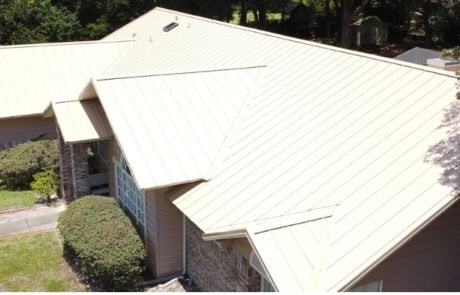
Screw-down systems pin the steel with fasteners through the weather surface, where a gasket under every head keeps the opening tight. With age the rings shrink and stop gripping, and overdriving hastens the damage.

The repair is a new screw carrying a fresh washer, and where the hole has widened, a thicker size is used. The trim at the ridge and the edges is inspected on the same pass, since what went in on the same job usually gives out in step.

Blown-Back Tabs: Checking the Damage

An asphalt course is held partly by nails and partly by a band of adhesive, but heavy weather can tear the bond free. A shingle that bends back takes a permanent kink, which lets driven water work under the shingle.

Where the bond let go but the piece was not damaged, dabs of roofing cement restore the hold, but a split shingle is taken off and replaced. A blown-away tab exposes the fasteners in the layer below, which lets water reach the deck.

The High Line of a Roof – Fixed as a Whole

The shingles across the apex are bent over a sharp angle, and weather opens splits over time. Under any ridge vent lies a gap cut out of the decking, and the cap above does all the work of keeping weather out.

Missing end plugs leave an open door for wind-blown spray, which leaves a wet band on the rafters just below the apex. The repair along the peak takes in the caps, the vent and the fastening at once, as one neglected component undoes the rest.

Ice Dams: the Overhang Problem

In the snowier part of our territory, a roof with nothing wrong can still get wet, because house heat turns the bottom of the snow to liquid. The runoff freezes again on reaching the unheated overhang, until a frozen barrier lines the gutters.

Upslope of the blockage, standing melt spreads out, and shingles were never made to hold back a puddle. What stops the freeze-thaw cycle for good is better insulation and ventilation overhead, though a waterproof underlayment at the eave protects the house in the meantime.

Covered Porch Roofs – Why Shingles Struggle There

Lots of houses include a stretch that barely tilts, and the main material is often carried onto the flat portion regardless. Shingles work only as long as gravity hurries the water along, but on a lazy grade the water hangs around and seeps sideways.

A sound fix swaps in a roll membrane designed for near-level roofs, run up beneath the roofing on the section uphill.

Evidence in the Attic – Stain Marks Explained

Runoff under the deck leaves a tide line on the lumber, and the discoloration remains long after everything dries. The stain's upper limit lies right under the fault, so a tape run to the peak and to an end wall locates the spot from the roof.

A nail driven up through the decking can flag the location for the crew overhead, unless a finished ceiling blocks the way, in which case the search happens outdoors. Matted fiberglass betrays the drip zone, since a waterlogged layer loses insulating value and can feed mold.

Indoor Weather Overhead: Where the Drops Come From

Even dampness across the whole underside of the sheathing usually has nothing to do with rain, since humid air escaping the living space turns to droplets up there. In the colder markets we serve, frost furring the nail points comes about the same way, and a thaw turns the ice into drips like a leak.

A new covering would not stop the droplets at all, as the answer is moving the humid air out and keeping more from rising. We say plainly whether the wet wood came from rain or from the rooms, and the diagnosis decides who gets called in.

The Chimney Detail: What Fails and Where

A broad apron closes the lower face, and step flashing is woven up both sides, and an upper strip tucked into the joints overlaps what lies beneath. Behind a big chimney belongs a small peaked saddle called a cricket, so the flow is split and sent around the brick.

Without a raised wedge to shed rainwater, the uphill face holds leaves and water every storm, so the joints at the top corners open up. Crumbling mortar lets rain into the brick above the metal, so the fix sometimes needs a mason as well as a roofer.

Skylights – Reflashing Around the Frame

Water seldom gets through the glazing; the surrounding metal is where water gets past. The uphill edge collects all the runoff from above, while needles and debris build a small dam.

A flashing repair does not require a new unit, unless the skylight is simply worn out. Steam from a bathroom below can bead on the glazing and drip, which calls for a fan or a vent instead of a roofer.

The Lower Edge of a Roof: Overflow and Backup

Dampness at the top of an exterior wall frequently traces back to drainage, as a trough that tips the wrong way sends runoff behind the trim board. Without a drip edge, rain wraps around the shingle lip and underneath, so the fascia softens and the sheathing starts to rot.

A gutter problem may need only a cleanout and a re-pitch toward the downspout, while spikes that pulled out are replaced by screws. A drip edge left out entirely is a roofer's oversight, and the fix is a full-length piece slipped under the bottom course.

Attachments on the Roof: What Removal Leaves Behind

A receiver on a pole is typically held by lag screws through the covering, with a dab of caulk as the only barrier. Within a few years the goop hardens and lets go, and each attachment becomes an entry for water.

Removing old hardware does nothing about the holes underneath, and openings that small are almost impossible to see from the ground. A sound fix fills each penetration with sealant and weaves in new tabs, and a light that stays is moved onto a flashed block.

A Spongy Deck – When the Base Gives Way

A trickle that goes on unnoticed waterlogs the plywood below, until the veneers separate and turn mushy. On top, the area feels springy under a boot, and underneath the deck droops between the rafters.

Every rotten piece is removed, right back to sound lumber, and properly nailed replacements fill the gap. The area is then papered and reshingled, and the leak that caused the damage is fixed as well.

Plastic Over the Damage – Poly and Lumber

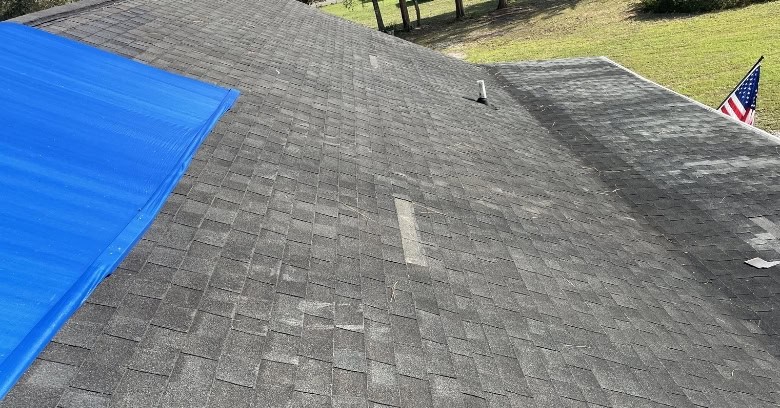
A tarp keeps the rooms dry, and nothing underneath has been mended. A well-anchored sheet runs over the ridge with boards fixed along the edges, and a few bricks end up in the yard.

A row of nails is driven through the courses below, and every hole is sealed during the permanent repair. A cover forgotten through a summer cooks the surface below, so the material underneath softens and ages early.

Pictures and a Written Account: For Your Files

With fresh material installed, the broken piece disappears, and the culprit is often a split no longer than a finger. We photograph the opening and the worn part before anything is changed, and the finished job gets a separate set of shots.

The images are yours to keep, which helps when a buyer or an inspector asks about the roof. Alongside the pictures comes a short write-up of the fault, together with each step of the repair.

The Replacement Question: Weighing the Options

A sound field with one faulty detail calls for mending that detail alone, because rubber and metal parts tend to age ahead of the asphalt. A full new roof comes up when the granules have worn away everywhere, or when the ceiling shows a different stain every season.

A repair on tired shingles can still hold off the weather for a while, but the repair cannot add years to the rest of the roof. Our recommendation comes with the reasoning, and you have the final word.

Color and Profile: What Is Still Made

A fresh tab looks brighter than the aged tabs around, since exposure has softened the tone of the field. We match the profile, the size and the nearest color still made, so the contrast eases within a few seasons.

Discontinued shingles have no exact twin, which means picking a comparable tab or extending the job to a hip or a ridge. Candidates compared in daylight against the old material reveal how well each candidate fits, since a screen or a brochure shifts the shade.

Signs Worth a Call – Easy to Miss

  • A brown ring on the drywall that gets larger each storm, usually below the attic.
  • A moldy odor in a closet under the eaves, which gets stronger in muggy months.
  • Pinpoints of light in the sheathing, at a pipe, a vent or a valley.
  • Dark streaks running down the rafters, often with a musty smell.
  • A gap between a pipe and the pipe seal, visible with binoculars from the yard.
  • A layer of sandy grains in the gutter, more than a new covering sheds.
  • A shingle corner flipped up, anywhere on the house.
  • Flashing bent away at the edge, wherever brick or trim rises through.

How APC Roofing Takes On Roof Leak Repair in Kissimmee Florida – What We Do on Site

The attic comes first, ahead of any ladder, and any wet track there leads a roofer to the spot on the slope above. The faulty piece is replaced with the right part, and similar details elsewhere get checked on the same trip.

We photograph what we found and what we did, with a plain written summary alongside. When the shingles are spent, the answer is given clearly, and nobody pushes you either way.

Roof Leak Repair for Homes in Kissimmee Florida: Straight Answers and Sound Work

Reach us at 407-270-1129 to arrange a visit.


Rigging and Weather: What the Materials Require

Plastic can be fastened down on a still-damp deck, whereas the proper repair waits on dry sheathing. Roofing cement and factory seal strips need warmth to grip, so on cold days each course is sealed by hand.

Steep pitches and upper-story eaves mean fall protection and staging, because a boot finds little purchase on a sharp incline. A roof baking in the afternoon sun bruises under traffic, so scuffed spots lose the protective grit.

Worn-Out Roofs – Honest About the Limits

Asphalt that has baked for decades turns brittle, and bending a course up to pull a nail can break the shingle. Whatever gets damaged along the way has to be swapped out too, so the section being fixed can grow as things proceed.

Before any tool comes out, we say whether the material is too fragile, and the photographs show the reason. Mending one leak on an old roof is reasonable to keep the house dry, while everyone knows the roof is near the end.

To arrange Roof Leak Repair in Kissimmee Florida, contact APC Roofing at 407-270-1129. We find the opening and mend the failed part with the right material, and you keep the photos.


Frank Smith

Verified

★★★★★
Our experience with APC roofing began with an introduction and quote by Lucio. He came to our home, explained the process and immediately went on the roof to access the damage. As we began to inquire further about what to expect Lu got us in contact with Adrian. Now Adrian became an invaluable partner in very honestly and sincerely letting us know what APC could and couldn’t do to repair or replace our damaged roof. Hurricane Milton left us scrambling to come up with thousands to meet our deductible. Patiently and empathetically Adrian dispelled our apprehension about working with a contractor or being left incomplete and in need of legal help to resolve any disputes. He gave us his assurance that he would oversee the entire project. I have to admit that he kept his word. Even when we thought there would be a last minute hiccup with financing he put me in-touch with Lucy and she did not give up until we got the information and terms I wanted. This was a truly great team from start to…

Mike Price

Verified

★★★★★
Everything went smooth on schedule nice clean job would recommend to anyone Mike Price was a great guy to work with

Tom Lewis

Verified

★★★★★
This company does fantastic work from start to finish. I couldn’t be more pleased and will refer anyone I know to APC Roofing!
★★★★★
APC Roofing recently installed a beautiful new roof on our home. Our experience, from the first visit by Lance, the APC salesman through to the finished product, was absolutely great. Their crew arrived in the morning and prepared the site, covering everything around the house so no damage would be done. They finished the job by late afternoon. The crew was polite, worked quickly, and all surrounding areas were meticulously cleaned. From the salesmen, to the hard-working roofing crew, to the team in the office, I couldn't be more satisfied. My sincere thanks to you all.

Elsa Kate Nichols

Verified

★★★★★
They were very helpful in working through and explaining the insurance process beforehand. The crew arrived earlier in the day both days than promised and worked hard. The roof and details are beautiful and everyone, from the gentleman delivering the trash trailer to the roofers to the manager, treated our property with respect and care protecting plants and cleaning up nicely.