The flat section over your back porch, carport or Florida room is where the trouble always starts. Water sits on it after a storm, the seam at the edge has started to lift, and there’s a stain on the ceiling underneath. Someone told you it’s a “rubber roof,” and now you’re trying to figure out whether EPDM roofing in Kissimmee is something to patch, replace or swap for something else.
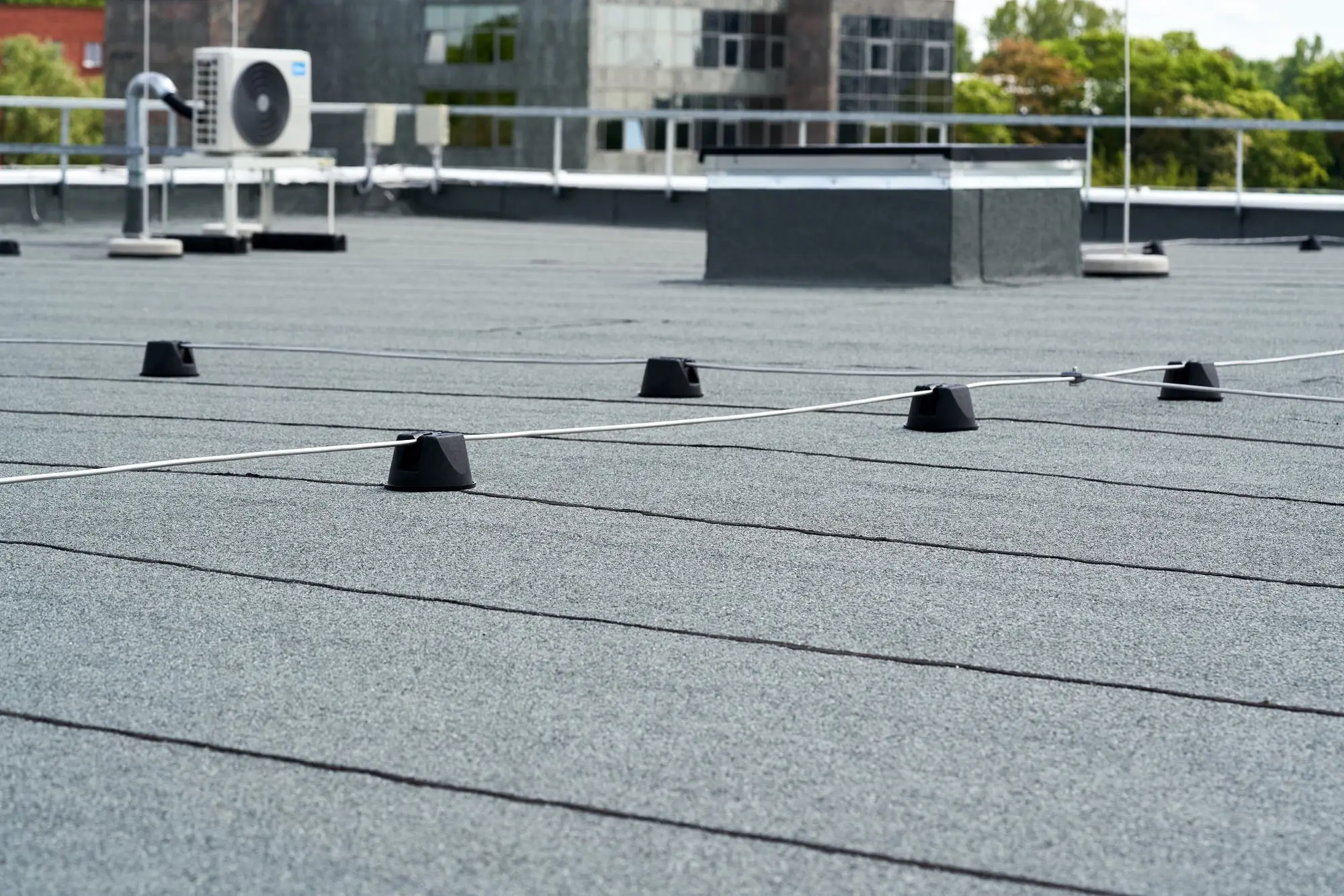
Low-slope roofs are confusing, and the advice you get online is all over the place. You deserve a clear explanation of what you have and what it needs.
APC Roofing works on flat and low-slope roofs on homes and commercial buildings across Central Florida. We’re GAF Certified, licensed in Florida (CCC1337030) and insured. The inspection and estimate are free, so call 407-270-1129 to have yours looked at.
What EPDM is
EPDM is a synthetic rubber membrane. It comes in large sheets, so a small roof may have few seams or none at all, and those seams are joined with special tape and adhesive rather than heat. On homes, it’s usually glued down to a cover board or insulation. On bigger commercial roofs, it may be fastened with plates and screws.
Shingles need slope to shed water. Below a certain pitch, rain can back up under the laps, so a low-slope section needs a membrane that’s continuous and waterproof on its own. That’s where EPDM, TPO and similar roofs come in.
How EPDM roofing in Kissimmee handles the weather
EPDM stands up well to UV and stays flexible through big temperature swings. That flexibility helps on a roof that heats up in the afternoon sun and cools fast when a storm rolls through.
The trade-off in Central Florida is color. Standard EPDM is black and absorbs a lot of heat. On your porch roof that may not matter. Over a room you live in, you may feel the extra heat, and white EPDM costs more and is less common. That’s one reason many Florida flat roofs today are white TPO, which reflects more of the sun. If you’d like a cooler roof, read about TPO roofing in Kissimmee.
Rain is the bigger test. Afternoon storms drop a lot of water fast, and a flat roof only drains as well as its slope, gutters and scuppers. Water that sits for days puts constant stress on seams and finds any weak spot.
Where EPDM roofs leak
Most EPDM leaks start at the details, not in the middle of the sheet:
- Seams where the tape or adhesive has let go, often in a low spot that holds water
- The tie-in where a flat porch roof meets the shingle roof or wall of the house
- Edge metal and drip edge that has loosened
- Pipe and vent penetrations
- Punctures from fallen branches, dropped tools or foot traffic
Older EPDM can also shrink a little over time, which pulls on the edges and flashings until something tears or lifts. If you see your membrane stretched tight like a drum near a wall, have it looked at.
Repair or replacement for an EPDM roof
A repair makes sense when the membrane is mostly in good shape and the problem is local. A failed seam can be cleaned, primed and re-taped. A puncture gets a properly bonded patch, not a smear of caulk. Flashing at a wall or pipe can be redone.
Replacement makes sense when seams are failing all over, the membrane has shrunk and pulled loose at the edges, or water has soaked the insulation or decking underneath. Wet material under a membrane doesn’t dry out, so it has to come out before a new roof goes on.
Replacement is also a good time to fix the drainage. Tapered insulation or a few changes at the edge can stop water from ponding in the same spot every storm. If your flat roof just needs fixing, you’ll find more on flat roof repair in Kissimmee.
EPDM on commercial buildings
EPDM is common on shops, offices and warehouses too, where large sheets mean fewer seams across a big roof. The same rules apply on a bigger scale: watch the seams, the drains, the curbs around rooftop units and the perimeter edge. If you own or manage a larger building, see commercial roofing in Kissimmee.
How it works
- Book your free inspection. Call 407-270-1129 or request a free online estimate.
- Get a clear, honest assessment and estimate. We check the membrane, seams, edges, drainage and the ceiling below, photograph what we find, and you’ll hear whether it’s a repair or a replacement and why. Financing is available through Aqua Finance, Fortifi, Hearth and Home Run Finance.
- The work gets done and the site gets cleaned up. We plan around the forecast so the roof isn’t left open when a storm builds.
A small seam leak on a flat roof can soak the insulation under it for months before it shows inside. Catching it early is usually the difference between a patch and a new roof.
EPDM questions from Kissimmee homeowners
Is EPDM a good roof for Florida?
It can be. EPDM handles UV and heat swings well. Standard black EPDM absorbs heat, so over living space many homeowners prefer a white membrane like TPO.
EPDM or TPO: which should I choose?
Both work on low-slope roofs. TPO is white and reflective with heat-welded seams. EPDM is flexible rubber with taped seams. You’ll hear which one suits your roof and why, and you make the call.
Can you repair my rubber roof instead of replacing it?
Often, yes. Lifted seams, punctures and bad flashings can usually be repaired if the insulation underneath is dry.
Can EPDM go on the low-slope part of my house?
Yes. Porches, additions, carports and other low-slope sections are a common place for EPDM or a similar membrane, since shingles don’t shed water well at very low pitches.
Talk to an EPDM roofer in Kissimmee
Call 407-270-1129 or start your free estimate online, and we’ll come take a look.
You’ll get a flat roof that drains, a dry ceiling under the porch and no more guessing every time a storm comes through. Trust matters.