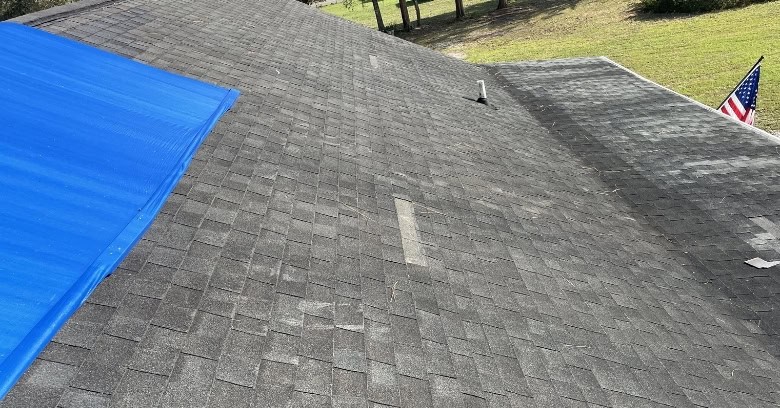
A storm just tore through, and now there’s water dripping from the ceiling or a tree limb sitting on the roof. You need emergency roof repair in Kansas City, and you’re trying to figure out what to do first while the rain keeps coming.
Take a breath. Most roof emergencies feel bigger in the first hour than they turn out to be, and a few calm steps right now can limit the damage inside your house a great deal.
APC Roofing is a GAF Certified contractor, licensed and insured, and we’ve been working on Kansas City-area roofs since 2017. Call 913-398-5020, tell us what’s happening, and we’ll get someone out to look at it as soon as we can.
First steps when your roof starts leaking
Stay off the roof. A wet, icy or storm-damaged roof is dangerous, especially at night or with a limb on it. Everything you need to do right now can be done from inside or from the ground.
Keep water away from electricity. If water is dripping near a light fixture, ceiling fan or outlet, turn off the breaker for that area if you can do it safely.
Catch the water and move your things. Buckets, towels and a tarp or plastic sheet on the floor go a long way. Move furniture, electronics and anything you care about out of the drip zone.
Watch for a bulging ceiling. If the drywall is sagging with trapped water, it can give way all at once. Keep people out from under it. Many homeowners poke a small hole at the lowest point with a screwdriver, with a bucket underneath, so the water drains in a controlled way. Only do it if you feel safe.
Take photos. Photograph the damage inside and whatever you can see outside from the ground. If you end up filing an insurance claim, those pictures help.
Common roofing emergencies in Kansas City
Most emergency calls here trace back to a handful of causes.
Severe spring and summer storms bring hail and straight-line winds that can strip shingles off a whole section of roof in minutes. Once the underlayment is exposed, the next heavy rain finds its way in.
Falling limbs are the next most common. Thunderstorms and winter ice storms bring down branches heavy enough to punch through decking.
In winter, ice dams can build along the eaves during a cold stretch with snow on the roof. Water backs up under the shingles, and you see it as drips along exterior walls or around windows.
Sometimes there’s no storm damage at all. A cracked pipe boot or loose chimney flashing that’s been seeping quietly finally lets go in a downpour, and it feels like an emergency because it shows up all at once.
What happens when you call
We’ll ask what you’re seeing and where, then set up a time to come out. On site, the first job is to find where the water is getting in, which isn’t always right above the drip. If the roof needs to be protected from more rain until a permanent repair can be made, we’ll talk through that with you.
After that, you get photos, a clear explanation and a written estimate for the permanent repair. Many emergency leaks turn out to be a repair job. If the damage is widespread, we’ll show you why a bigger fix makes sense, and our roof repair in Kansas City and storm damage roofing pages explain the options.
Emergency roof repair in Kansas City and your insurance
If a storm caused the damage, call your insurance company to report it. Many policies expect you to take reasonable steps to stop further damage, so keep receipts for anything you buy, like tarps or buckets.
You file your own claim and you pay your own deductible. We document the damage with photos, provide a written estimate and work with your adjuster.
After a big storm, crews from out of town often go door to door. Be wary of anyone who pressures you to sign that day, asks for a large payment up front or offers to waive or cover your deductible. Our insurance roof claims page for Kansas City covers the claim process in more detail.
How it works with APC Roofing
- Call us and book your inspection. Call 913-398-5020 and tell us what’s going on. For non-urgent work you can also request a free online estimate.
- Get a clear, honest assessment and estimate. We find the source, show you photos and explain what it’ll take to fix it properly.
- The repair gets done and the site gets cleaned up.
Financing is available through Aqua Finance, Fortifi, Hearth and Home Run Finance if the repair is larger than you planned for.
Emergency roofing questions from Kansas City homeowners
Should I climb up and put a tarp on the roof myself?
We’d ask you not to. Wet shingles are slippery, storm-damaged decking can give way and wind can turn a tarp into a sail. Protect the inside of the house and leave the roof to a roofer.
Is a small drip during a storm an emergency?
It’s worth a call either way. A small drip usually means water has already soaked through the underlayment and decking, and it tends to get worse with each storm.
Will my homeowners insurance cover an emergency roof repair?
Policies usually cover sudden damage from hail, wind or a falling tree, and not wear and tear. Your insurer makes that call. If you file, we’ll document the damage and work with your adjuster.
What if the leak stops once the rain stops?
The opening is still there. Have the roof checked before the next storm, while the repair is likely still small.
Back to a dry house
A leak that gets ignored after the rain stops keeps working on the decking and insulation, and the next storm picks up where it left off. Getting it looked at now keeps the repair smaller.
The goal is simple: the water stops, the roof is fixed properly and you sleep through the next storm without listening for drips. Call 913-398-5020 to get your roof looked at.