Your roof has the flat, even look of 3-tab shingles, and lately a few of them have ended up in the yard after a windy night. Maybe a home inspector called out “aging 3-tab roof” on a report, or a hailstorm has you wondering how much life is left. If you’ve got 3-tab shingle roofing in the Kansas City metro, you’re likely weighing whether to keep patching it or move on.
It’s a hard call when you can’t see the roof up close and every roofer seems to have a different opinion. You want someone to tell you plainly what your roof can still handle.
APC Roofing is GAF Certified, licensed and insured, and has worked on homes on both sides of the state line since 2017. Inspections and estimates are free. Call 913-398-5020 to have your 3-tab roof looked at.
How to tell if you have 3-tab shingles
A 3-tab shingle is a single flat layer of asphalt with two cutouts along the bottom edge, so each strip looks like three equal tabs once it’s on the roof. The result is a uniform, brick-like pattern with straight lines running across the roof.
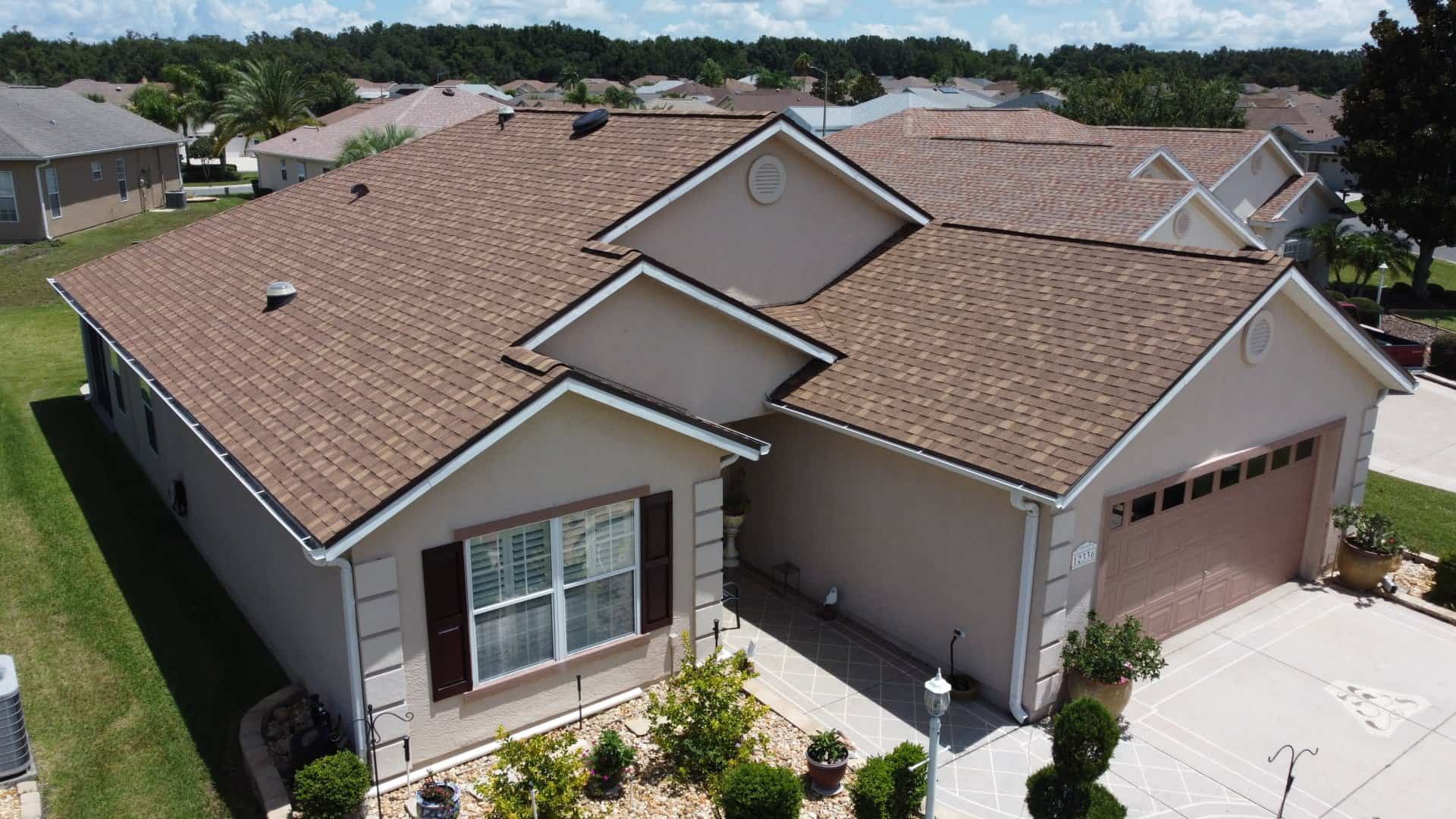
Architectural shingles, the more common choice on new roofs today, are built from two or more laminated layers. They look thicker and more random, with shadow lines that give the roof depth. If your roof looks flat and evenly gridded from the street, it’s probably 3-tab.
Plenty of homes around the metro still have them, especially roofs put on years ago and houses where an owner chose the lower-cost option.
How 3-tab shingle roofing in the Kansas City metro handles the weather
3-tab shingles are lighter and thinner than architectural shingles, and that shows up in our weather.
Wind is the most common trouble. A 3-tab shingle relies on a single strip of sealant to hold its tabs down. Strong straight-line winds from spring storms can break that seal and fold a tab back, which leaves a crease and an opening for rain. Over time, tabs tear off entirely, and you find them in the grass.
Hail is the second. Because the shingle is thinner, a hailstone can crack the mat or knock off granules more easily. Bruises may not leak right away, but the exposed asphalt breaks down faster in the summer sun.
Cold matters too. Older 3-tab shingles get stiff and brittle in winter, and the sealant doesn’t bond well until warm weather returns. That’s one reason tabs tend to blow off during late-winter and early-spring storms.
Repairing a 3-tab roof: the matching question
A few missing or damaged tabs can usually be replaced. The repair itself is simple. The challenge is the look.
Shingles fade as they weather, so even a perfect color match will look brighter at first. On top of that, many manufacturers now make fewer 3-tab products than they used to, and some older colors are no longer available. The goal is to find the closest product and color, then install it so the pattern lines up with the existing courses. Most patches blend in more as they age.
Older 3-tab shingles can also crack when they’re lifted to reach the nails underneath. If that happens, the repair grows. Before any work starts, you should hear whether your roof is still flexible enough to repair cleanly.
For storm-related repairs, see shingle roof repair in the Kansas City metro.
When to replace a 3-tab roof
It may be time to stop patching when:
- Tabs blow off after most windstorms, not just the big ones
- Hail has cracked or bruised shingles on several slopes
- The granules are mostly gone and the shingles look smooth or shiny
- Shingles crack or crumble when they’re lifted
- Leaks keep showing up in new places
Most homeowners replacing a 3-tab roof today move up to architectural shingles. They’re heavier, carry better wind ratings and are easier to find. That said, it’s your house and your budget, and if 3-tab is what makes sense for you, we’ll talk it through honestly. Learn more on our architectural shingle roofing page.
If hail or wind damaged your 3-tab roof
Storm damage is often covered by homeowners insurance. You file the claim with your insurer and pay your deductible. APC Roofing documents the damage with photos, provides the estimate and works with your adjuster. Be wary of anyone who offers to waive or cover your deductible.
How it works with APC Roofing
- Book your free inspection. Call 913-398-5020 or request a free online estimate.
- Get a clear, honest assessment and estimate. You’ll see photos of your shingles and hear whether a repair still makes sense or replacement is the better buy.
- Get the work done and the site cleaned up. Repairs are matched as closely as possible, many residential replacements are finished in a single day, and the crew cleans up before leaving.
Financing is available through Aqua Finance, Fortifi, Hearth and Home Run Finance.
3-tab shingle questions from metro homeowners
Why do my 3-tab shingles keep blowing off?
Usually the sealant strip under the tabs has failed with age, or the tabs were creased in an earlier windstorm. Once a tab has been folded back, it rarely seals flat again on its own.
Can I put architectural shingles on part of my roof?
It’s possible, for example on a separate garage, but mixing the two on the same slope looks uneven. Most homeowners keep one style per roof.
Is 3-tab still a reasonable choice for a detached garage or shed?
It can be, especially on a small outbuilding where budget matters most. Wind exposure and how long you plan to keep the building are worth weighing.
Can hail damage on a 3-tab roof be repaired instead of replaced?
If the damage is limited to a few spots, yes. If hail hit most of the roof, a repair only fixes some of it, and replacement is usually the better choice.
A roof that stays put in the next storm
A few loose tabs can let water reach the deck, and wet wood under an older roof tends to turn a simple fix into a bigger one.
You want to hear the wind pick up and not wonder what you’ll find in the yard tomorrow. Call 913-398-5020 to book your free inspection, or start online. For all our shingle services and more, visit the Kansas City metro roofing page.