Considering Architectural Shingle Roofing Anywhere in Independence Missouri?
APC Roofing mends torn, curled and lifted pieces and lays complete new coverings, on a bungalow, a split-level or a colonial.
Dial 913-398-5020 and you will hear in plain terms what is needed.
Behind the Colored Finish – Factory Details
Each shingle is built on a fiberglass mat for strength, and a saturant of asphalt seals out rain, and a layer of granules on top screens out ultraviolet light.
Products that seem alike from the driveway can vary a good deal underneath, and a heavier build generally adds years on a house. A swatch offers the look and nothing more, but a specification sheet names the ratings.
Traditional and Textured – Setting Them Apart
A three-tab product is a single-layer piece with twin cutouts at the exposed edge, so the surface shows neat uniform lines. Architectural shingles are built as a base with a second, trimmed ply fused on top, so the extra depth gives relief.
The double-ply build adds material and weight, and the rated wind resistance usually rises too. A dimensional shingle is nailed through its double-thickness strip, and most manufacturers print guide lines there.
A Place for the Plain Option – Practical Niches
Three-tab commonly goes on a shed, a carport or a covered porch, while a house already wearing that type can be matched. Several makers now offer that style in fewer colors than before, and discontinued hues cannot be ordered at all.
Laminated shingles hide small dips in an older deck better, while a thin strip follows every undulation. Either profile sits on the same underlayment and flashings, so the difference lives entirely in the top layer.
Loose Grit: Sun-Facing Slopes
Shingles fresh from the bundle drop leftover grains in their opening months, and the amount tapers off quickly. Heavy grit at the downspouts of an older covering means the protective coat is thinning, and uncovered asphalt dries out and cracks in sunlight.
Southern and western slopes absorb the hottest light, so bald patches tend to appear there sooner.
Sealant Lines – Wind Resistance
Glue is applied to every shingle at the plant as a narrow stripe, and warm days melt it just enough to anchor the next row. Adhered courses keep their bottom edges down in a gust, while the nails keep doing their share for decades.
At the colder end of our territory, a covering installed in freezing temperatures can wait months to bond, so a windy day can fold back tabs that have not taken hold. Makers' directions cover this with cement placed by the installer, and each bundle label marks the right locations.
How Courses Are Attached: Common Slips
Roofing nails go into a narrow band marked by the manufacturer, where the shank also catches the headlap of the row below. Most shingles take four fasteners apiece, while a bundle wrapper asks for six on very steep or wind-exposed jobs.
A nail set too high misses the row underneath, excess air pressure buries the head in the mat, and a skewed shank tents the shingle on top. The wind resistance stated on the package depends on the specified pattern, while a bad compressor setting repeats itself on every shot.
What Supports the Covering – Before New Courses Go On
Plywood or OSB panels form the deck under a shingle roof, since shanks need continuous solid material to stay put. Older houses sometimes keep the gapped boards once used under shakes, and new sheathing bridges them before any shingles.
Sections that are soft, delaminated or rotted get cut out and replaced during a tear-off, since a shank in crumbling fibers cannot hold. Panels go down with a narrow space along each joint, because wood swells in humid weather and buckles without room to move.
Old Paper, New Fabric: Known Limits
Before any shingles go down, a water-resistant membrane is rolled over the deck, and it goes down in horizontal runs that lap downhill. Asphalt felt is less common now that synthetic sheet has taken hold, because the woven fabric resists tearing and stays flat when damp.
Water blown under a lifted tab runs down the membrane to the gutter, but it was never designed to serve as the only covering.
Membrane at the Eaves: Trapped Runoff
At the colder end of our territory, a heated attic thaws rooftop snow, and a frozen band builds along the chilly lower edge. Held back up the slope, water works its way under the tabs, and plain underlayment admits it around each nail hole.
Colder-market codes call for a peel-and-stick membrane along the lower edge, and it is carried upslope far enough to clear the heated part of the house. In all of our territory, installers also lay it in valleys and around penetrations, because those junctions carry heavy flow.
Where the Deck Ends: Sequence Matters
Prefinished drip edge follows each eave and each rake, and water sheds into the gutter instead of onto wood. The underlayment covers the lower flashing, but on the gable sides the order reverses.
Codes across much of the country list edge metal as required on every perimeter of the covering, since rain creeps back onto the decking where nothing guards it.
The Lowest Row – No Substitutes
A purpose-made starter strip lines the bottom of every slope, so the sealant is positioned right at the lip. A rotated field piece strands the adhesive several inches up, and the tabs at the low border are held only by nails.
Most instruction sheets extend starter up both rakes, because wind catches the outer margins along with the eaves.
Inside Corners: Debris and Flow
Open valleys expose a painted or galvanized liner along the fold, and the closed-cut type carries one side's courses through while the other side is cut back. Weaving rows from both planes together suits single-layer tab products, while makers generally advise against it for architectural shingles.
Fasteners stay out of the center of the channel, and a waterproof underlayment is laid beneath along the full run. A mat of leaves lodged in a valley traps water and grime, so runoff may be forced beneath the cut side.
Masonry Connections: Transitions Between Materials
Every course that meets a wall gets its own folded step flashing, while the lap siding covers the upright side. The corner where the eave reaches the house takes a kickout, since water left alone tracks into the sheathing.
A chimney gets an apron across its front, steps along its sides and counterflashing let into the mortar joints, and a broad stack calls for a saddle upslope.
Holes for Plumbing – Sequence and Laps
A typical boot is a metal or plastic plate carrying a flexible collar that grips the pipe, and the sealing ring stiffens and cracks as it weathers. The upper half of the flange tucks beneath the shingles above, so the lower edge sheds onto the shingles beneath.
Collars often crack while the surrounding field still has years of wear left, and new boots are standard whenever the shingles are replaced.
Along the Peak: Homemade Shortcuts
Cap shingles close the ridge and each hip, and laminated work calls for the maker's coordinated accessory. Tabs cut from single-layer shingles make a thinner substitute, and in winter at the colder end of our territory the fold is prone to cracking.
A continuous ridge vent frequently lies under the cap row, and longer nails are needed to reach through it into the deck.
Circulation Upstairs – Mixed Systems
Fresh air is meant to enter low through soffit vents, and a ridge exhaust lets it out. Batts pushed hard against the sheathing at the wall line can block movement, so baffles are installed to keep a clear gap.
A poorly vented attic turns into an oven under the deck, while indoor humidity collects there with nowhere to go. Across the colder end of our territory, a crust of frost builds on the nail points, and the water runs down as the day goes on. Combining different exhaust types can make one vent pull air in through another, so the lower part of the space goes stagnant.
One Product Everywhere – Sunlight and Storms
Our markets take in mountain snow in one place and tropical heat in another, and the strain on asphalt shifts with the setting. At the coastal end of our territory, hurricanes bring spells of fierce wind, and makers publish a tougher fastening pattern for that exposure. Long seasons of strong sun dry out the oils in the coating, and lasting humidity gives algae room to grow.
At the colder end of our territory, each overnight freeze works on any opening, while snow cover keeps the eaves cold for weeks at a time.
Stones Out of a Thunderhead: Surface and Below
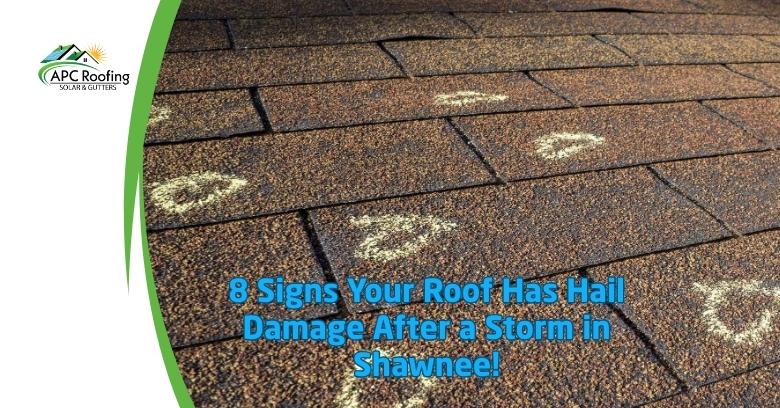
At the colder end of our territory, hail falls in many storm seasons, so shingle lines that stand up to it are common. Where a stone lands, the granules break away in a round mark, and a heavy blow may fracture the fiberglass below.
The impact class on a bundle comes from a standard drop test with steel balls, and the better lines survive rough treatment more often. Rubber-modified asphalt is common in these designs, so the material bends where an ordinary mix would crack.
Strong Gusts: Folded Tabs
The eaves, rakes and corners take the heaviest upward pull, and a shingle whose seal has let go starts to flap. Once a tab is doubled back, a crease forms where it bent, and it is liable to tear off later. A shingle hurt like that is replaced with a new one, while an unfolded one can be sealed again with roofing cement.
An empty spot in the courses puts the underlayment in direct sun, and daylight starts breaking it down at once.
Living Things Up Top – Cleaning Without Harm
Blackish trails are colonies of algae, and the microbes draw on limestone in the coating. At the humid end of our territory, faces under trees and out of the sun collect it soonest, and the film alone rarely shortens the life of the covering.
Moss behaves differently, soaking up rain like a sponge, and as clumps thicken they wedge the tabs upward. Pressure washing takes the granules along with the growth, while a cleaner applied gently loosens the film. Copper-bearing mineral is blended into algae-resistant lines, while a strip of zinc at the ridge helps keep the stains from returning.
Choosing a Color – Blends and Batches
A black or charcoal covering absorbs more of the sun's energy, while light ones reflect much of the light skyward. Some product lines use specially coated granules that turn back more radiation, and a reflectance rating appears on the data sheet.
The look can drift from one manufacturing lot to the next, so maker directions say to draw from more than one bundle at a time. Blended colors, with many tones on each piece, hide those minor differences, whereas single-shade shingles make them easier to spot.
Standing on a Slope – Weighing the Risk
Strong sunshine warms the bitumen until it goes pliable, so a shoe sole scrapes away grit. At the colder end of our territory, a course stiff with cold can break under weight, while frost at dawn makes the footing treacherous.
Keeping both feet in the yard is safer for an owner, and a pair of binoculars shows most of what matters.
Re-Covering Without a Tear-Off: The Deck Question
Local regulations commonly accept an overlay over an old roof, though not where two are already down or the sheathing is soft. The current shingles stay on top of the decking throughout the job, and damaged sheets end up sealed beneath the added material.
An uneven base gives the new shingles a wavy face, while aging flashing frequently stays put. A second layer's load sits on framing chosen decades ago, and every nail must travel through the old material before it grips.
Early Warnings: Outside and In
- Granules pile up in the gutters, and the drifts get deeper each season.
- Tabs stand up along one edge, so the adhesive strip has given way.
- Bottom corners curl upward, and the asphalt is drying out.
- Fractures cross the exposed face, and the layer below begins to soak up water.
- Parts of a slope look darker and slick, so the base is bare to sunlight.
- A rubber collar around a vent pipe has split, so water works its way indoors.
- The metal where a slope meets siding sits bent or pulled back, so every storm can find a weak point.
- A damp patch shows up on the ceiling after heavy rain, but the place moisture enters may lie higher up.
How APC Roofing Approaches Architectural Shingle Roofing in Independence Missouri: Our Method
An inspection starts by walking each slope in turn, and the flashings, valleys, vents and edges get a close look along the way. Inside the house, the attic is searched for stains and daylight, and darkened boards on the underside show past leaks.
Trouble of any kind is photographed, and its size is measured. A written summary lays out what was found, with a reason beside every recommendation. A modest problem is presented as modest, and a worn-out covering is identified as such. The choice is the owner's, be it a repair, a replacement or no work yet.
Architectural Shingle Roofing in Independence Missouri: a Careful Look Before Any Advice
Dial 913-398-5020 and say what you have noticed.
Fix or Replace: Knowing the Limit
Changing a boot, resealing a flashing or swapping a few torn tabs is everyday repair work, while the surrounding shingles are left alone. Fresh shingles stand out against faded neighbors at first, while the exact style may no longer be made.
A sun-dried tab breaks as soon as it is pried back, so the pieces beside the work may need to come out too. Once wear like that reaches across the covering, replacement makes more sense than more patching.
Expected Service Life – Early Endings
On three-tab, fifteen to twenty years is normal, while laminated lines often reach close to thirty. Heat, ventilation and fastening all push the number up or down, while one bad storm can end the run early.
The vent collars and flashings deserve an occasional look, since a crack caught in time stays a small job.
When you are weighing Architectural Shingle Roofing in Independence Missouri, get hold of APC Roofing at 913-398-5020. The whole covering and the attic are inspected in person, and you get the findings in writing and choose.
Verified

Verified