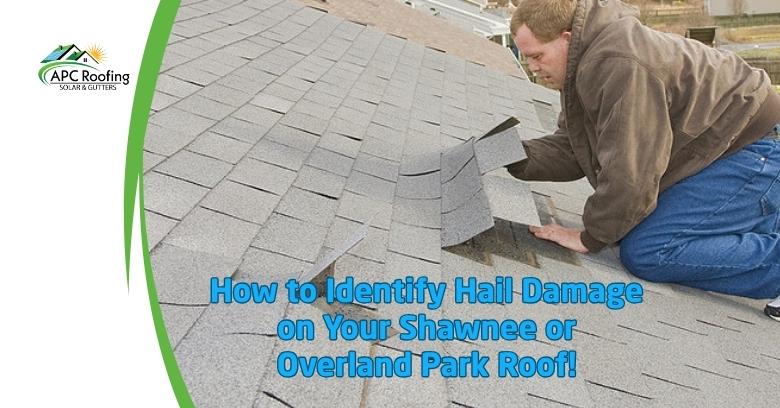
You’ve decided the old roof has to go. The hard part now is that almost everything that decides how long your new roof lasts ends up hidden under the shingles, where you’ll never see it. Two quotes for shingle roof installation in Independence can look alike on paper and be very different roofs.
That’s a fair thing to worry about. You’re spending real money, and you want to know the parts you can’t see were done right.
APC Roofing is a GAF Certified roofing contractor, licensed and insured, in business since 2017. Your inspection and estimate are free, and we’ll walk you through exactly what goes into your roof. Call 913-398-5020 to set up a time.
What shingle roof installation in Independence includes
Here’s what happens on a full replacement, from the deck up. It’s worth knowing so you can ask good questions of anyone who bids on your roof.
Tear-off and a look at the deck
The old shingles and underlayment come off down to the wood. That’s the only time anyone gets a clear look at the roof deck, the plywood or OSB sheets everything else is nailed into. Soft, rotted or delaminated sections get cut out and replaced, because a nail driven into punky wood won’t hold.
Some older houses have spaced board decking from the days of wood shake roofs. Shingles need a solid surface, so new sheathing goes over those boards first.
Drip edge and ice barrier
Metal drip edge runs along the eaves and rakes so water drops into the gutter instead of curling back onto the fascia. Along the eaves, and down every valley, a self-adhering ice and water barrier goes on next. It sticks directly to the deck and seals around nails. In a Missouri winter, when snowmelt refreezes at the eaves and backs up under the shingles, that membrane is what keeps the water out of your house.
Underlayment
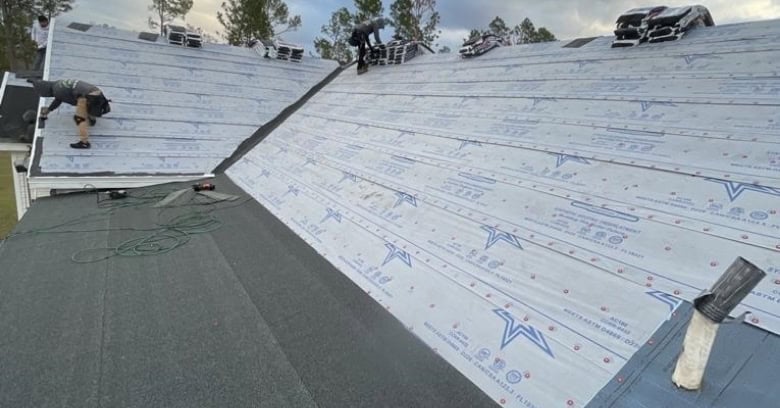
The rest of the deck gets covered with underlayment, lapped from the bottom up like shingles so any water that sneaks past runs downhill and out. Most roofs today use synthetic underlayment, which is lighter and stronger than old felt paper and doesn’t wrinkle the same way.
Starter strip and field shingles
The first row along the eaves is a starter strip with a line of sealant right at the edge, so the bottom course is glued down against wind. The field shingles then go up row by row, nailed in the narrow nailing zone the manufacturer marks on each shingle. Nails placed too high miss the shingle underneath. Nails driven too deep cut the mat. Either one weakens the wind rating printed on the bundle.
Flashing, pipe boots and ridge
Where the roof meets a wall, step flashing goes in with each course of shingles. Chimneys get flashing on every side, with counterflashing set into the mortar. Plumbing vent pipes get new boots, since the rubber collars on old boots often crack before the shingles wear out. Ridge cap shingles finish the peaks and hips.
Why the details matter in Independence
Kansas City-area weather tests every one of those steps. Spring storms bring hail and straight-line winds, and wind pulls hardest at the edges and corners of a roof, right where the starter strip and edge nailing do their job. Missouri winters bring freeze-thaw cycles that work water into any gap at a chimney or pipe, and the ice barrier at the eaves is there for the ice dams that follow a heavy snow.
Timing matters too. Shingles seal to each other when the sun warms the adhesive strip. A roof installed in late fall may not fully seal until warmer weather comes, so manufacturers call for hand-sealing in cold conditions. Ask whoever installs your roof how they handle a cold-weather install.
Tear-off or an overlay?
Many codes allow one new layer of shingles over an existing one, and it’s quicker. You give up a lot for that, though. The deck stays hidden, so any rot or soft spots stay under the new roof. The extra layer adds weight, and the new shingles can show every lump in the old ones. A full tear-off costs more up front and gives you a roof built on a sound deck. Your estimate should say plainly which one you’re getting.
Choosing your shingles
Installation and material go together. Architectural shingles are the most common choice today, and impact-resistant shingles are worth a look in an area that sees as much hail as Independence. Our asphalt shingle roofing in Independence page compares the options, and the Independence shingle roofing page covers repairs too. If you’re weighing other materials, see roof replacement in Independence.
Installation day
On the day itself, plan on noise and a crew on your roof from morning on. Before work starts, landscaping and the area around the house get covered to catch debris. When it’s done, ask any roofer how they pick up nails; a magnetic sweep of the yard and driveway should be part of cleanup. Many residential roofs are finished in a single day, and you’ll get a realistic timeline with your estimate.
How it works with APC Roofing
- Book your free inspection. Call 913-398-5020 or request an estimate online.
- Get a clear, honest assessment and estimate. You’ll see photos of your roof and get a written estimate that spells out what’s included. Financing is available through Aqua Finance, Fortifi, Hearth and Home Run Finance.
- Your new roof goes on and the site gets cleaned up. The crew installs it and cleans up before they leave.
If you’re on the fence, keep in mind that an aging roof doesn’t usually fail all at once. It leaks a little, around a boot or a valley, and the water soaks the deck for months before you see it inside. Replacing the roof before that happens means you’re paying for a roof, not a roof plus drywall and insulation.
Shingle roof installation questions
How long does a shingle roof installation take?
Many homes are done in one day. Bigger or steeper roofs, or a deck that needs a lot of new wood, can take longer.
Do I need to be home during the installation?
Not usually. Someone should be reachable, and the crew will need access to the outside of the house and the driveway.
What happens if the deck is rotten?
Bad sections get replaced before anything else goes on. The condition of the deck isn’t fully known until the old shingles come off, so your estimate should explain how replacement wood is handled.
Can you install a shingle roof in winter?
Yes, on days when the weather allows. Shingles may need hand-sealing in the cold because the adhesive strips won’t activate until it warms up.
Book your free roof inspection in Independence
You want a roof that’s built right underneath, not just one that looks good from the street. Call 913-398-5020 or request your free estimate online.
When the work is done, you’ll have a sound deck, a dry attic and a new roof you understand from the wood up.