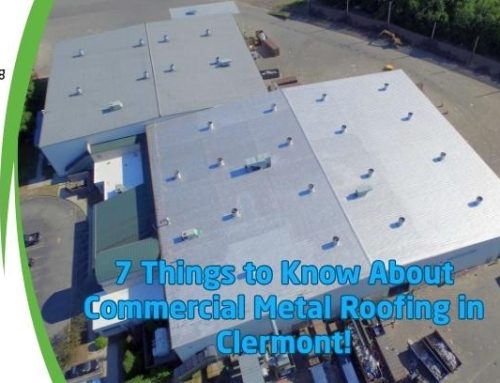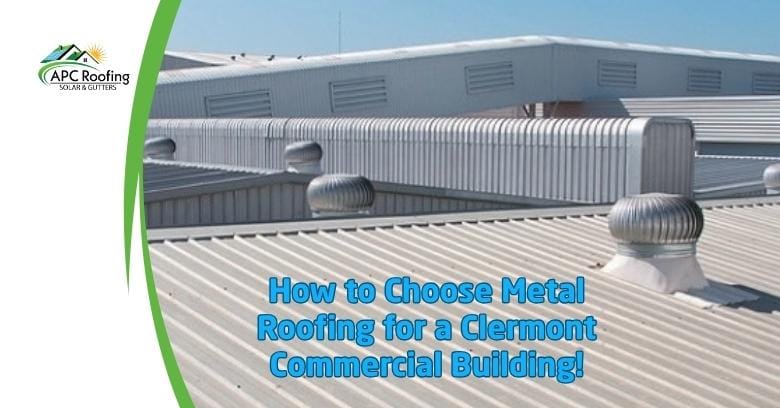
Commercial building owners around Clermont Florida face a narrower set of roofing choices than they might expect. Between rolling terrain along the Chain of Lakes, ultimate design wind speeds in the 125 to 130 mph range, near-daily afternoon storms from June through September, and panel surface temperatures that reach 160 to 180°F in July, a system that performs well in a milder climate can fail early here. Metal roofing solves many of those problems, but only when the panel profile, slope, fastening method, coating, and edge detailing match the actual building.
The decision matters more now than it did a decade ago. The US-27, SR-50, and Wellness Way growth corridors have filled with tilt-wall and pre-engineered metal buildings, many of them low-slope, and owners of aging metal roofs are hitting the point where recover-versus-tear-off becomes a real question. At the same time, hurricane-season backlogs and Kynar color lead times of four to ten weeks mean a project decided in August may not get materials until well into the season.
This article walks through how to evaluate a metal roof for a commercial property in the Clermont and Sanford Florida area by reading the building's slope and exposure first, comparing exposed-fastener and standing seam systems, choosing substrate and paint for inland Florida conditions, understanding what Lake County code actually requires, and scrutinizing the roofing companies bidding the work.
Start With the Building, Not the Panel
The most common mistake in commercial metal roofing is selecting a panel from a brochure before anyone measures the roof. Slope and wind exposure eliminate most options before aesthetics ever enter the conversation.
Slope Decides the System
Manufacturers publish minimum slopes, and those numbers are enforceable through product approval:
- Mechanically seamed standing seam (180° double-lock): roughly 1/4:12 minimum
- Snap-lock standing seam: typically 3:12 minimum
- Exposed-fastener panels (R-panel, PBR, corrugated, 5V): generally 1/2:12 to 3:12 depending on the specific approval
Many commercial roofs in Clermont Florida are low-slope or dead-flat, which rules out snap-lock entirely. The workaround is a retrofit framing system with sub-purlins and hat channels installed over the existing deck to build positive slope which adds roughly $3 to $7 per square foot but converts a ponding-prone flat roof into a drainable metal assembly. Owners comparing that cost against a TPO replacement, which typically runs $7 to $13 per square foot, should weigh it against service life rather than first cost alone.
Exposure and Wind Pressure
Lake County is not a High Velocity Hurricane Zone, so a Miami-Dade Notice of Acceptance is optional, not required. You need a Florida Product Approval number with a matching test report. Look for uplift testing under UL 580, UL 1897, FM 4471, or TAS 125.
Exposure category matters just as much as wind speed. Sites near open water or on the rolling ground west of downtown often qualify as Exposure C, which produces higher design pressures than a sheltered infill lot in Orlando or a similar parcel in Sanford Florida. Under ASCE 7-16, corner zones can see two to three times field pressure, so clip or fastener spacing must tighten at perimeters and corners. A bid that uses one spacing across the whole roof is not engineered.
Exposed-Fastener Versus Standing Seam
Commercial metal roofing falls into two families and they behave differently over a 30-year ownership horizon.
Exposed-Fastener Panels
R-panel, PBR, corrugated, and 5V profiles screw directly through the panel face into purlins or framing. Installed cost typically lands in the $6 to $12 per square foot range, making these the budget-friendly choice for warehouses, agricultural buildings, and secondary structures. Service life runs 20 to 30 years, but the gasketed screws are the weak link: neoprene washers degrade under Florida UV and usually need replacement around year 15 to 20. Thermal cycling also works the fasteners loose, because steel moves roughly 0.8 inches per 100 feet for every 100°F swing and Clermont roofs see that swing routinely.
Standing Seam Panels
Concealed-clip standing seam carries no penetrations through the panel face. Clips allow the panel to float as it expands and contracts, which is exactly what a long run in Central Florida sun needs. Installed cost for 24-gauge standing seam generally runs $12 to $22 per square foot, with a service life of 40 to 60 years. Narrower panels of 12 to 18 inches rather than the widest available resist oil-canning better and deliver higher uplift resistance.
For an occupied office, medical suite, or retail space, mechanically seamed standing seam over a solid deck with insulation also handles rain noise far better than a bare exposed-fastener panel over open purlins in a warehouse. That distinction comes up constantly when building owners in Sanford Florida and nearby Clermont compare notes on similar-looking projects with very different interior uses.
Substrate, Coating, and Gauge
Metal and Corrosion Exposure
Clermont sits roughly 30-plus miles inland, so chloride exposure is low and Galvalume-coated steel is generally appropriate for a commercial metal roof. AZ50 is the standard coating weight; AZ55 carries more coating and buys additional corrosion margin for a modest upcharge. Aluminum is the coastal answer and is rarely necessary this far inland.
The real corrosion risks here are local rather than marine including fertilizer storage, citrus operations, and rooftop kitchen exhaust that deposits grease and acids on panels. Galvalume must also never contact ACQ-treated lumber, copper, or lead. Confirm separation in writing with an approved barrier before installation.
Paint Systems and Gauge
Coating choice drives how the building looks in year fifteen. PVDF, commonly known as Kynar 500, uses a 70% fluoropolymer resin and holds color dramatically better under Florida UV than an SMP finish. Chalk-and-fade warranty terms differ sharply between the two, and those documents are worth reading line by line rather than accepting a verbal summary from any roofing company quoting the job.
Gauge follows the span and the use:
- 26-gauge: light commercial, shorter spans, budget-driven projects
- 24-gauge: the standard for commercial standing seam
- 22-gauge: heavy-duty applications and long, unsupported spans
Lower numbers mean thicker steel. For a building in an Exposure C setting with high corner pressures, moving from 26 to 24 gauge is usually money well spent.
Code, Permits, and Documentation
Paperwork sinks more commercial reroofs than weather does. The requirements are predictable and a prepared owner can keep the schedule intact.
- Asbestos survey - Under NESHAP, a survey is required before a commercial reroof or renovation regardless of the building's age. This is not optional and cannot be skipped because the structure looks new.
- Roof covering count - The IBC limits a building to two roof coverings total. If two layers already exist, a third forces a full tear-off, which changes both budget and schedule.
- Secondary water barrier - Florida requires a sealed or secondary water barrier on reroofs, an item that must appear in the scope, not as a change order.
- High-temperature underlayment - Anything under metal must be rated for 240°F or higher. Standard peel-and-stick can bleed asphalt at the panel temperatures reached here in summer.
- Edge metal to ANSI/SPRI ES-1 - Most wind losses begin at the perimeter, not in the field of the roof. Compliant, tested edge metal is one of the highest-value line items on the estimate.
- Notice of Commencement - Florida requires one for work over $5,000, recorded with the Lake County Clerk.
- Permitting authority - In-city projects go through the City of Clermont; properties outside city limits go through Lake County Building Services. Both typically require dry-in and final inspections.
Energy code adds another layer. In Climate Zone 2, low-slope assemblies generally target around R-25 continuous above-deck insulation, and the cool-roof compliance path looks for roughly 0.65 initial solar reflectance or an SRI of 64 and above. Reflective coatings on a metal roof make that path straightforward, and they also reduce cooling load on buildings with large conditioned footprints.
Scheduling, Budgeting, and Scrutinizing Contractors
Timing is strategic in Central Florida. Hurricane season runs June 1 to November 30 with a peak from August through October, and contractor backlogs plus material allocation spike immediately after any named storm. The rainy season overlaps, delivering 7 to 9 inches of monthly rainfall through the summer, which makes dry-in sequencing on a metal roofing installation far more important than crew size. A contractor who tears off more roof than can be dried in before the afternoon convection builds is creating a claim, not progress.
When comparing roofing companies, owners should ask for specifics rather than generalities:
- The Florida Product Approval number for the exact panel, gauge, and substrate proposed, with a test report that matches the deck type
- Clip or fastener spacing shown separately for field, perimeter, and corner zones
- Written confirmation of underlayment temperature rating and ES-1 compliant edge metal
- A dry-in plan tied to daily tear-off limits during rainy season
- Lead time for the selected color, since Kynar finishes commonly take four to ten weeks
- Whether panels will be roll-formed on site, which removes length limitations and eliminates end laps on long runs
APC Roofing works across Central Florida, the East Coast, and the South West Coast, handling residential and commercial projects ranging from tile and shingle work to TPO and metal roofing systems, and the company is BBB accredited with GAF Master Elite contractor status. Owners weighing a project in Clermont Florida or a comparable building in Sanford can start with a free estimate, review financing options, and discuss extended warranties ranging from 10 to more than 25 years before committing to a system.
Final Thoughts
Choosing metal roofing for a commercial building is an engineering exercise before it is a purchasing decision, and the order of operations protects the investment. Confirm the slope, determine the exposure category and design pressures, select the panel family that fits both, then choose substrate, gauge, and coating for inland Florida conditions and only then compare price. Owners in the Clermont and Sanford Florida areas who reverse that order tend to buy a panel that cannot legally be installed on their slope or one that fails at the perimeter in the first serious storm.
The practical next step is to schedule an inspection and a documented estimate with a reliable roofing company well before hurricane season peaks, because material lead times and post-storm backlogs can push a straightforward project months past its intended completion date. A properly specified standing seam roof can serve a building for 40 to 60 years, which makes the few weeks spent getting the specification right one of the best returns available on a commercial property!
Key Takeaways
- Roof slope determines which metal panel systems are legally and practically available, so measure before selecting a profile.
- Standing seam costs more upfront than exposed-fastener panels but typically lasts 40 to 60 years versus 20 to 30, with no face penetrations to maintain.
- Lake County requires Florida Product Approval with a matching test report; a Miami-Dade NOA is optional, not mandatory.
- Perimeter and corner zones need tighter fastener or clip spacing than the field and ES-1-compliant edge metal prevents the failures that cause most wind losses.
- Schedule commercial reroofs outside the August-to-October peak when possible, and confirm color lead times of four to ten weeks before finalizing a completion date.
Frequently Asked Questions
Can we install metal over the existing roof or is tear-off required?
Recover is often possible, but the IBC caps a building at two roof coverings total. If two layers already exist, a full tear-off is required, and a NESHAP asbestos survey must be completed before either approach begins.
Will a metal roof attract lightning?
No, metal roofs are not more likely to be struck by lightning than other roofing materials. Because metal is non-combustible, it generally performs better than combustible materials if a strike does occur, and proper grounding and bonding can be addressed during design.
How loud is the sound of rain hitting a metal roof?
Noise depends almost entirely on the assembly beneath the panels. A standing seam roof over a solid deck with insulation is quiet enough for offices and retail, while bare panels over open purlins in a warehouse will be noticeably louder.
What does a commercial metal roof typically cost?
Exposed-fastener systems generally run about $6 to $12 per square foot installed, and 24-gauge standing seam typically falls between $12 and $22. Retrofit framing to create slope on a flat roof commonly adds another $3 to $7 per square foot.
Do we need a permit for a commercial reroof?
Yes. Projects inside city limits are permitted through the City of Clermont and those outside go through Lake County Building Services, with typical dry-in and final inspections. Florida also requires a recorded Notice of Commencement for work over $5,000.
Is Galvalume or aluminum the better choice here?
Galvalume is generally appropriate at roughly 30-plus miles inland, where chloride exposure is low. Aluminum is normally reserved for coastal sites, though AZ55 coating weight is worth considering near fertilizer, citrus, or heavy kitchen exhaust operations.
How long does a commercial metal roof project take?
Installation time varies with size and complexity, but the schedule usually depends on material lead times and weather. Kynar-finished panels commonly take four to ten weeks to arrive, and summer rain requires daily tear-off limits so each section can dry before afternoon storms.