Considering Corrugated Metal Roofing in Greater Orlando Metro Area?
APC Roofing works on ribbed sheet and concealed-clip panels alike, for houses as well as workshops and barns.
Reach us at 407-270-1129 and a visit ends with a straight account of what was found.
Sorting Out Types – A Glance Up
Screw-down panels, corrugated or ribbed, are fastened with screws through the exposed metal, but standing seam is anchored by clips concealed beneath upright folds. Coated steel is what the great majority of metal-roofed homes carry, though aluminum and copper have a place too.
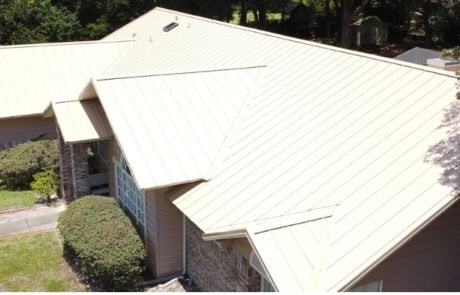
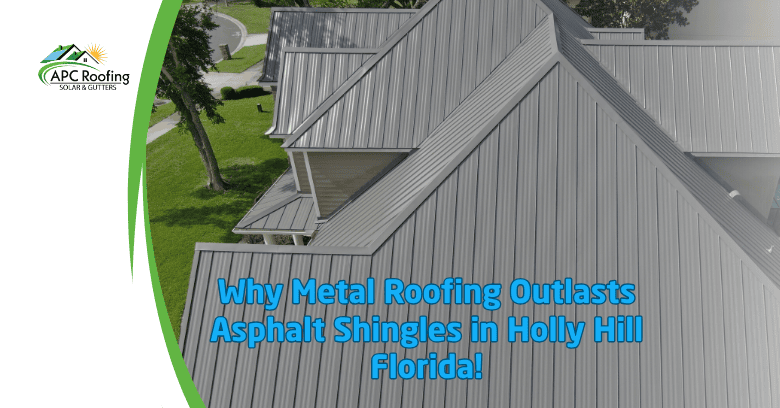
Rows of fastener heads, visible from the street, give away a screw-down roof, while flat pans divided by upright folds with no hardware showing are standing seam. Outbuildings and porches lean toward ribbed or corrugated sheet, and homes turn up with both.
Rolled Shapes: Old Look, New Look
Corrugated sheet rises and falls in rounded, evenly spaced waves, while ribbed designs show angular ribs and wide flats. Side by side, adjoining lengths overlap by one crest, and a maker's pattern says where screws go.
Ribbed stock is stiffer and spans further between supports, while corrugated keeps a place on vintage buildings and farmhouse designs. A tall rib keeps heavy rain inside a channel on a broad roof plane, whereas a short porch covering gets by with a low pattern.
Hardware in the Weather – Why Installation Matters
Each screw draws a panel snug against a rafter or purlin, and a sealing washer beneath each head closes a drilled hole. Rubber in steady sunlight hardens and cracks with age, long before the painted metal gives out.
Overdriving tears a washer and dishes the metal, and a fastener stopped short or angled leaves a gap for rain.
Refreshing Hardware – Where Help Stops
Washers dotted across a ribbed field grow old together, so eventually a full new set of seals is needed. Tired fasteners are pulled one by one, and a slightly fatter screw goes into each hole so a thread bites fresh wood or steel.
A re-screw stops drips around screw heads and draws lifting sheets back down, yet rusted panels, opened laps and poor flashing still need separate repairs. Replacements are chosen for whatever framing lies underneath, lumber or steel, and a factory color on every top suits most finishes.
A Covering in Motion: Room to Travel
Sunshine stretches steel slightly and a chilly night pulls the metal back, and forty feet of panel shifts roughly a quarter inch or more, and aluminum reaches about double. Metal screwed down with no give wears each hole into an oval, and washers then stop sealing.
Snapping sounds at sunrise come from panels shifting against clips, and nothing is damaged where every detail allows for slack.
Beneath Raised Seams: Out of the Weather
One short stretch of every long pan is pinned tight, and sliding clips everywhere else let the metal move with temperature. Trim at an end that travels is bent with clearance underneath, whereas a pan with no play lets go or distorts.
Clips are screwed to the deck along one edge of every pan as work proceeds, so nothing that holds the roof down is left exposed.
Seam Styles: Which Suits the House
Snap-together panels latch by hand, while machine-rolled designs get folded over by a motorized seamer. Double-lock construction resists uplift and ponding, and maker approvals cover shallower slopes.
Manufacturers offer a range of pan widths and rib heights, and a home's design and a buyer's taste guide selection. Clips, trim and closures are bought to suit one particular panel, and a substitute from elsewhere leaves gaps.
Light or Heavy – Worth Confirming
Steel thickness is given as a gauge, and a lower figure means more metal per sheet. Outbuildings commonly get twenty-nine, while houses often take twenty-six or twenty-four.
Aluminum sheet is measured in decimal inches, and in either metal thicker stock dents less and lies flatter. From the ground, light and heavy metal look alike, so a label on a bundle shows what was delivered.
Factory Protection – Aging in Sunlight
Steel for roofing is hot-dipped in zinc or an aluminum-zinc blend, and baked-on primer and color follow. Paint scuffed but not broken through is fine, while a sheared edge or a deep gouge lets rust begin.
PVDF systems keep color and gloss for decades, and polyester families fade and chalk more quickly. An aluminum-zinc surface is damaged by contact with fresh mortar, and a barrier belongs wherever panels meet new stonework.
Which Metal Suits: Salt Air
Aluminum is light and free of red rust, but a dropped tool or a falling branch dents a soft sheet sooner. Close to salt water, at the coastal end of our range, metallic coatings break down faster, and some makers limit steel products by distance from a shoreline.
Copper appears mainly as small roofs on bays and cupolas, and left unpainted, the metal darkens with age.
Metals That React: Treated Lumber and Wrong Screws
Water that has crossed copper wears away any steel coating below, and staining shows up well ahead of pinholes. Chemicals in treated lumber pit any aluminum resting on top, and a mismatched fastener rusts quickly.
Any added flashing or trim should be the same metal as what is up there, or tape and membrane keep dissimilar metals from meeting.
A Frequent Complaint – Surface, Not Structure
Oil canning means a slight bow in a wide stretch between seams, and a sun low in the sky exaggerates every contour. An irregular-looking finish keeps weather out just as well, and service life is unaffected.
Striations, heavier stock and narrower pans keep rippling in check, and an even deck beneath helps as well. Images of real houses show oil canning from obvious to barely there, and you decide what to order.
Everyday Comfort: Rattle and Warmth
A racket many recall comes from sheet over open framing, since a single skin is the only barrier. Residential metal goes over plywood and underlayment, with insulation above each ceiling, and indoors, few people notice more noise than under asphalt.
A white, tan or light gray panel turns back much glare, so upstairs spaces bake less. Deep shades absorb as much as dark asphalt, and without venting and insulation, color alone does little. Thin steel cools off right after dusk, so evenings indoors feel better sooner.
Holding a Load Up There – Only Where Needed
At the colder end of our range, snow lets go of a metal surface easily, and a slab arriving all at once can injure someone or rip a gutter off. Stops attached to the metal let a load leave slowly, and typical spots are above doors, walks, decks and gas meters.
A standing seam roof gets brackets that squeeze an upright joint rather than pierce a pan, whereas corrugated panels get mounts anchored through to purlins, and in milder markets roofs do without.
Blows From Above: Documented Plainly
Hail is common across the colder end of our territory, and panels with an impact rating are an option. A strike sharp enough to break a finish lets rust start, and a flattened rib or a shifted cap can leak.
Following a storm, our roofer takes pictures and measurements, and the depth of each dent is gauged.
Storm-Ready Attachment: Layout Matters
Corners and borders see heavy suction, an open field much less, and an unfastened edge lets pressure build beneath. Each finishing piece is folded back and locked over a full-length cleat, so nothing sticks out to be grabbed.
Screw and clip spacing tightens at corners and around a perimeter, as manufacturer tables call for at each site. At the coastal end of our range, where hurricanes come ashore, rows of screws draw in further, and panel and hardware are rated as one assembly.
Openings in a Covering: Keeping Water Out
A plumbing pipe gets a flexible boot with a base that bends to a panel profile, and a hole is cut in a flat, never across a crown. Larger units get a raised curb plus a cricket on an uphill side, and water from higher up is divided and sent past.
Caulk plays a supporting role to folded metal, because a compound shrinks and pulls away with time.
Where Slopes Meet: Hooked and Clear
Valley metal is laid before a single panel, and each sheet is cut to a matching angle. Every raw end is turned under and caught by a cleat, so no fastener sits where water collects.
Long runs made of more than one piece get an endlap with sealant sandwiched inside, and fasteners through both thicknesses keep water from backing up.
Limits Near Flat: Where Locked Seams Help
Corrugated and ribbed sheet usually needs around three inches of rise in every foot, and on flatter roofs, water works under side laps. Double-lock standing seam is rated for far shallower roofs, and product literature states an exact minimum.
Nearly level spots over sunrooms and porches turn up on plenty of houses, and a measured angle decides what goes on, and where metal does not belong, a membrane does.
Substrate: Checked on a Tear-Off
Metal on a dwelling is installed over full sheathing, and a heat-rated synthetic membrane goes in between, since ordinary felt dries out under sun-heated steel. Pole buildings commonly have metal spanning between purlins with air below, and support distance dictates grade.
A stripped roof is probed, and weak sections are replaced, as fasteners driven into mush pull straight out.
A Recover Instead of a Strip: Condition Decides
Where code allows, metal can be installed over one layer of shingles, so waste is kept out of a landfill. A steel covering adds only slight dead load, so most framing takes extra weight without reinforcement. An underlayment topped with a grid of furring strips goes over existing shingles, and clips or screws go down into solid structure.
Where a roof was already recovered once, or the decking is soft, everything comes off, because a problem covered with steel keeps growing out of sight.
Finishing Off – Tight Against Weather
Closure strips shaped to a panel profile plug hollows under every rib where a run starts and stops, and wind-driven rain, wasps and birds stay out. A ridge cap can be vented to let warm air escape or left solid, depending on how an attic is ventilated.
Gutter aprons and rake trim wrap up a roof's outline, and fascia boards stay dry.
Care on Site: Handling and Footing
Standing seam is produced to fit each run from bottom to top, and one pan spans eave to ridge with no joint across. A long panel calls for several people spaced along the metal, and a pan that gets bent should not go on the roof.
Weight should go only into pans over framing, since a heel on a rib crushes a fold. Morning dew alone can make metal treacherous, so owners do better keeping off the roof.
What to Watch For: Without Climbing Up
- Red staining around each screw, partway down a pitch.
- A row of lifted screws, at an eave.
- A rake edge torn free, above a porch.
- A boot pulled away from a pipe, close to a ridge.
- A cut end turning red, at a hip.
- Peeling paint, across one face of the house.
- Water marks lined up on drywall, in an upstairs bedroom.
- A lock pulled apart, above a gutter.
How APC Roofing Goes About Corrugated Metal Roofing in Greater Orlando Metro Area: What Happens on a Visit
Our starting point is pinning down which system is up there and how the panels are secured, followed by every screw or clip, edge, boot, valley and lap. Notes cover gauge, finish and every kind of hardware, and the attic is searched for stains and soft decking.
What we find goes into a report with photographs, and every item comes with the why. If a covering needs only new screws, we say exactly that, and a roof past saving is described plainly.
Corrugated Metal Roofing for Property Owners in Greater Orlando Metro Area: Plain Findings
Call 407-270-1129 and we will pick a time together for a visit.
Repair or Replacement – Knowing Limits
A panel torn by a falling limb can be changed individually, although new paint never quite matches older metal. Resealing a lap or replacing a boot stops a local leak, while a re-screw takes care of hardened washers.
When corrosion has gone through across a whole field, a tear-off is due, and a covering with every joint and collar given out is no different. A partial job on just one side is sometimes a sensible middle course, if everything else is sound.
The Long View: Watching Details
Coated steel put on properly often gives forty years or better, and an estimate varies from house to house. Standing seam, with no holes through a pan, gets by on less maintenance, whereas screw-down sheet has washers changed out at some point.
Dissimilar metals, raw edges and sealant used instead of proper flashing wear out a covering ahead of schedule, and a check every few years catches small faults early. Wet leaves left sitting on panels stain and dull a colored finish, and sweeping debris clear helps a finish.
For a roofer's view on Corrugated Metal Roofing in Greater Orlando Metro Area, call APC Roofing at 407-270-1129. Every detail, including how the panels are fastened, is read in person, and a written report puts options in front of you.