Looking for Standing Seam Metal Roofing Here in Greater Daytona Beach Metro Area?
APC Roofing works on ribbed sheet and concealed-clip panels alike, from a pole barn to a family home.
Reach us at 386-356-2111 and a visit ends with a straight account of what was found.
Sorting Out Types – A Glance Up
Screw-down panels, corrugated or ribbed, are fastened with screws through the exposed metal, while standing seam is clipped down beneath upright folds. On homes the metal is usually coated steel, and aluminum and copper are less frequent choices.
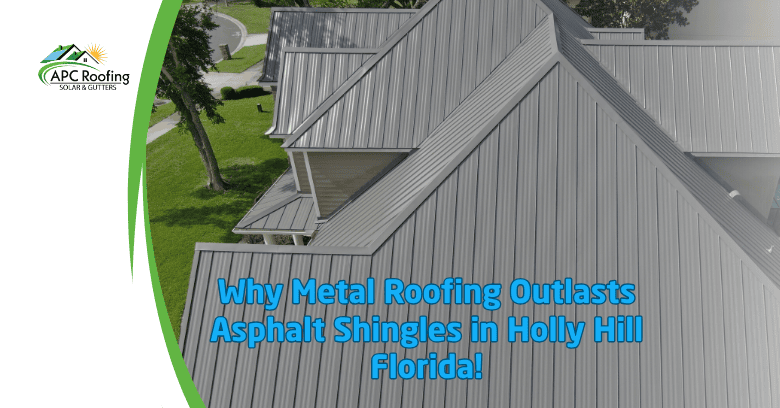
Rows of fastener heads, visible from the street, give away a screw-down roof, while plain pans and tall ribs with nothing in sight are standing seam. Pole buildings, sheds and porches frequently get ribbed sheet, while residences take either style.
Cross-Section Choices: Matching a Building
Corrugated sheet rises and falls in rounded, evenly spaced waves, and a ribbed panel has trapezoid ribs separated by broad pans. One length rides over a neighbor at a side lap, and a printed fastening schedule sets where screws land.
Ribs make a stiffer panel that crosses longer spans, while corrugated fits a period barn or a farmhouse style. Rib height governs how much water a long slope can move, while modest runs need little depth.
Exposed Hardware: Every Detail Counts
Each screw clamps a panel down onto wood or steel framing, and a washer under each head keeps rain out. Synthetic rubber ages in the sun, going hard and then cracking, well ahead of the painted steel nearby.
Overdriving tears a washer and dishes the metal, while an underdriven or tilted fastener never seals all the way around.
Fastener Replacement: Part of Upkeep
Washers on corrugated or ribbed panels give out as a group, so at some stage all seals get changed. Every existing fastener is removed, and a wider replacement goes back in where threads can still find purchase.
A re-screw stops drips around screw heads and draws lifting sheets back down, but rust damage, open laps and failed flashing are untouched. Screw style depends on what lies beneath, with coarse threads for wood and self-drilling tips for steel, and a factory color on every top suits most finishes.
Expansion and Contraction: Why Slack Matters
Steel swells with heat and draws back as temperatures fall, and a long run can gain a quarter inch between noon and midnight, and aluminum changes nearly twice as much. Metal screwed down with no give wears each hole into an oval, and a washer stops sealing.
Ticking heard as morning sun lands on steel is ordinary expansion, and a properly detailed roof suffers no harm.
Beneath Raised Seams – Out of Sight
Every lengthy pan is secured firmly in only one zone, and floating clips farther along give the metal freedom to shift. Flashing at an unanchored end is shaped with space beneath, while a pan fastened hard along every foot pulls loose or ripples.
Pans go down one at a time, with clips screwed along a single side, and an adjacent pan then covers every anchor point.
Joint Styles: Choosing Between Options
Some profiles snap together under hand pressure as each pan goes down, while other designs are crimped over by a machine. A double-locked joint stands up to gales and to water sitting against the metal, and maker approvals cover shallower slopes.
Profiles come in different widths and heights, and building shape and personal taste steer a buyer. Hardware and trim are sold for one system only, and a mismatch shows up as gaps and loose joints.
Choosing a Weight: Reading a Label
A steel panel is rated by gauge, and higher numbers mean thinner sheet. A shop or barn frequently has twenty-nine, and homes typically get twenty-six or twenty-four.
Aluminum is specified in thousandths of an inch instead, and in either metal thicker stock dents less and lies flatter. A light grade and a heavy grade are indistinguishable from a driveway, so printed product data gives a firm answer.
Rust Resistance – Aging in Sunlight
Roofing steel leaves a mill with a zinc or aluminum-zinc layer over plain sheet, and a color coat is baked on afterward. Damage no deeper than paint is cosmetic, while a sheared edge or a deep gouge lets rust begin.
High-end fluoropolymer finishes keep a bright look for years, while polyester grades dull faster in strong sun. Wet masonry corrodes aluminum-zinc coated sheet, and a barrier belongs wherever panels meet new stonework.
Which Metal Suits: Salt Air
Aluminum is light and free of red rust, though a thicker grade is needed to resist dents. Beside salt water at the coastal end of our range, protective layers wear away faster, and makers restrict certain products near surf.
Copper usually goes on small accent roofs over bays and entries, and the metal weathers to a natural patina with no paint.
Incompatible Neighbors: Separation Helps
Copper upslope of a steel covering sends corrosive runoff over the panels, and staining shows up well ahead of pinholes. Chemicals in treated lumber pit any aluminum resting on top, and an incompatible screw causes slow damage nearby.
Any added flashing or trim should be the same metal as what is up there, or a strip of membrane goes between dissimilar metals.
A Frequent Complaint – Why Installation Counts
Oil canning names shallow dips and bulges across a flat pan, and faint hollows show at sunrise and fade by noon. A slightly distorted pan sheds rain like any other, and the roof lasts no less.
Stiffening ribs, a stouter grade and a smaller pan width lessen waves, and a deck without humps or dips matters too. Photographs of finished houses show how noticeable oil canning can be, and the choice of panel is yours.
Inside the House – Sound and Temperature
An outbuilding with bare framing under the metal makes a loud din in rain, since one thin layer is all that stands between sky and interior. A home has sheathing, a membrane and an insulated ceiling under steel panels, and in a living room few can pick out any change from shingles.
A light-colored panel sheds much of the sun's warmth, and the attic beneath stays cooler on a summer afternoon. Dark metal heats up like any black roof on a clear day, and venting and insulation under the deck do as much for comfort as color. Panels cool fast at nightfall, and the attic below catches up before long.
Holding a Load Up There – Clamped or Fastened
In the snowier part of our service area, a metal roof sheds snow fast, and a whole mass may come down at once on anything under an eave. Retention bars keep a load up top to melt off gradually, and a doorway, walkway or meter below decides placement.
Brackets on standing seam bite an upright fold, not a flat, whereas on corrugated sheet, mounts go into solid wood with gasketed fasteners, and homes where snow seldom falls go without.
What Ice Does – A Record of What Happened
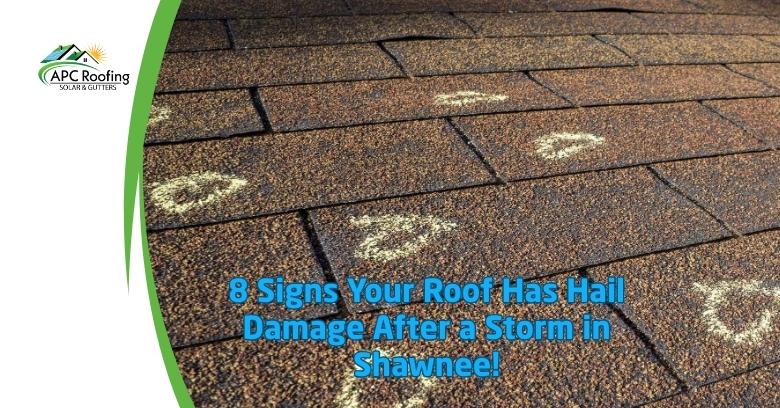
At the colder end of our range, hail arrives most years, and panels with an impact rating are an option. Where a blow splits paint, bare metal can corrode, while a buckled seam can part enough to admit water.
Once a storm has moved on, affected spots get photographed and measured, and the depth of each dent is gauged.
Holding On in a Gale – Rated Assemblies
Suction gathers along rakes and eaves, and a loose flange gives moving air a handle. Each finishing piece is folded back and locked over a full-length cleat, leaving nothing for a storm to seize.
An attachment pattern grows denser toward every corner, following a maker's layout for a site's exposure. Along the coastal end of our service area, hurricane risk raises fastener counts again, and panel and hardware are rated as one assembly.
Breaking Through the Metal – Careful Detailing
Each pipe takes a boot made for panel roofs, with a base pressed to follow corrugations, and a hole is cut in a flat, not through a seam. A skylight, chimney or larger unit sits on a raised curb with a cricket uphill, so no water dams up.
Sealant finishes a joint already made watertight by folded metal, because a compound shrinks and pulls away with time.
Channels Between Roof Planes – No Screws in the Water
A broad flashing lines each valley in advance, and every sheet is trimmed on the skew. Ends are hemmed and held by cleats, so no hole sits where runoff gathers.
A sealed endlap connects consecutive lengths on an extended run, and uphill metal always goes on top, screwed through.
Near-Flat Areas: Where Membrane Takes Over
Corrugated and ribbed sheet usually needs around three inches of rise in every foot, since anything less lets rain back up at overlaps. Double-lock standing seam is rated for far shallower roofs, and product literature states an exact minimum.
Porches, additions and back rooms often carry a barely tilted section, and pitch is measured rather than judged by eye, and an area that metal cannot serve is given a membrane.
Support for the Roof – Out of Sight Once Done
A home gets metal over a continuous plywood or OSB deck, and a synthetic barrier made for high heat sits on top, since ordinary felt dries out under sun-heated steel. Sheds and barns often fasten directly to purlins, so support spacing and gauge are matched.
With an old roof gone, damaged sheathing is cut away and rebuilt, as fasteners driven into mush pull straight out.
Going Over the Existing Roof: Light Enough to Add
Where code allows, metal can be installed over one layer of shingles, and the mess and hauling of removal are avoided. Sheet steel is light, at well under two pounds a square foot, and typical framing carries a little extra easily. Battens on top of a synthetic membrane are laid across existing shingles, and fasteners are long enough to bite solid boards below.
A second layer already in place, soft decking or stains from past leaks mean a full tear-off, as a wet base under a new roof only gets worse.
Finishing Pieces – Fillers and Trim
Closures matching a panel shape stop up hollows under each rib at both extremes, and wind-driven rain, wasps and birds stay out. A ridge cap may be vented or sealed, and attic airflow needs are what decide.
Gutter aprons and rake trim wrap up a roof's outline, and fascia boards stay dry.
Day of Installation: Where to Step
Standing seam is produced to fit each run from bottom to top, so a single piece covers eave to ridge without an endlap. Carrying an extended panel takes people spaced along the metal, and a damaged pan is replaced, not flattened out.
Each step should land in a flat with support right underneath, as a seam under a boot can bend open. Dew or rain makes coated steel as slick as glass, so climbing up for a look is unwise.
What to Watch For – No Ladder Needed
- Orange halos at fasteners, just above a gutter line.
- Screws no longer tight against metal, by a peak.
- A rake edge torn free, facing prevailing wind.
- A flue collar sitting crooked, on a back slope.
- A sheared end streaked orange, next to a skylight.
- Peeling paint, on one panel more than on panels nearby.
- Spots on a ceiling in a row, in a garage.
- A gap along a rib, at the low end of a panel.
APC Roofing and Standing Seam Metal Roofing in Greater Daytona Beach Metro Area – Step by Step
Everything begins with identifying which panel system is installed and how the panels are fastened, before each fastener, edge, boot, valley and lap is read in sequence. Notes cover gauge, finish and every kind of hardware, while the underside of the deck is inspected from the attic.
Findings come to you in a report with pictures, and a reason sits beside every recommendation. If a covering needs only new screws, we say exactly that, and a roof at the end of service life is named as such.
Standing Seam Metal Roofing for Greater Daytona Beach Metro Area Homes – Details Read Closely
Call us at 386-356-2111 and we will schedule an inspection.
Deciding on Scope – Knowing Limits
One badly damaged sheet can be swapped alone, though new metal looks brighter than weathered neighbors. A new pipe boot or a resealed lap ends a local drip, while re-fastening cures aged washers.
When corrosion has gone through across a whole field, a tear-off is due, and a covering riddled with failed seams is no better off. A partial job on just one side is sometimes a sensible middle course, as long as nothing else shows wear.
The Long View: Watching Details
Good metal work frequently reaches forty years, and every estimate is approximate. Concealed-clip panels require less upkeep because no rubber seal sits in the sun, while ribbed sheet gets new fasteners once washers tire.
Metals of different kinds touching, unhemmed cuts and sealant used in place of flashing shorten a roof's service, and a check every few years catches small faults early. Leaves and needles piled in a valley or behind a chimney keep the metal wet, and brushing debris off protects paint.
Before deciding on Standing Seam Metal Roofing in Greater Daytona Beach Metro Area, reach APC Roofing at 386-356-2111. Every detail, including how the panels are fastened, is read in person, and you get photographs, notes and a recommendation to consider.