Your flat roof is covered in black rubber, the seams are starting to curl at the edges, and you’ve got a drip near the wall every time it rains hard. Or you’re replacing a flat roof and someone recommended EPDM roofing, and you want to know if it’s the right call before you sign anything.
Flat roof decisions are hard to make from the ground. You can’t easily see the problem, the quotes use terms like “60-mil” and “fully adhered” without explaining them, and you don’t want to replace a roof that only needs a repair. You deserve a plain answer.
APC Roofing installs and repairs flat and low-slope roofs, EPDM included, on homes and light commercial buildings across Central Florida, the Daytona Beach area, the Kansas City metro and Springfield, Missouri. We’ve been in business since 2017, we’re GAF Certified, licensed and insured, and the inspection is free. Call 866-995-0704.
What EPDM is
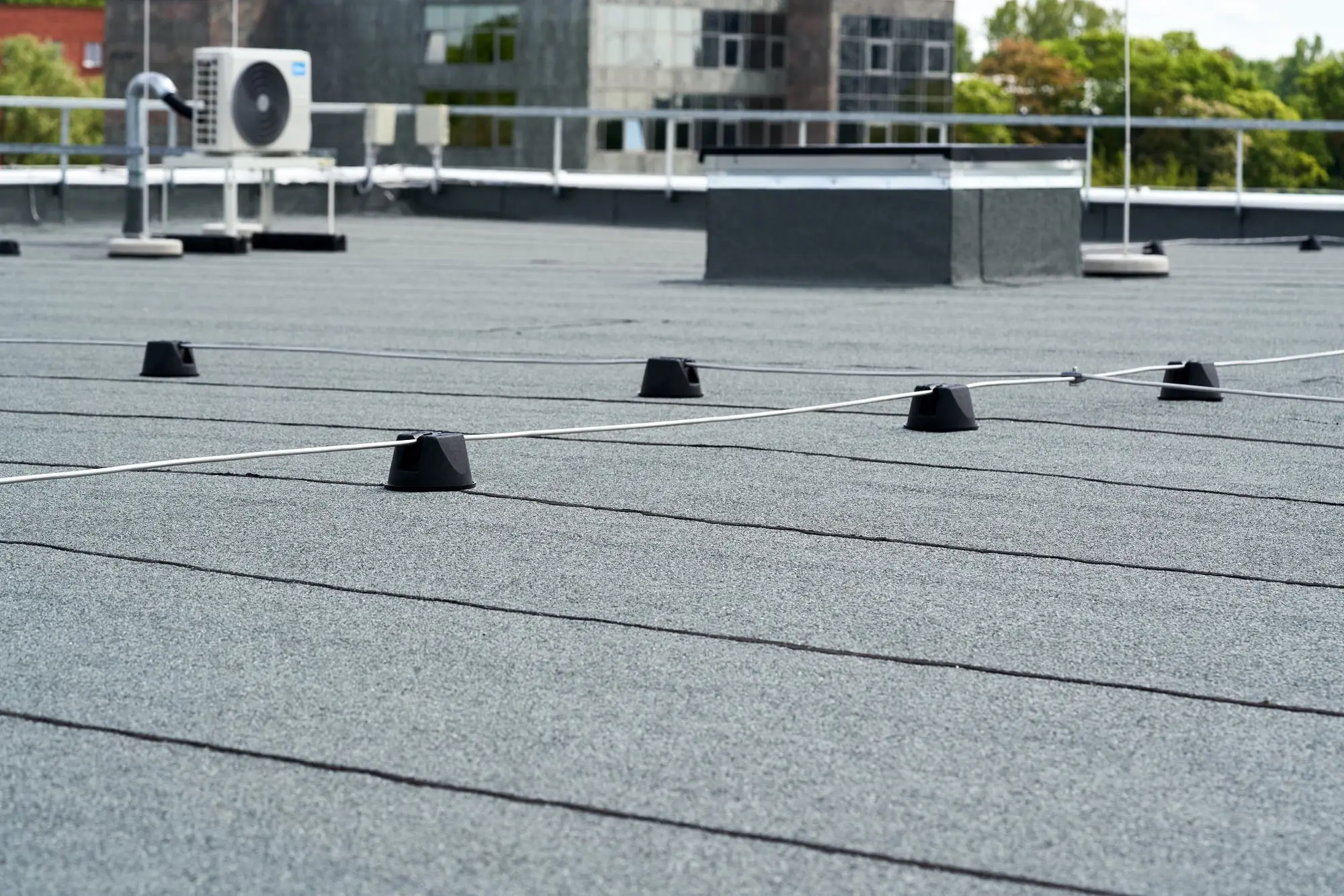
EPDM is a synthetic rubber membrane, usually black, sometimes white. It comes in large sheets that are rolled out over a low-slope roof and then glued down across the whole surface, fastened to the deck, or held down with stone ballast. You’ll hear it called a rubber roof.
Its best quality is stretch. Your house and its roof move all the time. Decks flex, framing settles, and materials grow in summer heat and shrink in winter cold. A membrane that stretches with that movement holds up better than one that fights it. EPDM also stays flexible when it’s cold, instead of going stiff and cracking. Sunlight is what ages it over time, which is why an old rubber roof starts to look chalky.
Where you’ll see EPDM roofing
On homes, EPDM is common on porch roofs, garages, additions and other low-slope sections that can’t take shingles. On small commercial buildings it’s often the whole roof. It works on just about any roof with too little pitch to shed water the way a shingle roof does.
Thickness is the first thing to ask about
EPDM is sold in thicknesses measured in mils, or thousandths of an inch. The common ones are 45, 60 and 90 mil. A 45-mil sheet is a real roof. A 60-mil sheet holds up noticeably better to hail, foot traffic and a dropped tool. The heaviest sheets are for roofs that get walked on a lot or catch debris.
Thickness is also the easiest thing to quietly trim to win a bid, and it’s hard to tell after the fact. Make sure the thickness is written on your estimate, and compare it when you look at other quotes.
Where rubber roofs leak
A rubber roof almost never fails in the middle of a sheet. It fails at the details:
- Seams, where two sheets overlap and are joined with tape or adhesive
- Edges, where the membrane turns up a wall or ends at metal trim
- Pipes, vents and equipment curbs that come through the roof
- Drains, where the membrane drops into the drain bowl
That means seam work is most of the job. The surface has to be cleaned and primed properly, the right tape or adhesive used for the conditions that day, and the seam rolled down firmly. A rushed seam can look perfect on day one and start leaking a couple of winters later.
EPDM in Florida heat and in a Missouri winter
Climate is where EPDM’s trade-off shows up.
Black EPDM absorbs the sun’s heat instead of reflecting it. In Central Florida and the Daytona Beach area, that means a hot roof surface and more heat pushing into the room below, especially if there isn’t much insulation. White EPDM helps, and a reflective membrane like TPO is often worth comparing for a Florida home.
In the Kansas City metro and around Springfield, the math changes. Winter is the harder season, and EPDM’s ability to stay flexible through freeze-thaw cycles is a real plus. Spring hail is the bigger threat there. Thicker membrane and a solid cover board underneath help a rubber roof take a hit.
Repairing an EPDM roof
One of EPDM’s best traits is that it stays repairable. An older rubber roof can usually be cleaned, primed and patched with new rubber that bonds to the old. A puncture from a fallen branch or a dropped tool is usually a short repair, not a question about the whole roof. Our flat roof repair page covers repairs on all kinds of low-slope roofs.
There’s a point where patching stops making sense. Watch for these signs together:
- The membrane has shrunk and is pulling tight, lifting away from walls and corners
- The surface is brittle and chalky, and cracks when it’s flexed
- Seams are opening in several places at once
When you see all of those at the same time, the roof is near the end, and putting money into a replacement usually beats chasing leaks.
How it works
- Book your free inspection. Call 866-995-0704 or request a free estimate online.
- Get a clear, honest assessment and estimate. We’ll check the seams, edges, penetrations and drains, look for trapped moisture and show you photos. You’ll get a written estimate with the membrane thickness spelled out if a new roof is on the table. Financing is available for homeowners through Aqua Finance, Fortifi, Hearth and Home Run Finance.
- The work gets done and the site gets cleaned up. You’ll know the timeline before anything starts.
A small leak at a seam lets water spread through the insulation under the rubber. Catching it early is the difference between a patch and a bigger job.
EPDM roofing questions
Is EPDM or TPO better?
Neither wins everywhere. TPO’s white surface reflects heat, which helps in Florida. EPDM stays flexible in cold weather and is easy to repair years later, which helps in Kansas City and Springfield. The right pick depends on your roof and your climate.
Can an old EPDM roof be repaired?
Usually. Rubber bonds well to new patches once it’s cleaned and primed. If the membrane has shrunk, gone brittle and has seams opening in several places, replacement is usually the better use of your money.
Can you walk on a rubber roof?
Carefully, and not more than you need to. Foot traffic wears the membrane and sharp debris underfoot can puncture it. Walkway pads help on roofs with equipment that gets serviced.
Is hail a problem for EPDM?
It can be. Large hail can bruise the insulation under the rubber or puncture thinner sheets. If a hailstorm hit your area, an inspection will tell you whether the roof took damage.
A rubber roof you don’t have to think about
The goal is a flat roof that stays dry, holds up to your weather and doesn’t surprise you with a bill. Call 866-995-0704 or book your free inspection online. For the bigger picture on low-slope roofs, see our flat roofing page.