The stain is on the ceiling again, in a different spot this time, and the patch someone put on the roof last year obviously didn’t solve it. If you own a home with a flat section or a building with a low-slope roof, you know the feeling. You want flat roof repair that actually finds the leak, and an honest answer about whether the roof is worth fixing at all.
That second question is the one that keeps owners up at night. Nobody wants to pay for a new roof that wasn’t needed, or keep paying for patches on a roof that’s done.
APC Roofing repairs flat and low-slope roofs on homes and light commercial buildings in Central Florida, the Daytona Beach area, the Kansas City metro and Springfield, Missouri. We’re GAF Certified, licensed and insured, and the inspection is free.
Why the stain isn’t under the leak
On a flat roof, water that gets through the membrane doesn’t drop straight down. It spreads sideways between the membrane and the insulation, follows the grooves of a steel deck or the seams of a wood one, and comes through at the first gap it reaches. The drip can show up fifteen feet from where the water got in.
That’s why a repair that starts at the stain often misses. The real work starts on top of the roof.
Reading the roof’s surface
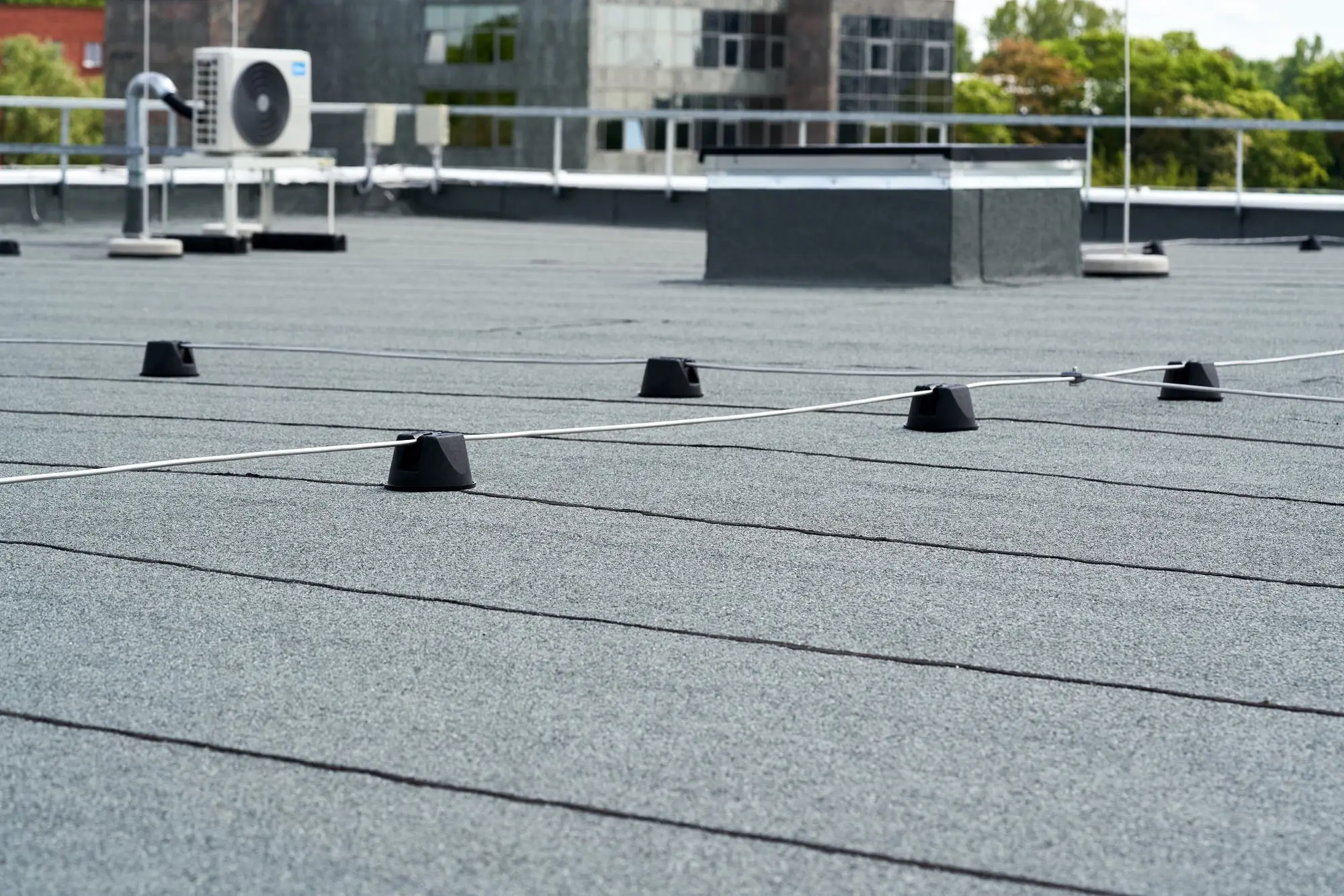
A flat roof tells you a lot if you know what to look for. Blisters, ridges, open seams, a split at a curb, fasteners backing out and pushing up the membrane, a chalky surface and dirty rings where water sat for days each point to a specific cause. A spongy feel underfoot means moisture is already in the insulation.
Inside the building, timing is a clue too. A stain that shows up only after wind-driven rain usually comes from a different place than one that appears after every ordinary shower.
Finding the wet you can’t see
Trapped moisture inside a roof is the part most repair quotes skip. There are reliable ways to map it instead of guessing: infrared scans that show where wet insulation holds heat after sunset, moisture meters taken across the roof, and small core cuts that show exactly what the roof is made of and whether it’s wet.
Without that information, nobody bidding the work really knows how big the job is. If you’re comparing quotes, ask each contractor how they figured out what’s wet.
Ponding water is a slow leak
Water still sitting on the roof two days after a storm is doing damage. It strains the seams, holds grit that wears down the surface and adds weight to the structure. On a Kansas City or Springfield roof, it freezes and expands in every small opening all winter. In Florida, frequent afternoon storms can keep a low spot wet for most of the summer.
Ponding almost always traces back to one of four things: a clogged drain, slope that was never built in, insulation that has compressed or framing that has sagged. A real fix deals with the cause.
What a proper flat roof repair looks like
A lasting repair has a few parts, done in order:
- Cut out any wet insulation back to dry material on every side.
- Replace it at the same thickness, so the surface stays flat and doesn’t create a new low spot.
- Tie the patch into the existing roof the way that roof was built to be joined: heat-welded for TPO, adhered or taped for EPDM rubber, and matched to the original method on built-up and modified roofs.
- Fix the curb, drain or flashing that let the water in, not just the field of the roof downhill from it.
Mixing incompatible materials is how this year’s patch becomes next year’s leak.
Storm damage on a flat roof
Hail is hard to judge on a flat roof. A membrane over firm insulation can crack from underneath while the top still looks fine, and big hail is part of spring around Kansas City and Springfield. Wind lifts edges and corners first, which matters most during Florida’s hurricane season. A close inspection soon after a big storm catches this while it’s still repairable and while the storm is easy to connect to the damage.
If you decide to file an insurance claim, you file it yourself and you’re responsible for your deductible. We document the damage with photos, provide the estimate and can meet your adjuster on the roof.
Flat roof repair or flat roof replacement?
Repair is the right spend when the membrane is still flexible, the damage is contained and the insulation is mostly dry. Replacement starts to make more sense when:
- The membrane has turned brittle or cracked across large areas
- Seams are opening in several places at once
- A large share of the insulation is wet
- You’ve paid to fix separate leaks two or three times in a couple of years
We’ll show you what we find and explain which side of that line your roof is on. If it’s time for a new roof, our flat roof installation page covers what a good one includes.
How it works
- Book your free inspection. Call 866-995-0704 or request a free estimate online.
- Get a clear, honest assessment and estimate. You’ll get photos, an explanation of where the water is getting in and a written estimate for repair or replacement.
- The work gets done and the site gets cleaned up. The crew cleans up before they leave.
Looking for a local page? See flat roof repair in Springfield, MO or flat roofing in Kansas City.
Flat roof repair questions
Can a flat roof just be patched?
Yes, if the damage is small and the insulation around it is dry. A patch over wet insulation usually fails, because the moisture underneath keeps doing damage.
Is some standing water on a flat roof normal?
A little that dries within a day or two is common. Water that’s still there after 48 hours points to a drainage problem worth fixing.
Do temporary fixes help?
A temporary patch can get a roof through a bad week, and it’s worth doing when you need it. It isn’t the repair, though. Every week under a temporary fix is a week the wet material below isn’t drying out.
Do you repair flat roofs on houses?
Yes. Flat roofs over porches, garages and additions are some of the most common flat roof repairs, usually at the spot where they meet the wall or the main roof.
Stop chasing the same leak
Every month a flat roof leak goes unfixed, more insulation soaks up water and more of the deck softens. That turns a repair into a replacement.
Call 866-995-0704 to book your free inspection. You’ll know where the water is coming from, what it takes to fix it and that your ceiling will stay dry through the next storm.