You can see it from the driveway now. A few shingles along the edge are curling, there’s a black streak running down the north slope, and after the last blow you found a tab in the yard. You’re trying to work out whether the roof has a few years left or whether it’s time to start pricing out new asphalt shingle roofing in Daytona Beach.
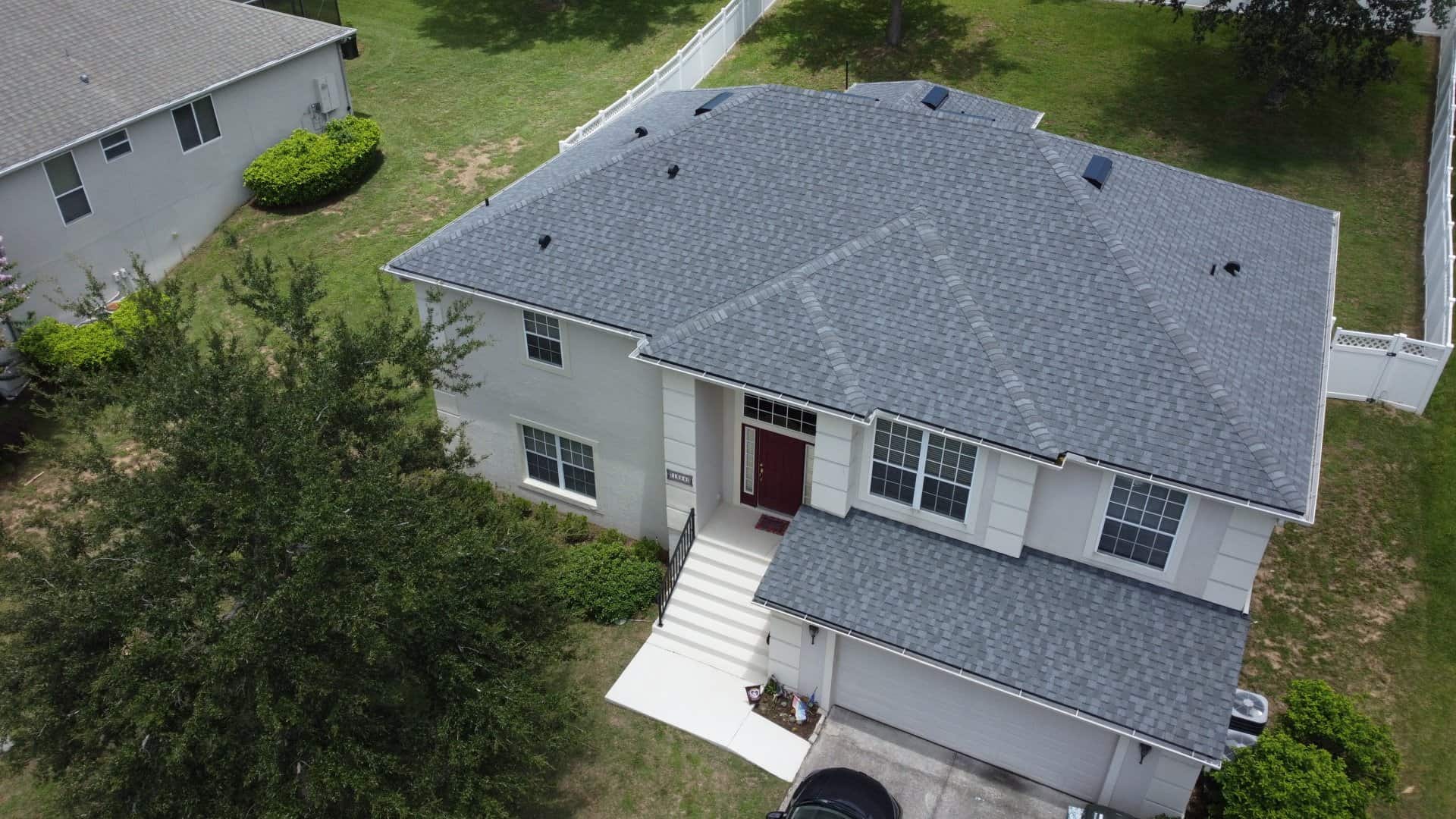
It’s a fair thing to worry about. A new roof is a big expense, and you don’t want to replace one that could be repaired, or patch one that’s already worn out. You deserve a plain answer from someone who’s actually been on the roof.
APC Roofing is GAF Certified, licensed in Florida (CCC1337030) and insured, and we’ve been doing this since 2017. Your inspection and estimate are free. Call 386-259-8425 to set one up.
What the coast does to asphalt shingle roofing in Daytona Beach
A shingle roof a few miles from the ocean ages differently than one inland. Here’s what’s working on yours.
Sun. Asphalt shingles have a coat of ceramic granules on top, and that coat is what shields the asphalt from UV. Year after year of Florida sun wears the granules down. Once the asphalt underneath is bare, it dries out, turns brittle and cracks. You’ll often notice it first as grit piling up at the bottom of your downspouts.
Salt air. Shingles themselves hold up to salt fairly well. The metal is another story. Nails, drip edge, flashing and vent collars can rust faster near the water, and a rusted flashing is where many coastal leaks start.
Wind. Daytona Beach gets a steady sea breeze most days, plus nor’easters in the cooler months and tropical storms from June 1 through November 30. Every shingle is held by its nails and by a strip of sealant that bonds it to the row below. When that bond lets go, the tab can flap, crease and eventually tear off.
Humidity. Those dark streaks are usually algae that feeds on the limestone filler in many shingles. They’re mostly cosmetic, but they hold moisture against the surface.
Architectural or 3-tab shingles?
Most asphalt shingle roofing in Daytona Beach today uses architectural shingles. They’re made from two layers bonded together, so they’re thicker and heavier than the older flat style, and they show more depth and shadow from the street. Their thickness also helps them carry a higher wind rating.
3-tab shingles are a single flat layer with cutouts along the bottom edge. They still have a place, like matching an existing roof on a shed or a small addition, and some homes still have them. If that’s your roof, our page on 3-tab shingle roofing in Daytona Beach walks through the differences in more detail.
Many shingle lines also come with algae-resistant granules, which slow down those black streaks. On a coastal home, that’s worth asking about.
The parts of a shingle roof you never see
The shingles are only the top layer. Whether a roof holds up through a storm season depends just as much on what’s underneath.
- The deck. Plywood or OSB that the whole roof is nailed to. Soft, rotted or delaminated sections get cut out and replaced during a tear-off, because nails can’t grip damaged wood.
- Underlayment. A water-resistant layer between the deck and the shingles. It’s the backup when wind drives rain under a shingle edge.
- Starter strips. A row along the eaves and rakes with sealant right at the edge, so the first course of shingles bonds down where wind pulls hardest.
- Flashing. Metal at walls, chimneys, valleys and roof edges. Near the coast, the type of metal matters, because cheaper flashing can corrode early.
- Pipe boots. The rubber collars around plumbing vents. Sun cracks them, and a cracked boot is one of the most common leak sources on a shingle roof.
Nailing matters too. Shingles have a marked nail zone, and wind ratings assume the nails go there, in the right number, driven flush. A nail set too high or overdriven by an air gun weakens the hold, and a whole roof installed that way can lose shingles in a storm it should have shrugged off.
Repair or full replacement?
A repair often makes sense when the damage is limited to one area: a few missing shingles after a storm, a cracked pipe boot or a single flashing leak, on a roof that’s otherwise in decent shape.
Replacement starts to make more sense when granule loss and cracking show up across every slope, when shingles are curling or lifting all over, or when the same leak keeps coming back after repairs. Insurance is part of it too. Many Florida insurers look closely at a shingle roof’s age and condition when they write or renew a policy.
We’ll show you photos of what we found and tell you which side of the line your roof is on. If it’s time for a full roof replacement in Daytona Beach, you’ll know why, and you’ll get a written estimate before anything starts. You can also see our other shingle options on the Daytona Beach shingle roofing page.
How it works
- Book your free inspection. Call 386-259-8425 or request a free estimate online.
- Get a clear, honest assessment and estimate. You’ll see photos of the shingles, flashing and boots, and hear whether a repair or a replacement is the better call.
- Get your roof done and the site cleaned up. Many residential shingle roofs are finished in a single day, and the crew cleans up before leaving.
If you’d like to spread out the cost, financing is available through Aqua Finance, Fortifi, Hearth and Home Run Finance.
A shingle roof that’s starting to fail usually gives you some warning. Granules in the gutters and a few lifted tabs are much cheaper to deal with now than wet insulation and a stained ceiling after the next tropical storm.
Shingle roof questions from Daytona Beach homeowners
How do I know if my shingles are wearing out?
Look for heavy grit in the gutters or at the downspouts, shingles that curl at the edges, bald or shiny patches, and cracked tabs. From inside, check the attic for daylight or water stains on the decking.
Do those black streaks mean my roof is failing?
Not by themselves. They’re usually algae. They’re worth watching because they hold moisture, but streaks alone aren’t a reason to replace a roof.
Are asphalt shingles a good choice this close to the ocean?
Yes, for many homes. Architectural shingles with a high wind rating, installed to the manufacturer’s high-wind nailing pattern with corrosion-resistant flashing, hold up well on the coast. If you want something longer-lasting, we can also talk through metal.
Can you replace a few shingles instead of the whole roof?
Often, yes. New shingles won’t match a weathered roof perfectly, but a small repair in the right spot can buy a sound roof more time.
A shingle roof you can stop checking on
Call 386-259-8425 or start your free estimate online. The goal is a roof that stays put in the next storm, a dry house underneath it, and an estimate with no surprises. Trust matters.