Exploring Shingle Roofing in Daytona Beach Florida?
APC Roofing lays new courses of strip and laminated products, from a small cottage to a large two-story house.
Call 386-356-2111 and a trained eye will check the details and report back.
Inside the Product: The Makeup Explained
Each shingle takes its strength from a fiberglass mat, and asphalt spread over the sheet stops water, and mineral granules across the top guard against sun damage.
Lines stacked side by side at a supplier are not always equal, and extra material usually means longer wear. A showroom sample tells nothing beyond appearance, while a technical sheet sets out performance figures.
Strip Versus Laminated – Setting Them Apart
A three-tab piece has one layer and two notches that divide its face into tabs, and a slope covered this way shows even, repeating rows. Architectural shingles are built as a base with a second, trimmed ply fused on top, and the staggered outline throws shadows that suggest depth.
Laminated products carry more asphalt and weigh more per square, and a stronger wind class is commonly assigned. On a two-layer shingle, fasteners belong in the band where both plies overlap, and a printed guide shows the right position.
A Place for the Plain Option – Practical Niches
Outbuildings and porches are frequent homes for three-tab, and a patch can match the rest of an older house. Fewer colors in that style are stocked than a generation ago, so an exact replacement can be hard to find.
A dimensional surface disguises minor unevenness in the sheathing, whereas straight single-ply lines reveal each flaw. Either profile sits on the same underlayment and flashings, while the shingle alone sets the two apart.
Surface Wear Over Time: Sun-Facing Slopes
A freshly laid covering releases surplus grains during its opening months, and that is no cause for concern. When an older covering sends piles of grit down the spouts, its mineral shield is wearing thin, and exposed asphalt turns brittle and splits.
South- and west-facing planes bake the longest each afternoon, so the black asphalt often shows through there sooner.
The Thermal Adhesive: Limits in Cold Months
Glue is applied to every shingle at the plant as a narrow stripe, and a stretch of warm, sunny days softens it until the overlying row sticks. Adhered courses keep their bottom edges down in a gust, and the nails stay just as essential for as many years as the covering lasts.
In the cold months at the colder end of our territory, sealing can take many weeks to happen, so tabs stay at risk from wind for a while. Dabs of asphalt cement applied by the installer are what makers specify in that case, and a printed diagram marks the spots and their spacing.
Attachment Basics – Frequent Errors
A narrow band, marked at the factory, is where nails go, where the shank also catches the headlap of the row below. Four fasteners per shingle meets the basic requirement, and high-wind or steep work moves the number to six.
A nail driven high pins one layer instead of two, an overdriven head slices the fiberglass, and a cocked shank raises a hump in the shingle overhead. The wind resistance stated on the package depends on the specified pattern, and a pneumatic tool set wrong makes the same mistake again and again.
What Supports the Covering: Types and Condition
Flat sheets of plywood or OSB make up the deck, since shanks need continuous solid material to stay put. Houses built for wooden shakes often have gaps between their deck boards, and sheathing is nailed over them before shingles go on.
Once the old covering is off, any soft or delaminated section is cut out and swapped for sound decking, because nails in weakened material back out over time. Adjacent sheets are spaced slightly apart at their edges, as moisture makes the wood expand and ridge up when butted tight.
Underlayment Basics – Types in Use
Shingles never go straight onto bare decking, since a water-resistant membrane comes between, and its runs overlap from the bottom edge upward. Felt paper has mostly given way to synthetic underlayment, because the replacement is lighter to carry and harder to rip.
A membrane catches wind-driven rain that slips under the shingles, though sunlight breaks it down if it stays exposed too long.
Ice Dams at the Overhang: Trapped Runoff
At the colder end of our territory, snow over heated rooms melts even on a sub-zero day, and meltwater goes solid again where the roof extends past the wall. Pooled water behind the obstruction travels uphill under the courses, and regular underlayment offers no seal where nails penetrate.
A self-sealing ice barrier goes down along the bottom of each slope where winters freeze, and it runs past the interior face of the outside wall. Everywhere in our territory, it is also a regular choice for valleys and around chimneys, as water collects and lingers there.
Finishing the Borders – A Code Item
Formed metal strips line the eaves and rakes of every slope, and water sheds into the gutter instead of onto wood. On the lowest margin the underlayment laps over the flashing, while on the gable ends the sequence is flipped.
Many building codes now require edge metal on every border of a shingled plane, since rain creeps back onto the decking where nothing guards it.
The Launch Point of Each Plane – Rakes Too
Under the first visible course lies a starter strip, so tacky asphalt ends up at the very brink of the deck. A rotated field piece strands the adhesive several inches up, and nails alone then keep the lowest tabs from lifting.
A starter run along each rake is common practice under current instructions, because gusts pry at a roof's perimeter.
Junctions of Adjoining Planes: Debris and Flow
A valley can be built open, with a metal channel left exposed down its center, and the closed-cut type carries one side's courses through while the other side is cut back. Woven work alternates rows from the two planes and suits three-tab, but most laminated shingles are too stiff for that.
No nails are driven near the middle of the crease, while a self-sealing sheet runs beneath from top to bottom. Collected leaves and twigs slow the flow and keep the surface wet, so runoff may be forced beneath the cut side.
Masonry Connections – Chimney Aprons
Along a sidewall, a bent L-shaped step flashing is woven in with each course, and siding or counterflashing laps down over its upright leg. At the low corner by the house, a kickout piece bends outward, since water left alone tracks into the sheathing.
The flashing around a chimney is an apron below, steps on each side and counterflashing embedded in mortar, and a large stack gets a saddle that sheds water both ways.
Roof Penetrations: Timing a Swap
Every pipe boot pairs a flat base of metal or plastic with a snug neoprene collar, and years of sun leave the seal brittle and split. The upper half of the flange tucks beneath the shingles above, and the exposed foot lets water pass over rather than behind.
Neoprene collars regularly fail well before the field shingles do, and a tear-off is the natural time to change every boot.
At the Summit: Homemade Shortcuts
Each hip and the ridge get a row of cap shingles across the joint, and architectural work uses a factory-made accessory. Improvised pieces from cut tabs are lighter and thinner, and on frigid days at the colder end of our territory the crease may crack.
An exhaust vent commonly sits under the ridge caps, and nail length is chosen to pass that gap and grip the boards.
Attic Airflow: Balance
Intake openings in the soffits let cool air in near the bottom, while an exhaust at the peak lets it escape. Insulation blown tight against the outer walls can choke the flow, so baffles are installed to keep a clear gap.
An attic with poor airflow runs hot under the decking, and moisture from the living areas lingers up there. At the colder end of our territory, frost can form on the nail tips poking through overhead, and the melt drips down when the sun comes out. Mixing a ridge vent with gable louvers or a powered fan can short-circuit the flow, so the lower part of the space goes stagnant.
Regional Demands: Algae and Hard Winters
Our service area stretches from high plains to subtropical towns, so a shingle ages in its own way depending on the setting. At the coastal end of our territory, hurricanes bring spells of fierce wind, and product sheets set out an enhanced nailing method. Strong sun, season after season, makes the coating brittle, while damp air in the humid markets feeds algae.
At the colder end of our territory, ice forming in hairline cracks forces them apart, while deep snow loads the deck for weeks.
Frozen Pellets – Marks on the Surface
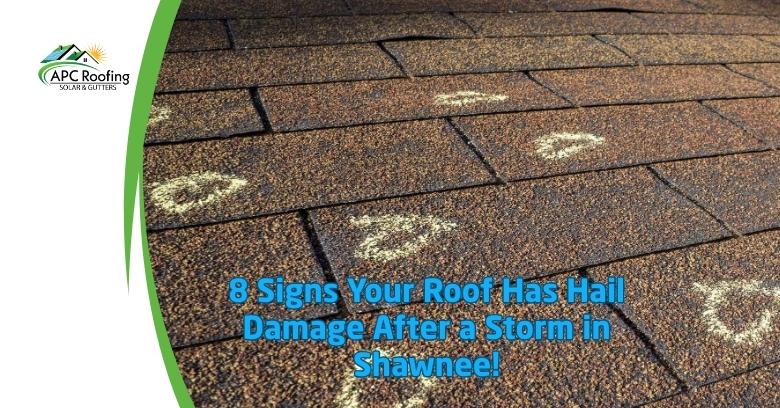
At the colder end of our territory, big hail visits many neighborhoods, and impact-resistant lines exist for exactly that. Where a stone lands, the granules break away in a round mark, while a sharp jolt can split the mat itself.
The impact class on a bundle comes from a standard drop test with steel balls, and a line that passes at the top level holds up better. Certain makers blend a rubbery polymer into the coating, so the surface gives a little under a strike.
Blowing Weather – Replace or Reseal
Suction pulls hardest along the eaves, the rakes and the corners of a roof, and a loose shingle rises and slaps back down. A tab folded back far enough creases along its width, and it is liable to tear off later. A shingle in that condition gets replaced, while one that only lost its seal can be cemented back down.
Blown-off tabs leave the underlayment uncovered, and it was never made to stand up to daylight.
Growth on the Surface – Copper and Zinc
Blackish discoloration in long vertical bands is algae, which survives by feeding on limestone filler. Shady, slow-drying planes at the humid end of our territory tend to go dark soonest, though the staining does little harm on its own.
Moss is more serious, because it stays wet for days, and as clumps thicken they wedge the tabs upward. Power washing tears granules loose as it goes, while a cleaner applied gently loosens the film. Many makers offer algae-resistant lines with copper in the coating, while rain running over a zinc band near the ridge holds the stain back.
Shade and Color – Matching Bundles
Darker shingles get noticeably hotter under a midday sun, and lighter shingles reflect more of the light. A few lines carry special granules that keep even a mid-tone from getting as hot, and the share they return is listed.
Shingles from separate production runs may not match exactly, so instructions call for pulling from several bundles as the work goes. Blended colors, with many tones on each piece, hide those minor differences, while plain shades display every one of them.
Going Up Top – Weighing the Risk
On a hot afternoon the coating turns soft, so a shoe sole scrapes away grit. At the colder end of our territory, a course stiff with cold can break under weight, while dew that freezes overnight leaves a slippery glaze.
A homeowner is far safer staying on the ground, and a pair of binoculars shows most of what matters.
Laying Over the Old Covering: What Gets Missed
Building rules in many places allow a new roof on top of an existing one, but never over two, or over boards that are wet or rotten. The current shingles stay on top of the decking throughout the job, which means damage stays trapped under fresh shingles.
Curled edges underneath leave a lumpy look on top, and weathered flashings are often reused rather than replaced. Two layers put more pounds on the rafters than they were planned to hold, and every nail must travel through the old material before it grips.
Early Warnings – Worth a Closer Look
- Mineral grains build up in the gutter troughs, and the layer thickens with each storm.
- A few tabs sit raised above their neighbors, which means the seal has let go.
- Shingle ends lift into curls, because the material has lost its flexibility.
- Straight breaks run through a few pieces, and the mat underneath takes on water.
- Dark, smooth patches appear on the surface, where the stone coating has worn off.
- A flue or vent collar has turned brittle and torn, so moisture can track down inside.
- The metal where a slope meets siding sits bent or pulled back, so a downpour can run in underneath.
- A damp patch shows up on the ceiling after heavy rain, and the source can lie well uphill of it.
APC Roofing and Shingle Roofing in Daytona Beach Florida – Plain Talk, Clear Photos
An inspection starts by walking each slope in turn, and the details at every valley, vent, flashing and edge are read. Inside, the attic is checked for stains and daylight, because darkened wood marks where water got in.
Every fault is photographed, and damaged areas are measured. Everything found is set down in writing, and every recommendation comes with its reasons. Small faults are labeled as small, while a covering at the end of its life is called that. The homeowner decides what comes next, be it a repair, a replacement or no work yet.
Shingle Roofing Around Daytona Beach Florida – Help From People Who Know the Details
Call 386-356-2111 and say what you have noticed.
Fix or Replace: Where the Line Falls
Trouble at a boot, a flashing or a few scattered tabs is normally dealt with by a repair, and the sound shingles nearby stay in service. A replacement piece looks brighter than the aged ones around it, and the original product line may have been discontinued.
Brittle tabs on an older roof tear when lifted, and the damage around the work zone grows. When curling edges and bald spots cover most slopes, a new covering is the sensible answer.
Life Expectancy: What Moves the Number
On three-tab, fifteen to twenty years is normal, and laminated types frequently see nearly thirty. The real number depends on sun, attic air movement and how the nails went in, while one bad storm can end the run early.
Checking the flashings and pipe seals now and then is sensible upkeep, because small faults caught in time never reach the deck.
If you are planning Shingle Roofing in Daytona Beach Florida, call APC Roofing at 386-356-2111. Every slope, edge and flashing gets a close look, and the findings reach you in writing so the decision stays yours.
Verified

Verified
Verified
Verified