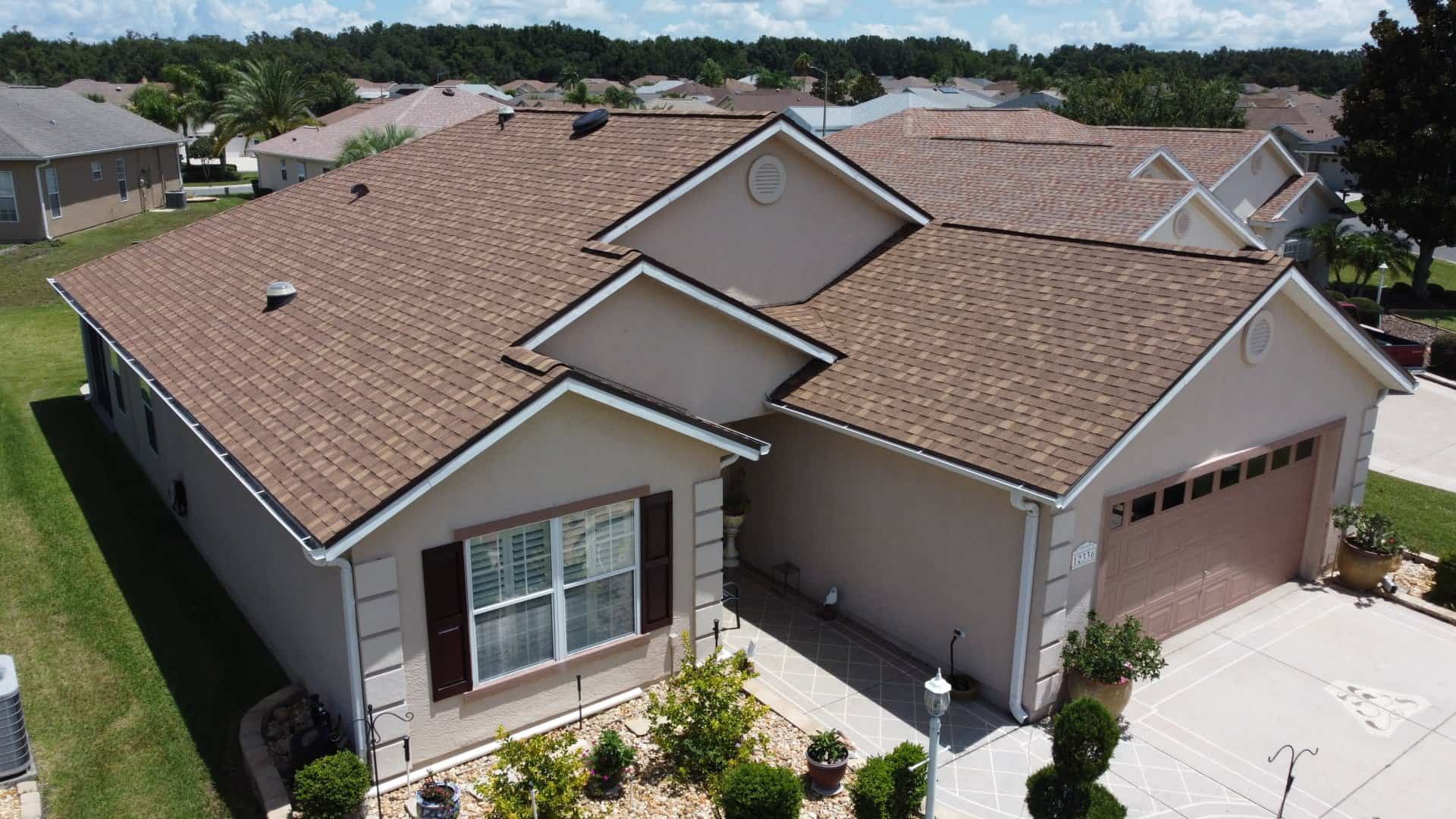
You can see it from the driveway. A few tabs along the edge are flipped up, a strip near the ridge looks bare, or one shingle is a slightly different shade from the rest after an old patch. Your 3-tab shingle roofing in Daytona Beach has done its job for a long time, and now you’re trying to figure out what it needs.
It’s a stressful spot to be in. You don’t want to replace a roof that only needs a repair, and you don’t want to keep patching one that’s worn out. You also want to know whether 3-tab shingles are still the right choice for a house this close to the ocean.
APC Roofing is GAF Certified, licensed in Florida (CCC1337030) and insured. We’ll look at the whole roof, show you photos and give you a straight answer, and the inspection is free. Call 386-259-8425 to book it.
What makes a 3-tab shingle different
A 3-tab shingle is a single flat layer of asphalt-coated mat with two cutouts along the bottom edge. Once it’s on the roof, each strip looks like three separate tabs, which gives the roof that flat, even, brick-like pattern you see on a lot of older homes.
Architectural shingles, also called dimensional shingles, are built from two or more layers bonded together. They’re thicker and heavier, and they make a shadowed, textured look on the roof. That extra material matters most in wind.
Each 3-tab strip holds down along a narrow sealant strip near the top of the tab below it. When that seal lets go, the tab can flap in the wind, crease and eventually tear off. On the coast, wind is the main way these roofs fail.
How the Daytona Beach coast wears on 3-tab shingles
Your roof lives with steady wind off the ocean, strong sun most of the year and hurricane season every June through November. Each of those hits a 3-tab roof in its own way.
Sun bakes the asphalt and dries out the sealant strips. As the seals weaken, the tabs are easier for wind to lift. You’ll often see this first on the side of the roof that faces the sun most of the day.
Wind finds the weak seals. A gust lifts a tab, bends it back and leaves a crease across it. Creased tabs may lie flat again and look fine from the ground, but they’re cracked and they’ll be the first ones to go in the next storm.
Humidity feeds the black streaks you see on so many Volusia County roofs. That’s usually algae. It’s mostly a cosmetic problem, but pressure washing it off strips away the protective granules, so a soft wash is the safer choice.
Salt air works on the metal around the shingles: drip edge, flashing and nails. A shingle roof is only as sound as the flashing at its walls, vents and valleys.
Repairing a 3-tab roof
A repair can make sense when the damage is limited to a small area and the rest of the roof still has life in it. Typical repairs include replacing torn or missing tabs, resealing lifted ones and replacing a cracked pipe boot or loose flashing.
Two things make 3-tab repairs trickier than they used to be. Many shingle makers have moved their product lines toward architectural shingles, so finding a 3-tab in a matching color can be hard. And older shingles get brittle, so lifting them to slip in a replacement can crack the ones around it.
You’ll see photos of the damaged areas and the shingles around them, so you can judge for yourself whether a repair will blend in and hold.
When it’s time for a 3-tab shingle roof replacement
Replacement usually makes more sense when you see problems spread across the roof rather than in one spot: lots of lifted or creased tabs, bald patches where the granules are gone, curling edges or leaks that keep coming back after repairs.
Florida adds two more things to think about. The state building code has rules about how much of a roof can be repaired before more of it needs to meet current code. And many Florida insurers look closely at a roof’s age and condition when they write or renew a policy. An inspection tells you where you stand on both before you spend anything.
Should you replace 3-tab with 3-tab?
You can, if 3-tab shingles in the color and wind rating you need are available. Many homeowners near the coast choose architectural shingles instead. They usually carry a higher wind rating, they hide small imperfections in the roof deck better, and they’re the more widely made product today.
You won’t be pushed one way or the other. You’ll get the options side by side, and you choose. If you’re curious about other materials, our asphalt shingle roofing in Daytona Beach and shingle roofing in Daytona Beach pages cover more.
How it works with APC Roofing
- Book your free inspection. Call 386-259-8425 or request a free online estimate.
- Get a clear, honest assessment and estimate. We check the shingles, seals, flashing, vents and attic and give you photos with a written estimate. Financing is available through Aqua Finance, Fortifi, Hearth and Home Run Finance.
- Your roof gets done and the site gets cleaned up. Many shingle roofs are replaced in a single day, and the crew cleans up before leaving.
Creased and lifted tabs don’t heal on their own. One more windy season can turn a handful of loose tabs into missing shingles and a wet attic.
Questions about 3-tab shingle roofing in Daytona Beach
Are 3-tab shingles still made?
Some are, but many manufacturers now focus on architectural shingles. That can make color matching harder when you need a repair.
Can you repair just a few 3-tab shingles?
Often, yes, if the surrounding shingles are still flexible and a close match is available. If the roof is brittle, the repair may cause more damage than it fixes, and we’ll tell you so.
Is wind damage on a 3-tab roof covered by insurance?
That depends on your policy. You file the claim with your insurer and pay your deductible. We document the damage with photos, give you an estimate and work with your adjuster. Our wind damage roof repair in Daytona Beach page explains more.
Get a straight answer on your 3-tab roof
Call 386-259-8425 or book your free inspection online. Whether you repair, replace or upgrade, the goal is a roof that stays put in the next storm, a dry house and no surprise bill.