You heard it during the storm: a flapping sound overhead that wouldn’t stop. The next morning there’s a strip of shingle on the lawn and a corner of the roof that doesn’t sit quite flat anymore. Wind damage roof repair in Daytona Beach is a common need, because a roof this close to the ocean takes wind that inland roofs don’t.
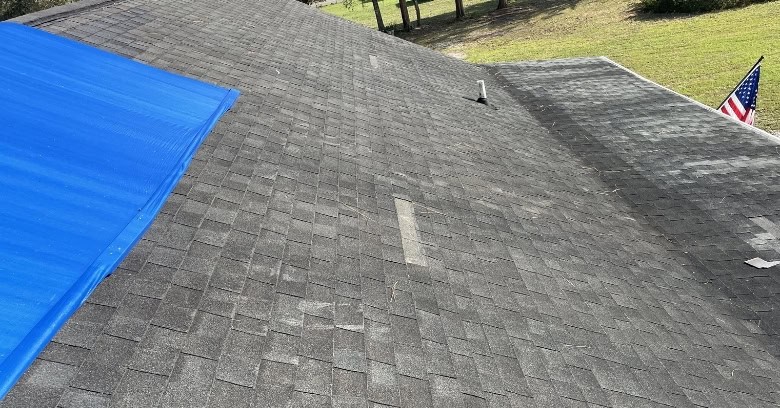
It’s unsettling not knowing how much damage you can’t see. A few missing shingles might be the whole story, or they might be a sign that more of the roof has loosened. You want to know which before the next storm finds out for you.
APC Roofing is GAF Certified, licensed in Florida (CCC1337030) and insured, and we’ve been fixing Florida roofs since 2017. Your wind damage inspection is free. Call 386-259-8425 to get on the schedule.
How wind actually damages a roof
Most people picture wind pushing on a roof. The bigger problem is that it pulls. As wind flows over the house, it creates suction that tries to lift the roof covering up and off, and that pull is strongest along the edges, at the corners and at the ridge.
That’s why wind damage almost always starts in the same places. The first shingles to go are usually at a rake edge or a corner, and once one lets go, the wind gets under the next one. A small opening can turn into a bare patch during a single storm.
On the coast, your roof also deals with steady wind that never fully goes away. The sea breeze builds most afternoons, nor’easters can blow onshore for days in the cooler months, and tropical systems bring gusts from June 1 through November 30. That repeated flexing wears down the sealant bond on shingles and the attachment on tiles and metal over time, so a roof that held up well five years ago may not hold up the same way now.
Signs of wind damage on your roof
Some wind damage is obvious. A lot of it isn’t.
- Missing shingles or tiles, often along edges and the ridge.
- Creased shingles. When a tab is lifted and bent back by the wind, it leaves a crease across the shingle. Even if it lies back down, the shingle is weakened and the seal is broken.
- Lifted or loose tabs that move when wind blows, or that you can see sitting slightly raised.
- Cracked or slipped tiles, and broken hip or ridge tiles.
- Loose metal panels or trim, or fasteners that have pulled up.
- Bent or lifted flashing along walls, chimneys and the drip edge.
- Debris damage from limbs and flying objects.
Inside, look for new ceiling stains, damp spots high on exterior walls and water near windows on the side of the house that faced the wind.
Wind damage by roof type
Shingle roofs lose their sealant bond first. Shingles that have come unstuck can’t always be glued back reliably, so the usual fix is to replace the damaged ones and make sure the shingles around them are fastened and sealed properly.
Tile roofs hold up well in wind when they’re attached correctly, but individual tiles can crack or slip, and ridge and hip tiles are especially exposed. A wind-damaged tile roof needs a careful look underneath, because the underlayment is what actually keeps water out. Our Daytona Beach tile roofing page explains more.
Metal roofs are strong in wind, but a loose fastener or a lifted panel edge gives the wind a handle to pull on. Repairs focus on refastening, replacing damaged panels and securing trim.
Leaks that only show up in wind
If your roof leaks during windy storms but stays dry in a calm rain, you’re likely dealing with wind-driven rain. Strong wind can push water sideways and even uphill, under shingle edges and tile laps and through gaps in flashing. A roof with no visible damage can still leak this way.
Finding the entry point takes patience. The stain inside is often several feet away from where water gets in, and the cause is often flashing, a pipe boot or an underlayment problem rather than the shingles themselves.
Wind damage roof repair in Daytona Beach, done the right way
A good wind damage repair restores the roof’s hold, not just its looks. That means replacing creased and broken shingles instead of gluing them flat, fastening new material to the manufacturer’s high-wind pattern, sealing edges and replacing any flashing that bent or pulled loose. If wind damage is widespread, or the roof was already near the end of its life, replacement may be the better long-term answer, and we’ll explain why with photos.
For the bigger picture after a storm, see our pages on storm damage roofing in Daytona Beach and storm damage in Daytona Beach.
If you file an insurance claim for wind damage, you file it with your insurer and pay your deductible. We document the damage, write the estimate and work with your adjuster. Be wary of anyone who offers to waive or cover your deductible.
How it works
- Book your free inspection. Call 386-259-8425 or request a free estimate online.
- Get a clear, honest assessment and estimate. We check edges, corners, the ridge and flashing up close and give you photos and a written estimate.
- Get your roof repaired and the site cleaned up. We fix the damage and clean up before we leave.
Loose shingles and tiles don’t fix themselves. Each windy day works them a little looser, and a small repair now is far easier than a bare section of roof after the next tropical storm.
Wind damage questions from Daytona Beach homeowners
Can wind damage a roof without tearing shingles off?
Yes. Creased shingles and broken seals are the most common wind damage, and both can happen without any shingle leaving the roof.
Should I go up and check the roof myself?
It’s safer to look from the ground with binoculars and check the attic for daylight or wet spots. Leave the climbing to a roofer.
Will a new roof hold up better in wind?
A roof installed with wind-rated materials, proper starter strips and the manufacturer’s high-wind fastening pattern is built to resist uplift. If wind damage keeps coming back, we can talk through those options.
A roof that stays put
Call 386-259-8425 or start your free estimate online. You’ll know what the wind did, the repair will hold, and the next blow off the ocean is just weather again. Your satisfaction is our reputation.