Your roof has been patched one too many times, your insurance company is asking how old it is, or the last storm made the decision for you. Now you’re looking at roof installation in Daytona Beach, and that means trusting a crew with one of the biggest projects your house will ever see.
Most homeowners only buy a roof once or twice, so it’s hard to know what a good installation looks like or how to compare two estimates. You want a roof that’s built for Florida weather, a price that’s honest and a crew that shows up, does the job right and cleans up after itself.
APC Roofing is GAF Certified, licensed in Florida (CCC1337030) and insured, and we’ve been putting roofs on Florida homes since 2017. Your inspection and estimate are free. Call 386-259-8425 to get started.
What a roof installation in Daytona Beach includes
A new roof is a system of layers, and each one has a job. Here’s what happens on a typical installation:
Tear-off and deck repair
The old roof comes off down to the wood deck. That’s the only way to see soft, rotted or delaminated sheathing, and it gets replaced before anything new goes on. Laying a new roof over a second layer hides problems you’ll pay for later.
Underlayment and a sealed deck
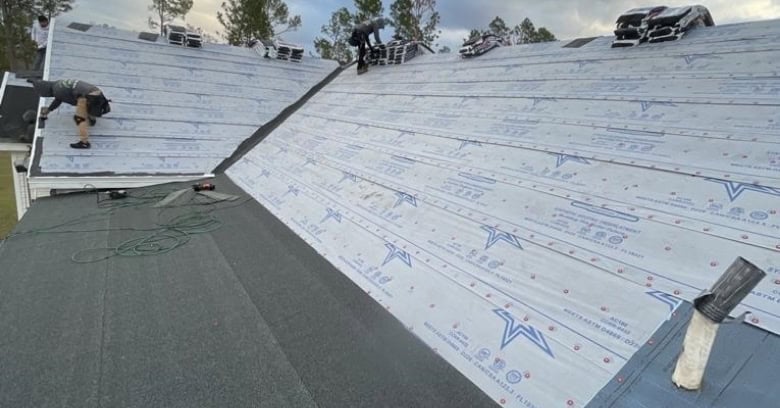
In Florida, the underlayment is your backup if wind ever tears away part of the roof covering. Florida’s building code sets requirements for this layer on a re-roof, often called a secondary water barrier, and self-adhering membrane is common at eaves, valleys and other spots where water concentrates.
Edge metal and flashing
New drip edge goes along the eaves and rakes, lapped in the right order with the underlayment. Flashing at walls, chimneys and vents gets replaced, not reused, and a kickout at the bottom of each roof-to-wall joint steers water into the gutter instead of behind the siding.
The roof covering
Shingles, metal panels or tile go on following the manufacturer’s installation instructions and the fastening pattern your home’s wind exposure calls for. On the coast, that typically means more fasteners per shingle and extra attention at the edges and ridge, where wind uplift is strongest.
Ventilation and the ridge
Attic ventilation is planned with the roof, not added as an afterthought. Good airflow helps keep heat and moisture out of the attic, which matters in a climate as hot and humid as ours.
Choosing the right roof for the coast
The three most common roofs here each have strengths:
- Architectural shingles are the most common choice and a good value. Look for wind-rated products installed to the higher nailing pattern. See shingle roofing in Daytona Beach.
- Metal handles wind and heat well and suits coastal homes when the metal, finish and fasteners are chosen for salt air. See metal roofing in Daytona Beach.
- Concrete and clay tile have a classic Florida look. The underlayment under tile does most of the waterproofing, so it’s worth doing carefully. See tile roofing in Daytona Beach.
We’ll recommend what fits your house, your budget and your distance from the ocean, explain why, and you choose.
Permits and inspections
A roof replacement in Florida needs a permit from your local building department, and the work is inspected. Ask any roofer you’re comparing how they handle the permit. If someone suggests skipping it, that’s a reason to keep looking.
How to compare roof installation estimates
Two estimates can look far apart and still be for very different roofs. A useful estimate tells you what’s being removed, how damaged decking is handled, which underlayment and edge metal are used, whether flashing is being replaced, what the ventilation plan is and exactly which roofing product goes on. Ask for all of it in writing. If one estimate leaves those blank, that’s usually where the difference is. For more on deciding whether it’s time, visit our roof replacement in Daytona Beach page.
How it works
- Book your free inspection. Call 386-259-8425 or request your estimate online.
- Get a clear, honest assessment and estimate. We measure the roof, check the attic and deck, and give you a written estimate that names the materials. Financing is available through Aqua Finance, Fortifi, Hearth and Home Run Finance.
- Your roof gets installed and the site gets cleaned up. Many residential roofs are installed in a single day, and the crew cleans up nails and debris before leaving.
Putting a failing roof off through another hurricane season is a gamble on your ceilings, insulation and decking, and those repairs add to the cost of the new roof when it finally goes on.
Roof installation questions
How long does a roof installation take?
Many residential roofs are finished in a single day. Larger homes, tile roofs and jobs with a lot of deck repair take longer, and you’ll get a realistic timeline with your estimate.
Do I need to be home during the installation?
Not necessarily, but it helps to move cars out of the driveway, keep pets inside and take fragile items off interior walls, since a tear-off shakes the house.
What happens if the crew finds rotten wood?
Soft or damaged decking gets replaced before the new roof goes on. You’ll be told what was found, with photos.
Will a new roof help with my homeowner’s insurance?
Many Florida insurers look closely at roof age and condition. A new roof may help, but your agent is the one who can tell you how it affects your policy.
A new roof and peace of mind
Call 386-259-8425 or book your free inspection online. You’ll end up with a roof built for Florida weather, a clean yard and the confidence that it was done right from the deck up.