Water is coming through the ceiling, a storm just tore shingles off the roof, or a limb came down on the house. You need emergency roof repair in Daytona Beach, and you need to know what to do in the next hour while you get help lined up.
This is stressful, and it’s easy to feel rushed into a bad decision. After a big storm, plenty of strangers show up at the door promising fast fixes. You want a local roofer who’ll find what actually failed, explain it plainly and fix it properly.
APC Roofing has worked on Florida homes since 2017. We’re GAF Certified, licensed in Florida (CCC1337030) and insured, and inspections are free. Call 386-259-8425 and tell us what’s happening.
What to do right now
Before anyone gets on a roof, protect the inside of your home and the people in it:
- Stay off the roof. A wet or storm-damaged roof is slick and may have weak spots. Leave it to a crew with the right safety gear.
- Catch the water. Put buckets or towels under drips, and move furniture, rugs and electronics out of the way.
- Watch for sagging ceilings. If drywall is bulging with water, keep people out from under it.
- Be careful with electricity. If water is near light fixtures, outlets or ceiling fans, turn that circuit off at the breaker if you can do it safely.
- Take photos. Shoot the ceiling, the wet areas inside and any damage you can see from the ground. They’ll help with your repair and any insurance claim.
What counts as a roof emergency
Some problems can’t wait for a convenient week. Active water coming into the house, a section of roof torn open by wind, a tree or large limb on the roof, or missing shingles or tiles with more rain in the forecast all need attention as soon as possible.
Other problems feel urgent but give you a little time: a small stain that isn’t growing, a few granules in the gutter, or a lifted shingle with dry weather ahead. Either way, getting the roof looked at soon keeps a small problem from spreading.
Temporary protection versus a real repair
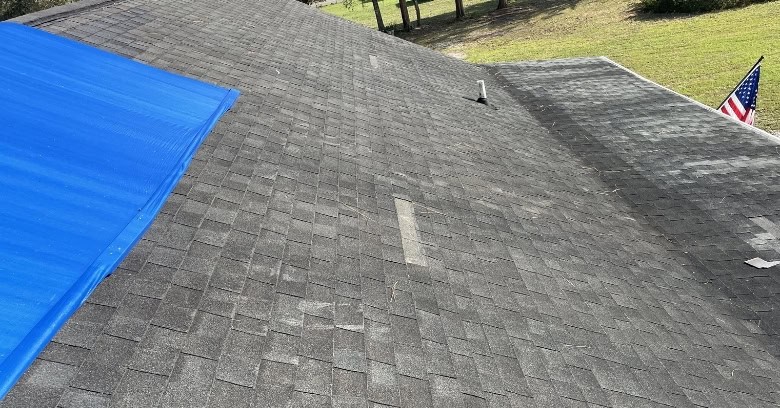
When a roof is open and more rain is coming, a temporary cover may be needed to keep water out until the roof is dry enough to repair. Keep in mind that a tarp is a stopgap, not a fix. A poorly secured one blows loose in the next gust, and one left on for months can damage the shingles under it. The goal is always a proper repair as soon as conditions allow.
Why Daytona Beach roofs fail in a storm
Most emergency leaks don’t come from the middle of the roof. They start where something interrupts it:
- Wind-lifted shingles. A strong gust breaks the seal strip, folds the shingle back and lets driven rain under it. Our wind damage roof repair page covers this in more detail.
- Flashing at walls and chimneys. Bent or loosened metal lets water run behind the siding.
- Pipe boots. Rubber seals around vent pipes crack in the Florida sun and often fail during a hard, sideways rain.
- Ridge caps and valleys. Storm wind drives water under caps, and valleys carry the runoff of two slopes at once.
- Broken or slipped tile. Tile roofs can lose pieces in high wind, exposing the underlayment.
- Fallen limbs. A branch can puncture the deck itself.
Water also travels. The stain on your ceiling is where the drip fell, not necessarily where the water got in, so a proper repair starts by tracing it back.
How APC Roofing handles emergency roof repair in Daytona Beach
We start by finding the actual entry point, checking the attic where we can and then the roof above it. The failed part gets repaired properly, and nearby boots, flashings and valleys get checked too, because a storm that broke one often weakened others. You get photos of the damage and the finished repair, with a plain written summary for your records.
If the roof is too far gone for a repair to make sense, we’ll say so, show you why, and you decide what’s next. For leaks that aren’t storm-related, see our roof leak repair in Daytona Beach page.
Storm damage and your insurance
If a storm caused the damage, you may want to file a claim. Here’s how that works with us: you file your own claim with your insurance company and pay your own deductible. We document the damage with photos, give you a written estimate and work with your adjuster so the damage is clearly accounted for. Be wary of anyone who offers to waive or cover your deductible. Our insurance roof claims page explains the process in more detail.
How it works
- Book your free inspection. Call 386-259-8425 or request your estimate online.
- Get a clear, honest assessment and estimate. You’ll see photos of what failed and hear whether it’s a repair or something bigger. Financing is available through Aqua Finance, Fortifi, Hearth and Home Run Finance.
- The repair gets done and the site gets cleaned up. Permanent repairs are made once the roof is dry enough to do them right.
A roof leak rarely stays the same size. Water that keeps getting in soaks insulation and decking, and a repair that could have been simple gets bigger.
Emergency roof repair questions
Should I call my insurance company or a roofer first?
Protect your home first, then it’s reasonable to do both. A roofer’s inspection and photos help you understand the damage, and your insurance company will tell you how to start a claim.
Can a roof be repaired while it’s still raining?
Permanent repairs need a dry surface for sealants and shingles to bond. During rain, the focus is keeping water out of the house until the real repair can be made.
How do I avoid storm chasers?
Work with a licensed, insured, local contractor, ask for a written estimate and never sign anything under pressure at your front door. Be cautious of anyone who offers to cover your deductible.
Will my whole roof need to be replaced?
Not necessarily. Many storm leaks come from a few failed spots. An inspection tells you whether a repair will hold or whether the damage is widespread.
Get the house dry and the worry off your mind
Call 386-259-8425 or book your free inspection online. We’ll find what failed, fix it properly and leave you with a dry house, clear photos for your records and no surprises on the bill.