Looking for Metal Roof Repair Throughout Daytona Beach Florida?
APC Roofing puts up and mends screw-down sheet and clip-held panels, from a pole barn to a family home.
Call 386-259-8425 and a roofer will look closely and explain plainly what is up there.
Identifying a System: Clues From Below
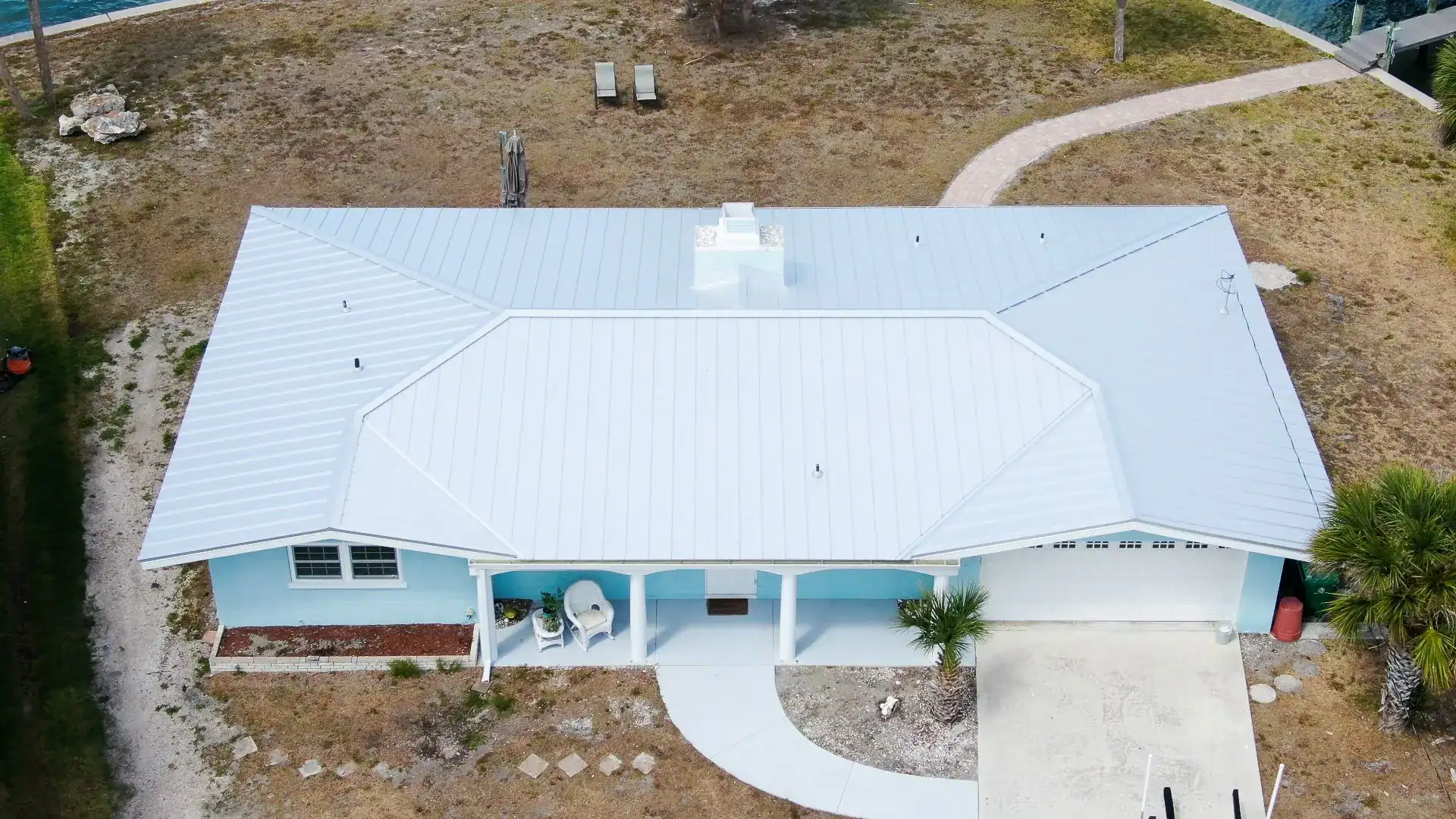
Ribbed and corrugated panels take screws through a flat or a crest, whereas standing seam relies on clips that sit under locked joints. Coated steel is what the great majority of metal-roofed homes carry, and aluminum and copper are less frequent choices.
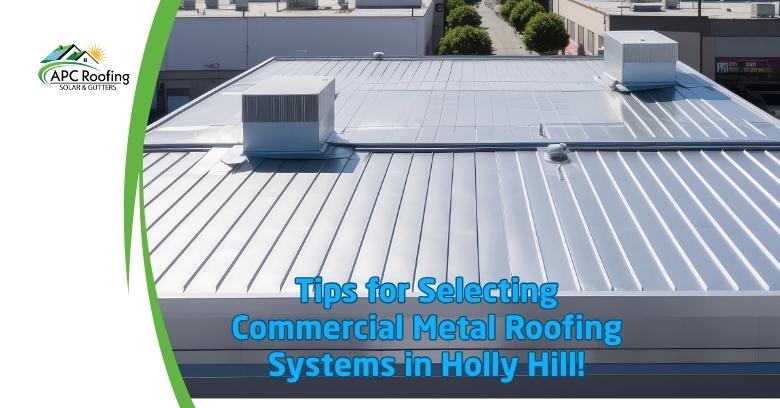
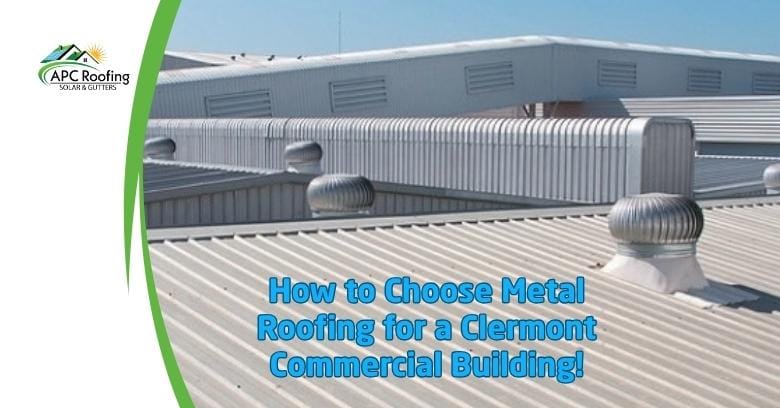
Rows of fastener heads, visible from the street, give away a screw-down roof, and smooth pans between tall ribs with nothing poking through are standing seam. Corrugated sheet is a regular choice on barns, shops and porches, though a house can suit either.
The Cross-Section: Which Suits a Building
A corrugated sheet curves up and down in regular round waves, and a ribbed panel has trapezoid ribs separated by broad pans. Each sheet laps over a neighbor along a long edge, and screw locations follow a published diagram.
A squared profile resists bending and reaches further between purlins, and corrugated remains popular for a traditional farm look. High ribs carry a heavy downpour across an extended slope, whereas a short porch covering gets by with a low pattern.
Exposed Hardware – Why Installation Matters
Each screw clamps a panel down onto wood or steel framing, and a washer under each head keeps rain out. Rubber in steady sunlight hardens and cracks with age, well ahead of the painted steel nearby.
Overdriving tears a washer and dishes the metal, and a shallow or off-square setting never seals fully.
Swapping Out Hardware – Where Help Stops
Washers on corrugated or ribbed panels give out as a group, and a full re-screw is an ordinary step somewhere along the way. Old fasteners are backed out one at a time, and a wider replacement goes back in where threads can still find purchase.
Re-fastening stops water at every head and holds down sheets that lift, yet rusted panels, opened laps and poor flashing still need separate repairs. Screw style depends on what lies beneath, with coarse threads for wood and self-drilling tips for steel, and tops painted in a panel color keep new work from standing out.
Expansion and Contraction – Stress at Screw Holes
A steel sheet grows in afternoon heat and shrinks back by dawn, and a longer run shifts farther still, with aluminum going about twice as far. Metal screwed down with no give wears each hole into an oval, and washers then stop sealing.
A tick from warming metal after sunrise is normal, and a roof built with slack is unharmed.
Anchoring Standing Seam: Tucked Away
A long pan gets one fixed point, often near a ridge or an eave, while floating clips elsewhere allow the pan to slide. Trim at an unanchored end leaves a gap for travel, while a pan fastened hard along every foot pulls loose or ripples.
Pans go down one at a time, with clips screwed along a single side, and an adjacent pan then covers every anchor point.
Closing a Seam: Which Suits the House
One kind of rib clicks shut under a firm push, and mechanical versions are finished by a rolling tool. A double-lock seam rides out storms and sheds pooled water, and maker approvals cover shallower slopes.
Widths between ribs and the height of each rib differ by line, and building shape and personal taste steer a buyer. Parts made for one system rarely suit a rival brand, and a substitute from elsewhere leaves gaps.
Light or Heavy: Reading a Label
A steel panel is rated by gauge, and higher numbers mean thinner sheet. Pole buildings frequently carry twenty-nine, while houses often take twenty-six or twenty-four.
Aluminum is specified in thousandths of an inch instead, and in both cases a heftier panel stays straighter and tougher. A light grade and a heavy grade are indistinguishable from a driveway, so printed product data gives a firm answer.
Rust Resistance: What Lasts
Roofing steel leaves a mill with a zinc or aluminum-zinc layer over plain sheet, and a primer and a colored enamel are baked over the metal. Damage no deeper than paint is cosmetic, but a cut that reaches base steel is where corrosion takes hold.
A PVDF finish stands up to sunlight for a long time, and polyester families fade and chalk more quickly. Wet mortar and fresh concrete attack an aluminum-zinc coating, so a gap or barrier separates panels from new block or stone.
Base Material: Salt Air
An aluminum panel is light and immune to red rust, but softness means a heavier grade for equal toughness. Beside salt water at the coastal end of our range, protective layers wear away faster, and some makers limit steel products by distance from a shoreline.
A copper accent over a bay window is a familiar touch, and left unpainted, the metal darkens with age.
Galvanic Trouble: Treated Lumber and Wrong Screws
Copper upslope of a steel covering sends corrosive runoff over the panels, and discoloration arrives well before a panel gives way. Aluminum on pressure-treated boards turns white and pits, and a mismatched fastener rusts quickly.
Any added flashing or trim should be the same metal as what is up there, or tape and membrane keep dissimilar metals from meeting.
An Appearance Question: Setting Expectations
Oil canning means a slight bow in a wide stretch between seams, and a midday sun hides what a low evening sun reveals. Metal with a visible warp stays just as watertight, and useful life is unchanged.
Striations, heavier stock and narrower pans keep rippling in check, and an even deck beneath helps as well. Pictures of completed homes give a sense of how visible oil canning gets, and the decision on profile rests with you.
Everyday Comfort – Day and Night
A shed with bare purlins under the panels rings like a drum, since a single skin is the only barrier. A dwelling puts decking, a membrane and insulation between the panels and any bedroom, and in a living room few can pick out any change from shingles.
A pale or cool-pigment coat sends much of the sun back, and the attic takes in far less. Dark finishes on metal get as hot as black shingles, and without venting and insulation, color alone does little. Thin steel cools off right after dusk, and the attic below catches up before long.
Guards and Placement – Clamped or Fastened
Across the colder end of our territory, snow does not cling to painted steel, and a whole mass may come down at once on anything under an eave. Stops attached to the metal let a load leave slowly, and positions are chosen where anything below could be hit.
Brackets on standing seam bite an upright fold, not a flat, while exposed-fastener sheet takes mounts screwed into framing, and where snowfall is rare, nothing is added.
Damage From Above: When Paint Cracks
Hail visits the colder end of our range with some regularity, and heavier grades with stiffening ribs shrug off more stones. A sharp blow that chips a color coat leaves metal bare to weather, while a seam or trim edge pushed out of line may open.
Once a storm has moved on, affected spots get photographed and measured, so the size and position of each dent are known.
Holding On in a Gale: Layout Matters
Gusts tug harder at corners and along a perimeter, and a blast under a raised lip can tear a panel away. Finish trim is hemmed and caught on a cleat, and nothing is left free to flap.
Fasteners go in closer together near corners and a roof’s rim, per manufacturer guidance for local conditions. On the hurricane coast at the far end of our territory, fastening counts rise again, and panel and hardware are rated as one assembly.
Breaking Through the Metal – Careful Detailing
A plumbing pipe gets a flexible boot with a base that bends to a panel profile, and a hole is cut in a flat, not through a seam. Larger units get a raised curb plus a cricket on an uphill side, so no water dams up.
Sealant backs up flashing and never stands in for folded metal, because a compound shrinks and pulls away with time.
Inside Corners – No Screws in the Water
Each valley receives a wide flashing before panels arrive, and panels are trimmed on a diagonal to match. Ends are hemmed and held by cleats, so no hole sits where runoff gathers.
An endlap on a long run holds sealant between overlapping sheets, and fasteners pass through both thicknesses, with uphill metal on top.
Shallow Sections: Where Locked Seams Help
Corrugated and ribbed sheet usually needs around three inches of rise in every foot, and at anything less, rain creeps sideways across laps toward screws. A mechanically locked seam can be installed far lower, and some products are allowed on nearly flat decks.
A barely tilted roof over a porch or addition is common on houses, and each incline is measured on site, and below every panel limit, a membrane goes on.
Substrate: Rot and Spacing
A home gets metal over a continuous plywood or OSB deck, and a high-temperature synthetic underlayment goes between, since felt paper cooks under summer metal. An outbuilding may have nothing but purlins under the metal, so support spacing and gauge are matched.
Once an old covering comes off, spongy sheathing is found and swapped, because screws in decay have nothing to grip.
Old Roof Off, Deck First
We tear the old roof off down to the deck before any metal goes on, so we can see and fix the wood first. Steel panels weigh well under two pounds per square foot, so most framing takes extra weight without reinforcement.
Completing the Job: Vented or Solid
Closures matching a panel shape stop up hollows under each rib at both extremes, and wind-driven rain, wasps and birds stay out. A ridge cap can be vented to let warm air escape or left solid, as existing ventilation requires.
Drip edge, rake trim and a gutter apron finish every outer line, and fascia boards stay dry.
Day of Installation – Sheet by Sheet
Standing seam is produced to fit each run from bottom to top, and nothing overlaps partway up. An extended panel needs enough hands under the metal to stay straight, and a kinked pan is not usable.
Each step should land in a flat with support right underneath, as a seam under a boot can bend open. Moisture turns a painted panel into a slide, and nobody without a harness should go up.
Clues to Watch – No Ladder Needed
- Rust circles where screws go in, just above a gutter line.
- Screws no longer tight against metal, mid-panel.
- Trim bent up at a corner, after a windstorm.
- A vent cap knocked askew, beside a chimney.
- A sheared end streaked orange, in a valley.
- Peeling paint, on a south exposure.
- A ceiling stain in a straight line, down a hallway.
- An endlap gaping, at the low end of a panel.
How APC Roofing Approaches Metal Roof Repair in Daytona Beach Florida: Our Routine
We start by identifying which panel type is installed and how the panels are held, and next come screw locations, perimeter trim, pipes, valleys and overlaps. Thickness, coating and hardware style go into notes, and the attic is searched for stains and soft decking.
A report with photos sets out what is up there, and each repair is explained. A sound covering is called sound, while a worn-out roof is named as such.
Metal Roof Repair in Daytona Beach Florida – Straight Answers
Phone 386-259-8425 and we will book a day that suits you.
Keeping the Roof: Guided by Evidence
A panel torn by a falling limb can be changed individually, and a difference in shade stays visible. A properly resealed lap closes a drip, and new screws restore a roof full of aged seals.
Perforation across many panels means replacement, and a covering with every joint and collar given out is no different. Redoing one face of the house is a middle path, when harm is local.
Aging Gracefully: Upkeep Over Time
Good metal work frequently reaches forty years, and an estimate varies from house to house. Standing seam asks for less upkeep, since nothing pierces a pan, while ribbed sheet gets new fasteners once washers tire.
Dissimilar metals, raw edges and sealant used instead of proper flashing wear out a covering ahead of schedule, and a visit now and then spots trouble early. Pine needles packed into a valley trap water against coated steel, so removal pays off in longer-lasting paint.
Whenever Metal Roof Repair in Daytona Beach Florida comes up, reach APC Roofing at 386-259-8425. Every screw or clip, edge and boot gets a close look, and a written report puts options in front of you.
« All Services in Daytona Beach Florida