In Need of Corrugated Metal Roofing in Daytona Beach Florida?
APC Roofing lays new panels and brings worn coverings back into shape, whether for a shop, a porch or a whole house.
Call us at 386-356-2111 and a roofer will come out and describe what the metal shows.
Which System Is Up There – A Glance Up
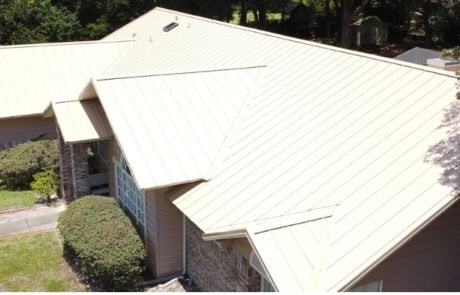
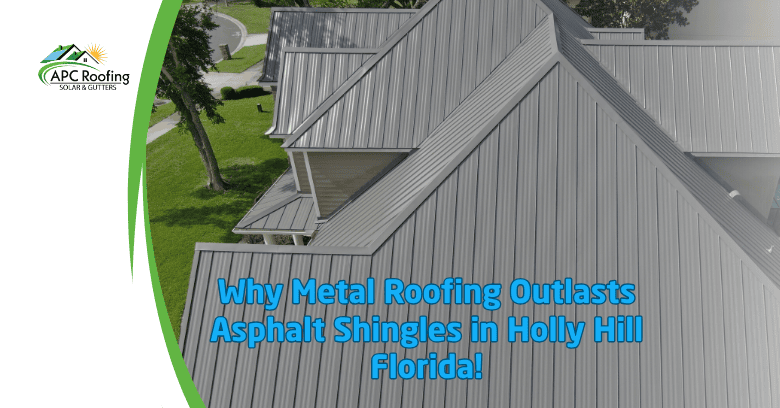
A corrugated or ribbed covering is secured with screws set through the metal, whereas standing seam relies on clips that sit under locked joints. On homes the metal is usually coated steel, and aluminum and copper are less frequent choices.
Screw heads marching in rows, easy to spot from below, point to exposed fasteners, while plain pans and tall ribs with nothing in sight are standing seam. Farm buildings and garages commonly have ribbed or wavy sheet, while residences take either style.
Rolled Shapes: Which Suits a Building
A corrugated sheet curves up and down in regular round waves, while ribbed designs show angular ribs and wide flats. Adjacent lengths share a narrow side lap, and every screw lands where a maker's layout calls for.
A squared profile resists bending and reaches further between purlins, and corrugated remains popular for a traditional farm look. On a big roof plane, taller ribs keep a downpour from spilling over side laps, while modest runs need little depth.
What Keeps Sheet Down: Every Detail Counts
A screw pulls the metal tight against a purlin or the deck, and a gasketed washer under each head does the sealing. Years of sun and heat stiffen synthetic rubber until cracks form, well ahead of the painted steel nearby.
An overdriven screw squashes a washer flat, and a shallow or off-square setting never seals fully.
Swapping Out Hardware – Benefits and Gaps
Every washer across a ribbed or corrugated field weathers at the same rate, and a whole-roof re-screw is routine over the years. Tired fasteners are pulled one by one, and an oversized screw returns to every hole to catch undamaged fibers or metal.
A re-screw stops drips around screw heads and draws lifting sheets back down, though perforations, split laps and faulty trim remain as before. Thread type follows whatever support lies below, since lumber and steel purlins take different screws, and a factory color on every top suits most finishes.
Thermal Movement: Room to Travel
Steel lengthens on a hot afternoon and shortens on a cold night, and a long run can gain a quarter inch between noon and midnight, and aluminum changes nearly twice as much. Metal screwed down with no give wears each hole into an oval, and water gets past a washer.
Snapping sounds at sunrise come from panels shifting against clips, and a careful installation suffers no damage.
Beneath Raised Seams – Out of Sight
Every lengthy pan is secured firmly in only one zone, and floating clips everywhere else let the pan glide. Trim at an unanchored end leaves a gap for travel, whereas a pan with no play lets go or distorts.
A pan is positioned and clips are screwed to the deck beside a long edge, and an adjacent pan then covers every anchor point.
Joint Styles – Wind and Water
Some profiles snap together under hand pressure as each pan goes down, and heavier-duty versions are folded over by a motorized tool. A double-lock grips harder against wind-driven rain, and approvals extend to flatter roofs.
Profiles come in different widths and heights, and a home's design and a buyer's taste guide selection. Hardware and trim are sold for one system only, so a repair calls for knowing exactly which panel is up there.
Heavier and Lighter Stock: Barn or Residence
A steel panel is rated by gauge, and numbers fall as sheet gets thicker. Twenty-nine is a regular sight on sheds and pole barns, while twenty-six and twenty-four are typical choices for houses.
For aluminum, sheet is sized in thousandths, and with either metal, a stouter panel holds shape. Different grades look identical once installed, so a label on a bundle shows what was delivered.
Factory Protection – Finishes That Hold Up
Roofing steel leaves a mill with a zinc or aluminum-zinc layer over plain sheet, and a color coat is baked on afterward. A mark in a topcoat alone keeps steel protected, but an unprotected cut or a gouge to bare steel is where red rust starts.
Fluoropolymer finishes remain true to color for many years, while polyester versions chalk and fade sooner. An aluminum-zinc surface is damaged by contact with fresh mortar, and a barrier belongs wherever panels meet new stonework.
Picking an Alloy: Matching a Location
Aluminum is light and free of red rust, but softness means a heavier grade for equal toughness. Along the coastal end of our service area, salt in the air shortens the life of zinc-based coatings, so a marine-grade finish is often chosen for homes near a beach.
Copper is usually kept to small accent roofs over a bay or a porch, and the metal weathers to a natural patina with no paint.
Galvanic Trouble – Isolation and Compatibility
Water that has crossed copper wears away any steel coating below, and discoloration arrives well before a panel gives way. Chemicals in treated lumber pit any aluminum resting on top, and an incompatible screw causes slow damage nearby.
A new piece of flashing belongs in a metal that matches existing work, or tape and membrane keep dissimilar metals from meeting.
A Matter of Taste: What Can Be Done
Oil canning means a slight bow in a wide stretch between seams, and faint hollows show at sunrise and fade by noon. Metal with a visible warp stays just as watertight, and the roof ages no faster.
Heavier gauge, narrower pans and pencil ribs in each flat all reduce waviness, and an even deck beneath helps as well. Images of real houses show oil canning from obvious to barely there, and the decision on profile rests with you.
Comfort Below – Sound and Temperature
A racket many recall comes from sheet over open framing, as no material absorbs vibration. A home has sheathing, a membrane and an insulated ceiling under steel panels, and loudness indoors is close to what asphalt gives.
A white, tan or light gray panel turns back much glare, and the attic beneath stays cooler on a summer afternoon. A charcoal or black panel gets hot, and ventilation and insulation underneath matter as much as finish. After sunset, metal sheds stored warmth quickly, and the attic below catches up before long.
Protecting Whoever Is Below: Position Matters
Across the colder end of our territory, snow does not cling to painted steel, and an avalanche off an eave can flatten shrubs, gutters or anyone underneath. Retention bars keep a load up top to melt off gradually, and typical spots are above doors, walks, decks and gas meters.
A standing seam roof gets brackets that squeeze an upright joint rather than pierce a pan, while ribbed or corrugated sheet takes mounts driven into structure with sealing washers, and at the warm end of our range snow gear is unnecessary.
Blows From Above: Documented Plainly
Hail is common across the colder end of our territory, and stouter panels with striations hold shape better. Where a blow splits paint, bare metal can corrode, and a flattened rib or a shifted cap can leak.
Once a storm has moved on, affected spots get photographed and measured, and each dent and damaged panel is located.
Uplift: Layout Matters
Perimeter bands of a roof take a heavier pull than a central field, and once air slips under an unsecured edge, pressure can roll the metal up. Finish trim is hemmed and caught on a cleat, so nothing sticks out to be grabbed.
Spacing shrinks where loads climb, at corners and a rim, following a maker's layout for a site's exposure. At the coastal end of our territory, hurricane country asks for more holding power still, and products are chosen with a wind rating to match.
Where Something Pokes Through: Sealant as Backup
Each pipe takes a boot made for panel roofs, with a base pressed to follow corrugations, and a hole is cut in a flat, not through a seam. Larger units get a raised curb plus a cricket on an uphill side, and water cannot pool at an upper edge.
Caulk plays a supporting role to folded metal, as ultraviolet light turns soft compounds brittle in a few seasons.
Changes of Direction: Made to Shed
Each valley gets a separate pan in advance of the panels, and each sheet is cut to a matching angle. Each raw end is hemmed back and hooked onto a cleat, and nothing pierces a channel that carries rain.
A sealed endlap connects consecutive lengths on an extended run, and fasteners through both thicknesses keep water from backing up.
Limits Near Flat – Measured, Not Guessed
Screw-down panels typically call for roughly three in twelve, and on flatter roofs, water works under side laps. A mechanically locked seam can be installed far lower, and some products are allowed on nearly flat decks.
Many homes have a gentle stretch over a porch or a later addition, and a measurement comes before any panel is named, and an area that metal cannot serve is given a membrane.
Support for the Roof: Wood or Open Framing
Residential panels are laid on a solid deck, and a high-temperature underlayment sits beneath the panels, because traditional felt degrades quickly up there. On a barn or shop, panels often span open purlins, so wider gaps call for thicker steel.
A stripped roof is probed, and weak sections are replaced, because crumbling plywood cannot anchor a clip.
Going Over the Existing Roof – Battens and Underlayment
A single layer of shingles can usually remain under new metal, code permitting, and noise and a dumpster are avoided. A steel covering adds only slight dead load, so rafters rarely need reinforcing. A synthetic underlayment and rows of battens come next, and clips or screws go down into solid structure.
If the decking flexes, or earlier leaks show from the attic, the old roof comes off, because moisture trapped under new metal keeps doing damage.
Perimeter Details: Done Properly
Shaped closures fill spaces under every rib at an upper line and a lower line, and rain, insects and birds cannot get under the panels. A ridge cover can include a vent or be solid, and attic airflow needs are what decide.
Gutter aprons and rake trim wrap up a roof's outline, so rain does not run down behind fascia.
Working at Height: Slick When Wet
A seamed panel comes off a forming machine cut to the length of a run, and one pan spans eave to ridge with no joint across. Big panels need a team so nothing buckles in transit, and a crimped or creased pan is no longer usable.
Each step should land in a flat with support right underneath, because ribs and seams crush under a boot. Moisture turns a painted panel into a slide, so climbing up for a look is unwise.
What Homeowners Can Spot: Easy to Notice
- Rust circles where screws go in, near the top of a run.
- Screws no longer tight against metal, on long panels.
- A rake edge torn free, following a gusty night.
- A boot pulled away from a pipe, close to a ridge.
- A cut end turning red, in a valley.
- Uneven fading, across one face of the house.
- A drip that follows a row of screws, in a garage.
- A gap along a rib, beside a hip.
How APC Roofing Goes About Corrugated Metal Roofing in Daytona Beach Florida: What Happens on a Visit
The first thing we do is identify which panel system is on the house and what holds the panels down, before each fastener, edge, boot, valley and lap is read in sequence. Gauge, finish and hardware are noted as we go, and a trip into the attic catches past leaks.
Findings come to you in a report with pictures, and each repair is explained. A sound covering is called sound, while replacement comes up only when a roof is truly spent.
Corrugated Metal Roofing for Property Owners in Daytona Beach Florida – Straight Answers
Call 386-356-2111 and we will book a day that suits you.
Repair or Replacement: Weighing Choices
An individual rusted sheet can be unscrewed and exchanged, and a difference in shade stays visible. A new pipe boot or a resealed lap ends a local drip, and a full set of screws fixes tired rubber.
Once red rust has eaten through large areas, patching no longer makes sense, and a covering with every joint and collar given out is no different. Somewhere in between, a single worn plane of the roof can be redone, when harm is local.
Aging Gracefully: Watching Details
Coated steel put on properly often gives forty years or better, and every estimate is approximate. Standing seam, with no holes through a pan, gets by on less maintenance, while ribbed sheet gets new fasteners once washers tire.
Galvanic contact, unfinished cuts and caulk in place of flashing hasten replacement, and a check every few years catches small faults early. Wet leaves left sitting on panels stain and dull a colored finish, and sweeping debris clear helps a finish.
If Corrugated Metal Roofing in Daytona Beach Florida is on the table, get hold of APC Roofing at 386-356-2111. Every screw or clip, edge and boot gets a close look, and a write-up leaves every decision in your hands.
Verified

Verified
Verified
Verified