Maybe your shingle roof is near the end of its life and you’re tired of replacing it after every rough hurricane season. Maybe you just like the look of metal and want something that can stand up to the coast. Either way, metal roof installation in Daytona Beach is a big decision, and you want to get it right the first time.
Metal comes with its own questions. Which kind of panel? Will salt air rust it? Will it be loud in a summer downpour? Is the person quoting it actually experienced with metal, or mostly a shingle crew? You deserve clear answers before you sign anything.
APC Roofing is GAF Certified, licensed in Florida (CCC1337030) and insured, and we’ve been installing roofs on Florida homes since 2017. Your inspection and estimate are free. Call 386-259-8425 to talk it through.
Choosing a metal roof for a Daytona Beach home
There’s more than one kind of metal roof, and the differences matter on the coast.
Standing seam panels run from ridge to eave with raised seams that lock together over hidden clips. No fastener goes through the face of the panel, so there are fewer places for water to get in, and the panels can expand and contract with the heat. It’s the cleanest look and usually the top choice for a home. See our standing seam metal roofing in Daytona Beach page for more.
Exposed-fastener panels, like 5V crimp and corrugated metal, are screwed straight through the panel with rubber-washered screws. They cost less to install and are common on Florida homes, porches and outbuildings. The trade-off is upkeep: those washers age in the sun, and the screws need checking over the years.
Metal shingles and stone-coated steel look like shingle, tile or shake from the street but carry the strength of metal. They’re a good fit if your neighborhood or HOA prefers a traditional look.
What salt air means for your metal roof
If you live on the beachside or within a few miles of the ocean, salt spray settles on everything. Metal roofs handle it well when the materials are chosen for it. Aluminum doesn’t rust, which makes it a common pick right on the coast. Coated steel can work too, with the right finish and coating system for coastal exposure.
Fasteners, trim and flashing have to match. Mixing metals that react with each other, or using plain fasteners on a coastal roof, can cause corrosion that starts at the screws long before the panels wear out. We’ll tell you what we’d use for your location and why.
Built for Florida hurricane wind
Wind doesn’t usually tear a metal roof off in the middle. It starts at the edges, corners and ridge, where uplift is strongest. A good installation follows the manufacturer’s fastening layout for your home’s wind exposure, with closer spacing at the perimeter, and secures the trim so it can’t be peeled back. Florida’s building code sets wind requirements for new roofs, and the panels, clips and fasteners need to work together as a rated system.
Underneath the metal, a high-temperature underlayment goes down over a solid deck. That layer is your backup if wind-driven rain ever gets past a seam, and it holds up to the heat that builds under metal in a Florida summer.
Heat, noise and comfort
Light-colored and reflective finishes bounce back a lot of sunlight, which can help keep the attic cooler. Metal also sheds heat quickly once the sun goes down. As for noise, a metal roof installed over a solid deck with underlayment is usually much quieter than people expect. The barn-roof racket comes from metal fastened over open framing.
What a metal roof installation in Daytona Beach involves
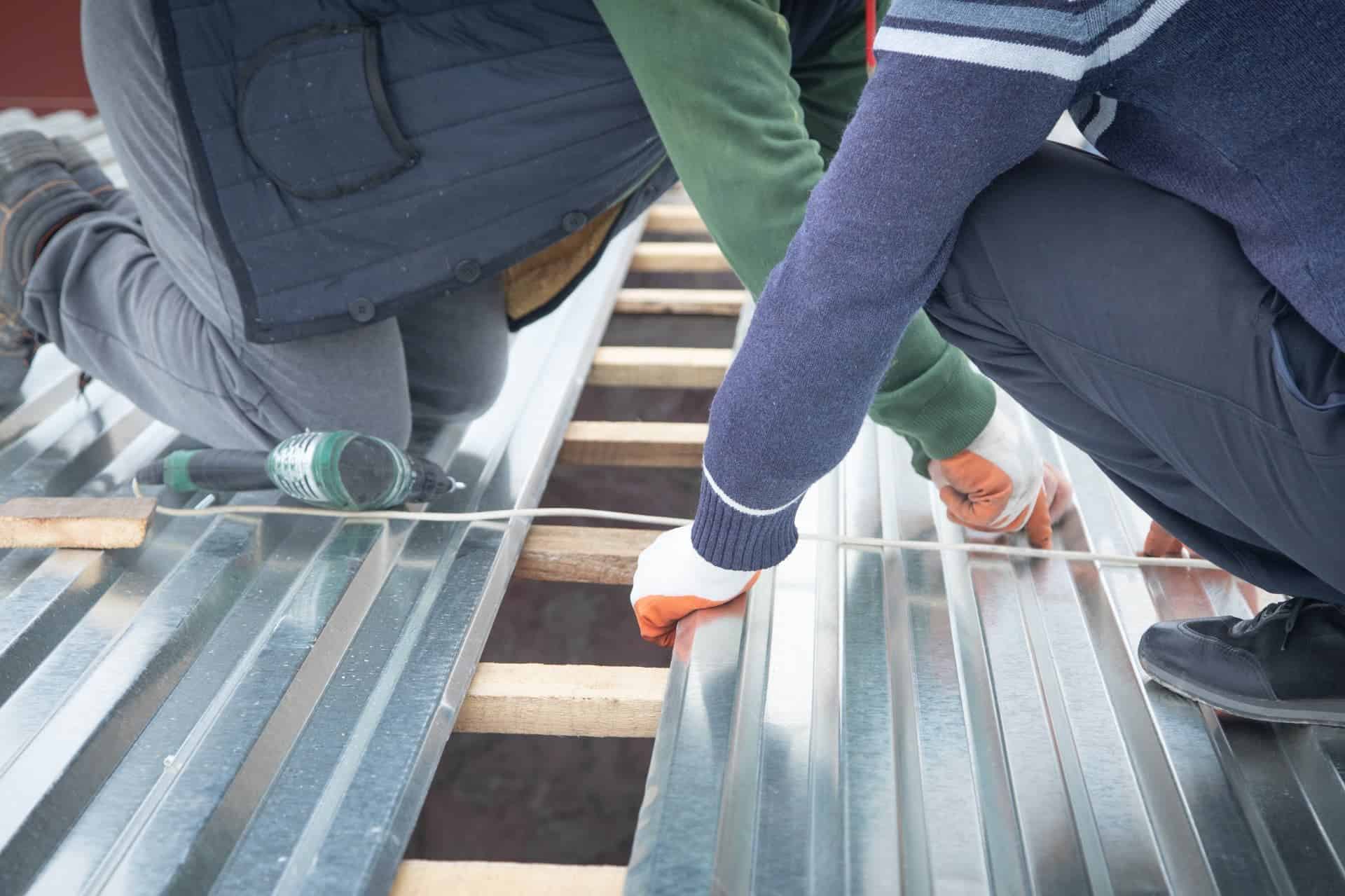
In most cases the old roof comes off down to the deck. That lets any soft or rotted decking get replaced and lets the new underlayment go on clean. Next come drip edge and underlayment, then the panels, with flashing at walls, chimneys, vents and valleys, and finally the ridge and trim. Low-pitched sections like a porch may be too flat for some panel types, and a membrane is the better choice there.
You’ll get a written estimate that names the panel type, metal, finish and underlayment, so you know exactly what you’re paying for. For a broader look at materials, see metal roofing in Daytona Beach, or compare all your options on our roof replacement page.
How it works
- Book your free inspection. Call 386-259-8425 or request your estimate online.
- Get a clear, honest assessment and estimate. We look at your current roof and deck, talk through panel types and finishes, and give you a written estimate. Financing is available through Aqua Finance, Fortifi, Hearth and Home Run Finance.
- Your new roof goes on and the site gets cleaned up. The crew picks up scrap and fasteners before they leave.
If your current roof is already leaking, putting the decision off through another storm season can mean more deck damage to fix when the metal goes on.
Metal roof installation questions
Will a metal roof rust near the ocean?
Not if the materials are right for the location. Aluminum doesn’t rust, and coated steel with a finish suited to coastal exposure holds up well. Matching fasteners and trim matter just as much.
Can a metal roof go over my existing shingles?
No. We always tear the old roof off first. It lets the deck be checked and repaired, and the new underlayment goes on clean.
Is a metal roof loud when it rains?
Over a solid deck with underlayment, most people find it isn’t much louder than shingles.
Does a metal roof help with insurance?
Some insurers consider roof type and condition when writing a policy. Ask your agent how a new metal roof would affect yours.
A roof you can stop worrying about every hurricane season
Call 386-259-8425 or book your free inspection online. You’ll get honest advice on the right metal for your home and your distance from the ocean, and a roof that lets you watch the next storm forecast without dreading it.