Commercial Roofing

Looking for Commercial Roof Repair in Clermont Florida?

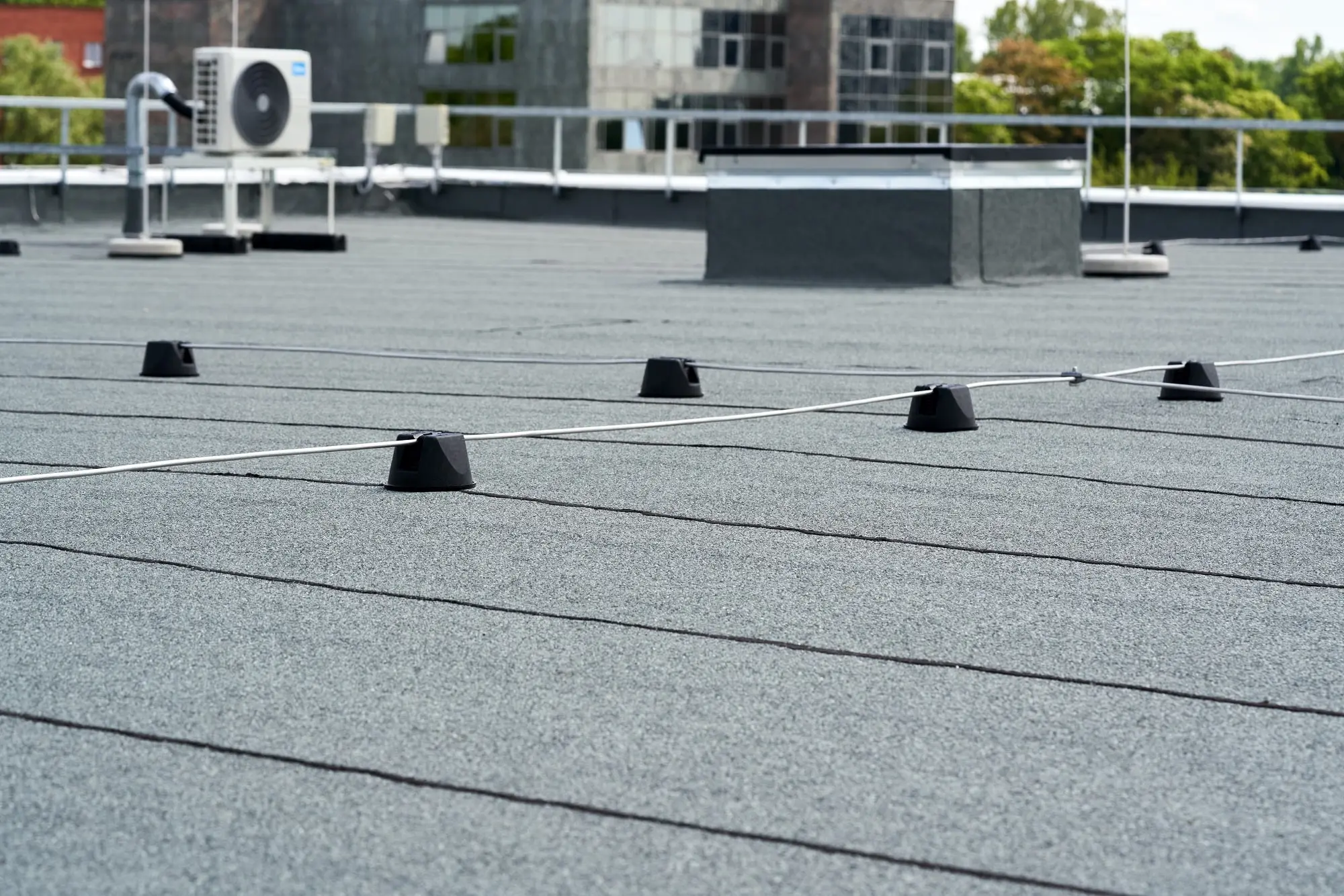
APC Roofing replaces and patches membranes on warehouses, shops and offices, along with the details at units and drains.

Call 407-270-1129 and a roofer will go up top and check every part.


Over Stores and Warehouses – an Overview

Staff, stock and machinery sit beneath the membrane, so a drip can shut down a shift instead of staining a tile. A large building is usually topped by a broad, nearly level surface, and the drainage layout and fastening pattern are calculated.

Air handlers, fans and communications gear sit on the membrane, and each support, line or duct gets careful flashing. How the building is used guides the specification, because a bakery and a document archive ask for different things.

Kinds of Low-Slope Covering: a Short Guide

One flexible layer of TPO, PVC or EPDM is what single-ply describes, modified bitumen comes as polymer-rich asphalt on a roll, and built-up roofing piles felt and tar ply on ply. A walk-behind welder fuses the overlaps on thermoplastic material, whereas rubber splices rely on primer and adhesive tape.

A commercial kitchen pushes greasy vapor up through the exhaust fans, and oily buildup degrades asphalt and EPDM coverings, so the stretch nearby is often PVC. A built-up roof topped with gravel is heavy and long-wearing, and the aggregate shields the bitumen from sunlight.

Panel Roofs on Low Buildings: Upkeep Notes

Some profiles are held down by screws driven through the flat of each sheet, and each shank is set into a purlin or joist. Sunlight bakes the washers until the rubber splits, and the fasteners wiggle loose as the sheets expand and contract.

A standing-seam roof is held by clips folded into the ribs, which lets each pan glide lengthwise. Corrosion sets in at side laps and sawn ends, and a retrofit coating can give sound metal more years of service.

The Supporting Deck: Age and Condition

The structure underneath decides how everything above is secured, and the framing outlasts several coverings. Steel with flutes holds screws securely, a poured slab gets adhesive or anchors in bored holes, and wood planking takes ring-shank nails or plates.

Old, slow leaks corrode patches of a metal deck, and a weakened section is taken out and replaced before new layers go down. Wherever the interior is exposed, the underside gets a look from a lift, and small cores from above show the rest.

Anchoring the Membrane: Weighing the Choices

Mechanically fastened sheets carry rows of plates and screws in the laps, adhered systems are rolled into a coat of adhesive, and ballasted sheets stay put under a blanket of stone. The deck, the building's height and the site's exposure steer the decision, and a frame with no spare capacity rules out a heavy layout.

Between the plates, a fastened sheet balloons in stiff gusts, whereas a glued sheet holds steady on a clean, dry substrate. A ballasted layout turns inspection into a slow job, because gravel or pavers must come off before anyone sees a joint.

Wind Across a Wide Roof – Numbers Behind the Pattern

Each corner feels the hardest pull, as vortices form where the flow crosses the parapet line. A band along each side takes somewhat less, and the center is loaded far more lightly.

Fasteners go in closer together near corners and edges, and published wind tables fix the spacing for each height. A thinly anchored outer angle can peel back, and a blow-off can run well across the field.

Thermal Resistance: Beyond Energy Savings

Polyiso is set on the deck in one or more courses, and a dense cover board often goes on top. Insulation reduces the load on air conditioning and furnaces, and tapered stock tilts the finished surface toward the drains.

Moisture in polyiso drives the R-value down sharply, and the added weight and dampness corrode metal decking. An infrared scan at dusk, backed by cores, outlines the affected zone, and spoiled sections come out while new stock goes in.

Outlets on a Big Building: Clogs and Standing Water

A domed strainer sits over every interior sump, so debris stays out of the leader below. A grate packed with sludge chokes the flow, and a pond spreads across the field.

Codes call for a backup outlet mounted above the main drain, so a steady discharge up high means a jam below. Ponded water adds load that the framing may not be sized for, and a pool that outlasts a downpour by two days marks a low spot or a fouled strainer.

Locating an Opening Overhead – a Careful Search

A soggy tile shows the spot where moisture emerged below, though the actual flaw may be far across the bay. Corrugated decking channels seepage the length of the building, and joints between foam panels open more paths.

Laps, curbs and outlets upslope of the stain are checked by hand, and a low-voltage test can trace an elusive leak. Guesswork patches above the ceiling spot usually miss, and the next rain brings the trouble back.

Rooftop Mechanical Units: Keeping Water Out

Each machine is bolted to a curb that rises from the deck, and the sheet is carried up the faces and tucked under metal. The corners are the fussiest detail up there, and a pinhole at the crease lets rain run down behind.

Swapping a machine for a newer model tends to add an adapter curb without flashing, so a new leak follows within a season. A trickle from a condensate pipe wears a streak of slime into the membrane, so the flow should be carried to a drain.

Penetrations Through the Field: Handling Each Type

Round stacks take a factory-made boot with a stainless band, and anything irregular is dammed with a pan and filled with pourable sealer. The compound shrinks and cracks as the years pass, so a fresh layer goes on every maintenance list.

Conduit and gas lines belong on free-standing supports, as a stand screwed into the deck punctures the waterproofing. A square of sacrificial material under each foot spreads the pressure, and the buffer takes the wear as everything expands and shifts.

Hinged Covers Up Top: What Wears

Ultraviolet light leaves acrylic and polycarbonate hazy and weak, and hairline breaks radiate from each fastener. A tired gasket on a skylight admits water, and the drip is often charged to the covering.

An access hatch is opened by every trade that climbs up, so the latch, springs and weatherstrip eventually give out. Automatic smoke vents must deploy when heat melts a link, and nothing stacked or sealed nearby is allowed to jam the lid.

Parapet Walls and Coping: Common Trouble Spots

Base flashing carries the membrane up the inside face, a termination bar clamps the upper end, and a counterflashing strip sheds water outward. Formed metal coping caps the parapet to keep rain off the top, though a cracked seam beneath lets runoff in.

Unsealed brick draws water in and carries moisture indoors, and the resulting mark resembles a roofing defect. Coping, wall and flashing are all looked at in the same inspection, and failing mortar is raked out and repointed.

Gravel Stops and Fascia – Wind at the Border

A continuous cleat is fixed along the eave and locks the hem of the flange, and a stripping ply seals the sheet to the horizontal face. Gauge and profile are matched to the wind exposure at the building's height, since a bent clip can let a gust peel a whole stretch.

An eave gutter on a big building collects runoff from a vast surface, which calls for sturdy hangers and oversized downspouts. Bent or lifted trim belongs on the repair list, since early work protects the covering behind the edge.

Service Visits and the Membrane – Keeping Damage Down

Refrigeration mechanics may call on a large store every few weeks, and a path gets a little more scuffed each season. An abandoned screw gets forced through the sheet by a passing boot, and a propped panel can gouge a hole.

Thick rubberized pads trace a safe path to each unit, so heels grind on a tough layer and spare the waterproofing. Managers can require contractors to keep off the unprotected sheet, and screws and scraps can be bagged and taken down.

A Regular Look Up Top: What Gets Done

A commercial covering should get a professional walk-through twice annually, plus an extra check after a severe storm. Regular servicing clears the strainers of collected debris, any open lap is found with a probe, and brittle sealant gets marked for replacement.

A walk before the stormy months concentrates on outlets and the perimeter, and a return after rough weather finds what shifted. Little defects go into a log, each tied to a spot on the plan, so decisions can be made calmly and in advance.

Roof Records – Notes That Help

A sketch of the whole area places each unit, drain and hatch, and a section view names each material from deck to membrane. Every repair is entered with the date and photos, and moisture readings are added as taken.

Older properties frequently hold no notes on the covering, which leaves every new contractor guessing. Roof records stay with the site office, so a future manager or purchaser inherits a copy.

Choosing the Scope – Letting Condition Rule

Localized faults on a healthy sheet are patched in place, while a tired but dry surface can carry a silicone or acrylic layer. Big stretches of waterlogged insulation make a new covering the sensible answer, as does brittleness at every lap, though age on paper proves nothing.

Cleaning, priming and repairs underneath come before any coating, and material below that holds water never dries out. Removing only the ruined parts can make sense as a middle option, where the surrounding membrane still has life left.

Routes to a Reroof – Guided by What Lies Beneath

With a recover, the old sheet stays and a new membrane goes over the top, and a separation board is laid in between. Building codes accept an overlay where only a single covering is in place, and only where the insulation underneath is dry.

A full tear-off removes every layer, right down to bare metal or concrete, and damaged sections of deck are mended while exposed. Tapered insulation installed at the same time can reduce chronic puddling, and a saddle between drains turns the flow toward each outlet.

Early Warnings: Before a Small Fault Grows

  • Water pouring from an overflow scupper during rain, which suggests a plugged strainer.
  • A brown ring overhead that widens with each downpour, which means leakage has crossed every layer.
  • White salt deposits across the parapet face, which can signal water entering the masonry.
  • Loose screws or gaps along the perimeter trim, which can set up a blow-off.
  • Puddles seen from the hatch that linger for days, which may mean a low spot or a blocked outlet.
  • A skylight bubble with hairline fractures, which may give way under a misstep.
  • Drops falling onto shelving during a downpour, which shows a leak traveling inside the assembly.
  • Water spilling over the lip of an eave gutter, which can reflect loose brackets or a jam.

How APC Roofing Tackles Commercial Roof Repair in Clermont Florida – Our Sequence

We look first at the drains, scuppers and overflows, and the laps, curbs and perimeter come next. Where there is a leak, the insulation is metered for moisture, because saturation below changes the answer.

Everything we find is written up with photographs and a sketch, and every trouble spot is pinned to a location. The conclusion is repair, restore or replace, and the reasons are set out for you to check.

Commercial Roof Repair Across Clermont Florida – A Clear Picture First

Phone 407-270-1129 and we will fix a time to see the building.


Sharing the Building – What Gets Agreed

Drilling a steel deck sounds like thunder to everyone below, and adhesive fumes can drift into rooftop air intakes. Noisy tasks are scheduled with the manager's input, and vents near the work can be shut while the cement cures.

Waste is sent to the ground through an enclosed chute, and stock under the open area can be covered over. Solvent adhesives carry a strong smell that water-based products lack, so the softer-smelling kind is common above occupied rooms.

Tie-Ins Between Sections – the Discipline Involved

No more old material comes off than can be closed up before dark, and each opened area is made tight again as stripping advances. A temporary tie-in joins the finished work to the existing covering overnight, and the extra piece is sliced off the next morning.

The outlook decides how far the tear-off goes, and a front on the way shrinks the stretch. Unprotected boards caught in a cloudburst soak through, and the contents beneath may get wet.

Weather Across the Region: Planning Locally

At the colder end of our territory, hailstones and drifted snow are real concerns, so a hard cover board and an engineer's review of the framing are sensible. Intense sunshine in every city we cover breaks a membrane down over time, and a white reflective surface cuts the warmth absorbed.

The coastal end of our territory demands fastening designed around hurricane gusts, and tropical storms require ample secondary drainage. Adhesives come with a cold limit printed on the label, whereas welded seams can go down in cool weather but never onto a wet deck.

Staying Safe Aloft: Rules on the Job

Short parapets and bare perimeters leave nothing between a worker and the ground, and anyone close to the edge wears a harness tied to an anchor. Skylights look solid yet break under a careless step, so a screen or guardrail at each opening prevents a plunge.

Permanent anchors make later visits by other trades less risky, and a gated ladder hatch adds another safeguard. A missing screen or warning line is flagged in our findings, since even a low building is high enough for a serious fall.

For Commercial Roof Repair in Clermont Florida, call APC Roofing at 407-270-1129. A roofer will walk the membrane, the drains and the perimeter, and the results arrive in writing to act on as you see fit.

Jacqueline

Verified

★★★★★
Mike Ferrai was absolutely amazing from beginning thru the end..! Our roof looks awesome..!!! Couldn't be happier.! Would definitely recommend for all your roofing needs.. A++++++++

Frank Smith

Verified

★★★★★
Our experience with APC roofing began with an introduction and quote by Lucio. He came to our home, explained the process and immediately went on the roof to access the damage. As we began to inquire further about what to expect Lu got us in contact with Adrian. Now Adrian became an invaluable partner in very honestly and sincerely letting us know what APC could and couldn’t do to repair or replace our damaged roof. Hurricane Milton left us scrambling to come up with thousands to meet our deductible. Patiently and empathetically Adrian dispelled our apprehension about working with a contractor or being left incomplete and in need of legal help to resolve any disputes. He gave us his assurance that he would oversee the entire project. I have to admit that he kept his word. Even when we thought there would be a last minute hiccup with financing he put me in-touch with Lucy and she did not give up until we got the information and terms I wanted. This was a truly great team from start to…

JOHN WEBER

Verified

★★★★★
Our rep. Holly and this company did a wonderful job while staying within our budget! I highly recommend you work with this company and Holly in particular.

Tramale Suggs

Verified

★★★★★
Honest trustworthy company with great employees… hardworking and dedicated to providing great service….thank you Adrian

Mike Price

Verified

★★★★★
Everything went smooth on schedule nice clean job would recommend to anyone Mike Price was a great guy to work with