Looking for Shingle Roof Repair Across Blue Springs Missouri?
APC Roofing lays new courses of strip and laminated products on ranch homes, two-story houses and detached garages.
Phone 913-398-5020 and a visit will show what condition everything is in.
Anatomy of a Covering – Raw Ingredients
A mat of glass fibers makes each shingle strong, while an asphalt coating keeps water out, and stone granules pressed into the upper face block sunlight.
Products that seem alike from the driveway can vary a good deal underneath, and more heft commonly lets a covering weather more summers. A display board reveals the shade and little else, but a specification sheet names the ratings.
Comparing the Styles – Setting Them Apart
A three-tab product is a single-layer piece with twin cutouts at the exposed edge, and courses laid this way form tidy straight bands. An architectural product bonds a contoured upper strip to a solid backer, so the extra depth gives relief.
The heavier laminated construction puts more asphalt on the deck, and listed wind classes are generally higher. Nailing on a two-ply shingle aims at the strip where the plies are joined, and the manufacturer's markings set the target.
Uses for the Flat Style: A Narrow Niche
A detached garage, a shed or a porch often suits three-tab well, and a patch can match the rest of an older house. Selection has shrunk, since many brands have trimmed that style, and discontinued hues cannot be ordered at all.
Uneven plywood is less noticeable under a dimensional product, while flat courses make any hollow obvious. Either style goes over the same underlayment and flashings, and the shingle itself is the only part that changes.
Mineral Grit and Aging – Early and Late Stages
Excess grains from the factory rinse off in the opening rains, and the amount tapers off quickly. Thick deposits of grit below an old covering show that its surface is worn, and uncovered asphalt dries out and cracks in sunlight.
Planes aimed south or west receive the harshest sun, and bald spots usually show up there ahead of the rest.
Self-Sealing Designs – Wind Resistance
Every shingle arrives with a sticky asphalt stripe, and bright sunshine activates it so the row above clings. An adhered course resists gusts that try to pry up its lower edge, and nailing still carries the load year after year.
At the colder end of our territory, shingles laid in late fall may not seal for weeks, so a windy day can fold back tabs that have not taken hold. Makers' directions cover this with cement placed by the installer, and a printed diagram marks the spots and their spacing.
Placement on the Shingle: Height, Depth and Quantity
Nails are driven within a slim band set out by the manufacturer, where the shank also catches the headlap of the row below. Four fasteners per shingle is the standard schedule, and six are required on steep slopes or in high-wind areas.
A misplaced high nail leaves the lower course loose, an overdriven head cuts into the mat, and a crooked shank makes a bump that wears through the shingle above it. Every wind rating on a wrapper presumes the pattern was met, and a poorly adjusted pneumatic tool repeats its error across an entire plane.
The Wood Below – Replacing Weak Sections
Flat sheets of plywood or OSB make up the deck, because a fastener driven into nothing holds nothing. Older houses sometimes keep the gapped boards once used under shakes, and sheathing is nailed over them before shingles go on.
Rotted and spongy spots are replaced while the framing is open during a tear-off, since a nail in punky fibers pulls loose. Panels go down with a narrow space along each joint, as boards butted tightly lift into ridges when they absorb moisture.
Old Paper, New Fabric: Known Limits
Building rules in most places require a water-resistant membrane over the deck, and its runs overlap from the bottom edge upward. Synthetic sheet has largely replaced asphalt-saturated felt, as the modern fabric is tougher and does not ripple after rain.
Rain that gets past a damaged shingle drains across the membrane rather than into the deck, but it is meant for occasional water, not months of open sky.
Guarding Against Ice Dams – How Far Up
At the colder end of our territory, attic warmth melts snow on the upper slope, and a frozen band builds along the chilly lower edge. Held back up the slope, water works its way under the tabs, and standard felt or synthetic sheet does not close around the nails.
A rubberized self-adhering membrane is laid along the eave where ice dams form, and it extends upslope beyond the point directly above the heated interior. Throughout our service area, valleys and chimneys commonly receive it as well, because those junctions carry heavy flow.
Where the Deck Ends: Sequence Matters
A metal drip edge wraps the eaves and the rakes, so the fascia stays dry. The lower flashing sits under the underlayment, while at the gable side the order flips.
Current codes in many places make edge metal mandatory along every border of a shingled plane, since rain otherwise wicks under and rots the sheathing.
Beginning at the Gutter: A Common Shortcut
Before any exposed shingles, a starter strip is laid along the bottom, and its glue stripe sits at the extreme outer margin. Flipping an ordinary piece around keeps the adhesive away from where it is needed, and nails alone then keep the lowest tabs from lifting.
Most instruction sheets extend starter up both rakes, since wind crossing the roof tugs at its outer lines.
Junctions of Adjoining Planes: Construction Methods
Open valleys expose a painted or galvanized liner along the fold, while in the closed-cut type one side crosses over and the opposite side is trimmed neatly. Weaving rows from both planes together suits single-layer tab products, though dimensional shingles rarely take to it because of their bulk.
Nailing close to the fold is avoided, and an adhered membrane lies underneath the whole length. Needles and grit gathered in a valley act like a dam, which can push rain beneath the trimmed shingles.
Roof-to-House Joints – Frequent Leak Points
A separate step flashing is tucked under each course where the covering meets a wall, and the exterior finish hangs down across the standing half. Where the eave stops against the house, a kickout diverter goes in, because otherwise rain soaks the framing.
Chimney flashing combines a front apron, side steps and counterflashing cut into the brick joints, while a wide one gets a small peaked cricket behind it.
Through-Roof Vents – Sequence and Laps
A pipe boot is built from a flat base plate and a stretchy neoprene collar, and ultraviolet exposure dries the gasket out and cracks it. The flange slips under the courses higher up, and the bottom margin stays exposed so rain rides over it.
A cracked collar is common on a covering that is otherwise sound, so new boots come with every new covering.
Along the Peak – Final Courses
Cap shingles straddle the ridge and run down every hip, and on a laminated covering the manufacturer supplies a thicker matching version. Pieces cut from strip shingles are much thinner, and at the colder end of our territory a freeze can open splits along the bend.
A continuous ridge vent frequently lies under the cap row, and nail length is chosen to pass that gap and grip the boards.
A Healthy Upper Story: Common Problems
Outside air should come in through vents under the eaves, while a slot along the ridge lets it rise and exit. Loose-fill insulation piled into the corners can smother the flow, and foam or cardboard baffles hold a channel clear.
Without airflow, an attic bakes the boards from below, while indoor humidity collects there with nowhere to go. At the colder end of our territory, frost can form on the nail tips poking through overhead, and the water runs down as the day goes on. Adding a fan to an attic that already has a ridge vent can reverse the intended path, so the lower part of the space goes stagnant.
One Product Everywhere: Algae and Hard Winters
Our service area stretches from high plains to subtropical towns, and the strain on asphalt shifts with the setting. At the coastal end of our territory, hurricanes bring hours of sustained wind, so manufacturers list a high-wind nailing schedule. Relentless sunshine hardens the binder over the years, and lasting humidity gives algae room to grow.
At the colder end of our territory, each overnight freeze works on any opening, while deep snow loads the deck for weeks.
Pelting From Above – Reading the Strikes
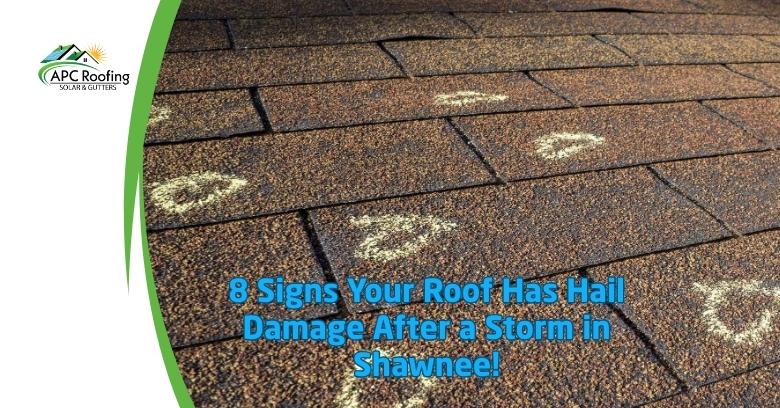
At the colder end of our territory, hail arrives most years with the thunderstorms, and impact-resistant lines exist for exactly that. A hailstone knocks granules loose where it lands, and a violent one can split the reinforcement beneath.
An impact class is assigned after steel balls are dropped on samples in a lab, and a tougher product shows less damage afterward. Plenty of makers use a polymer-modified coating, which lets the shingle flex instead of shattering.
Strong Gusts – The Damage Done
The border of a roof and its corners see the greatest upward force, and a loose shingle rises and slaps back down. A tab folded back far enough creases along its width, and the damaged spot stays weak for good. Pieces left in that condition are taken out and replaced, while an unfolded one can be sealed again with roofing cement.
A missing tab leaves bare underlayment facing the sky, and rain then has only that thin layer to get past.
Growth on the Surface: Slowing the Return
Algae is what paints the long black marks on many slopes, which survives by feeding on limestone filler. At the humid end of our territory, faces under trees and out of the sun collect it soonest, but the streaking by itself is largely about looks.
Moss matters more, since it keeps the courses damp, and as it creeps it breaks the tabs' seal. A pressure washer blasts granules off along with the growth, so a mild product rinsed on softly is the better choice. Copper-bearing mineral is blended into algae-resistant lines, and a zinc strip near the peak slows regrowth on an older covering.
Choosing a Color: Mixing Bundles
A black or charcoal covering absorbs more of the sun's energy, while light ones reflect much of the light skyward. Specially coated granules now come in a range of hues, and a tested reflectance figure goes with them.
Stock can vary from one production lot to another, so maker directions say to draw from more than one bundle at a time. Multicolored designs keep slight differences from showing, while a uniform finish lets them stand out.
Walking on Asphalt: A Safer View
Midday sun softens the surface noticeably, and each tread can leave a mark. At the colder end of our territory, icy mornings leave the tabs ready to crack underfoot, while dew that freezes overnight leaves a slippery glaze.
Staying down below is wiser for a homeowner, and a good pair of field glasses picks up loose or missing pieces.
Shingles Over Shingles – Hidden Trade-Offs
A re-roof over a prior roof is legal in many towns, provided there is only one and nothing beneath is rotted. The current shingles stay on top of the decking throughout the job, and weak spots stay just as they were.
An uneven base gives the new shingles a wavy face, and step and valley metal commonly remains in service. A doubled covering rests on structure never meant for that weight, and every nail must travel through the old material before it grips.
Signs on the House – When to Call
- Mineral grains build up in the gutter troughs, and the layer thickens with each storm.
- Some tabs flap loose or are gone altogether, which means the seal has let go.
- Shingle ends lift into curls, which happens as the oils bake out.
- Splits open across the middle of a tab, and rain then finds a path to the mat.
- Shiny black spots stand out against the color around them, so the base is bare to sunlight.
- A pipe boot has gaps between its collar and the pipe, so moisture can track down inside.
- The metal where a slope meets siding sits bent or pulled back, and gusts can push weather in behind it.
- A damp patch shows up on the ceiling after heavy rain, though the entry is often some distance off.
How APC Roofing Works on Shingle Roof Repair in Blue Springs Missouri: What to Expect
Every slope is walked first during an inspection, and the details at every valley, vent, flashing and edge are read. Inside the house, the attic is searched for stains and daylight, because darkened wood marks where water got in.
Anything wrong is photographed, and damaged areas are measured. The findings are written up in plain language, and every recommendation comes with its reasons. A modest problem is presented as modest, while a covering at the end of its life is called that. The final say rests with the owner, whether that means a repair, a replacement or waiting.
Shingle Roof Repair for Homes in Blue Springs Missouri: Straight Answers From Up Top
Dial 913-398-5020 to book a time.
Small Fixes and Full Jobs – Matching Old and New
A cracked boot, loose flashing or a handful of torn tabs is routine repair work, while the surrounding shingles are left alone. A replacement piece looks brighter than the aged ones around it, while the manufacturer may have retired that design.
A sun-dried tab breaks as soon as it is pried back, and one fix can turn into several. If hard, curled courses run from eave to ridge, a patch simply moves the problem along.
Useful Lifetime: What Moves the Number
Strip products tend to give fifteen to twenty years, and dimensional products often go a decade longer. Attic airflow, sun exposure and the quality of the nailing move that figure, and a severe storm can cut a covering's life short.
A look at the vent collars and metal details every so often makes sense, because minor gaps closed promptly spare the sheathing.
If you are planning Shingle Roof Repair in Blue Springs Missouri, phone APC Roofing at 913-398-5020. Each slope is walked and every detail checked, and the findings reach you in writing so the decision stays yours.
Verified

Verified