The stain on your ceiling shows up after every heavy rain, dries out, then comes back a little bigger. Maybe someone already “fixed” it once with a tube of caulk. You’re tired of watching that ring grow, and you’re starting to worry about what’s happening inside the ceiling where you can’t see.
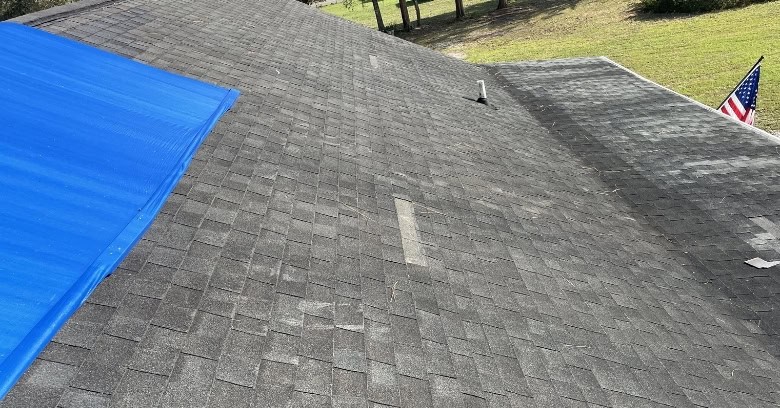
Roof leak repair in Blue Springs is mostly detective work. Water rarely comes in right above the spot where it drips. It finds a gap, runs along the underside of the roof deck or down a rafter, and drops wherever gravity takes it. Fix the spot above the stain and the leak often keeps going.
APC Roofing is GAF Certified, licensed and insured, and has been in business since 2017. Your inspection is free. Call 913-398-5020 and describe what you’re seeing inside.
Where roof leaks usually start
A roof rarely leaks in the middle of an open slope. Leaks start where the roof stops being a plain field of shingles: at pipes, walls, chimneys, valleys and edges. Where your stain shows up often hints at the cause.
A stain on the bathroom or kitchen ceiling
Plumbing vent pipes come through the roof above bathrooms and kitchens, and each one is sealed with a rubber boot. Years of summer sun harden and crack that rubber, and water runs down the pipe into the ceiling below. A new boot is one of the most common, and simplest, leak repairs.
Water at a corner near the chimney
A chimney needs several layers of flashing: an apron on the low side, step flashing up each side and counterflashing set into the brick. If any piece rusts, slips or loses its sealant, water gets in. On a wide chimney, debris and water can collect on the uphill side too. Sometimes the brick or mortar itself is soaking up water, which is a masonry repair, not a roofing one.
A wet spot where a lower roof meets a wall
On two-story homes, an attached garage or a porch roof, the roof runs into a wall. Step flashing tucked behind the siding keeps water out. If it’s missing, rusted or was never installed right, water runs behind the siding and into the wall or ceiling. A small kick-out flashing at the bottom edge also keeps water from pouring down the wall.
Drips along a valley
Valleys carry water from two roof slopes, so they handle more water than any other part of the roof. Worn shingles, a damaged valley liner or leaves packed into the valley can let water back up under the shingles.
Small, scattered drips after a hard rain
Nail pops are a common cause. As the deck swells and shrinks with Missouri’s seasons, nails work loose and push up through the shingle above, leaving tiny holes. Wind-lifted or creased shingles cause similar leaks in a driving rain.
Leaks near outside walls, only in winter
If the stain shows up after snow, not rain, an ice dam is the likely cause. Snow melts on the warm upper roof, refreezes at the cold eaves and backs water up under the shingles. You’ll often see icicles and a ridge of ice along the gutter line.
Is it actually a roof leak?
Not every wet spot comes from the roof. On very cold nights, warm, damp air from inside the house can condense on the underside of the roof deck and frost the nail tips in the attic. When the sun warms the roof, it drips. This shows up as damp insulation or drips spread across the attic instead of one trail back to a single spot. Plumbing, an AC drain line or a bathroom fan duct can also mimic a roof leak. A good inspection rules those out before anyone touches your shingles.
What you can safely check yourself
If you can get into your attic safely, take a flashlight on a rainy day or right after one. Look for wet or darkened wood, water trails on the rafters and damp patches in the insulation. Follow the trail uphill as far as you can. A photo of what you find helps whoever comes out to look. Stay off the roof itself, especially when it’s wet.
How a leak gets fixed for good
Once the source is found, the repair targets that spot. That might mean a new pipe boot, new step flashing behind the siding, resealed or replaced chimney flashing, a rebuilt valley or replaced shingles over a nail pop. If the decking underneath has gone soft from repeated leaks, the rotten section gets cut out and replaced. Caulk alone on a moving joint is a stopgap, not a fix.
After the repair, you’ll get photos of what failed and what was done, so you know the leak was handled at its source.
How roof leak repair works with APC Roofing
- Book your free inspection. Call 913-398-5020 or request a free estimate online.
- Get a clear, honest assessment and estimate. The roof gets checked from the attic and from the top, and you’ll see photos of the source with a written estimate for the repair.
- The leak gets fixed and the site gets cleaned up. Old materials and debris leave with the crew.
If water is pouring in right now, our emergency roof repair page walks through what to do while you wait.
Roof leak questions from Blue Springs homeowners
Why does my roof only leak in certain storms?
Wind direction matters. Rain blown sideways can get under a lifted shingle or behind loose flashing that stays dry in a straight-down rain.
Can I fix a roof leak with caulk?
It might slow it down for a while. Caulk dries out and cracks as the roof moves, so the lasting fix is usually replacing the failed part.
Why is the stain far from where the leak is?
Water runs along the roof deck and rafters before it drips. The source is often several feet uphill from the stain.
Does one leak mean I need a new roof?
Usually not. Most leaks come from a single failed detail. If the inspection finds widespread wear, you’ll hear that too, along with your options.
A ceiling you can stop staring at
A slow leak can soak insulation, stain drywall and soften the wood under the shingles long before it shows up as a big drip. Finding it early keeps the repair small.
Once the real source is fixed, the stain stays dry through the next storm and the one after that. Call 913-398-5020 or start your estimate online. For other roof problems, see our Blue Springs roof repair page or read about shingle roof repair.