Need Residential Roofing in Blue Springs Missouri?
APC Roofing takes on jobs ranging from a basic checkup to a full replacement, on asphalt, steel and clay coverings alike.
Reach us at 913-398-5020, and a roofer heads out for a look at the house.
The Roof's Inner Build-Up: What Holds a House Together
What shows from the curb is just the outer layer, and a moisture barrier, sheathing and framing sit underneath. Bent metal covers the gap at a chimney, a pipe or a valley, and a drip there rarely points to worn shingles on the slope.
The space under the sheathing works as a component of the roof, too, since trapped summer heat bakes the deck from underneath. A stain on an upstairs ceiling can trace back to any level of the roof, and work confined to the outside can miss the real source.
A Roof at Work: Behind the Shingles
A sloped covering sheds every storm's water downhill, and seal strips keep gusts from getting under the courses. What lies below carries the weight of everything on top, snow included at the colder end of our territory, while vents let damp air leave the attic.
Water is a job for the covering, and wind is a task for the fastening, and holding the whole thing up falls to what is underneath. A failure in one part puts pressure on neighboring parts, and the real remedy sits back where the fault started.
Small Parts of a Roof System: Different Timelines
The shingled field is built to last for decades, but the gasket around a vent pipe hardens within a fraction of that span. Rain finds a way down past the weak point, and a stain appears on the ceiling below.
Sealant around a skylight loses hold after enough summers, and aluminum flashing pits at the bends in salt air. The capping pieces craze down the center, because the highest point stands open to glare and gusts.
Different Stages, Different Details: What Turns Up at Each Point
At a distance, the outline of the roof gives away dips, sags and wavy planes, and the fascia and gutter runs are visible at the same time. Binoculars pick out torn collars, lifted tabs and bare patches, but a weak spot underfoot tells what optics cannot.
Once on the roof, a roofer checks every connector closely and follows the flashing at each wall, and the field is read for brittleness, granule shedding and loose edges. A rain-slicked or very steep covering stays off limits underfoot, and the eave line, reached by ladder, becomes the vantage point.
Behind the Ceiling: Evidence to Look For
Discolored wood around a fastener points to water that beat the covering, and a soft, wet feel means the entry point is still open. Light passing through the decking reveals a breach, and the distance from the ridge and gable gets measured so the spot can be found outside.
Rusted nail tips point to condensation, not a leak, and a compressed, faded patch nearby points to the same cause. Fill pushed into the eave opening, or a fan duct ending in the attic, turns up only from inside, so a yard-only look passes over faults like that.
A Homeowner's Take-Away: An Overview
A record of the visit takes the form of photographs keyed to spots on the roof, and a written line explains what each image shows. Solid sections are treated in the same plain language as sections that are not, and trouble spots are ranked from most to least urgent.
A filed report from an earlier check-up serves as a reference going forward, and change over time is easier to judge than condition on a single day. A roof tracked across each year brings few surprises, and a large job gets seen coming well ahead of time.
Keeping a Shingle Roof in Shape: Practical Habits
New rubber boots go on the pipes ahead of any cracking, and brittle beads at the walls get cut out and run again. Needles and leaves get cleared from valleys and from behind chimneys, and every outlet gets checked for an open path.
A raised corner glued down in time stays a simple repair, but delay through a wet season can let water reach the ceiling below. Lichen keeps the surface damp and works in under the shingles, and the growth gets treated and then brushed away, not blasted off.
A Regular Routine: the Basics
A roofer should walk the roof once a year, scheduled once the harshest stretch of local weather has passed. The point is finding small faults before a leak forms, and the homeowner learns roughly how much life the covering has left.
In the months between visits, a look from the driveway after high wind helps, and bedroom ceilings upstairs can be watched for fresh spots. A flashlight trip into the attic twice a year pays off: discolored boards, light through the deck and damp insulation turn up long before anything reaches the space below.
The Age of a Roof Seen From the Ground: What Changes Over Time
Newer asphalt lies smooth and uniform in tone, and by mid-life the sun-facing side fades ahead of the shaded side. Late in a roof's run, tabs cup and granules wash into the downspouts, and repairs stop holding.
Judging from the street supplies a reasonable idea, but a ladder and a closer look tell the fuller story. A worn-out field is past the point where patching helps, and a good contractor gives that answer plainly, rather than selling another repair.
The Channel at the Bottom: the Basics
A sloped roof delivers water only to the eave, and the gutter takes over from that point. A run choked with leaves sends overflow behind the trim board, and the rafter tails nearby rot over seasons.
A soft spot along that edge points more often to drainage trouble than to worn shingles, and new shingles will not cure a fault of that kind. The slope of every gutter and where each downspout empties get checked, and the drip edge gets looked over where the metal meets the fascia line.
How the Roof Breathes: The Basics
A balanced system draws air in low and releases air up high, and that path carries heat and moisture out of the attic. With the opening closed, the attic turns hot in summer and clammy in humid months, and the tabs curl and the plywood softens ahead of schedule.
A fan starved of intake draws air from the rooms below, not from outdoors, and stacking two setups the wrong way can leave one choking the other. Fresh shingles laid over stale, trapped heat age nearly as fast as the old ones did, so a proper replacement addresses the same issue at the same time.
Roofing That Fits Where You Live: An Overview
At the colder end of our territory, ice at the eaves and the weight of snow shape the build, and a waterproof membrane covers the bottom few feet of deck. At the coast, uplift decides the fastening pattern, and impact-and-wind-rated shingles and sealed seams get chosen.
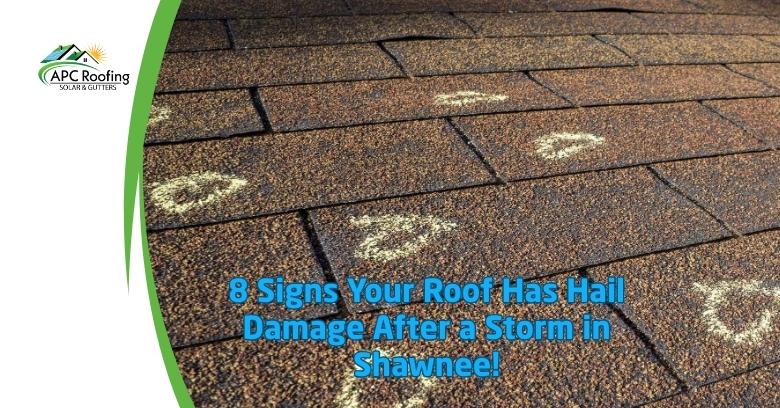
In the hail-prone part of our range, at the colder end, a tougher product deserves a look, while strong sun bakes asphalt across every market we serve. The details get set by conditions at that specific location, not routine, and not whatever a past project called for.
Family Homes and Business Buildings: Different Structures Entirely
A sloped covering sheds rain by lap, laid in asphalt, tile or metal. Most commercial buildings use a single-ply or built-up membrane, and drains, scuppers and rooftop units sit built into that surface.
A fair number of homes have a shallow strip over a porch, and shingles there tend to leak because water lingers before running off. A low spot like that needs a continuous membrane tied in beneath the main covering, and putting shingles back on that spot solves nothing.
A Cover Until Things Get Fixed: Done the Right Way
A secured sheet keeps rain out while repairs get scheduled, but the broken parts stay broken all the same. A cover done right crosses the ridge and gets screwed down through battens, and the material gets pulled taut so wind cannot get behind the edge.
A cover needs a wide border around the hole, since water runs sideways under a short edge. Plastic left in place for months traps heat and moisture against the deck, and mildew and rot follow underneath.
The Detail Where a Roof Meets Something Upright: Getting the Work Right
Step flashing gets woven in with each course along a wall, and counterflashing tucked into the masonry covers that metal from above. A chimney has an apron below and metal run up against both edges, and a wide stack gets a cricket that divides the flow around back.
Caulk troweled onto a bad seam lets go once temperatures shift the metal, so a fresh tie-in, installed correctly, is the dependable way to go. Soft mortar lets water into the brick above the flashing, and part of that repair belongs to a mason, not a roofer.
Putting Requirements on Paper: a Careful Look Before the Ink Dries
A clear plan identifies every material, from the shingle to the metal, by name, and the document states plainly whether the work is a tear-off or a layover. A firm outline settles ahead of time how bad wood gets handled, and the metal, the ventilation and the yard cleanup are each called out.
Competing proposals listed in detail can be read side by side, and the gaps between the two sets of paperwork come into view. A firm unwilling to resolve the plan in advance is telling an owner something, since a handshake settles nothing once a dispute starts.
What a Re-Roof Involves: What Changes at the House
Plants take tarps and hard surfaces take padding before the crew begins, and the existing covering gets removed completely. Opened up, the decking gets checked for soft spots and breaks, and weak areas get cut out and replaced with sound lumber.
Underlayment, new metal and ice-and-water membrane go on across the open deck, and the main covering, the ridge line and the vents finish the work. The yard and drive get a magnetic sweep before the crew leaves, and no debris gets left in the gutters.
Care for Non-Shingle Roofs: What Differs by Material
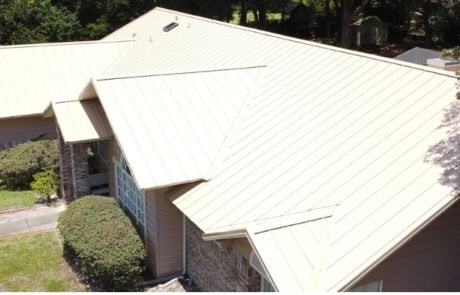
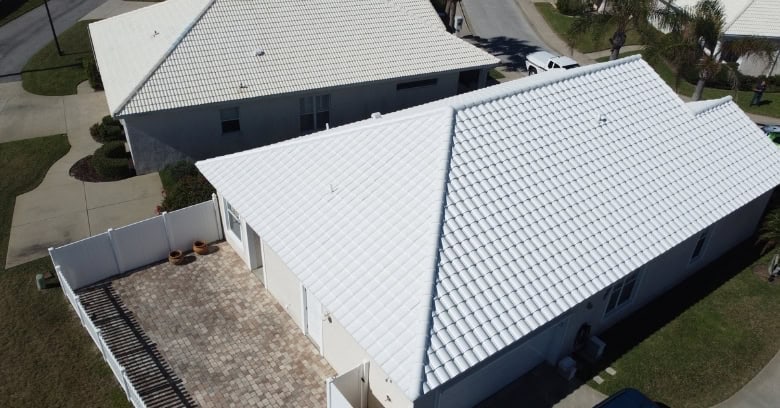
Exposed-fastener metal panels seal at a rubber gasket under every fastener, and a leaking screw gets paired with a fresh washer. Across our markets, tile sets by mortar, by foam or by clips, based on the property, and the underlayment does the actual waterproofing.
Walking on the wrong spot cracks a piece, and a damaged unit gets pulled and replaced to match the surrounding pattern. On a low-slope section, standing water and open seams are the things to watch, and grit and leaves get cleared from the scuppers.
Clues That Point to Trouble: Caught Early
- Coarse grains washing out after every rain, in amounts that keep returning each season.
- Shingle edges cupping upward, most visible on the sunniest slope.
- A hardened gasket at a stack, easy to spot with binoculars.
- A ceiling mark that spreads with each downpour, new since the previous season.
- Pinholes of light in the sheathing, beside a vent stack.
- Moss packed into the laps, holding moisture against the surface.
- A wave running across a plane, new since the previous year.
- Rust streaks below a metal joint, often after a hot summer.
Residential Roofing in Blue Springs Missouri: What APC Roofing Does
Before any recommendation gets made, a roofer walks the whole covering and checks the attic, and the results come back as images plus a short written summary. Sound parts get named as plainly as parts that need work, and the choice of what to do next stays with the homeowner.
Residential Roofing in Blue Springs Missouri: a Roofer Who Reads the Whole Roof
Reach us at 913-398-5020 to schedule a visit to the property.
An Archive for the Roof: a Few Minutes a Year
Saving the install date and the product names on the invoice pays off later, and every yearly report can go into the same file. Including a line for every repair, the spot and the method, rounds out the picture, and looking back after enough time shows what keeps recurring.
At sale time, questions about the roof's age and history always come up, and dated records answer all that better than memory ever could. A copy kept at a second location protects the earlier notes, in case the paper sheets go missing in a move.
Judging the Result: Points to Look For
Every row lines up, and the ends at the gables get trimmed evenly, and nails stay covered by the layer above. Around chimneys and dormers, the flashing gets replaced rather than reused, and any sealant used is a neat bead, never a smear.
Ventilation openings stay in place and free of debris, and the gutter runs finish straight and fastened. The property gets checked with a magnet for stray fasteners, and sawdust from a trimmed board is the most common leftover, easy to rinse from a walkway.
Anyone comparing options for Residential Roofing in Blue Springs Missouri is one step away from a straight answer. A call to APC Roofing at 913-398-5020 moves the scheduling forward. Every stop takes in the whole roof, not just the part in question, and no part of the roof goes unchecked.
Verified

Verified